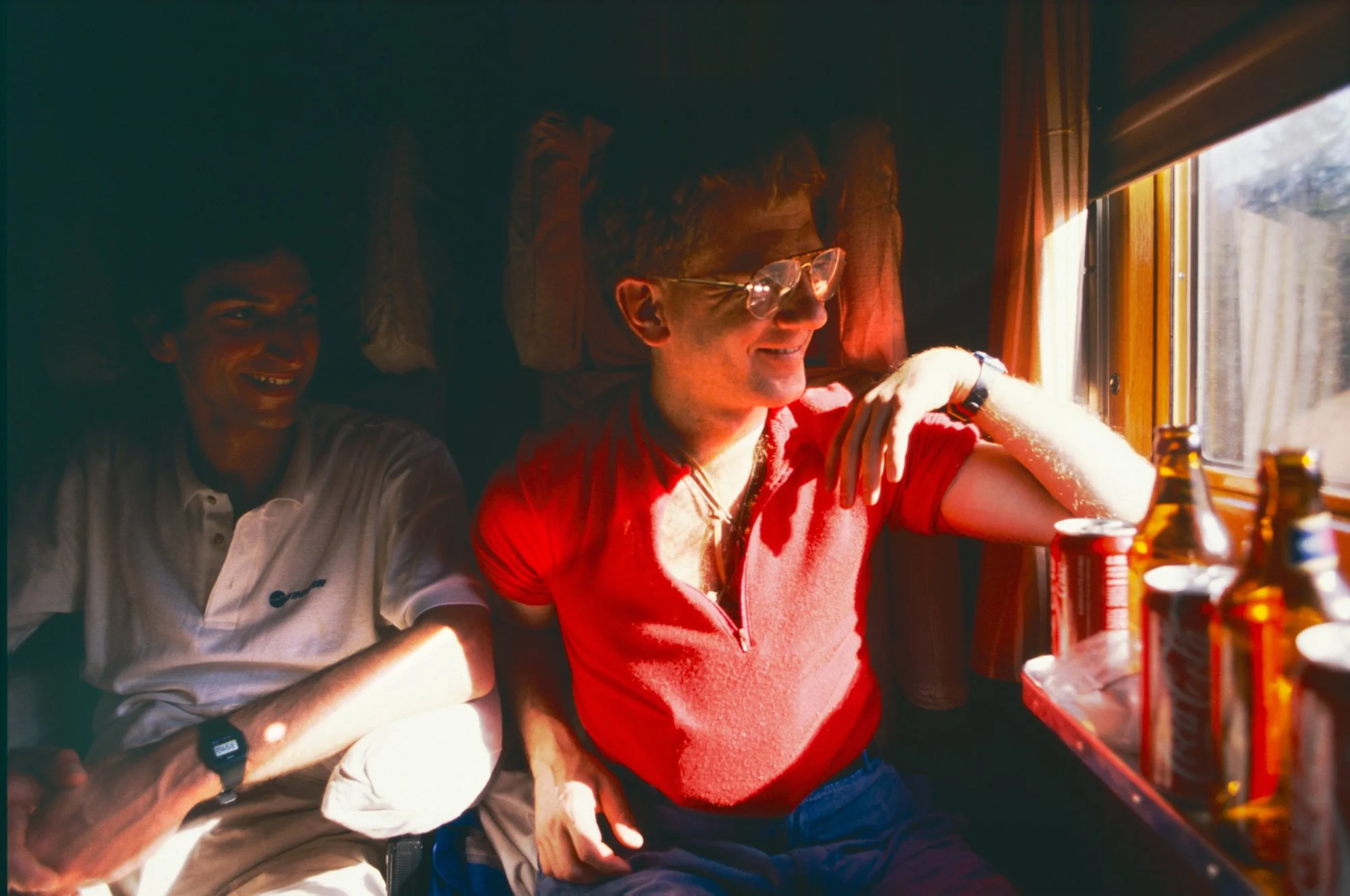
Simon and Howard on the train between Helsinki and Leningrad.
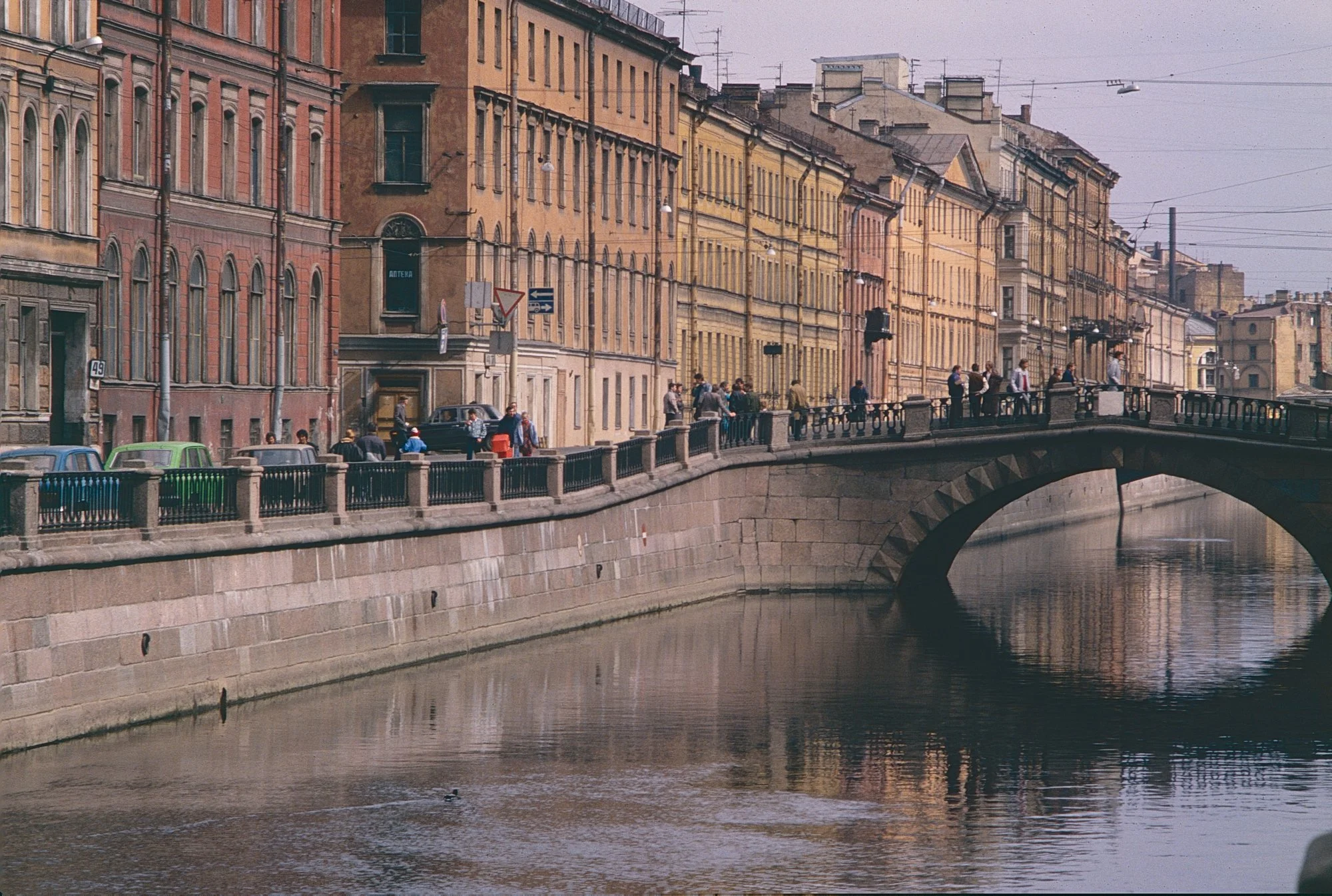
Leningrad.
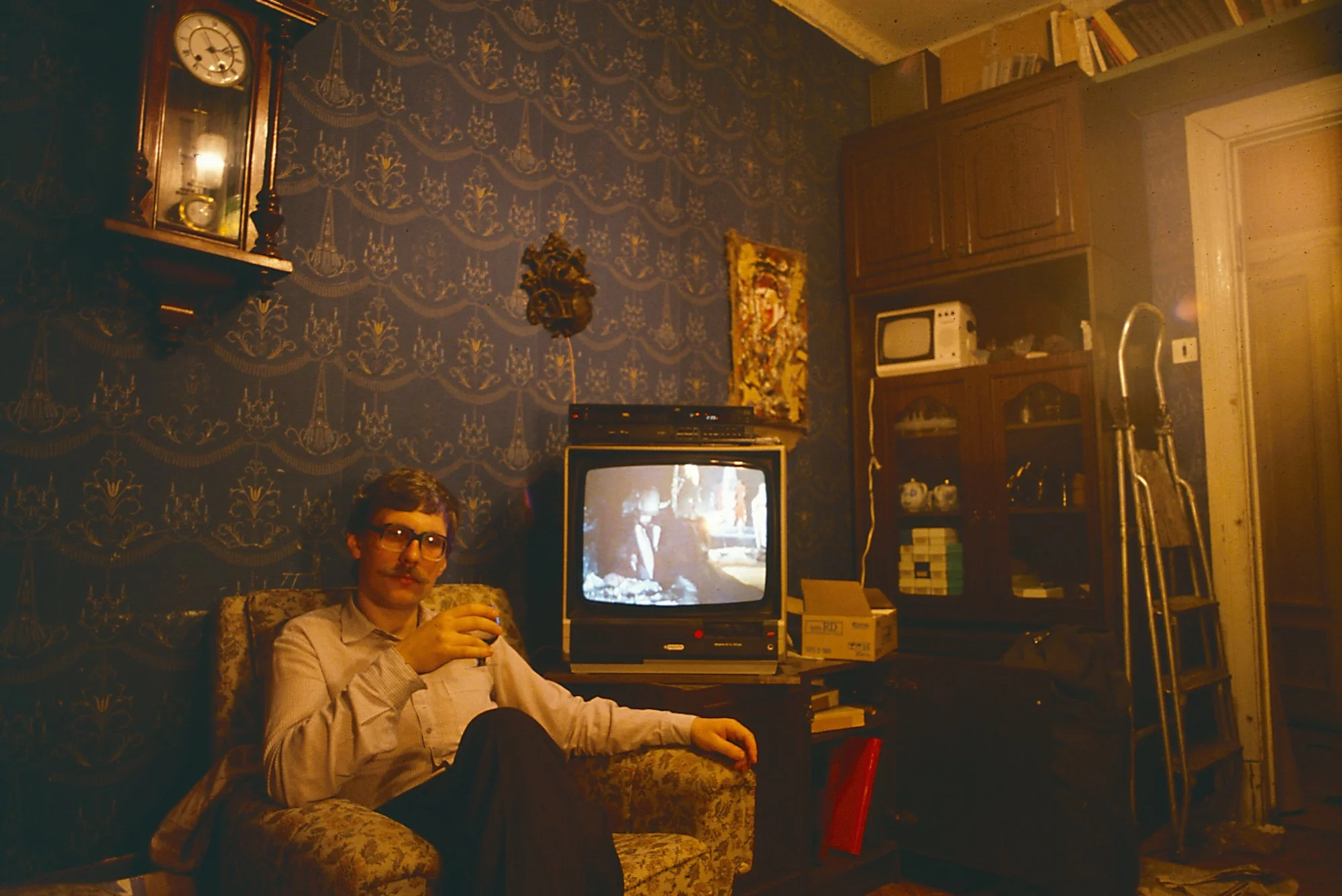
We spend our first night in the Soviet Union in Alexei's apartment in Leningrad.
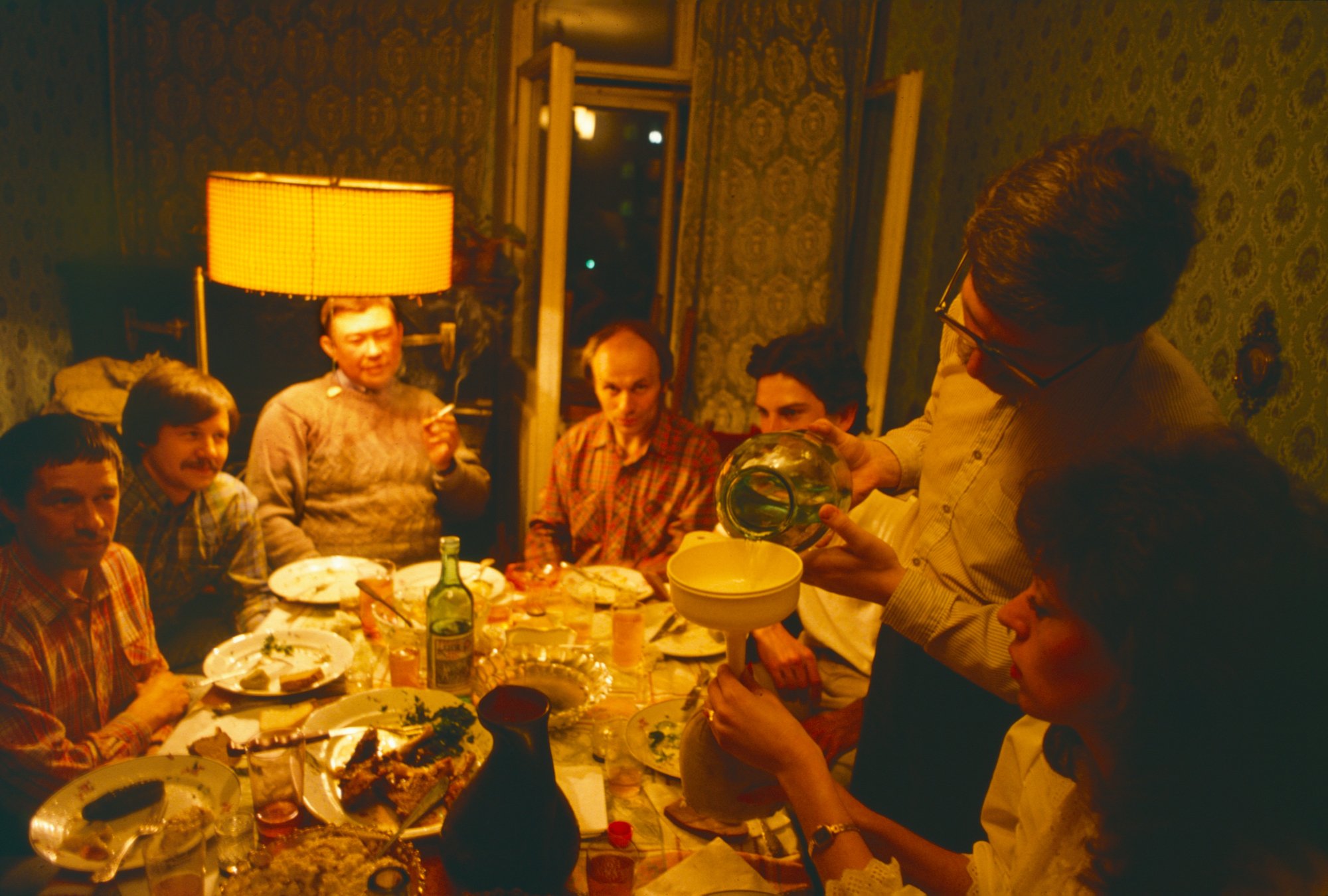
The party is about to get going after a jar of unmarked black market vodka appears at the door.
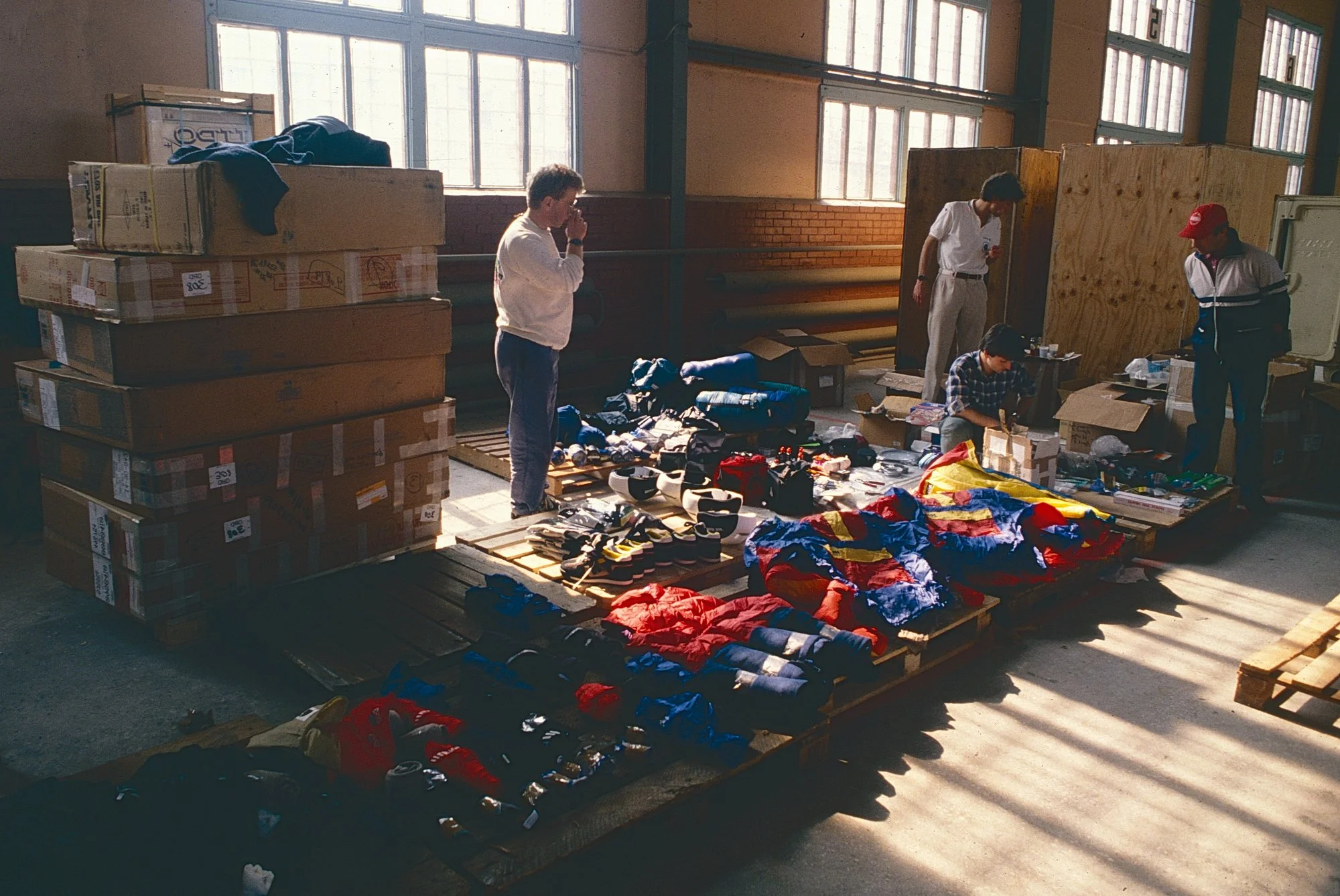
Sorting out the sponsors' gear in a Leningrad warehouse the next day.
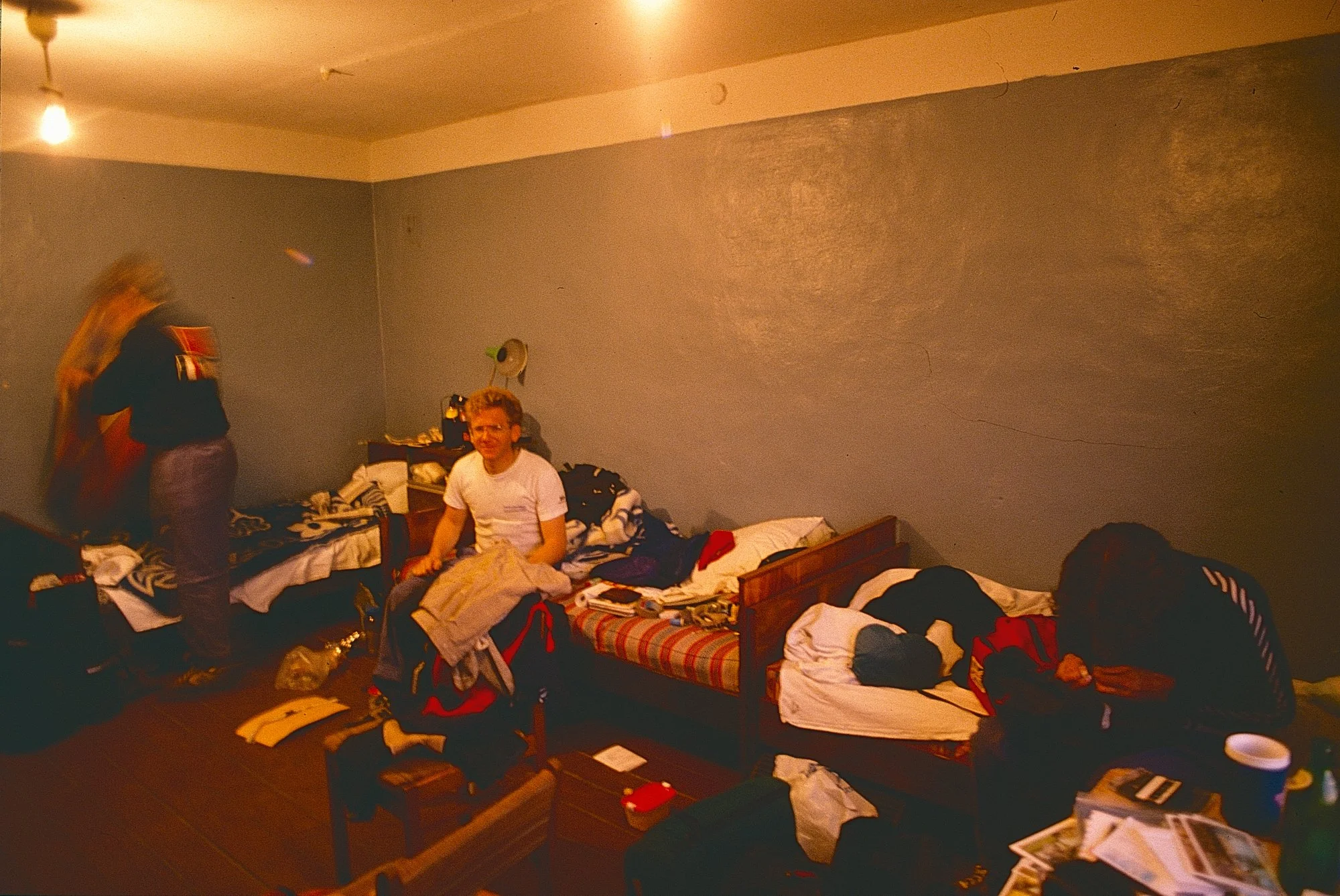
Getting the bikes and gear ready in our Leningrad hotel.
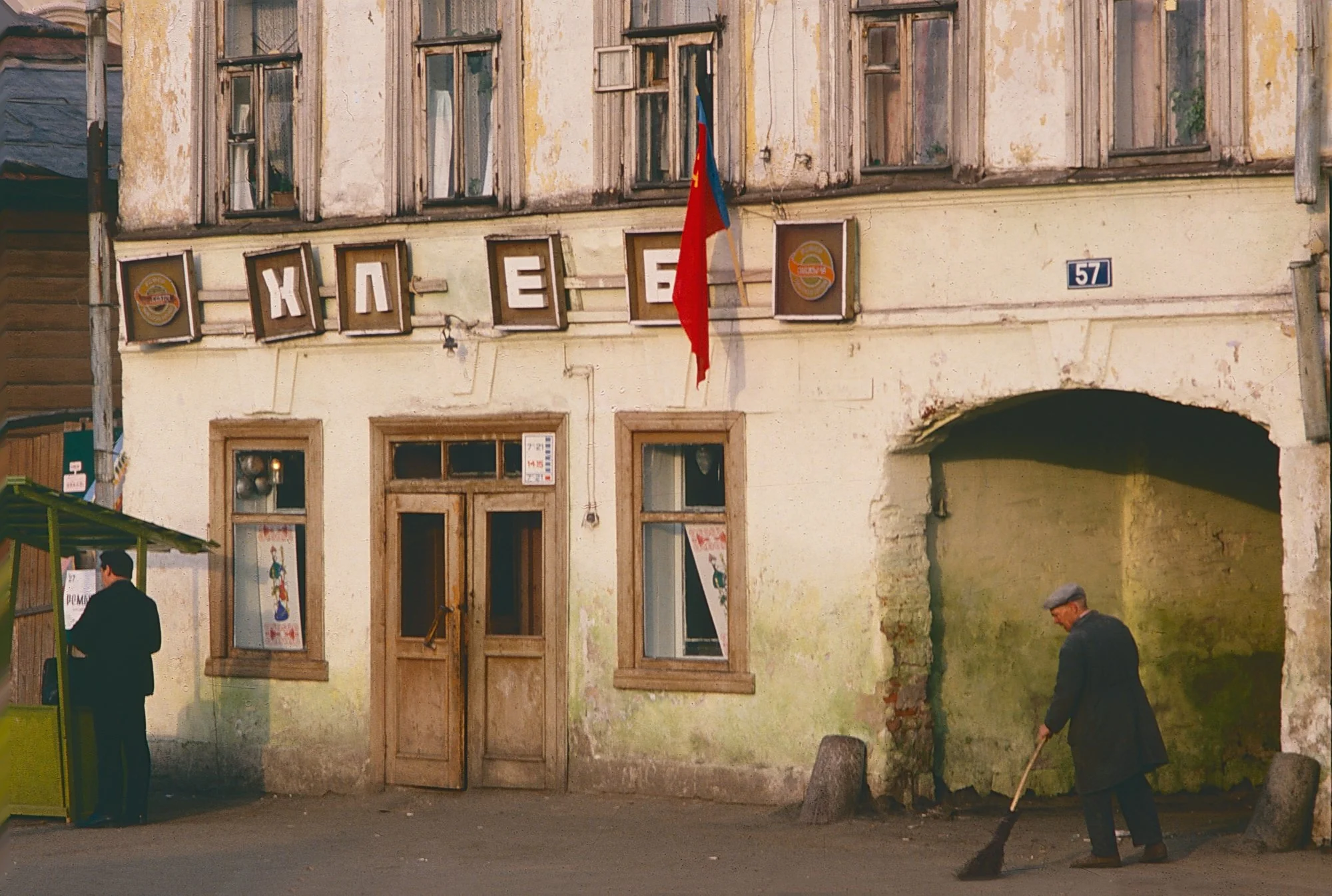
Street sweeper and bread shop, Leningrad.
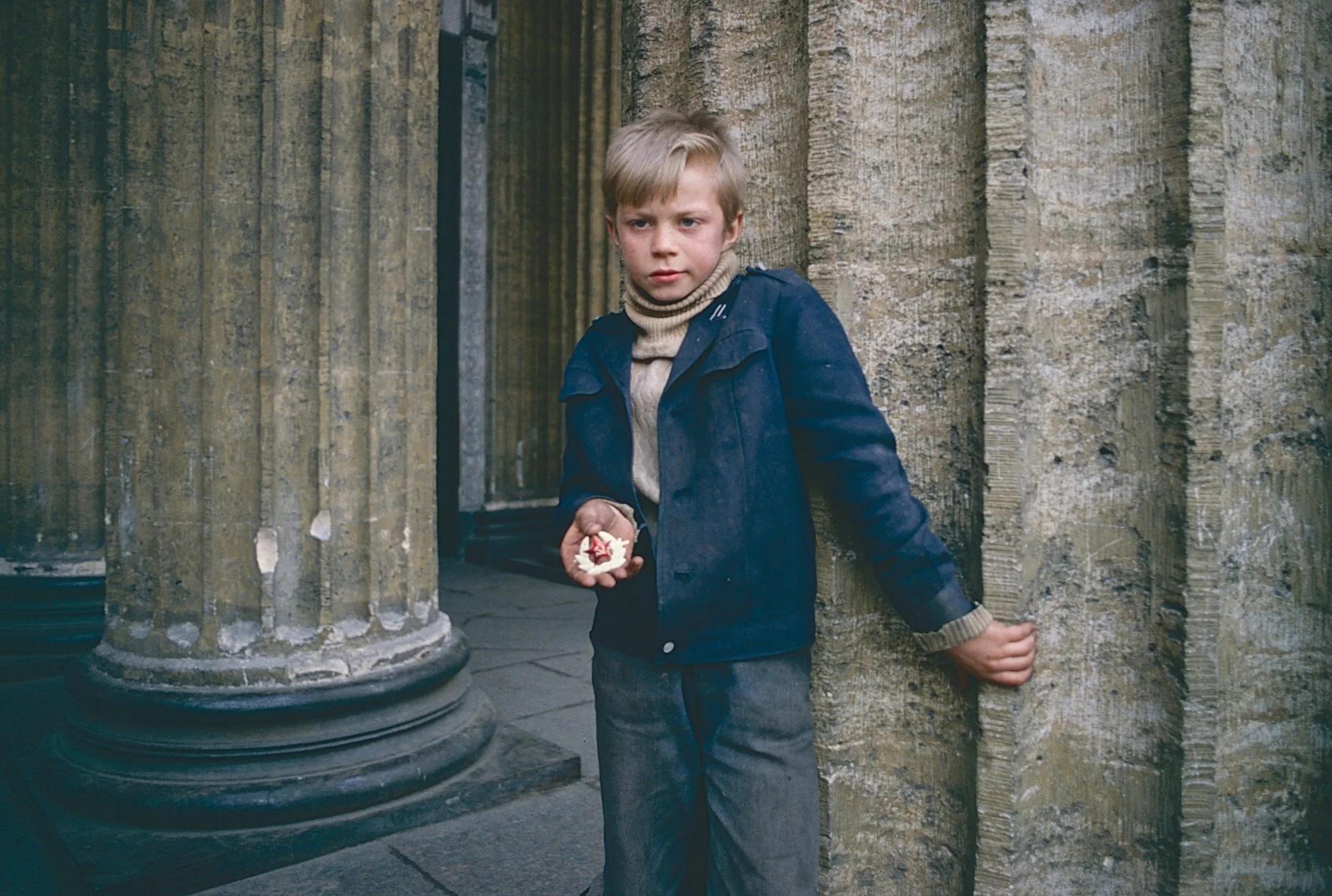
Kid selling Red Army insigna, Leningrad.
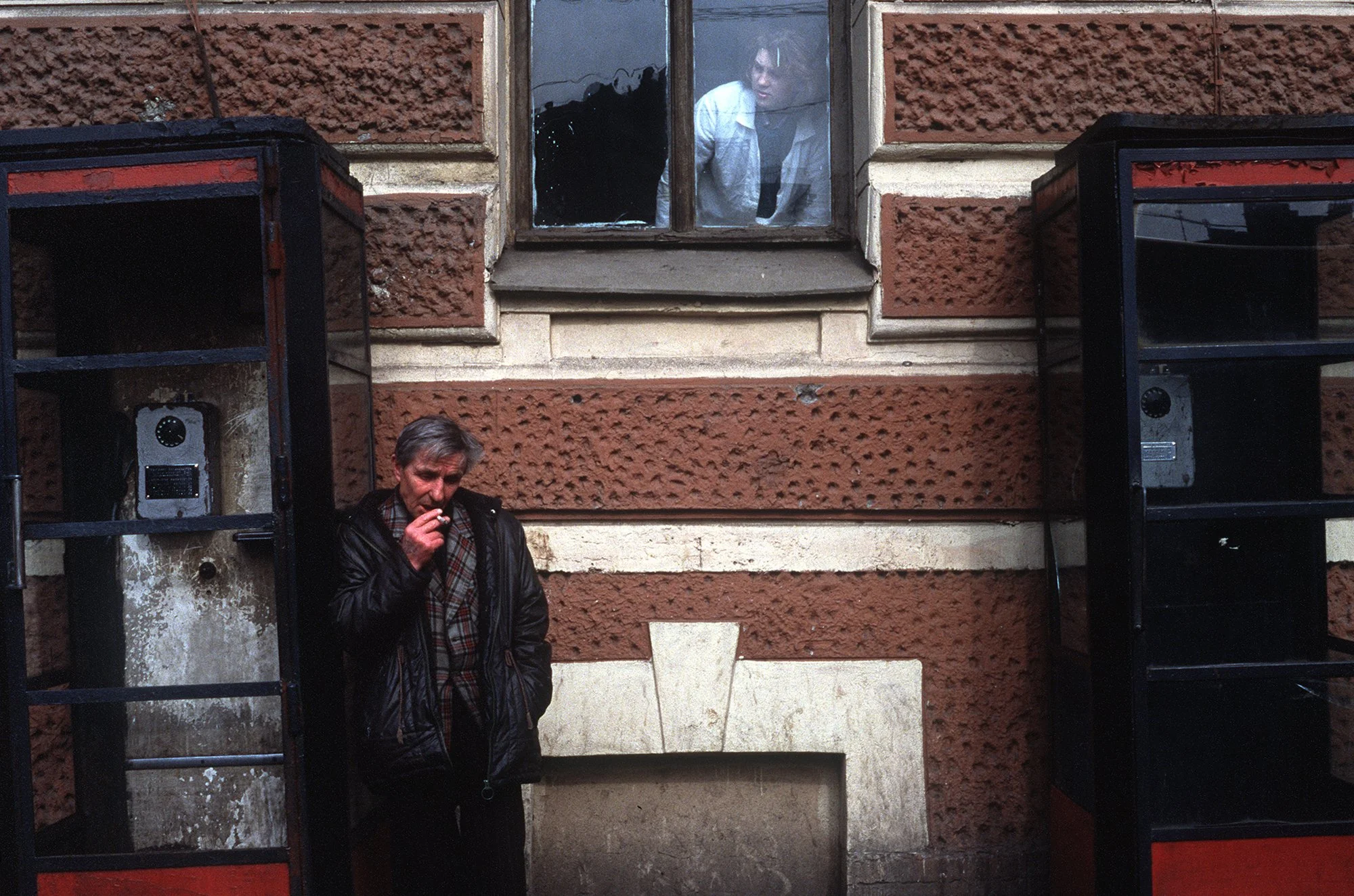
Street scene in Leningrad.
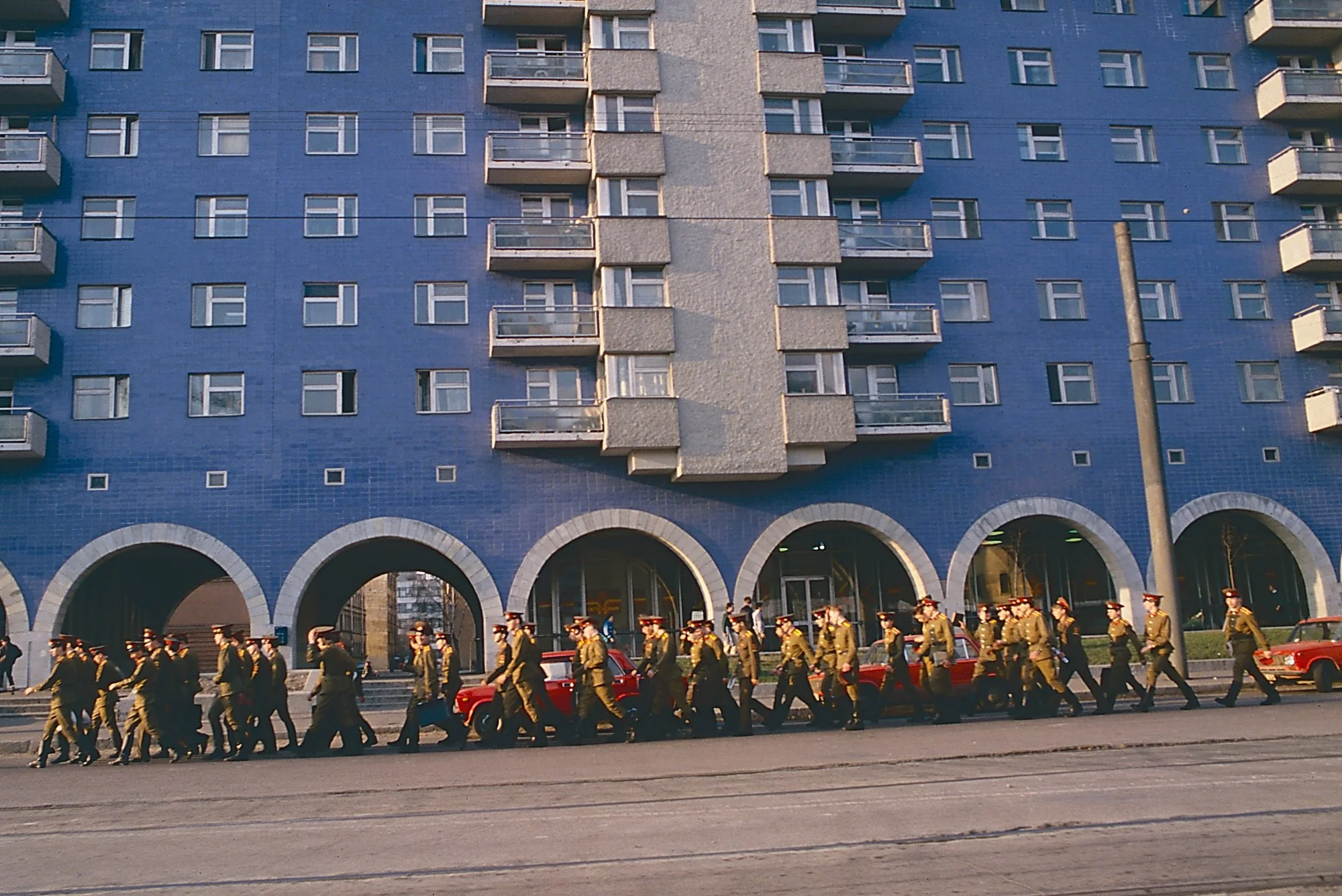
The Red Army goes for a stroll.
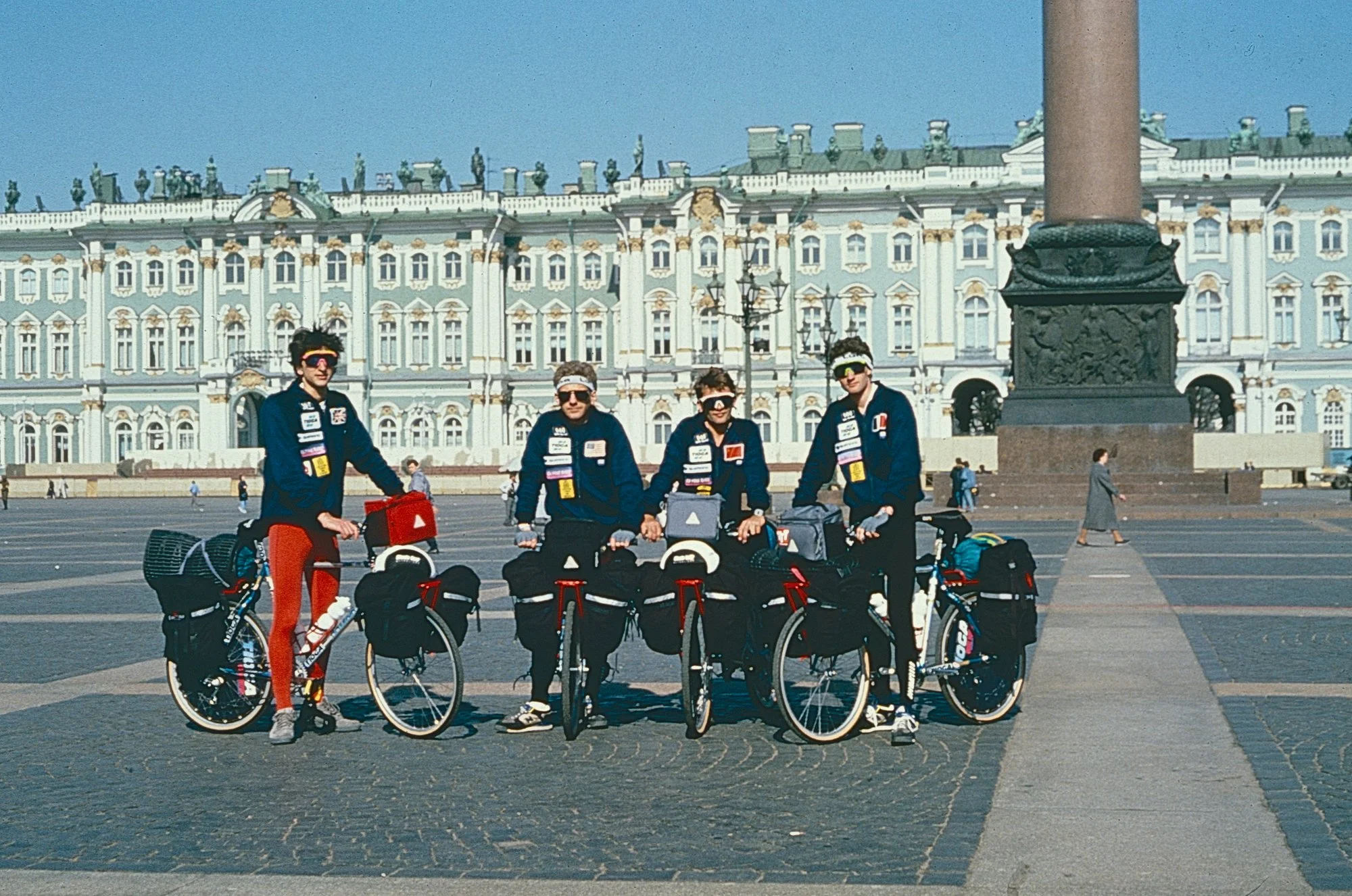
Simon, Howard, Vitale and Gilles in front of the Hermitage Museum, at the start of the journey East.
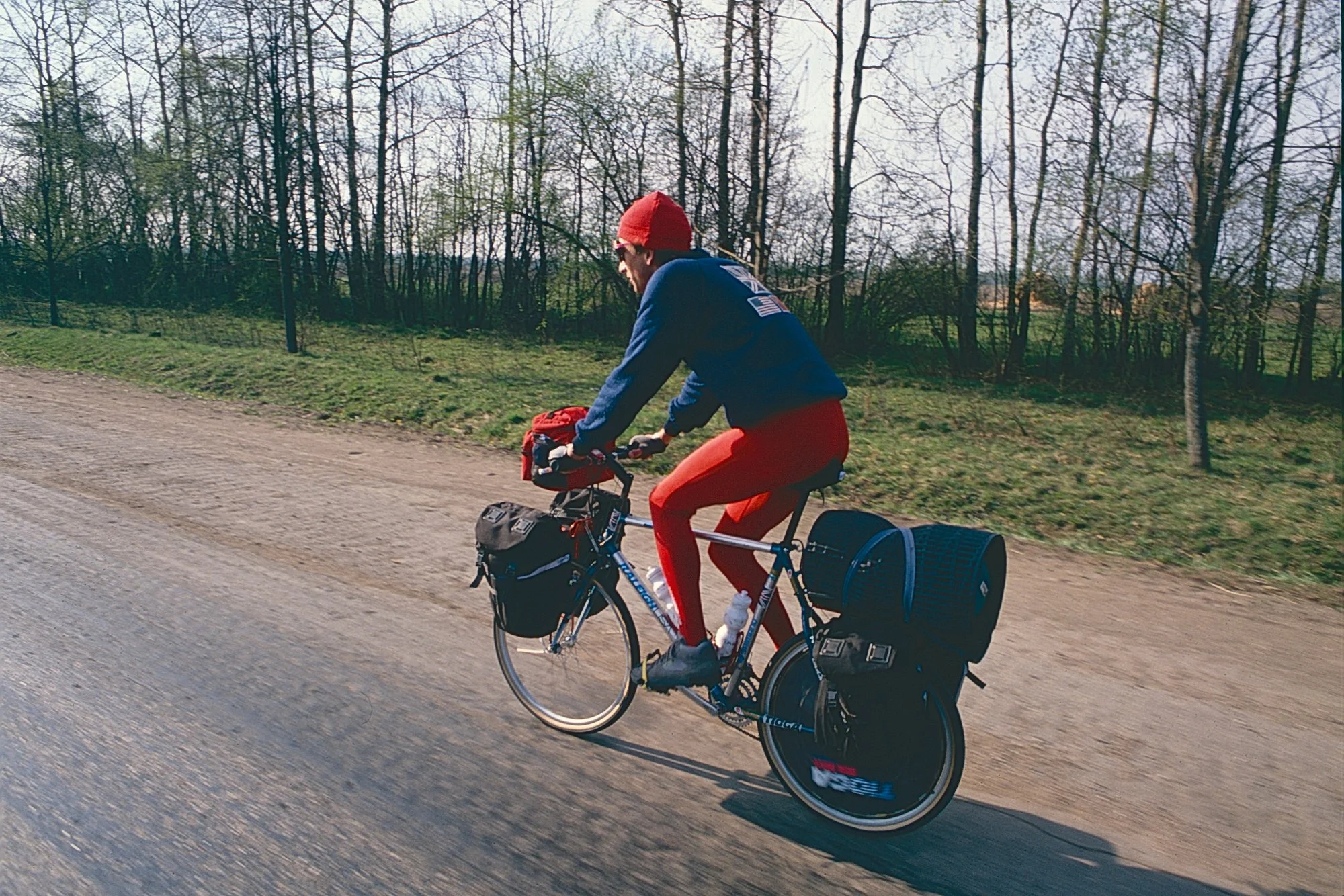
Simon pedaling a still very clean bike as we leave Leningrad behind and enter the Russian countryside.
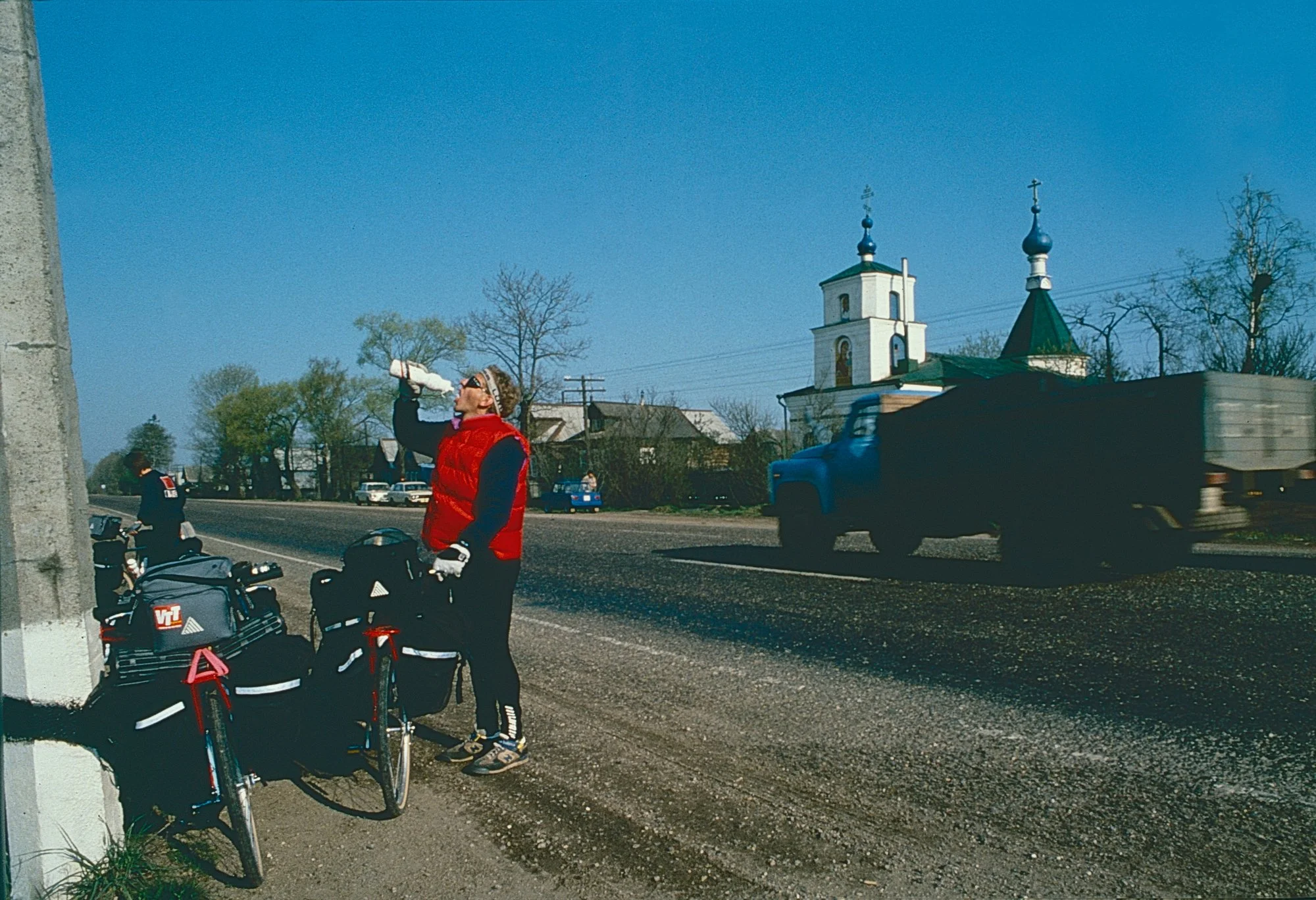
Howard hydrates on the road between Leningrad and Moscow.
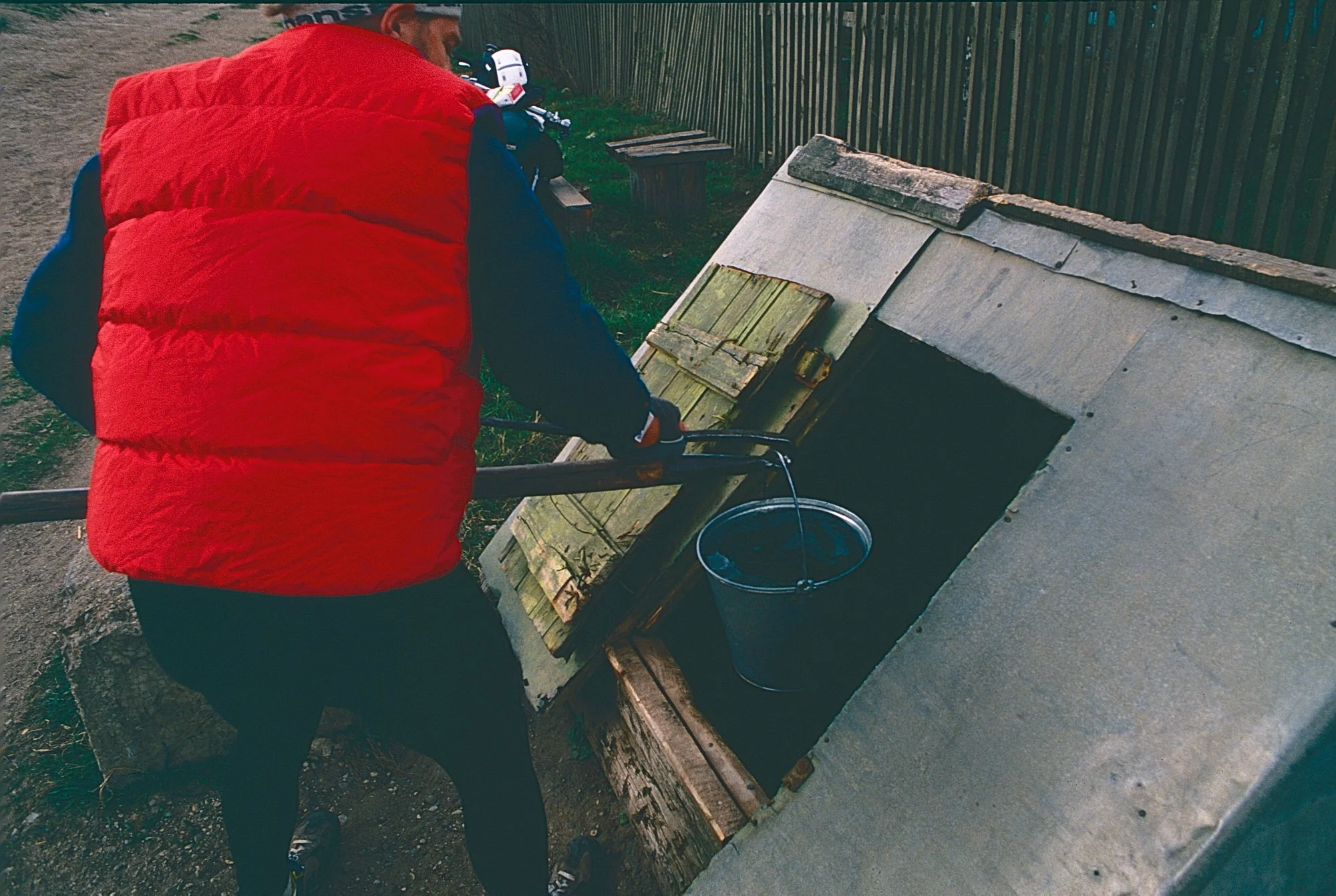
Fetching water from a well. Katadyn ceramic filters allowed us to filter any water into drinking water during the trip.
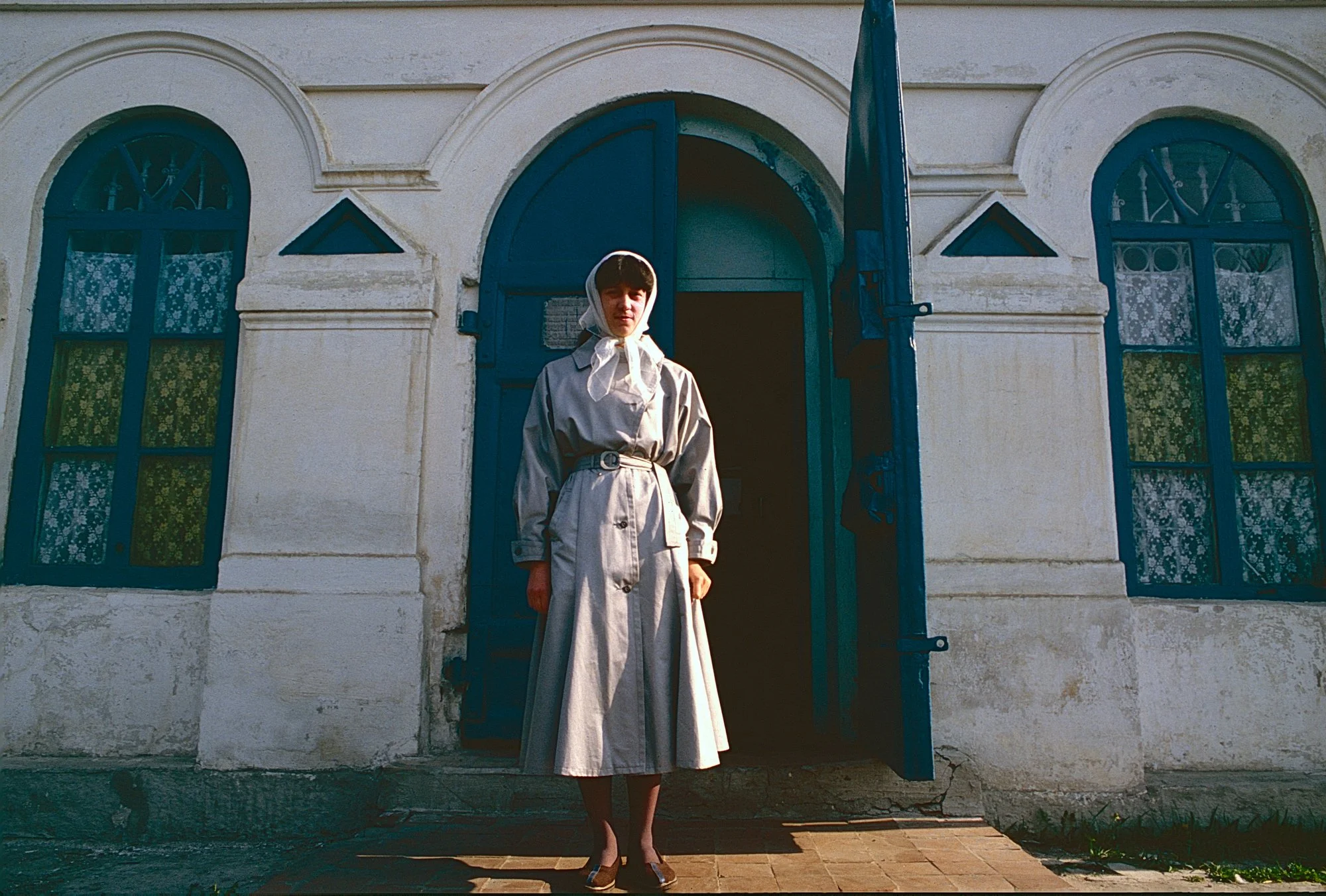
Outside a church.
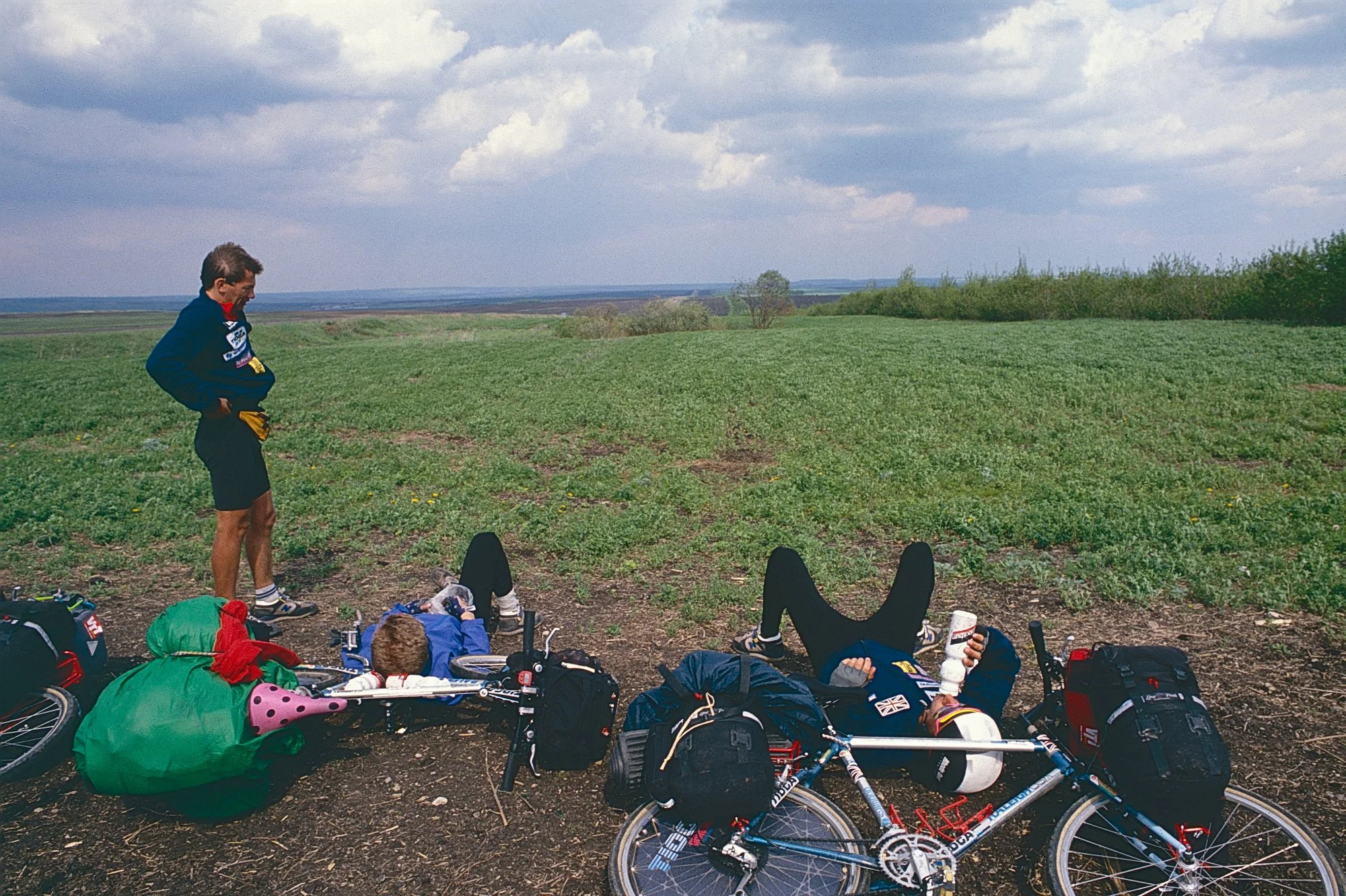
Taking a breather between Leningrad and Moscow. The first leg of the trip, which lasted twelve days, enabled us to test the gear (bikes, camping, etc.) and find ours legs.
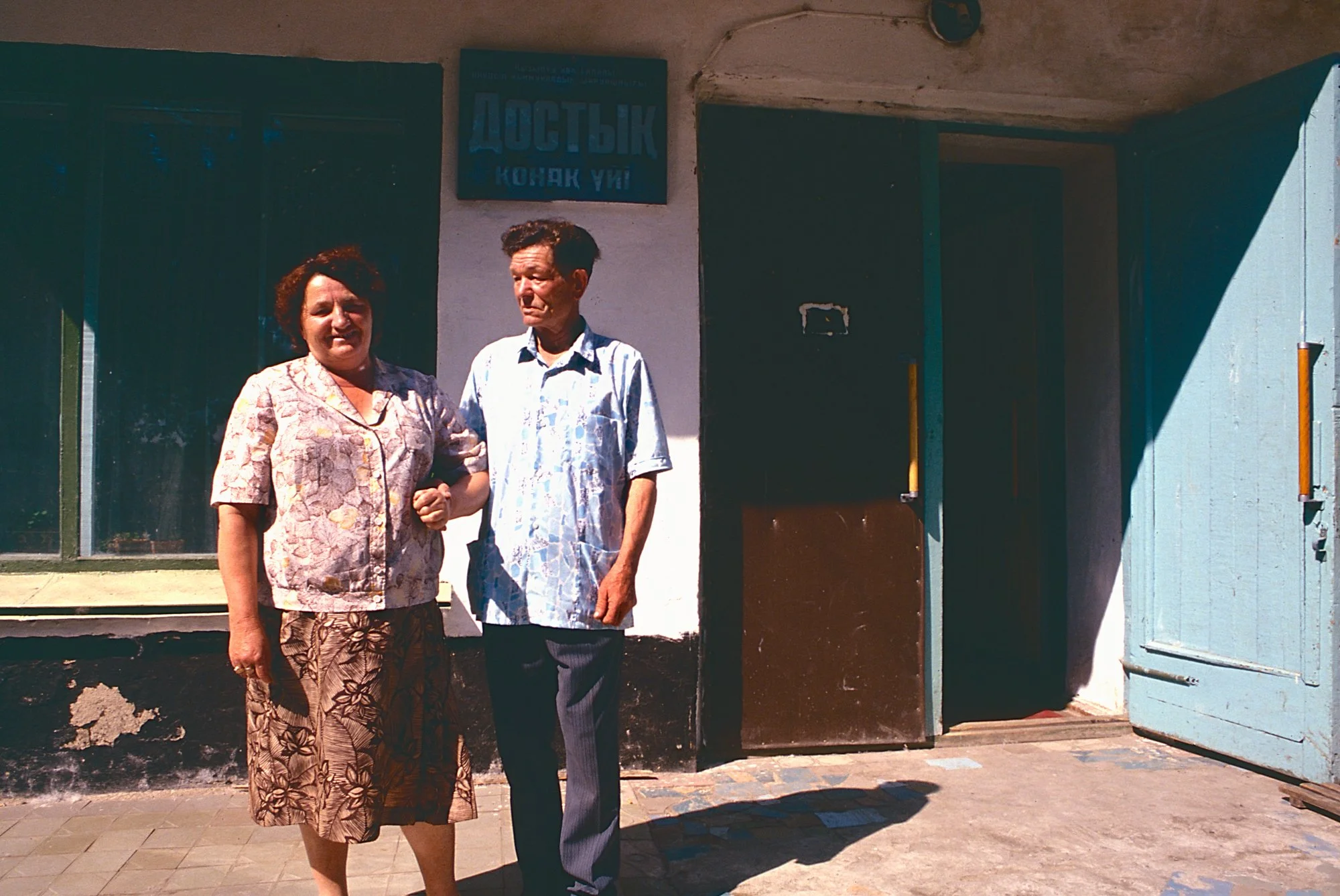
A couple in front of a store.
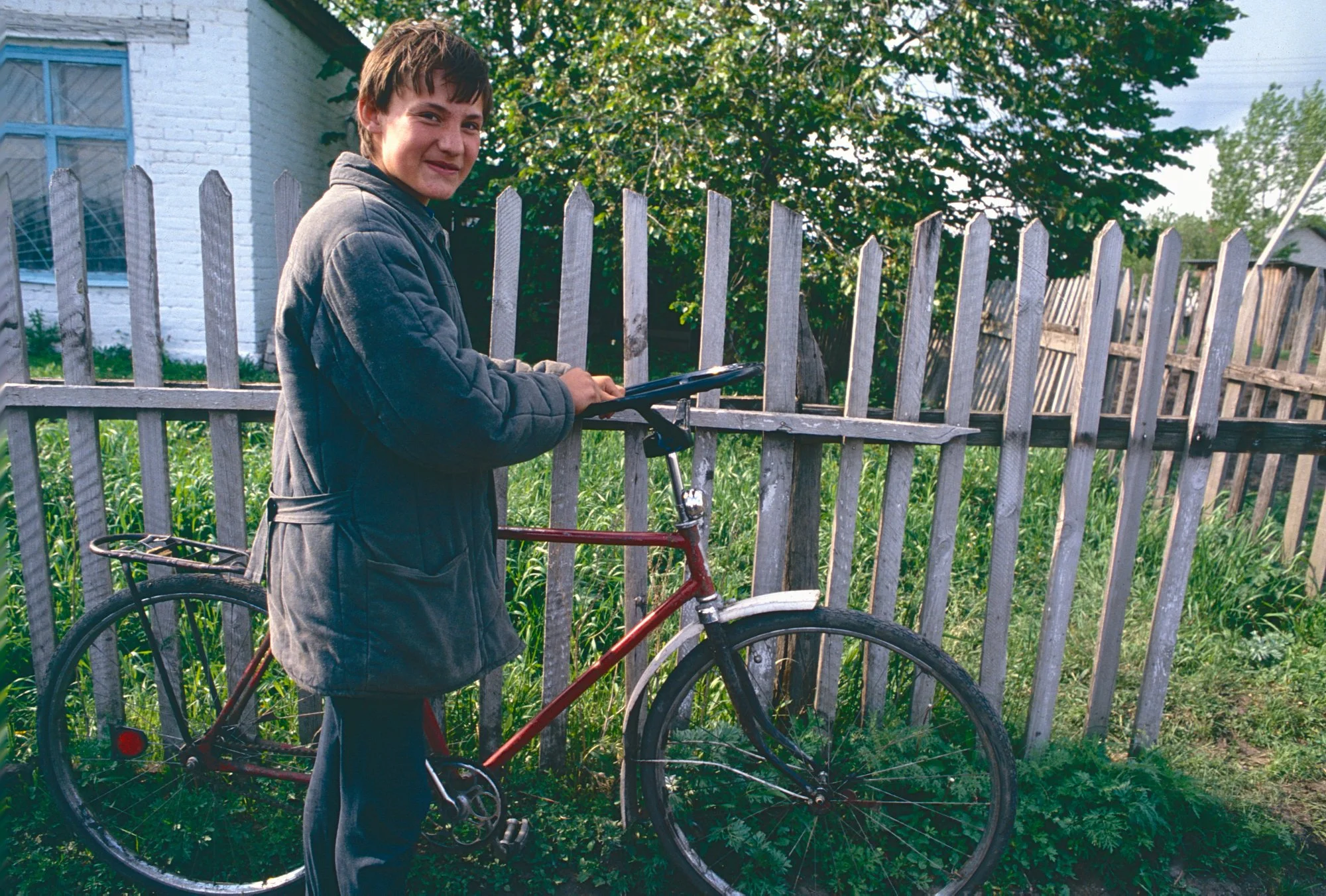
Russian handle bars.
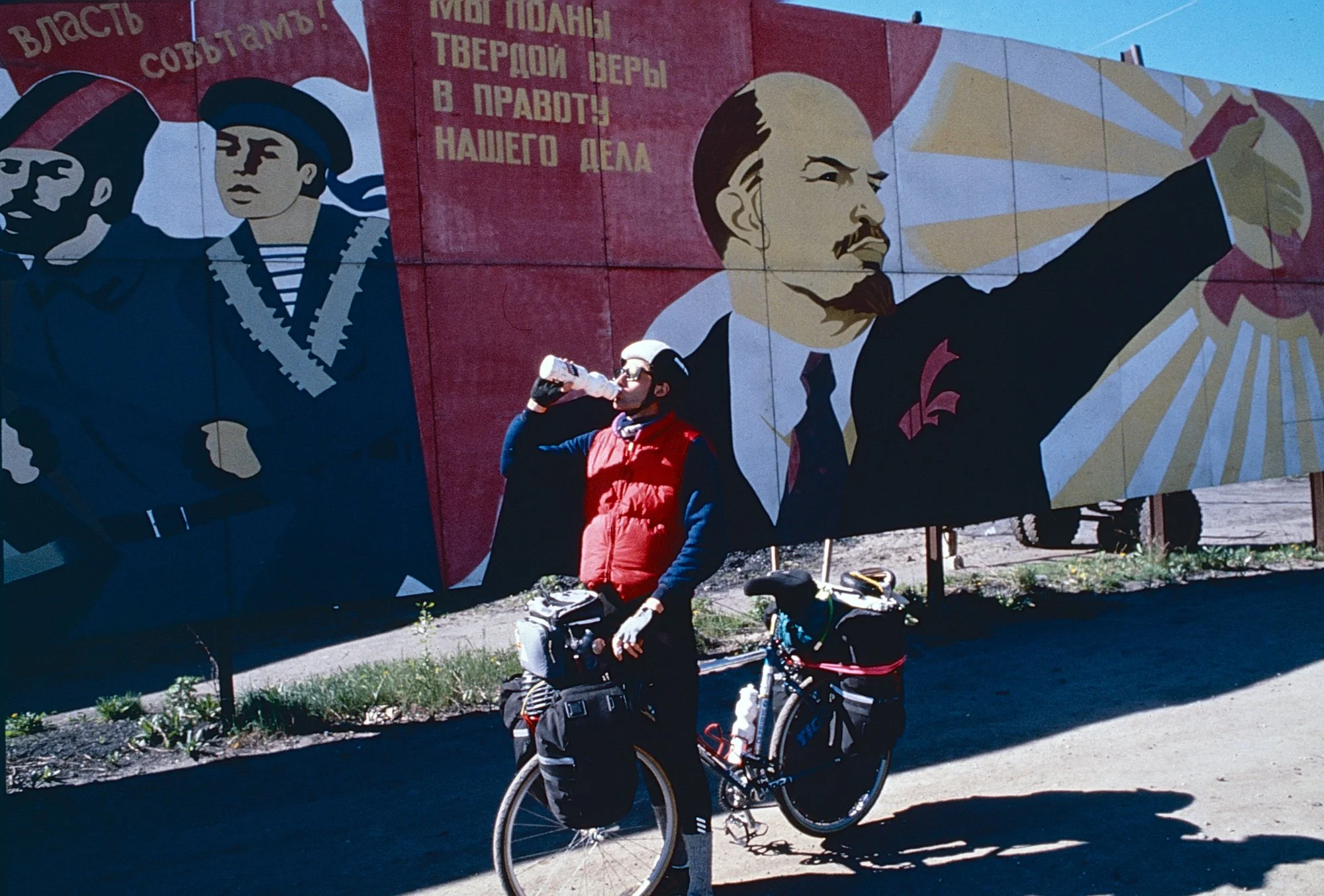
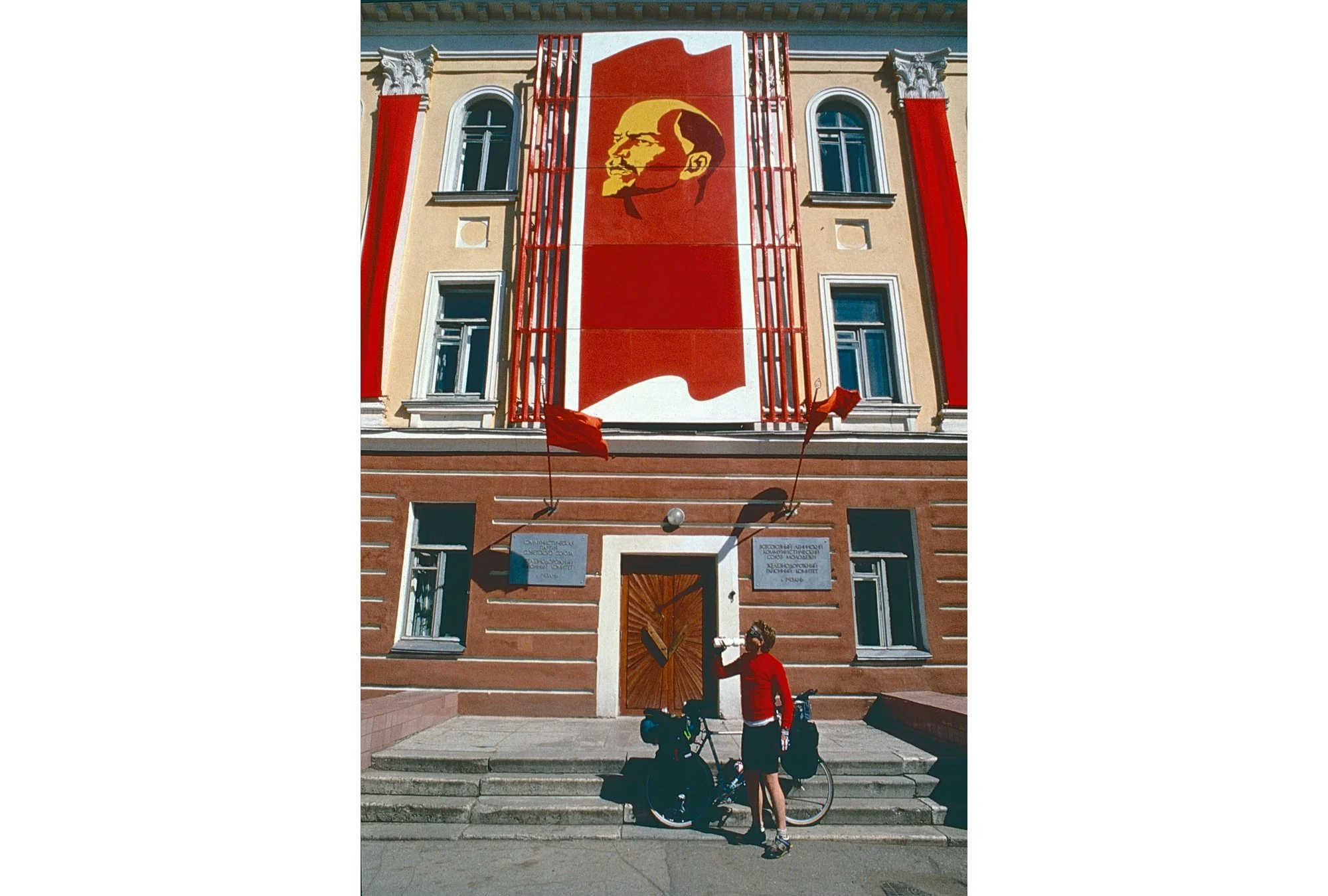
Hydrating with Lenin.
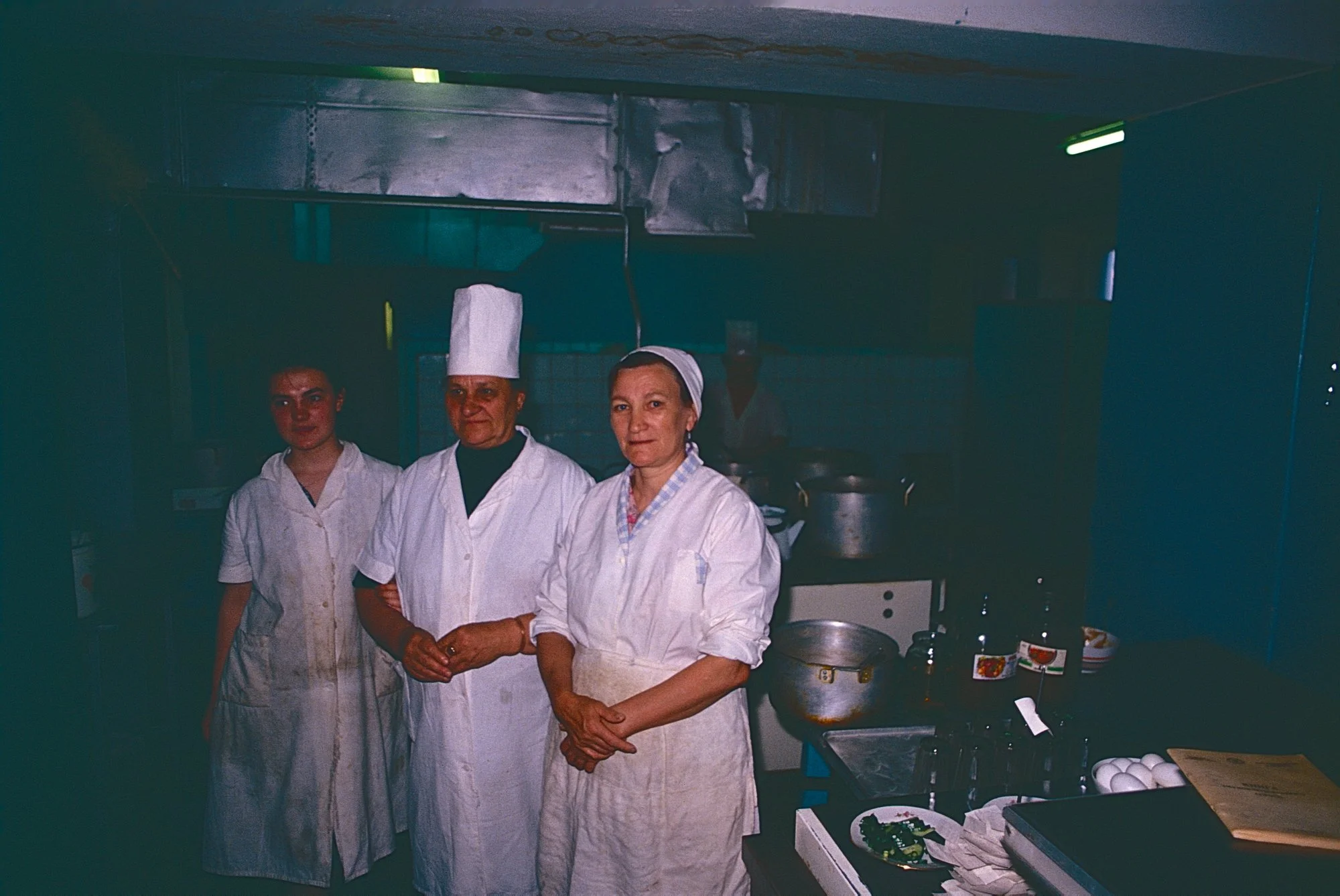
Stolovaya (workers' cafeterias) served without failing the worst meals in the Soviet Union -not a high bar. Generally insipid, congealed pasta with meat fat. We wondered where the meat once attached to the fat was until we realized that it was sold in the back of the kitchen, which improved our diet somewhat.
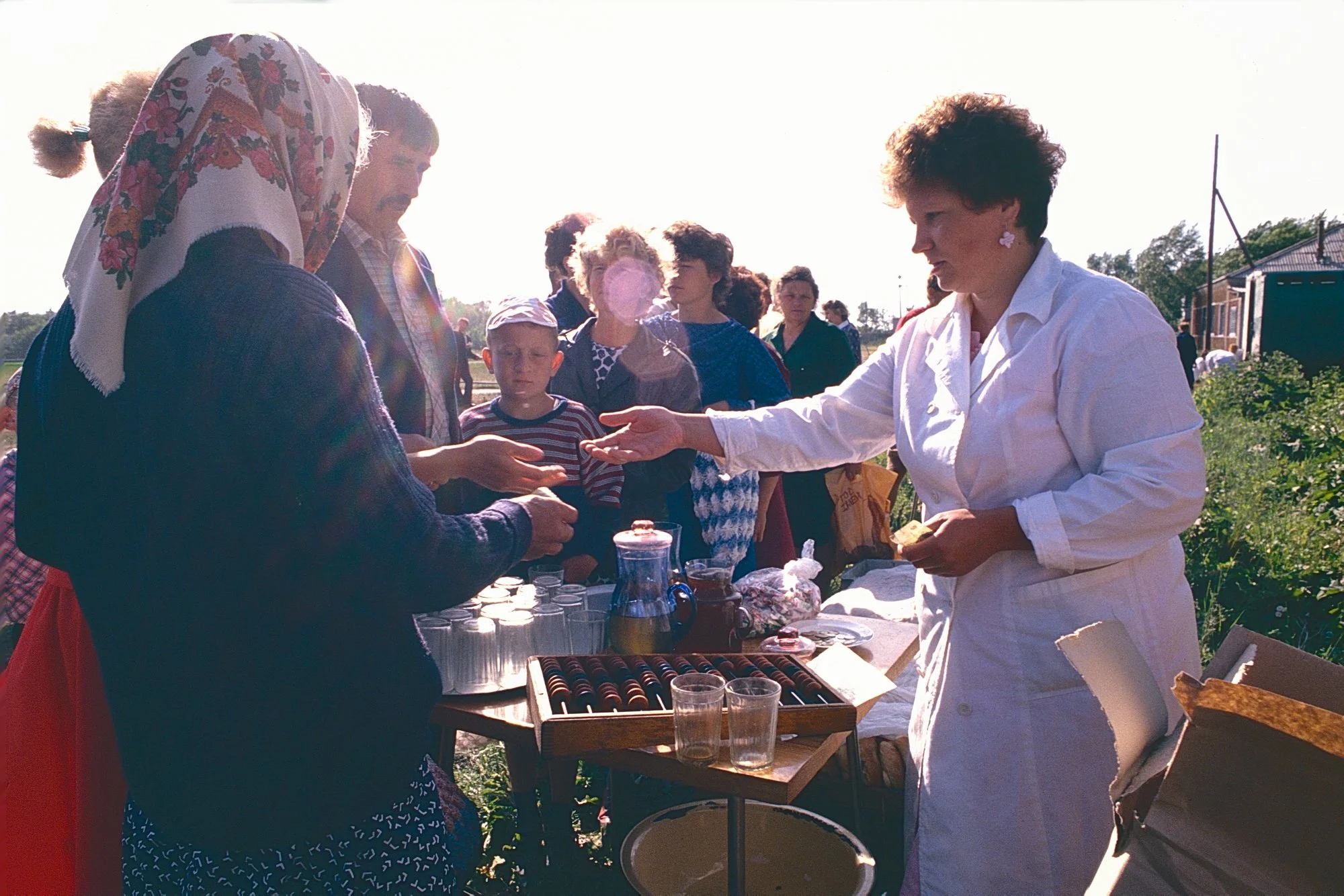
Kvas line in a Russian village. A fermented drink, Kvas was the Soviet Coca-cola and drew crowds whenever it appeared.
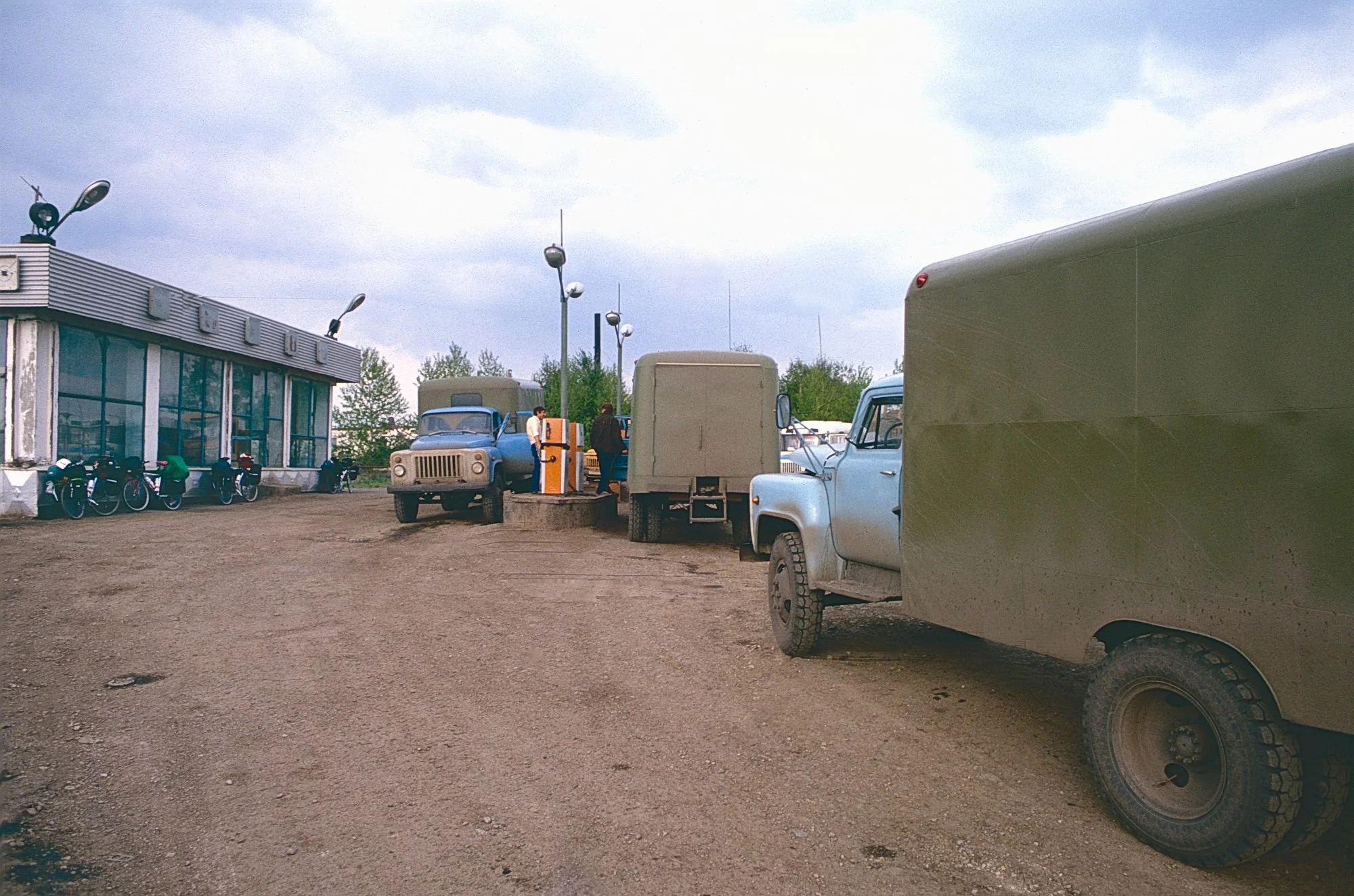
Roadside gas station.
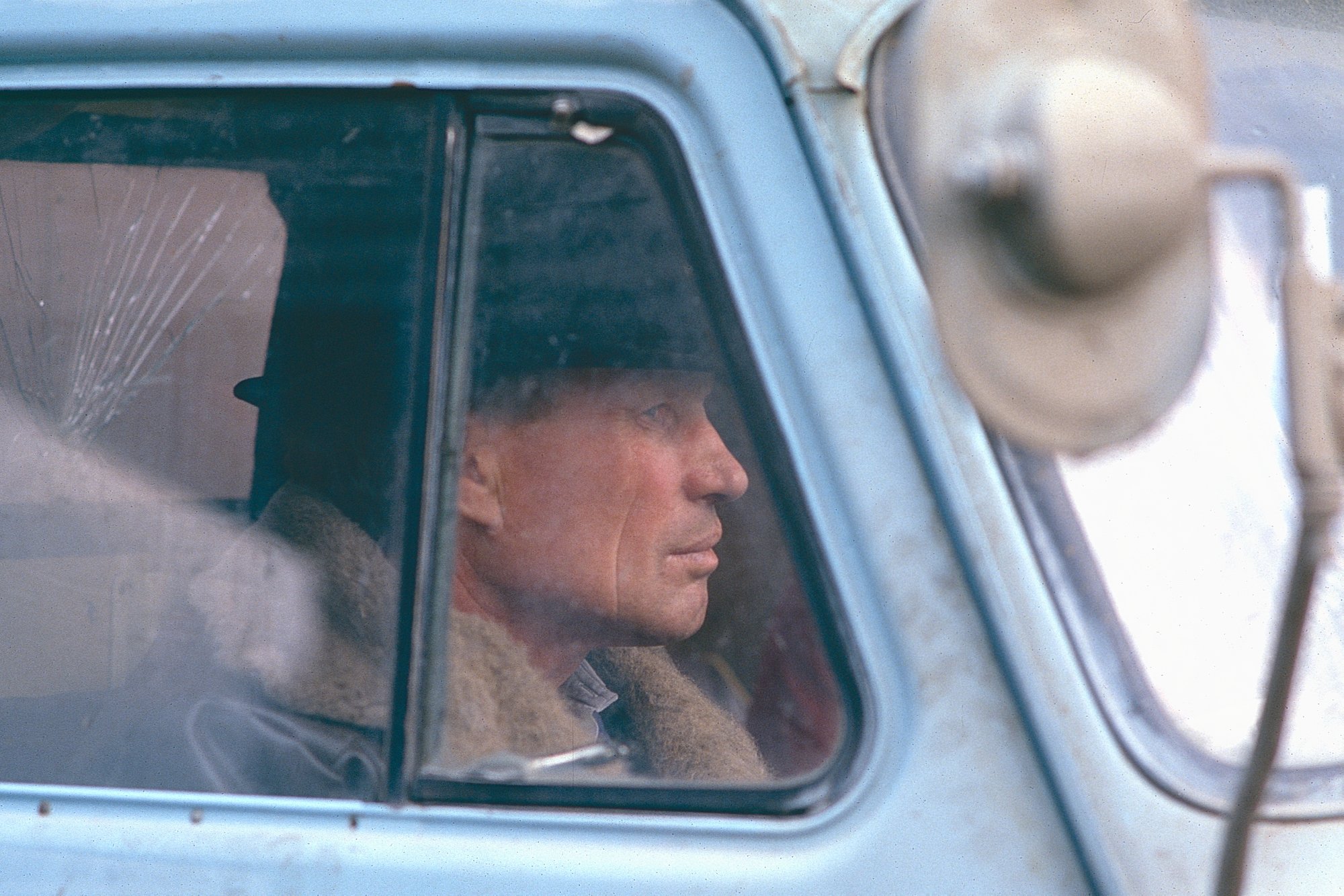
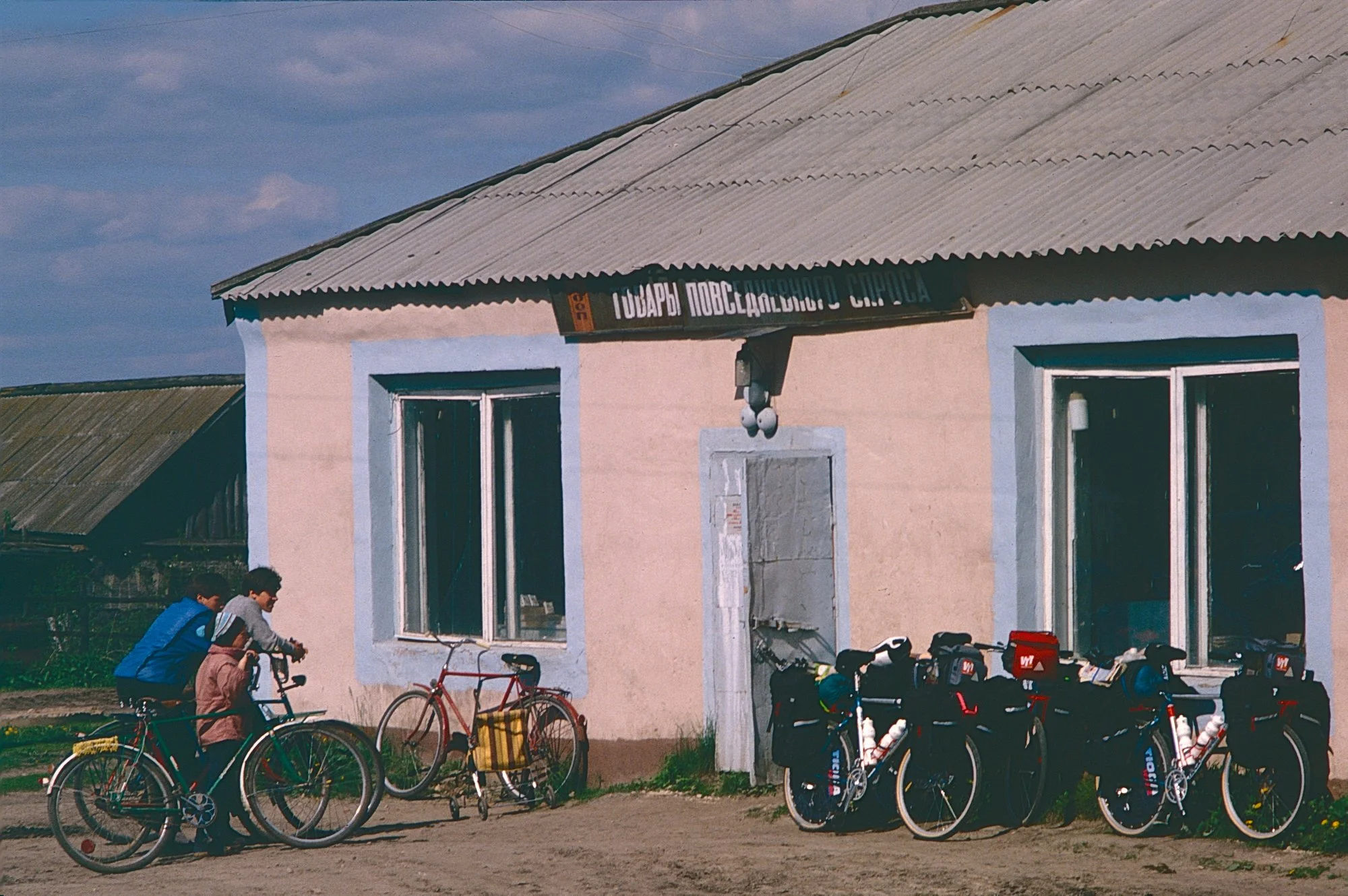
Curious locals check out our rides.
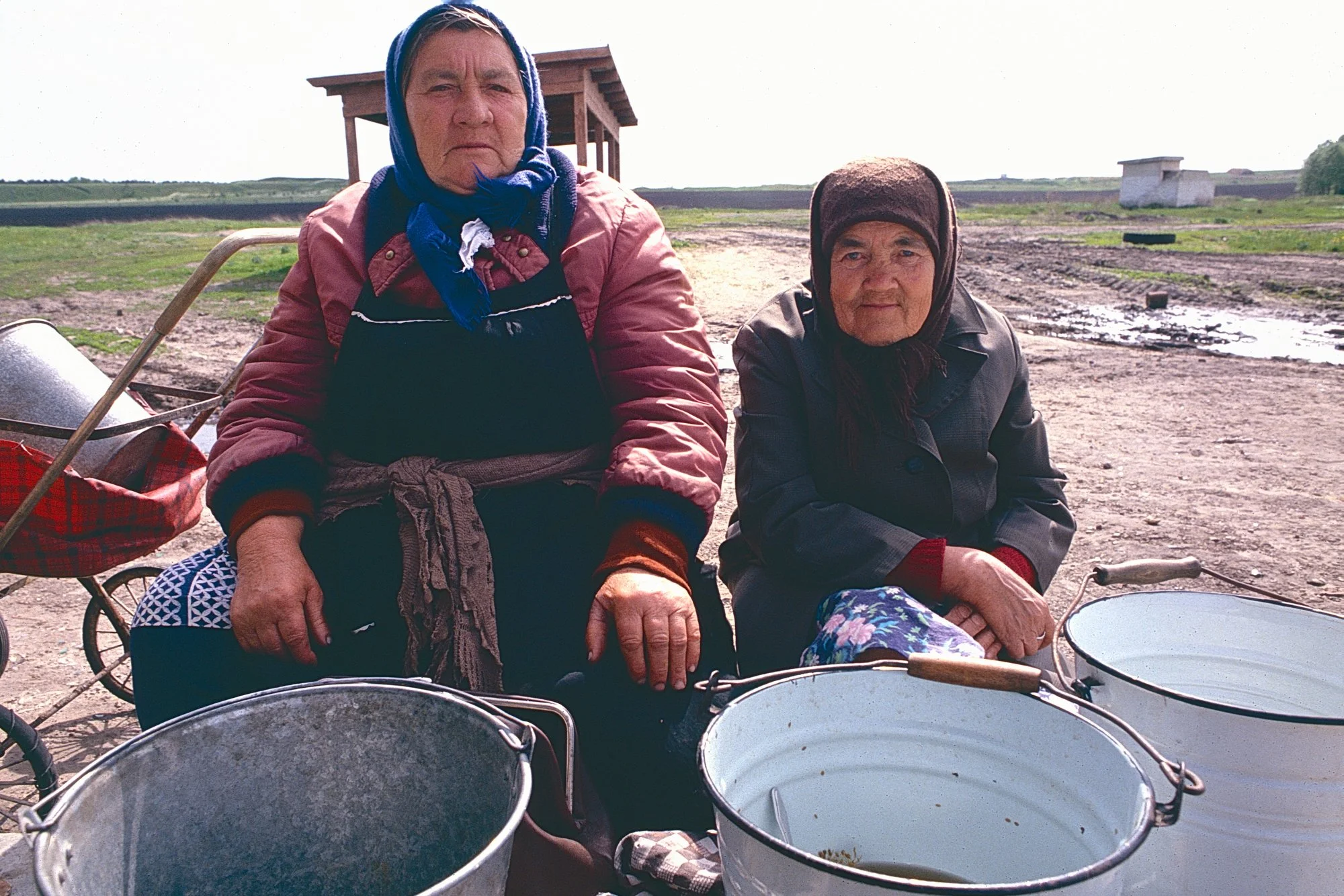
A new sight in the Soviet Union: Babushkas openly selling potatoes on the side of the road. Private businesses were illegal until Gorbachev's Perestroika.
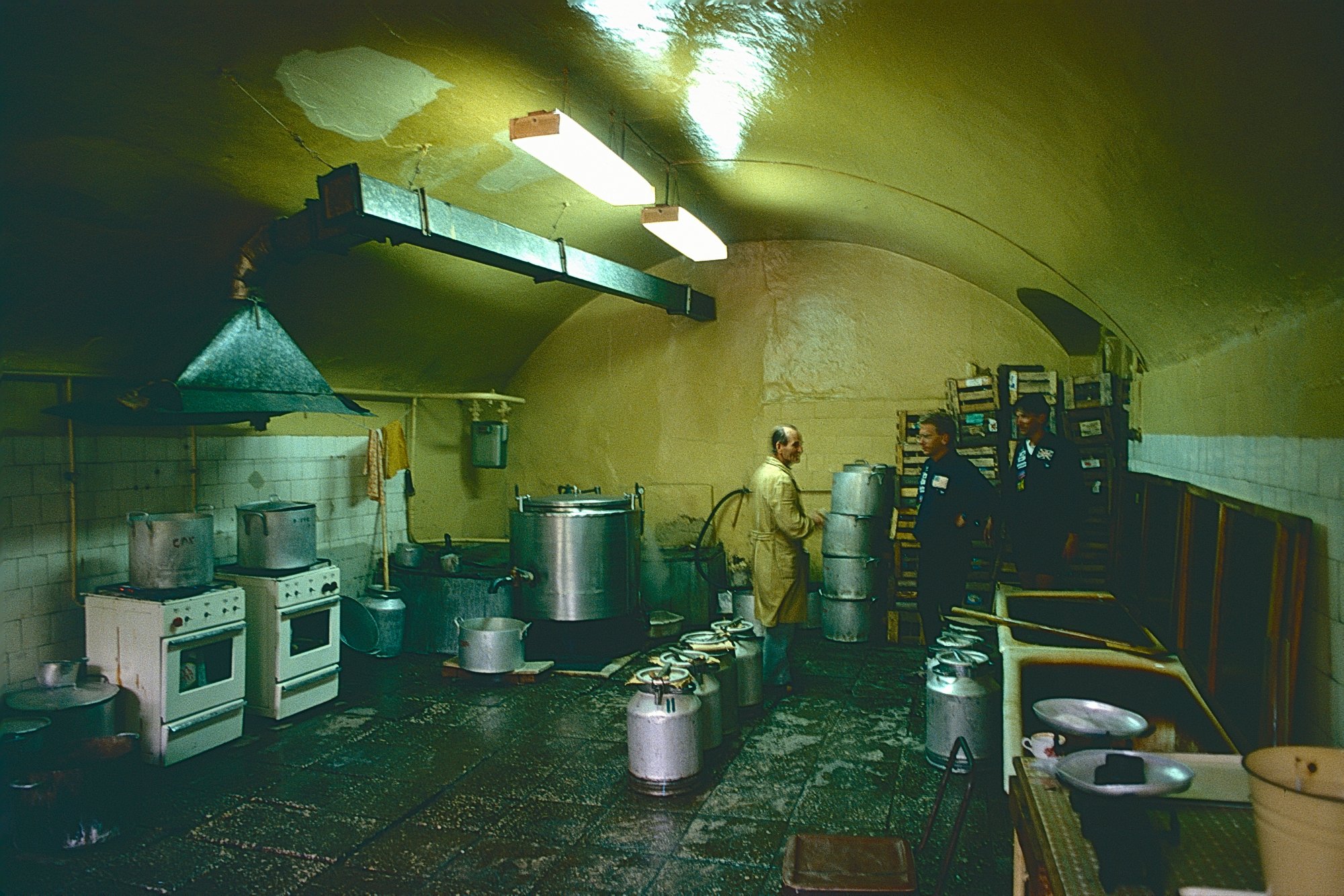
Dropping in at a local dairy processing farm.
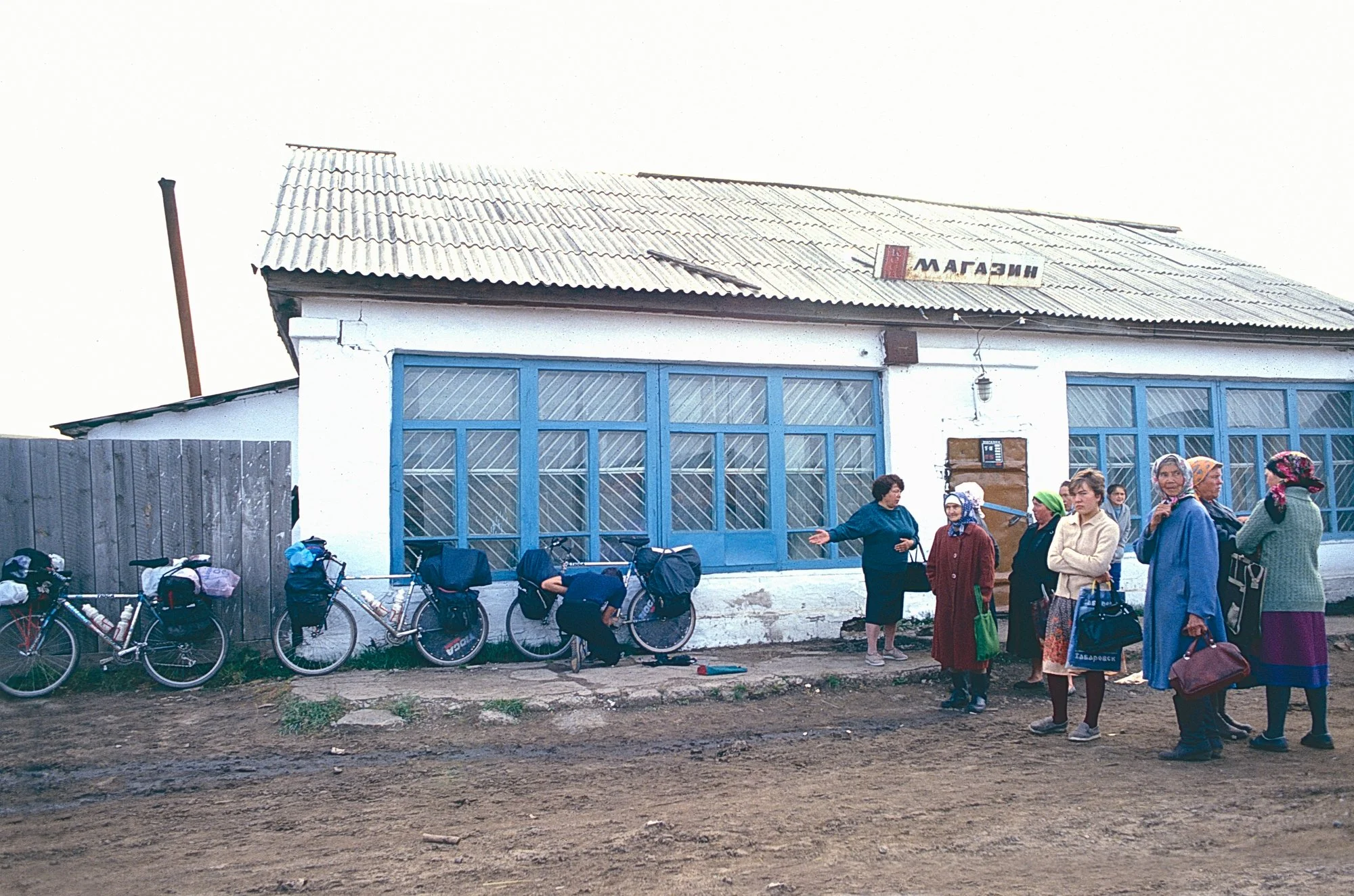
Women discuss the presence of foreigners in bike tights, a downside of Perestroika, as they wait for the general store to open.
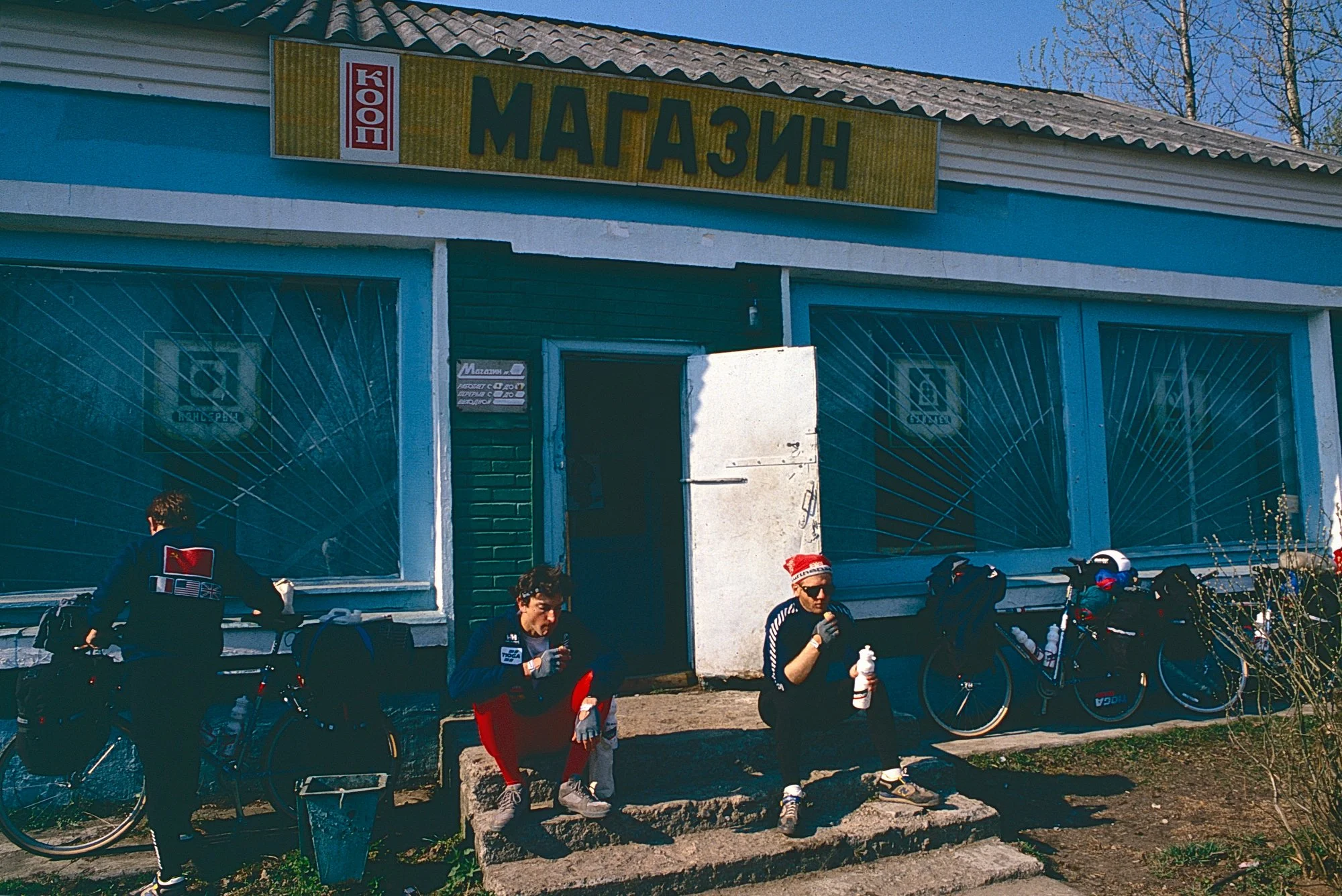
Not enjoying a Leningrad Brick (probably not the official name), a dry and tasteless cookie first found in Leningrad and, unfortunately, all the way to Vladivodstok. It appears to have been the only cookie made in the Soviet Union at the time.
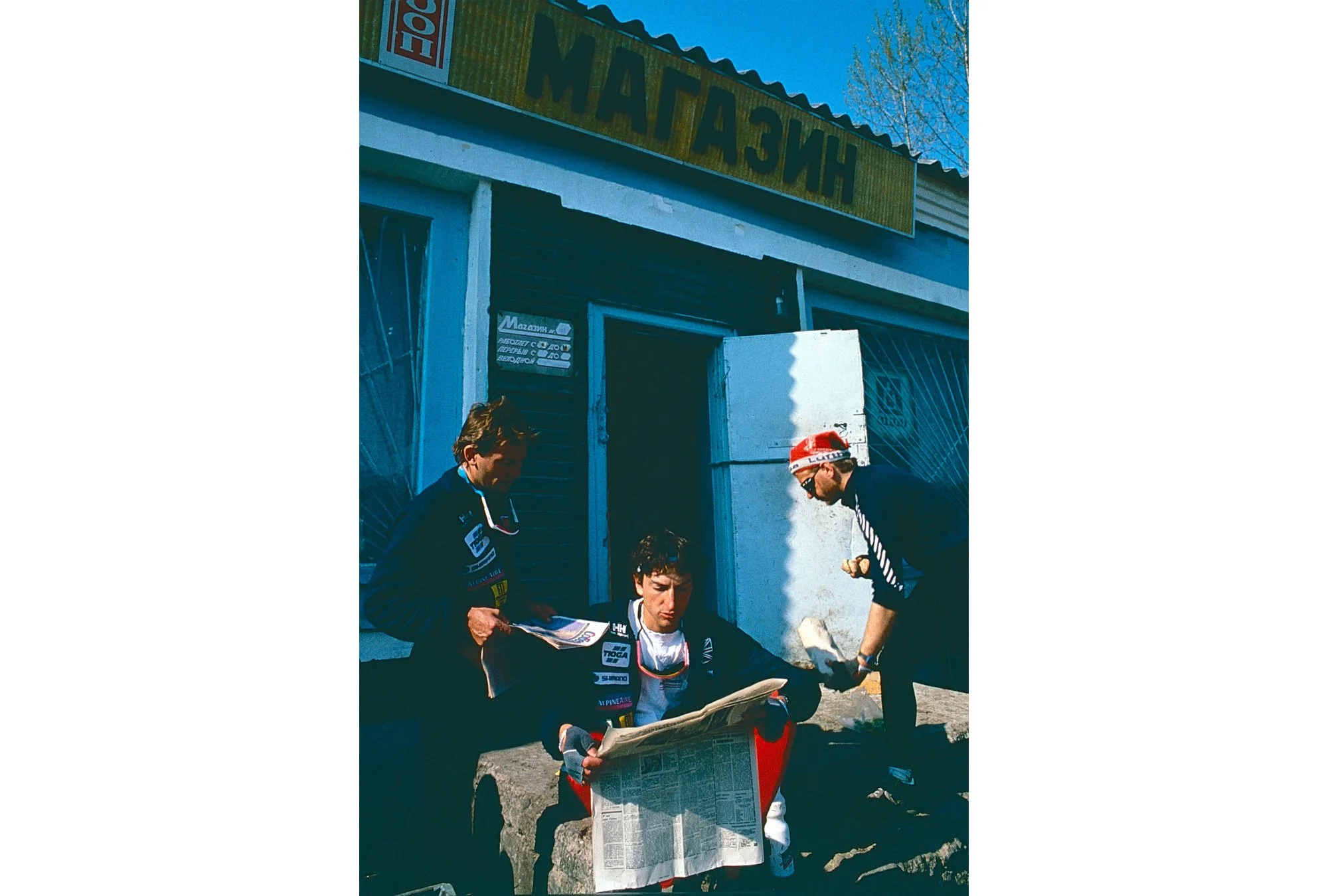
Trying to decipher the Pravda, which is easier than swallowing a Leningrad Brick.
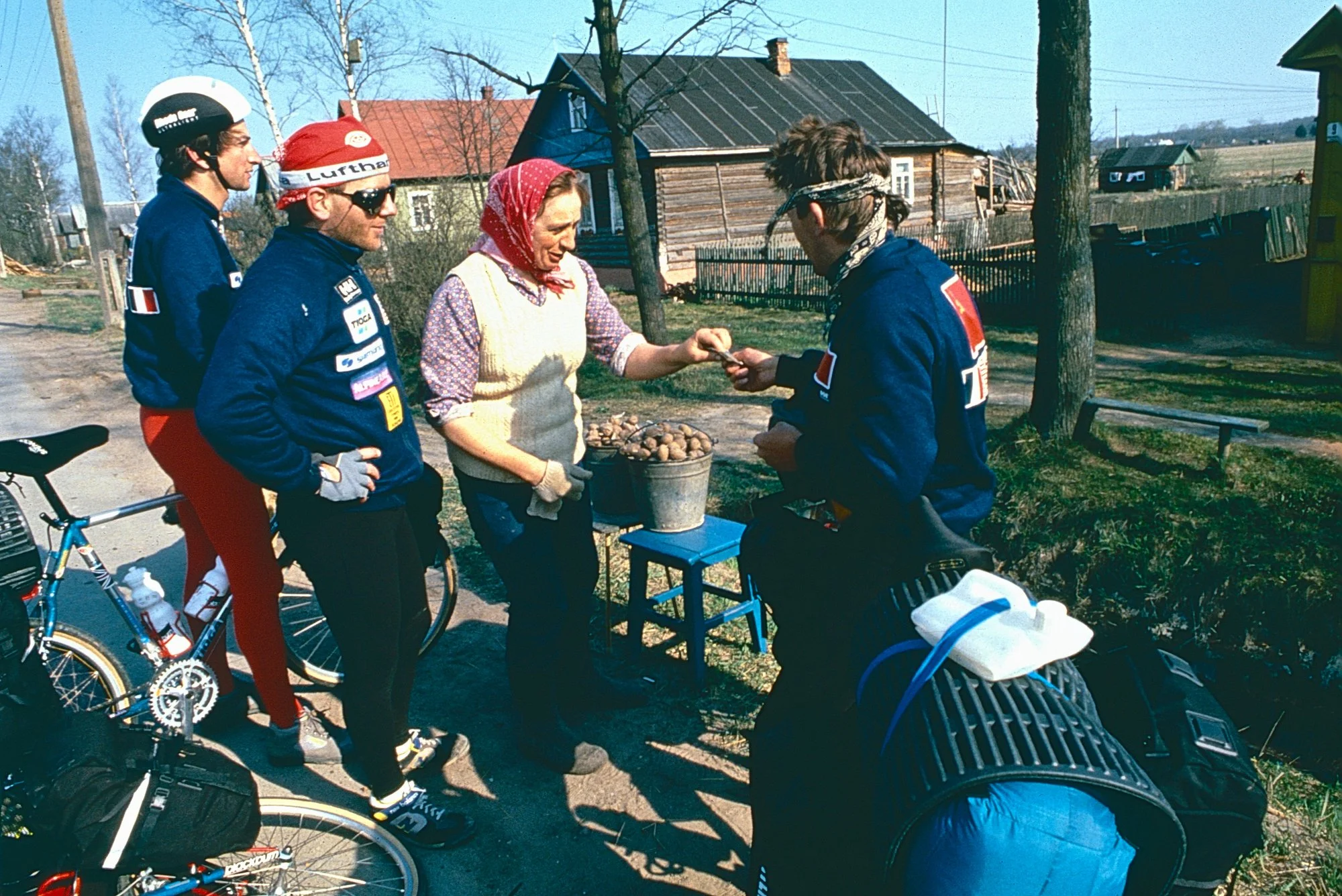
Buying potatoes for our evening stew, consisting of whatever we could find during the day, and only when needed, a packet of precious Alpine Aire, as we tried to save our dry food for the remote Siberia section coming up in the Fall.
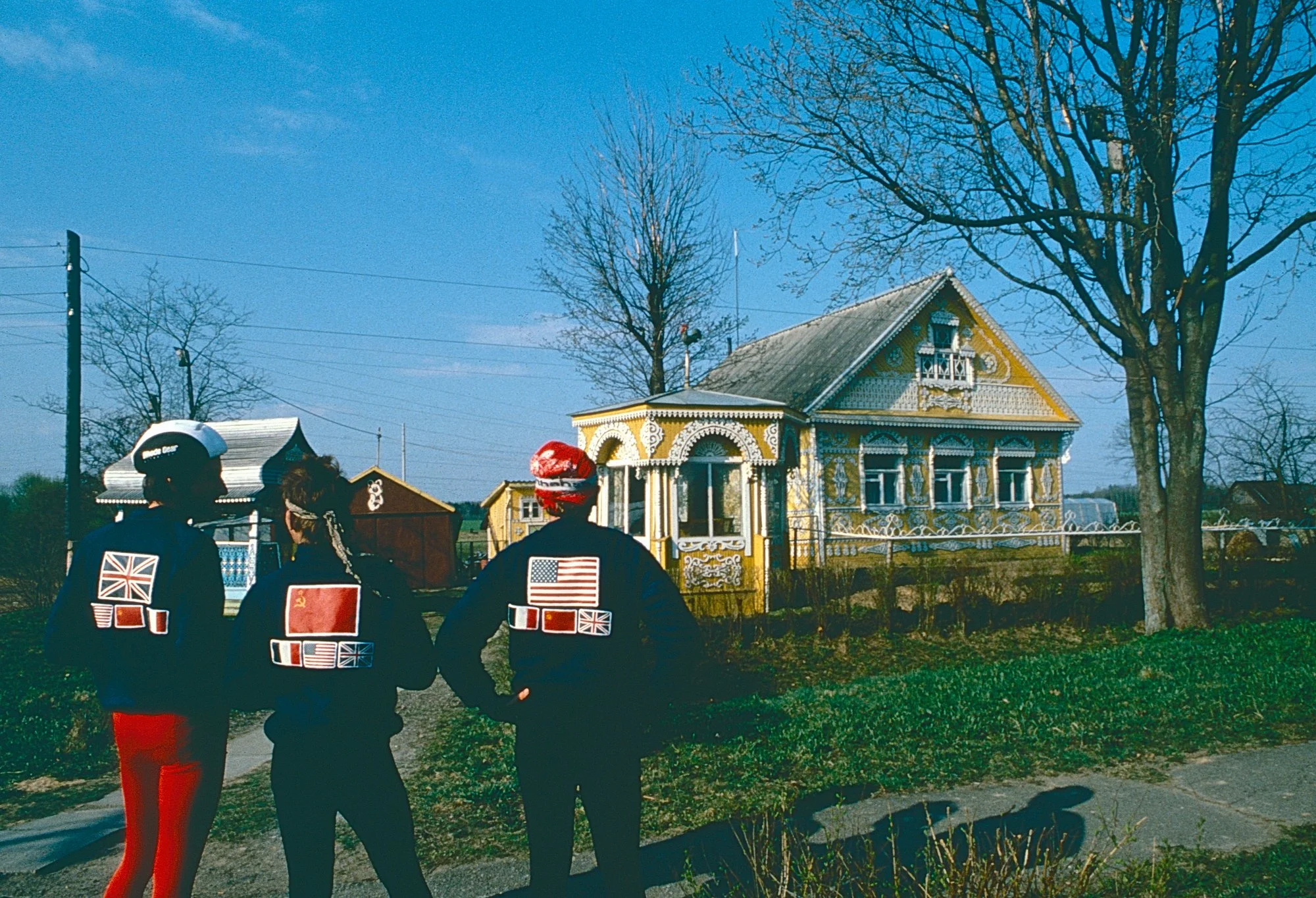
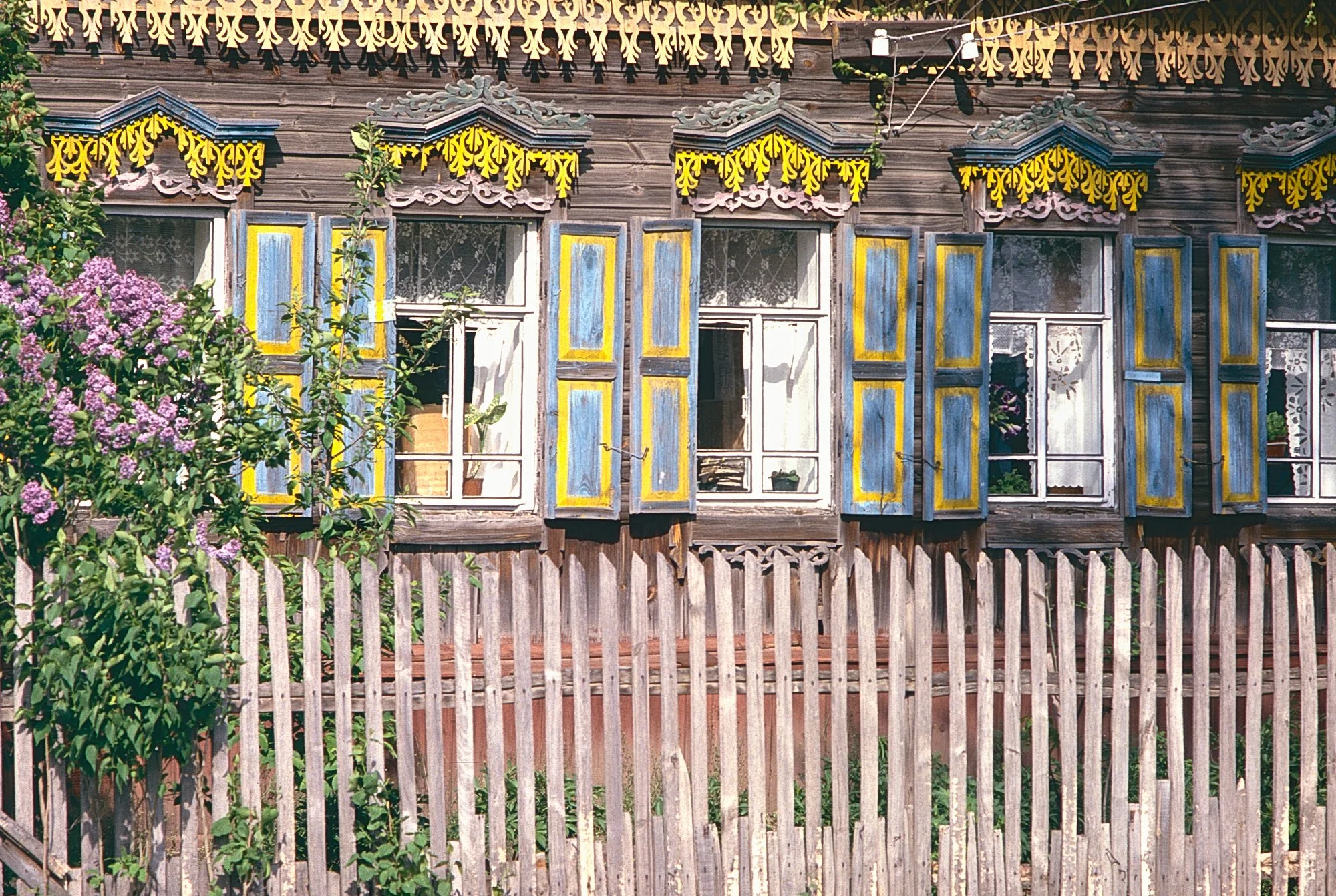
Blending in in our discreet outfits. Some traditional home survived the wave of Soviet Style architecture.
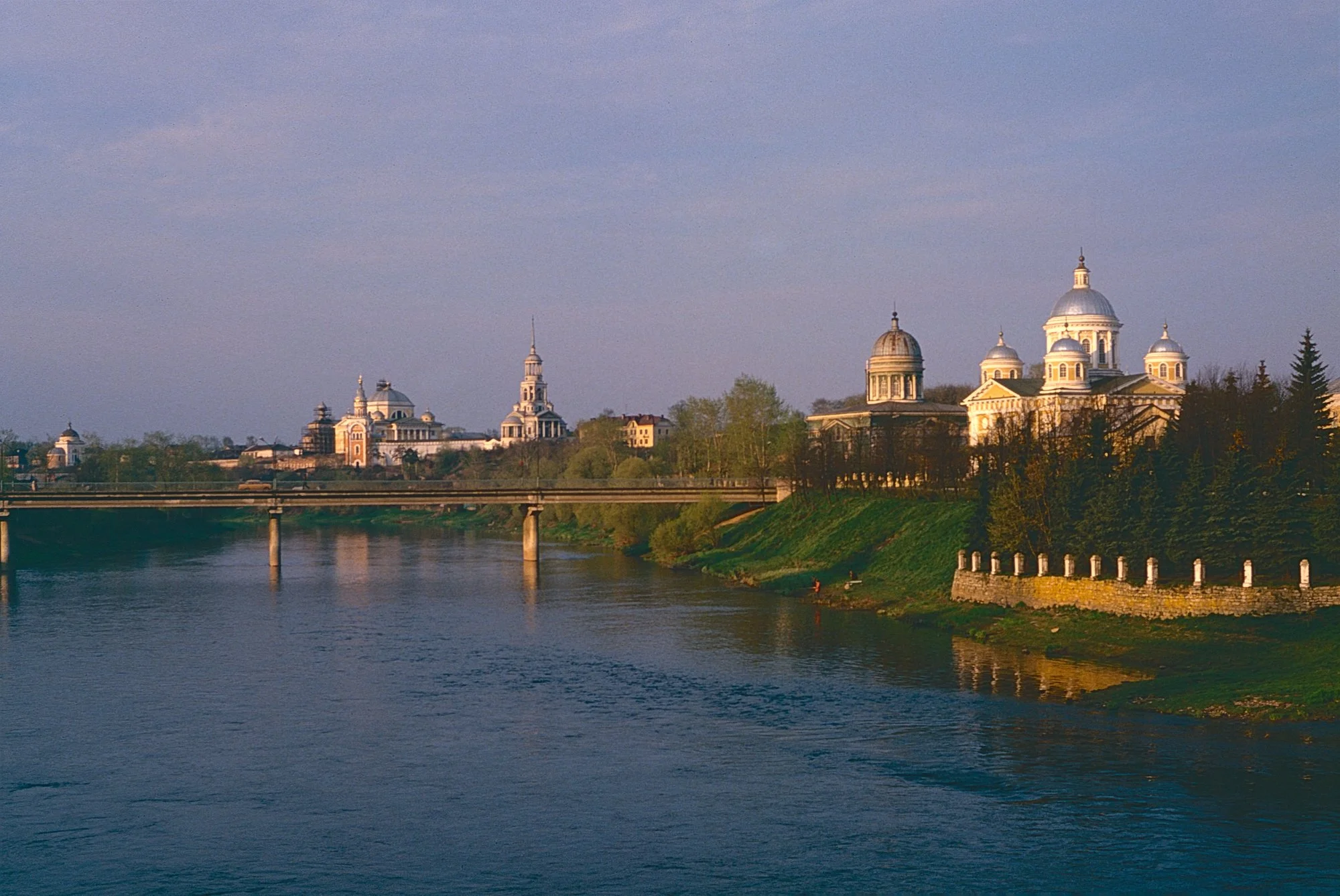
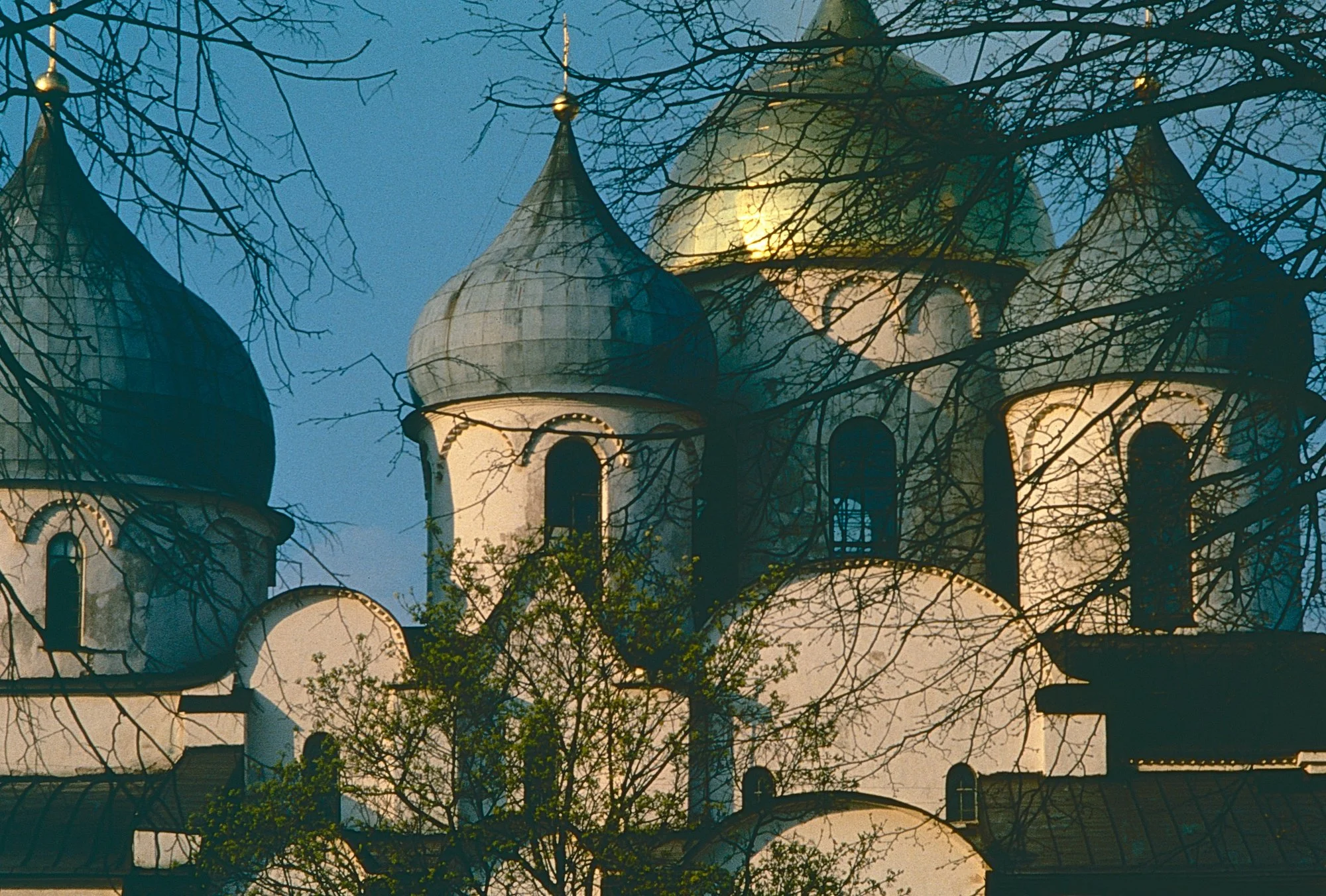
Russian churches.
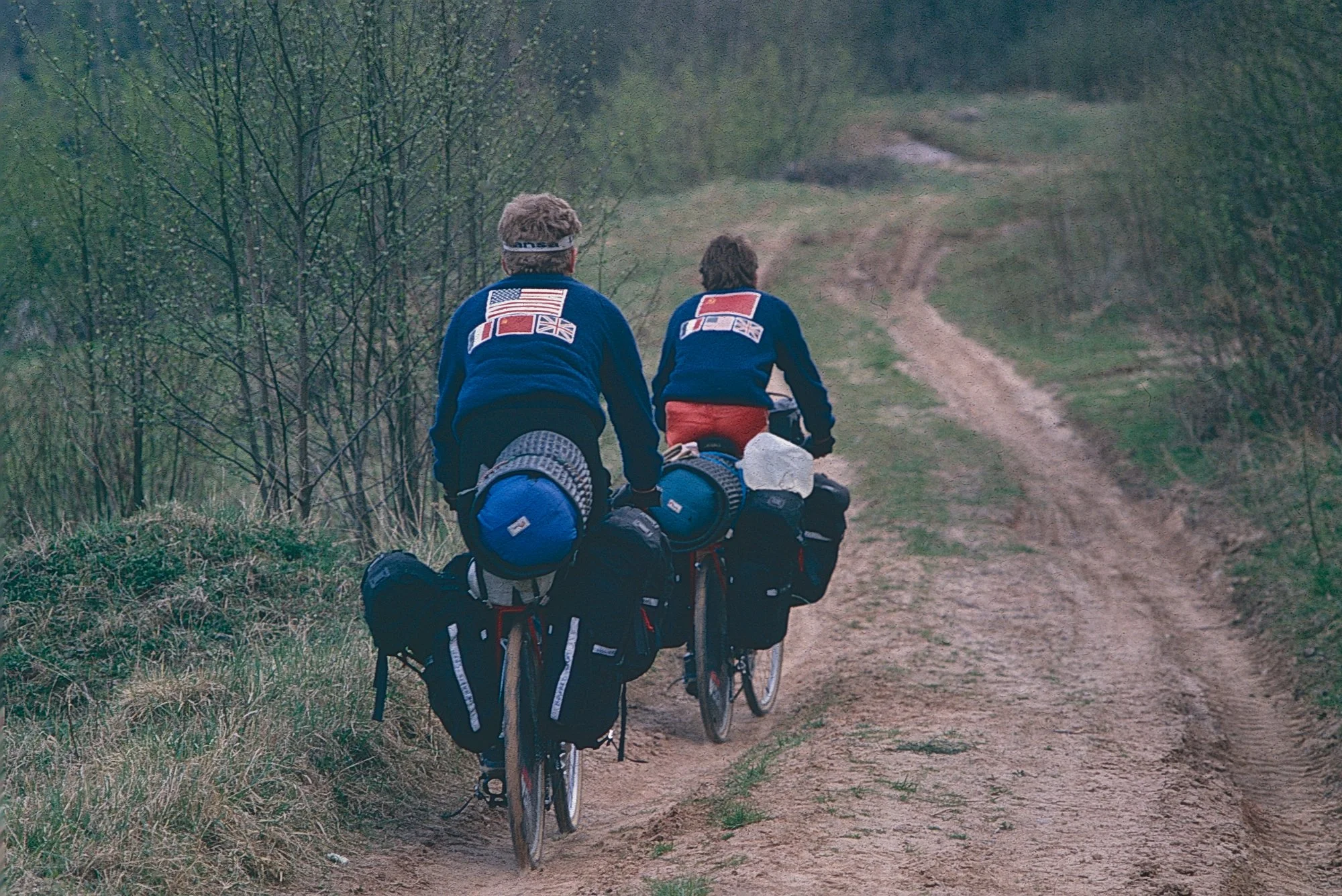
In the evening, we veer off the main road to look for a place to camp.
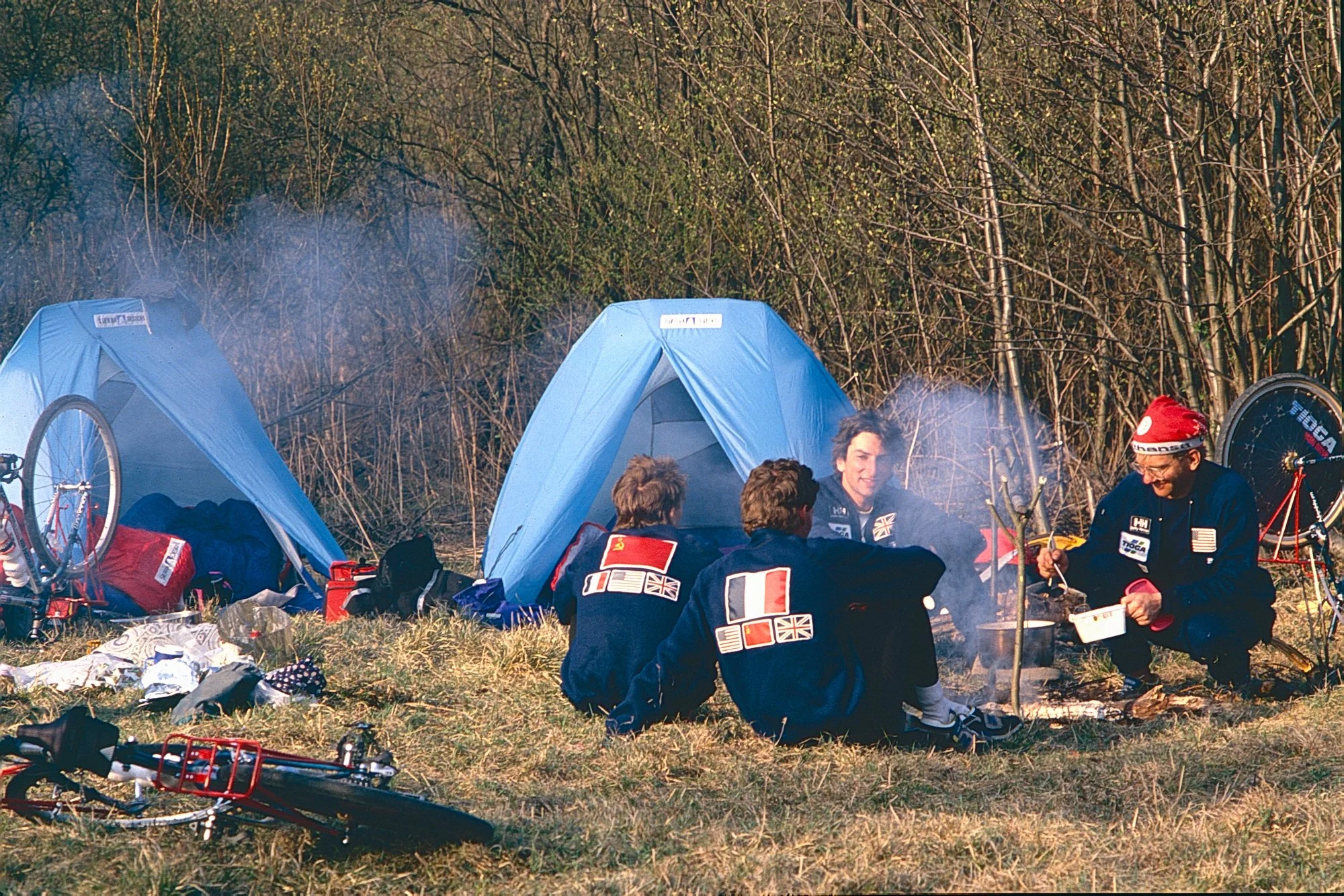
Half way between Leningrad and Moscow.
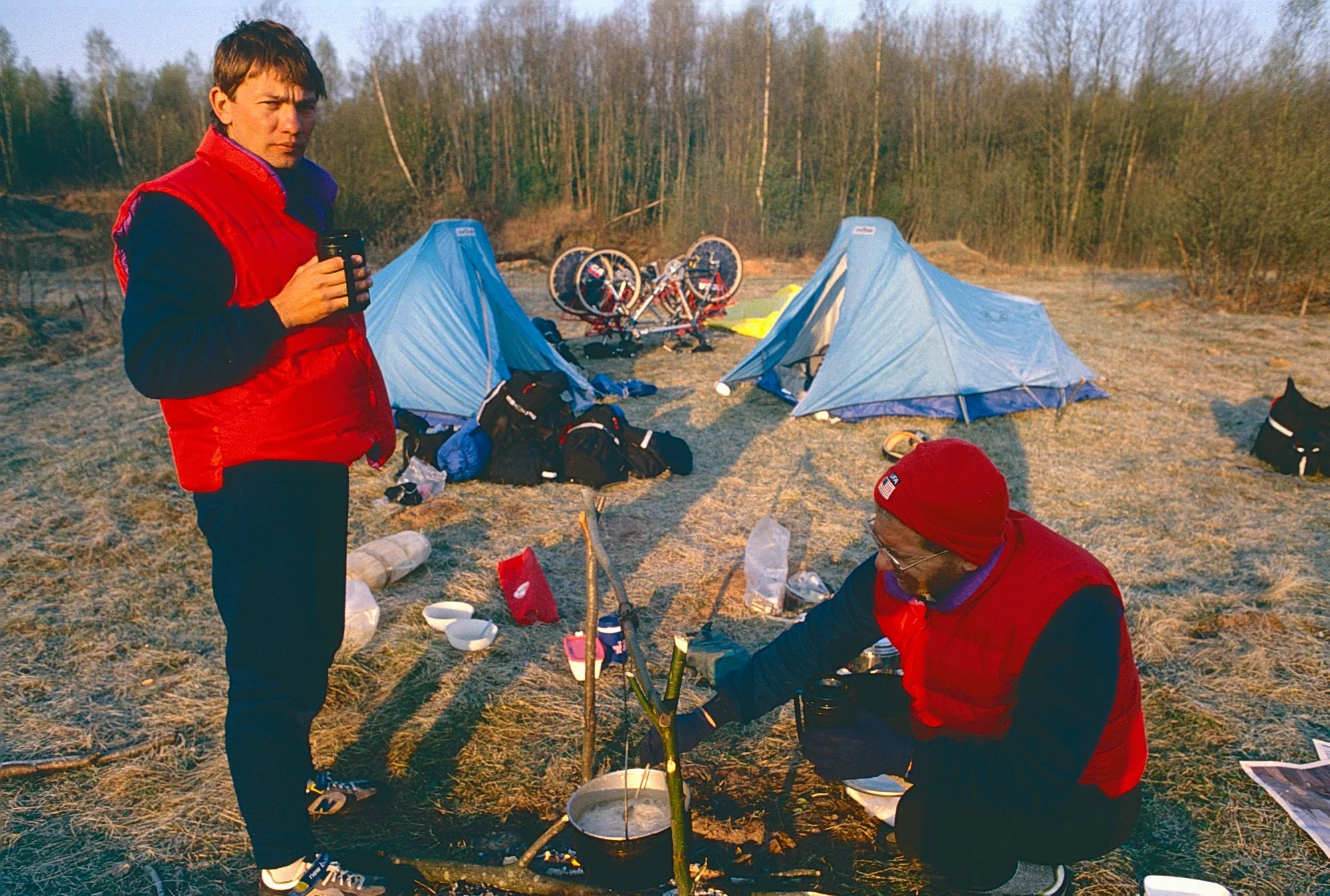
Vitale and Howard at breakfast. Vitale was "provided" by the Soviet government, and we made half serious plans to ditch what we thought was going to be a minder as soon we figured out how things worked. But Vitale turned out to be a skilled amateur cyclist and great human, who became a friend. He was plucked from a Moscow cycling club to accompany us because the government was confused about why anyone would want to ride across the Soviet Union (fair question), and didn't really know what to do with us.
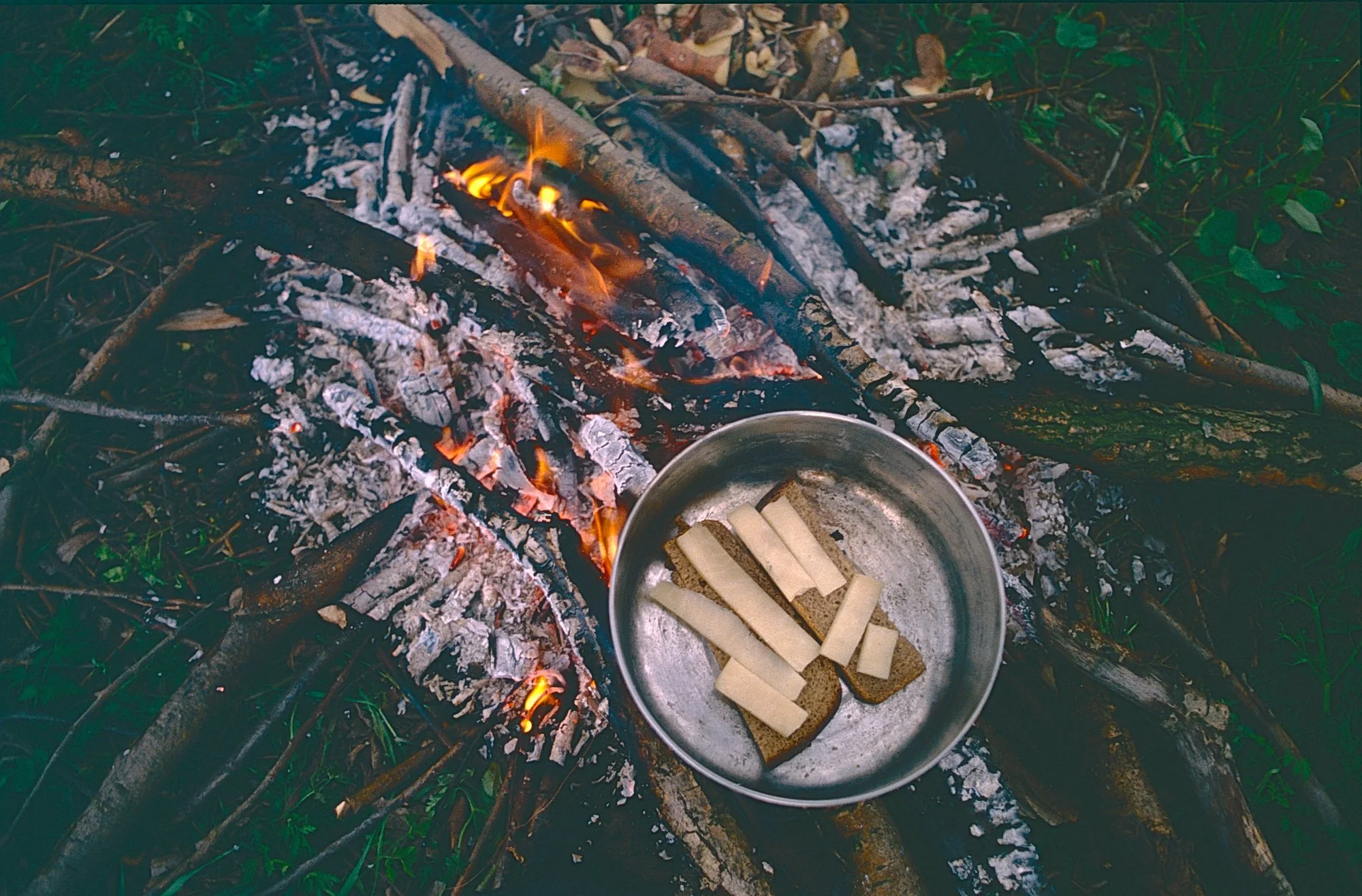
A rare delicacy: cheese tops our daily dark Russian bread, which like the Leningrad Brick tasted exactly the same from Leningrad to Vladivostok. Unlike the Leningrad Brick, it was delicious.
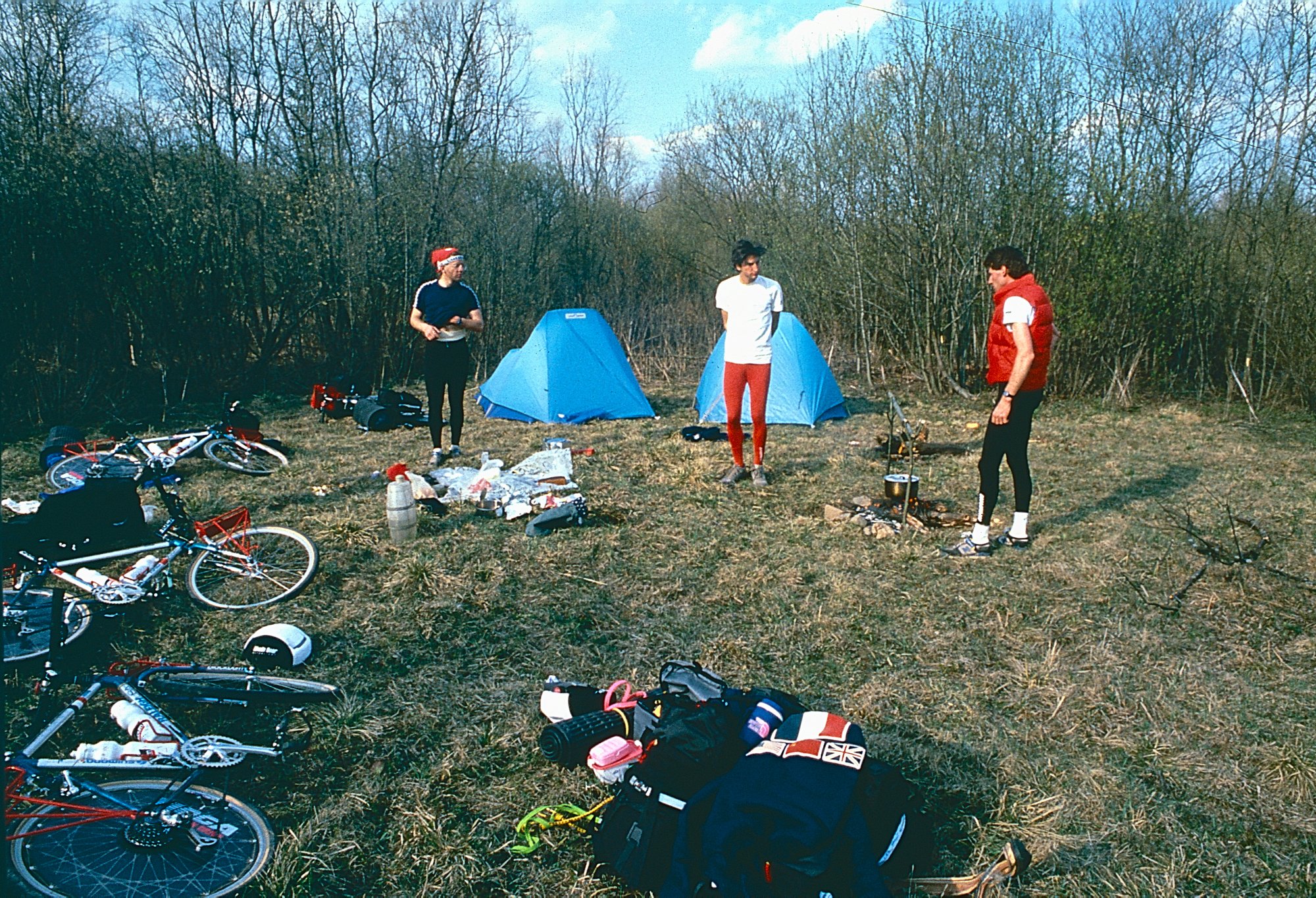
Getting ready for a new day in the saddle as we approach Moscow.
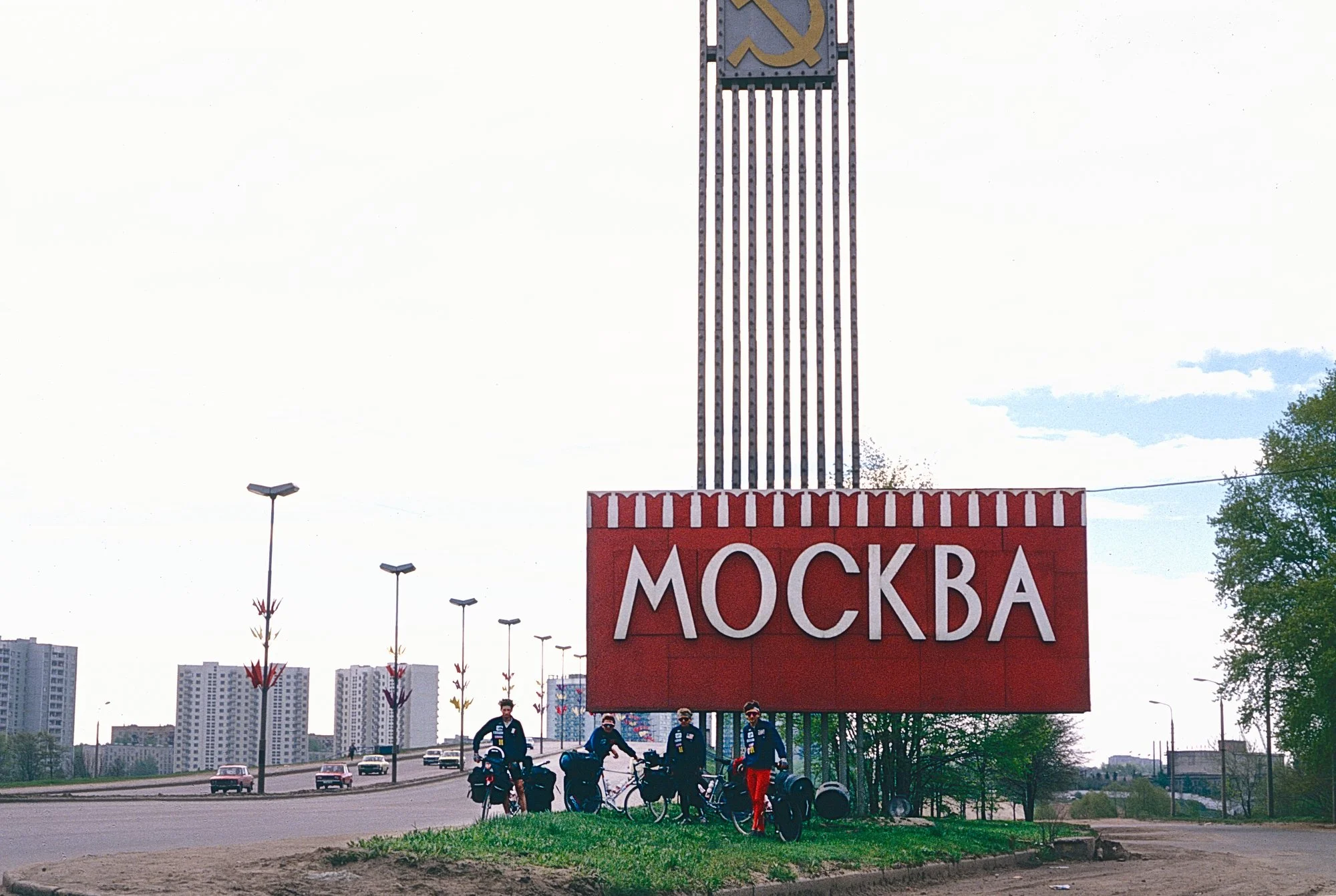
Made it to Moscow...
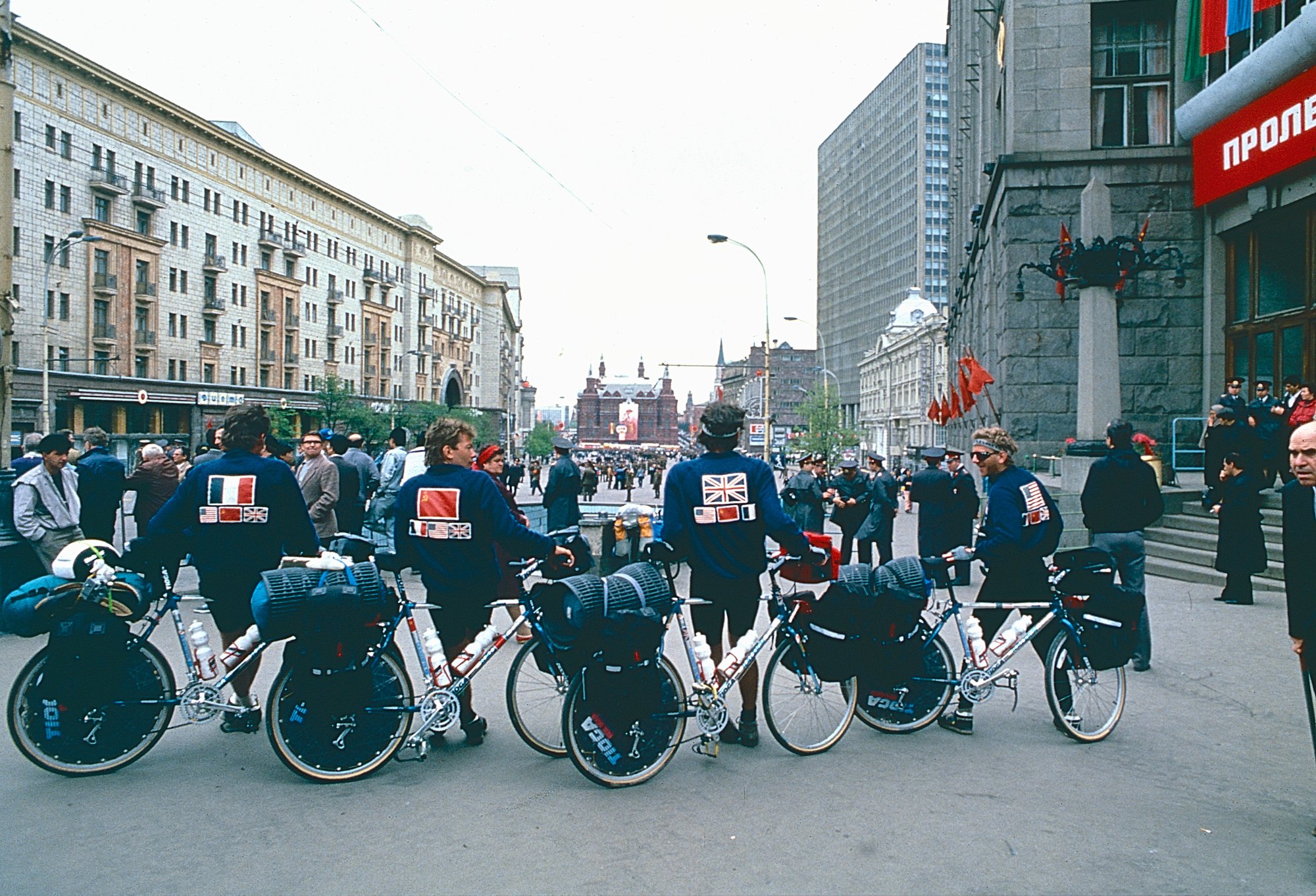
on May 1st, so we stopped by Red Square.
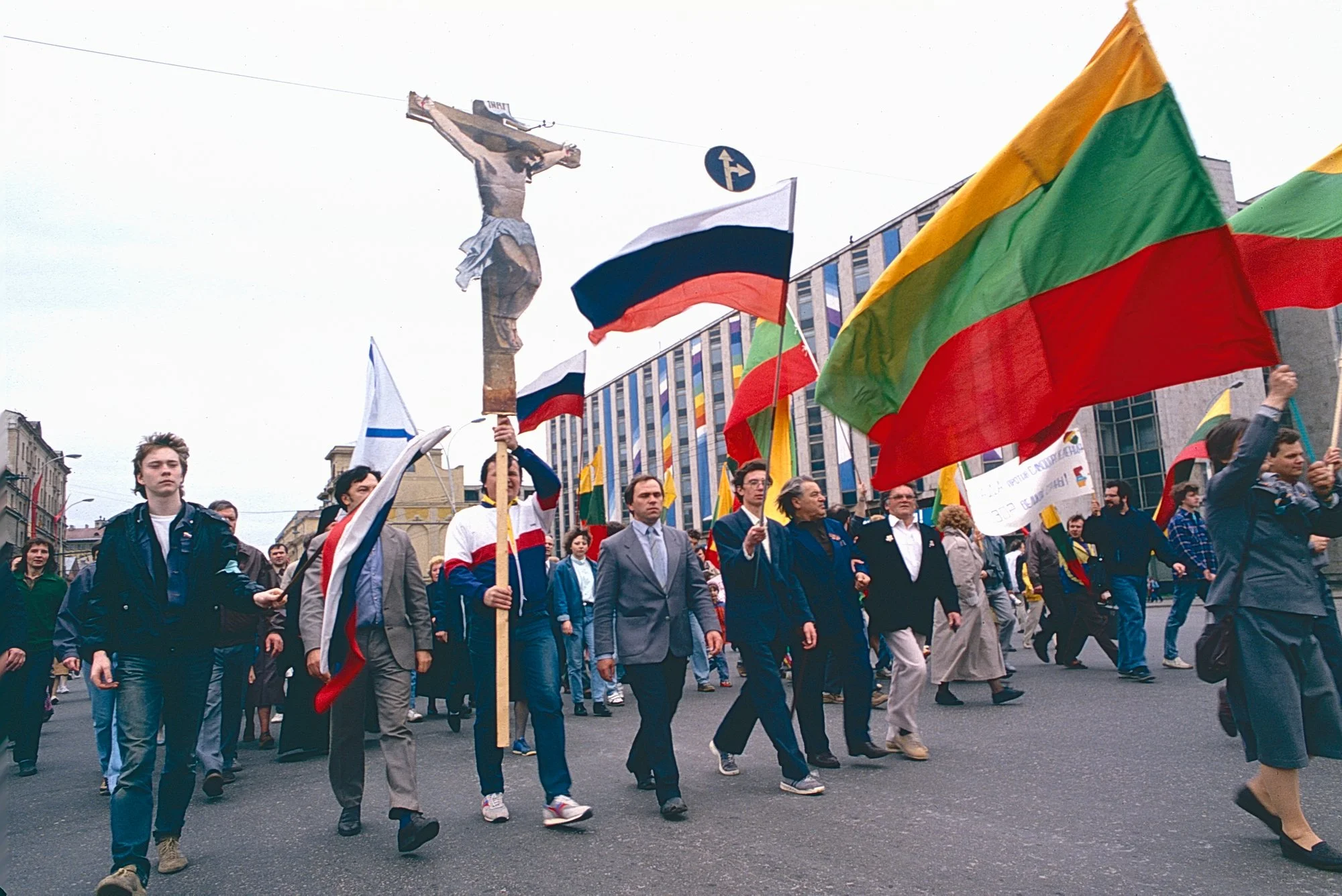
Under Gorbachev, May 1st parades by different groups were allowed for the first time.
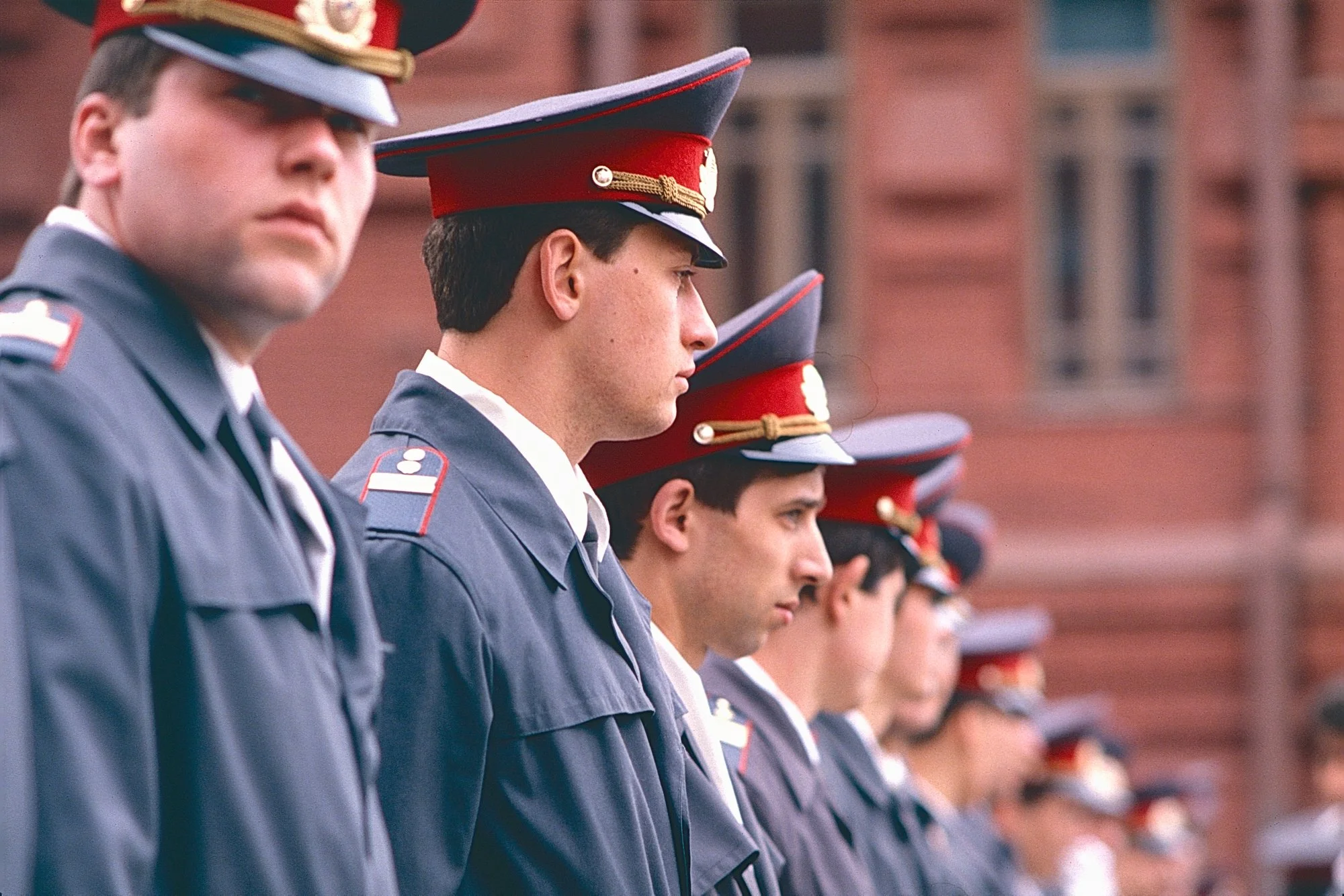
Red Square.
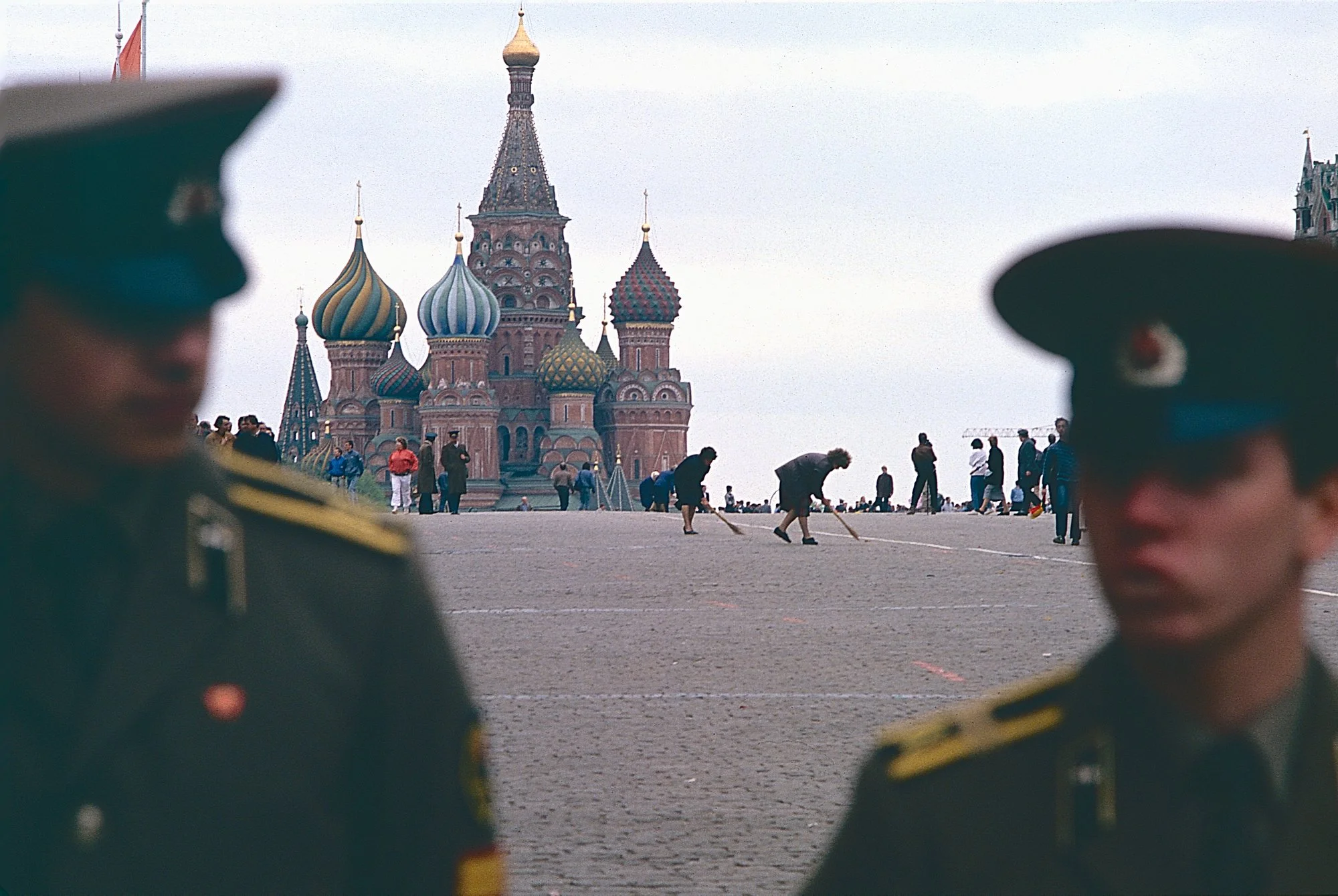
Sprucing up Red Square on Worker's Day.
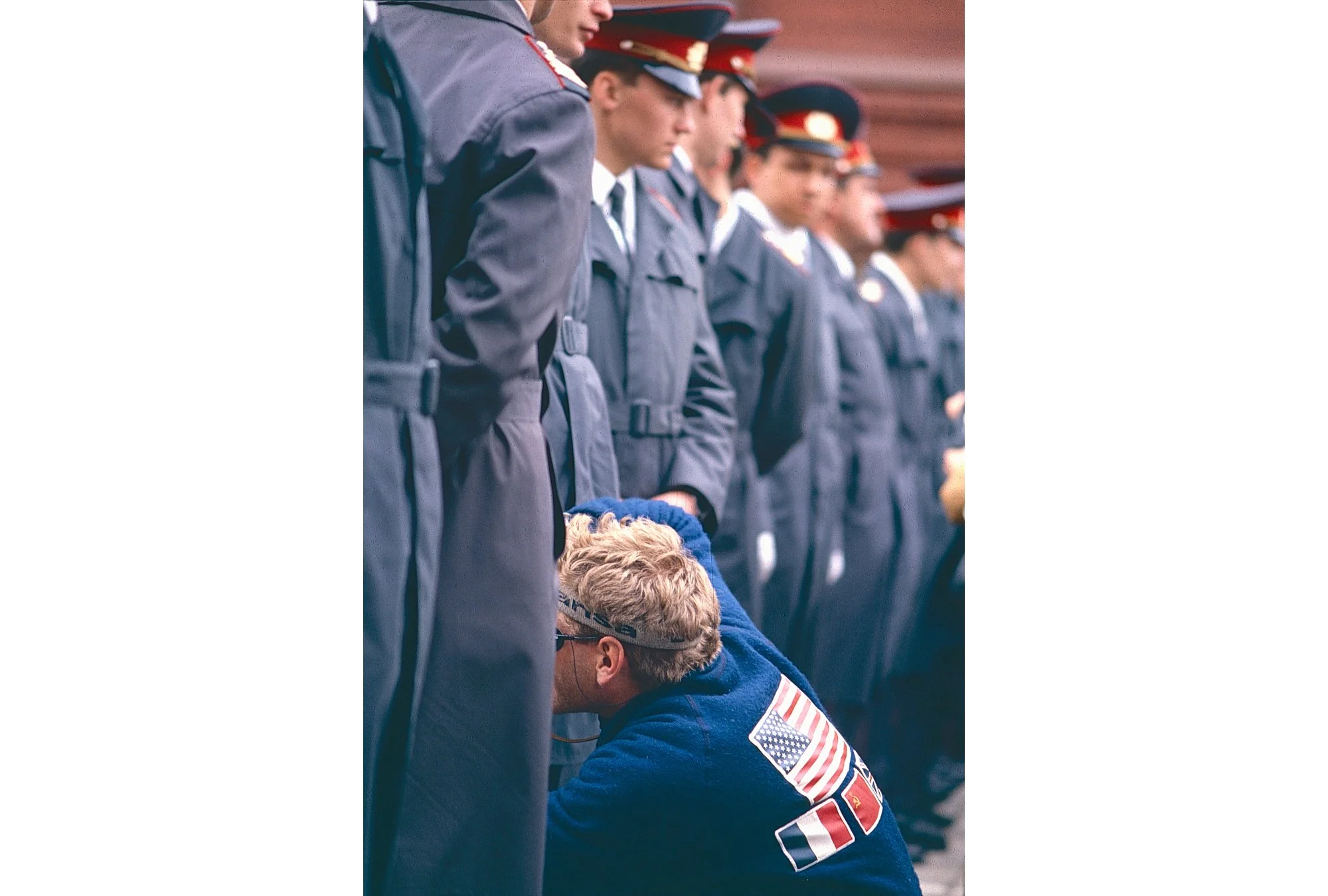
Howard tests the limits of Perestroika.
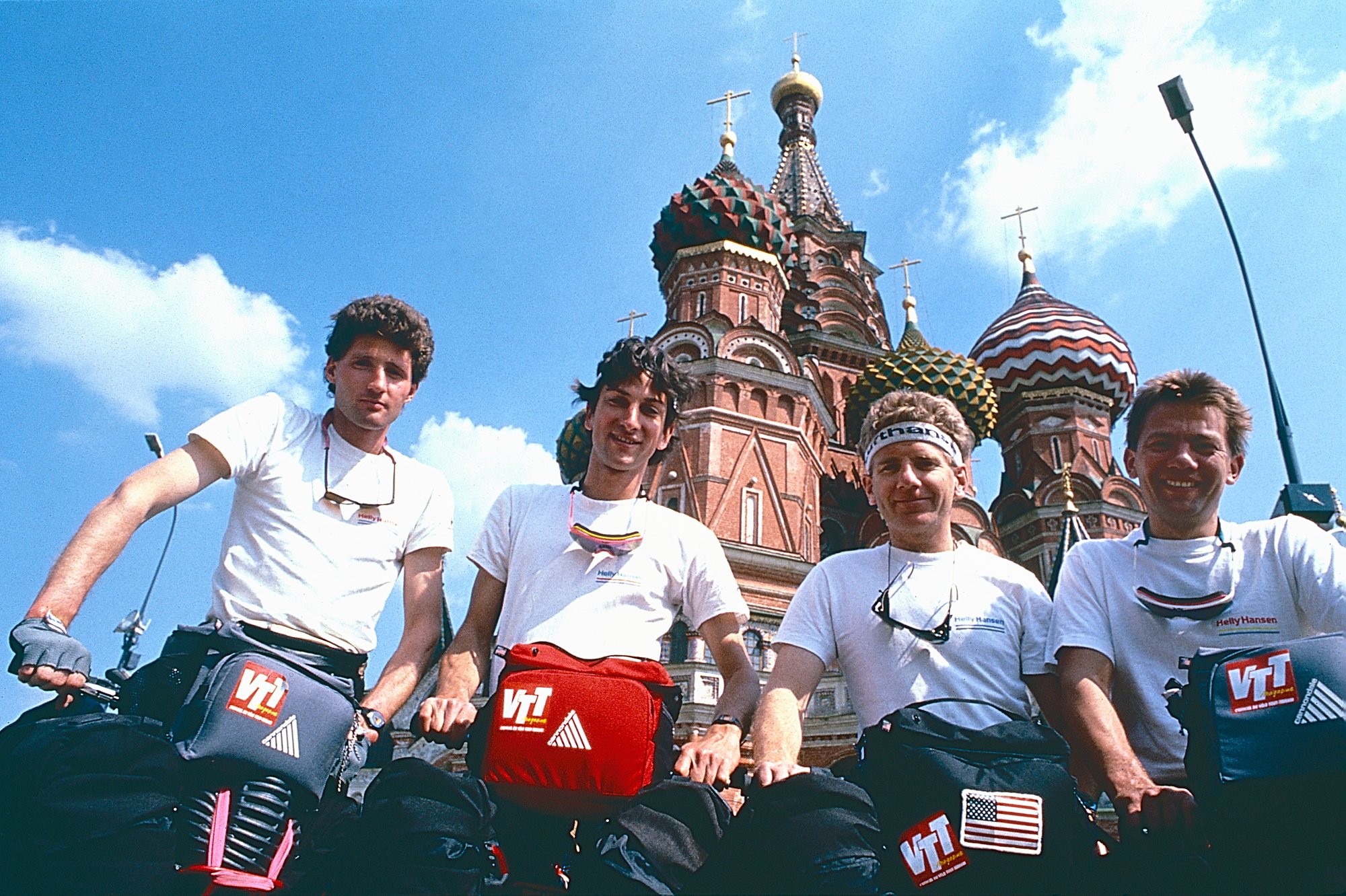
Tourist photo.
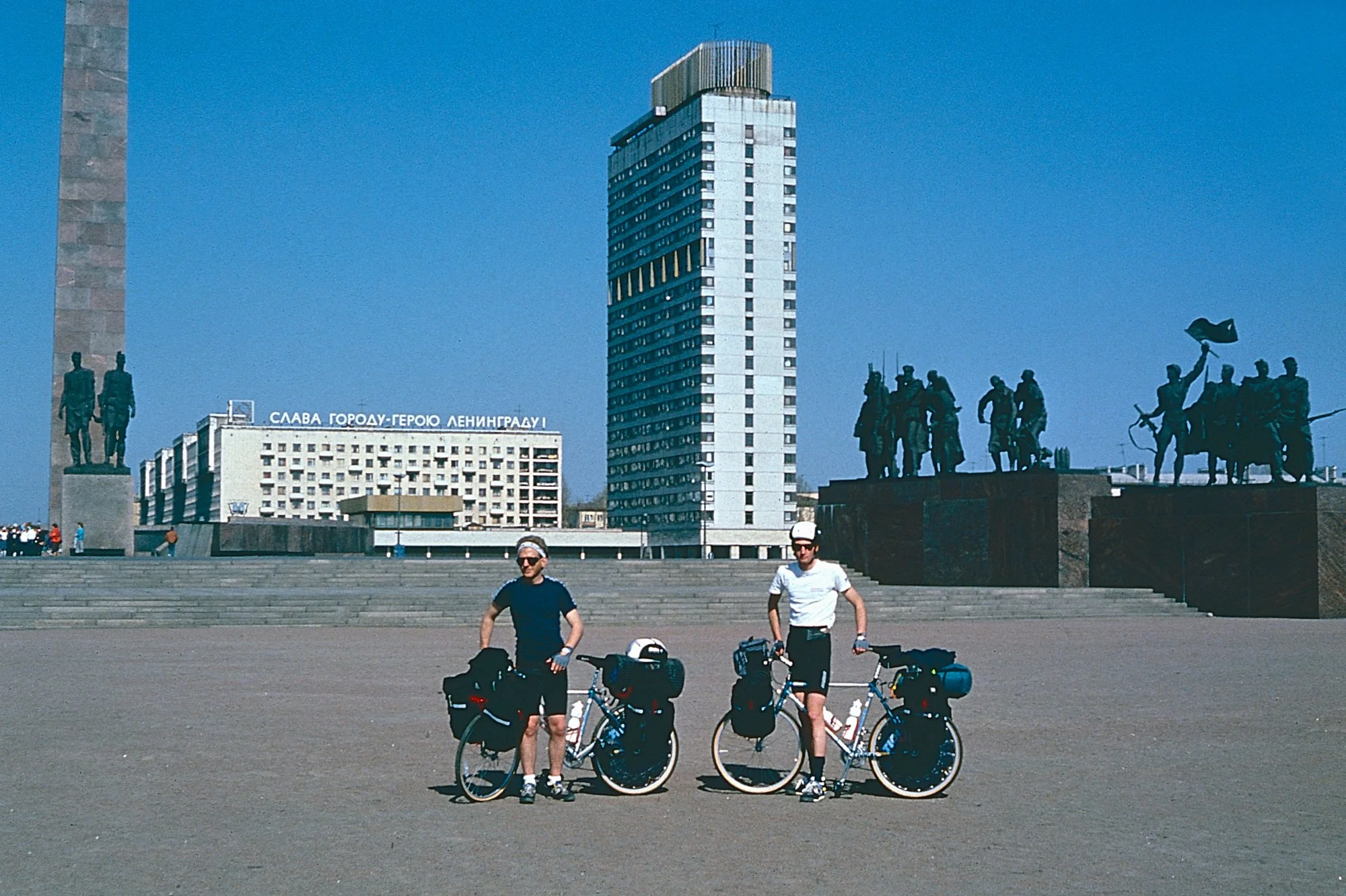
After a short week of rest and sorting out gear, we leave Moscow, cycling by a giant World War monument.
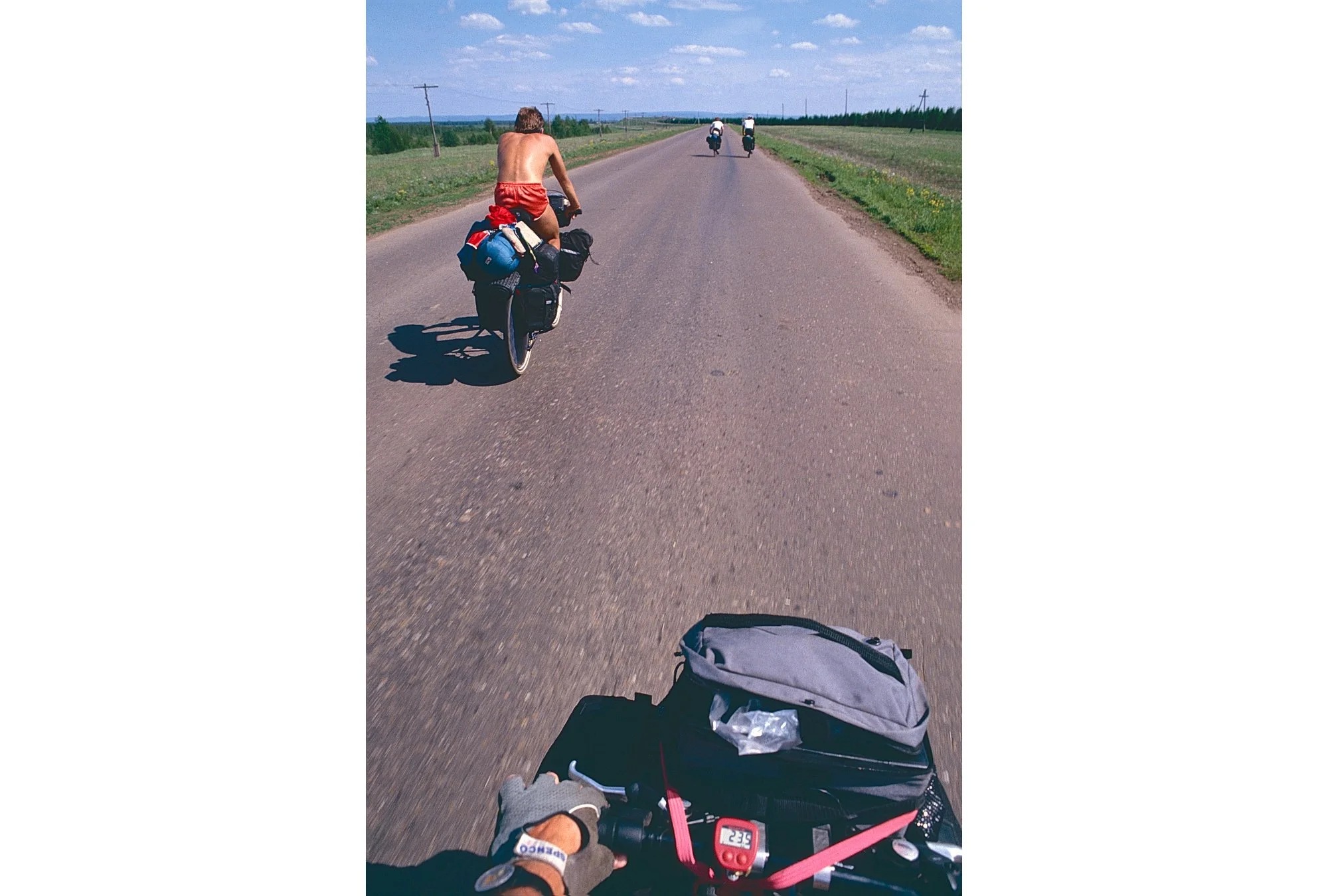
The view from the bike: Spring comes in and we try to make good time in the Russian plains, cycling 8-10 hours a day.
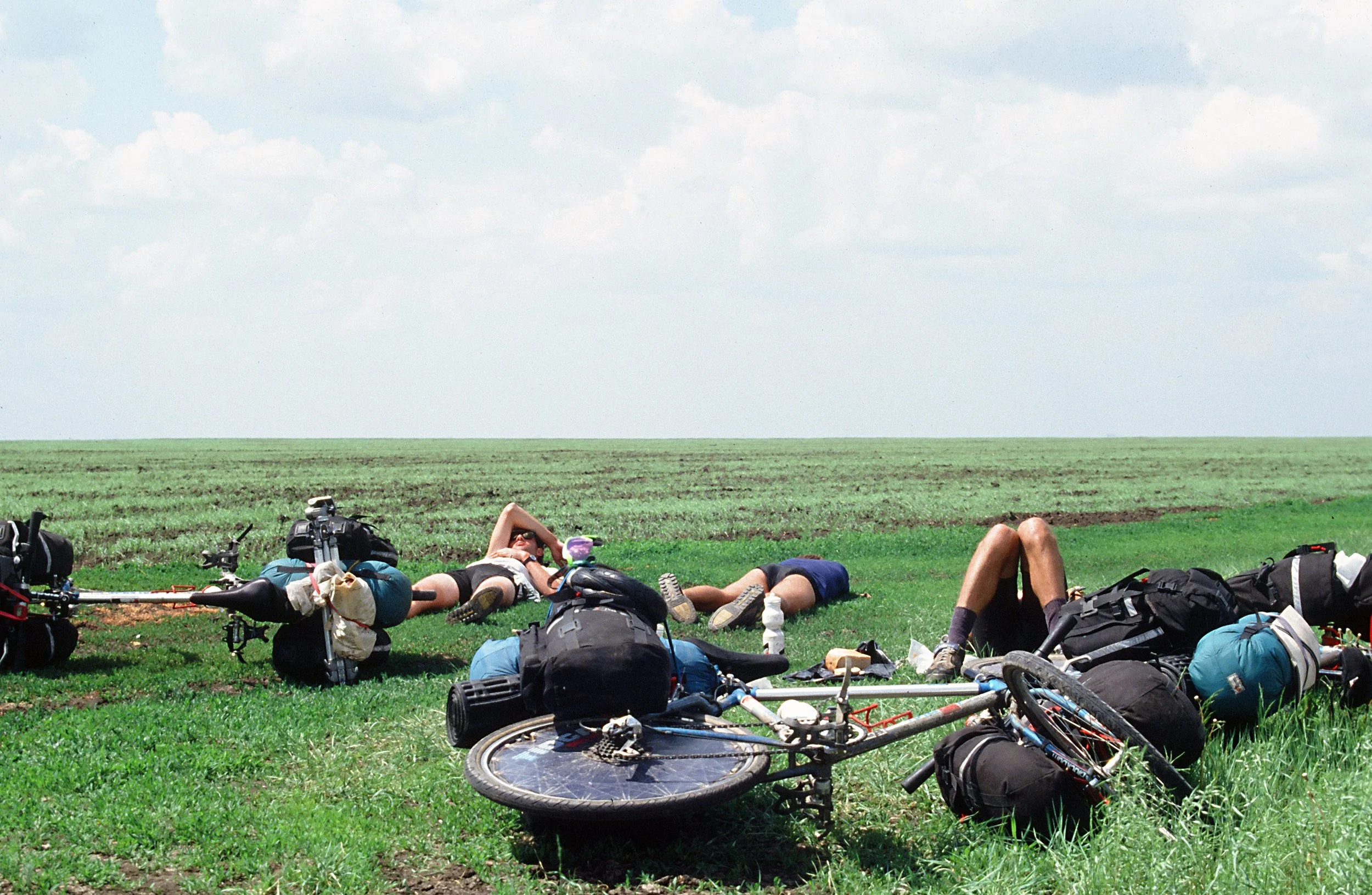
Road side power nap.
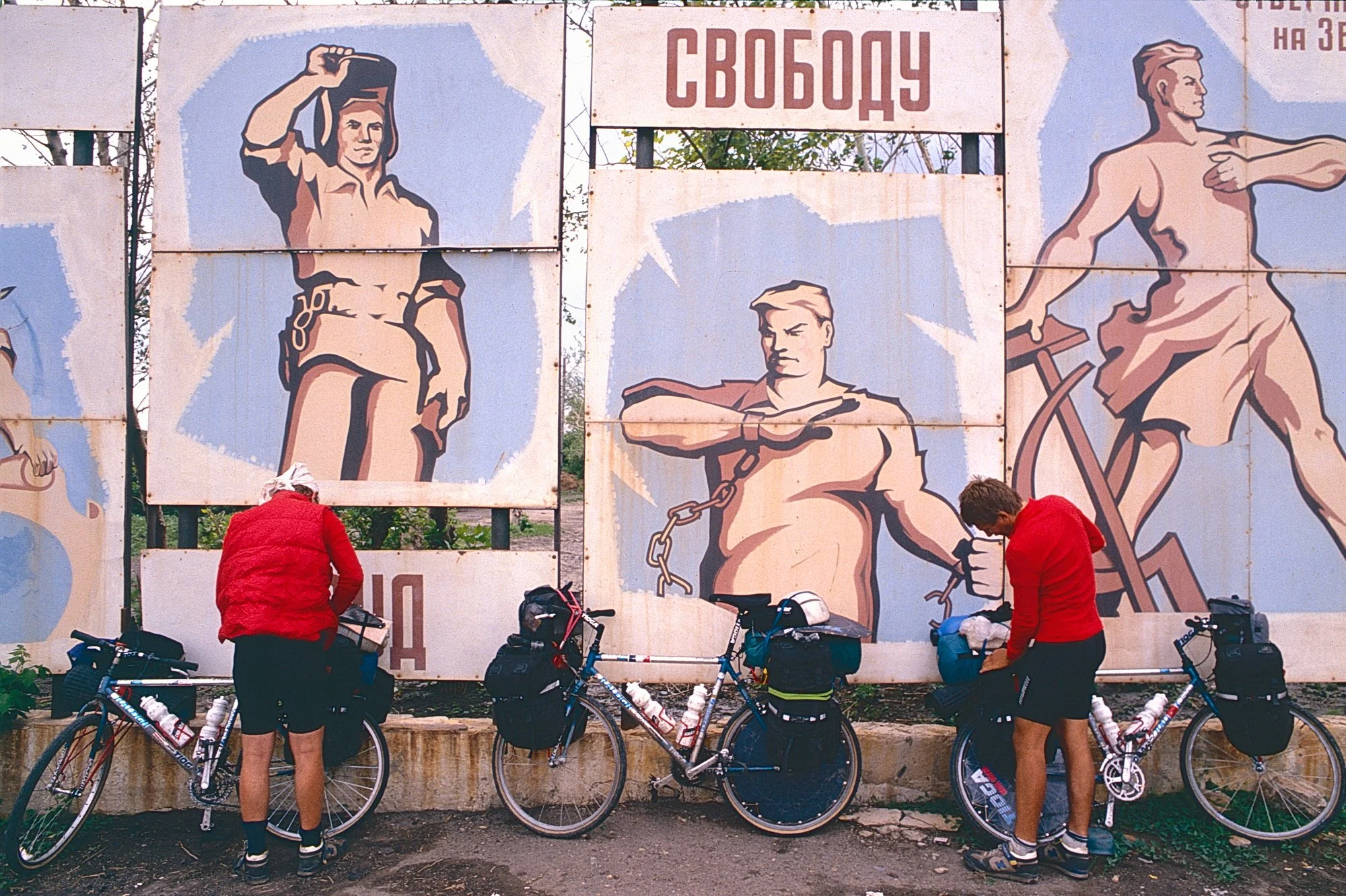
Cycling across vast and flat plains, but not in Kansas.
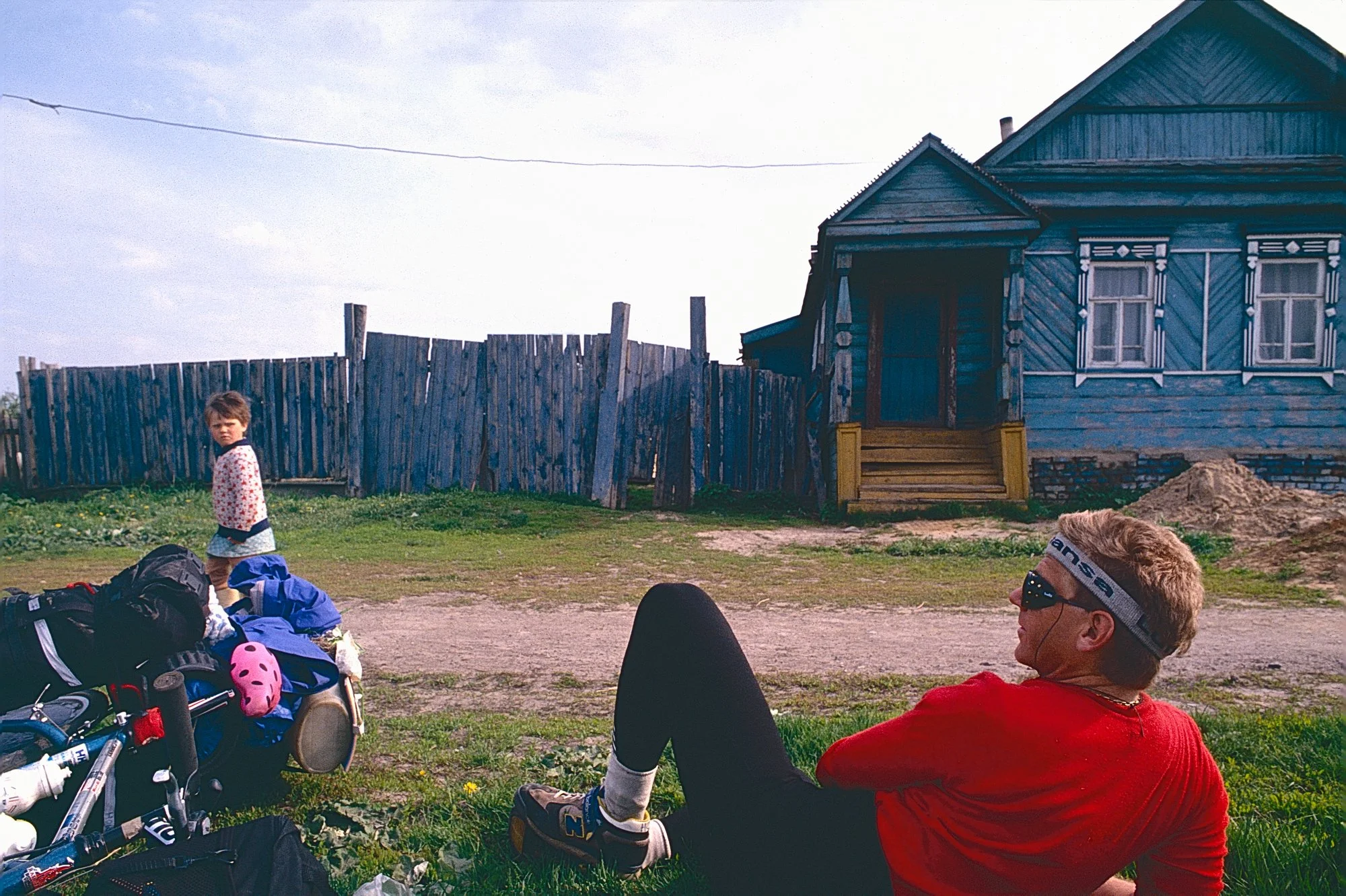
Howard taking a break in a Russian village.
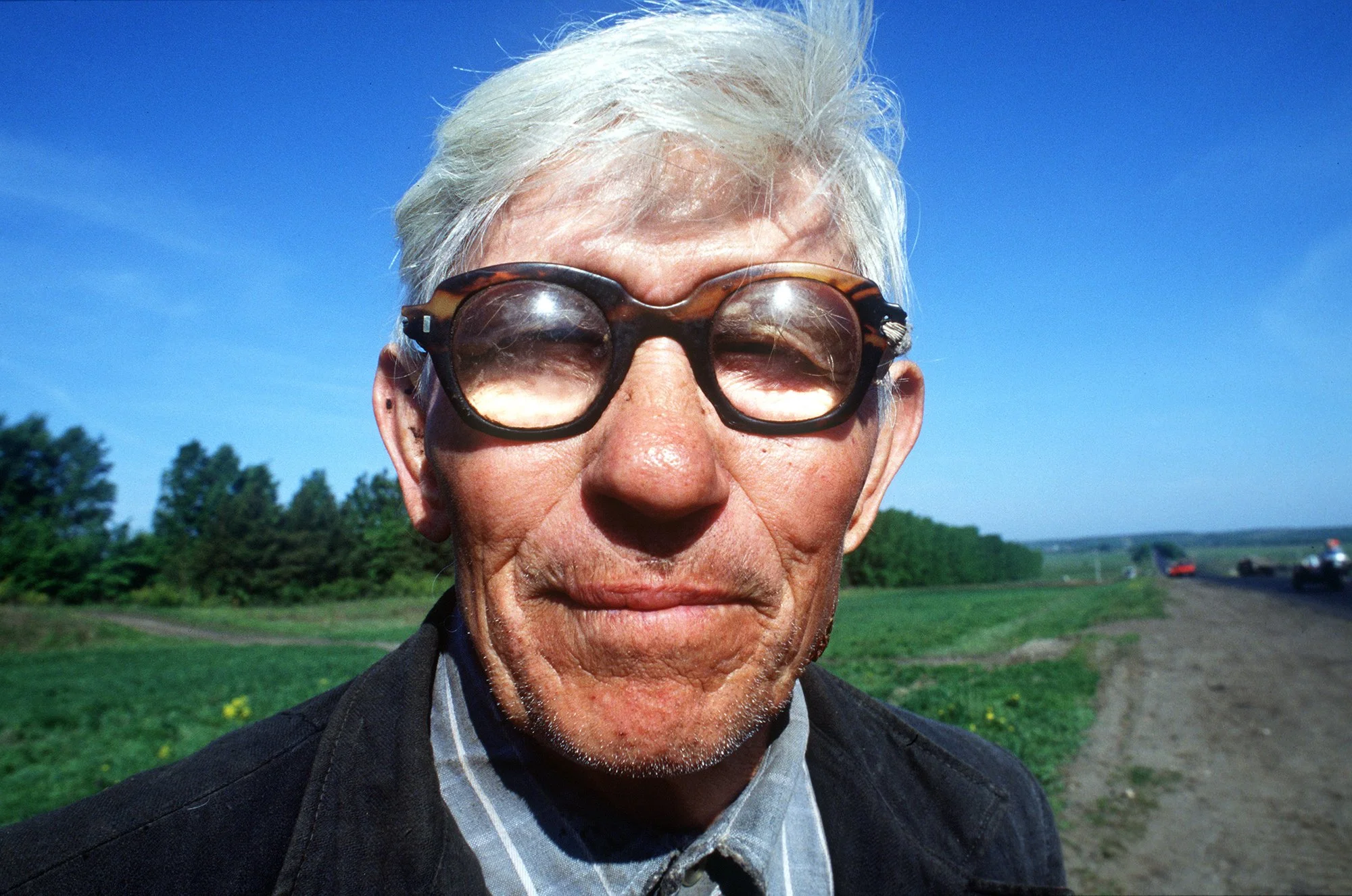
A Russian farmer waived at us as we rode by, and we circled back. Alexander was 80, and he had never met a foreigner. After meeting an American, a British and a French cyclist, he said "You're just like us!".
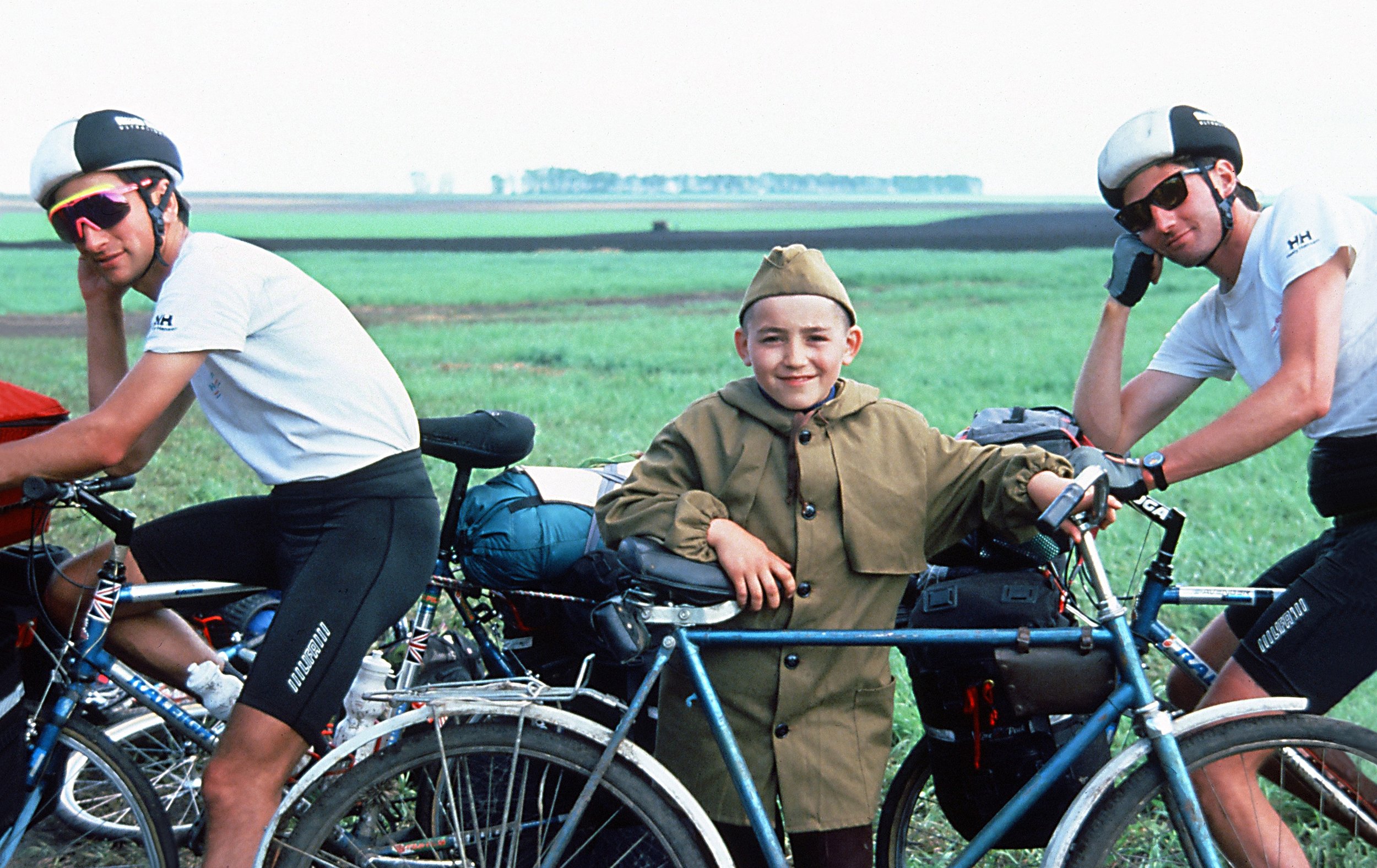
A young Soviet cyclist showing us how to dress.
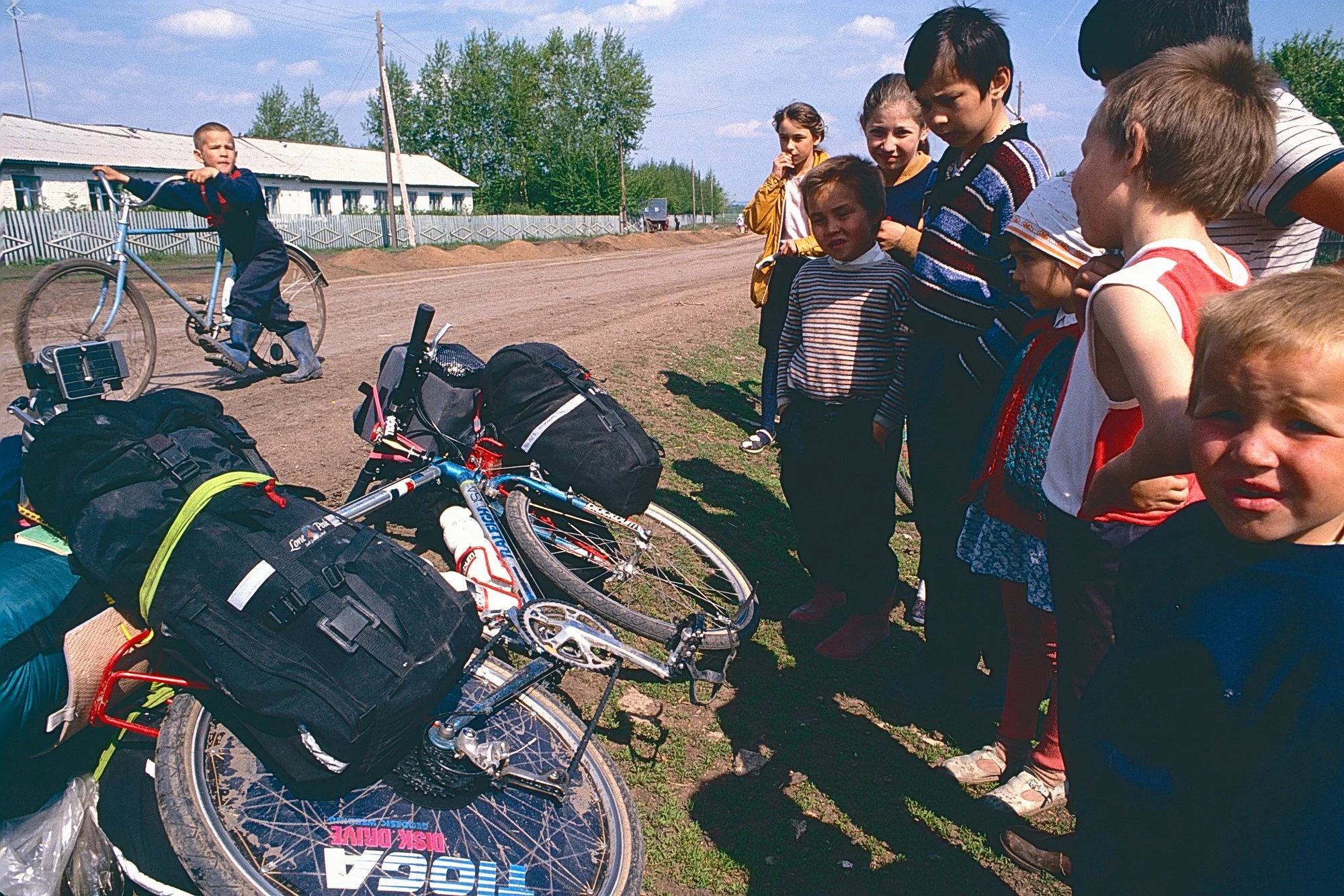
Locals kids keep us company during a stop.
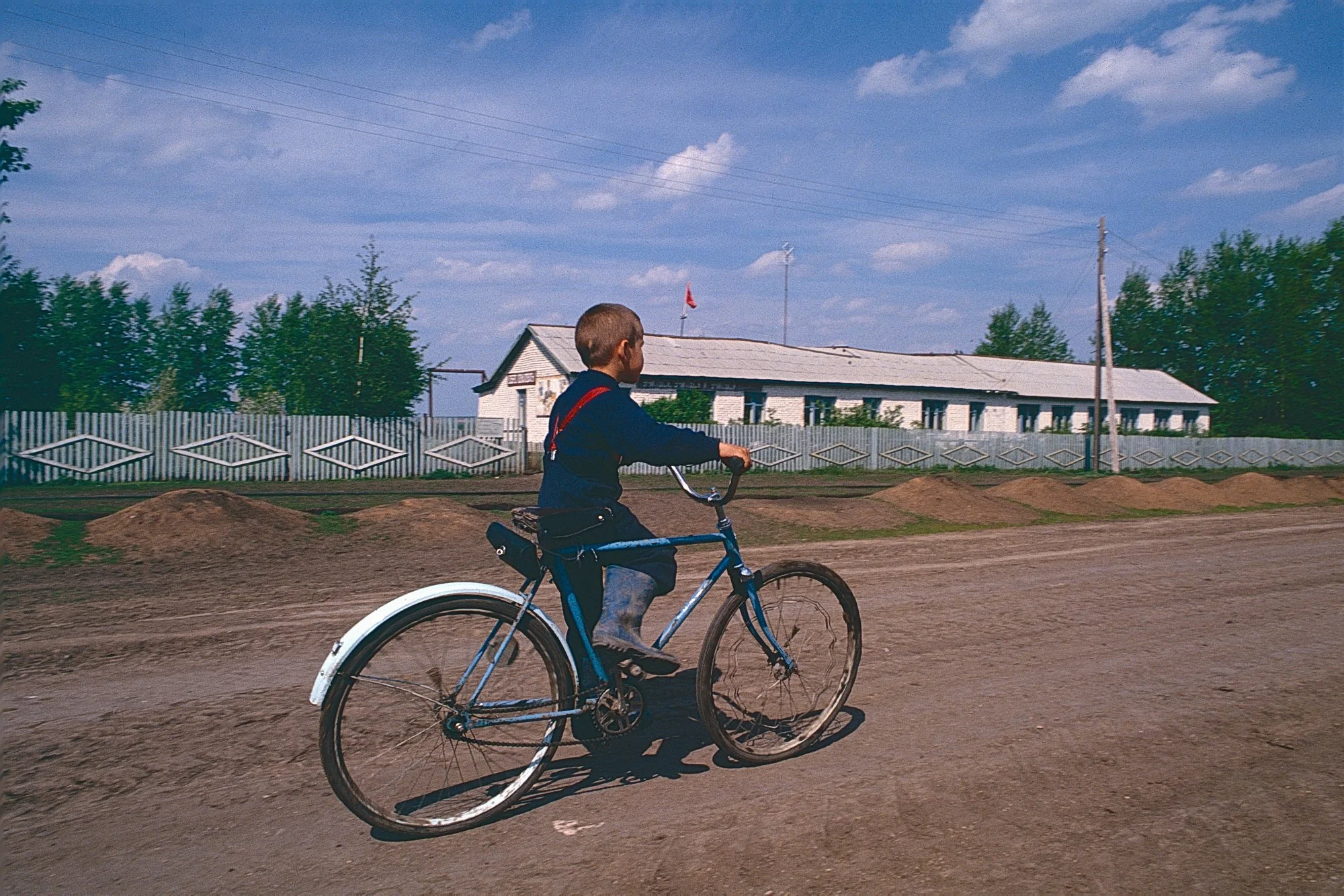
One size fits all Soviet bike.
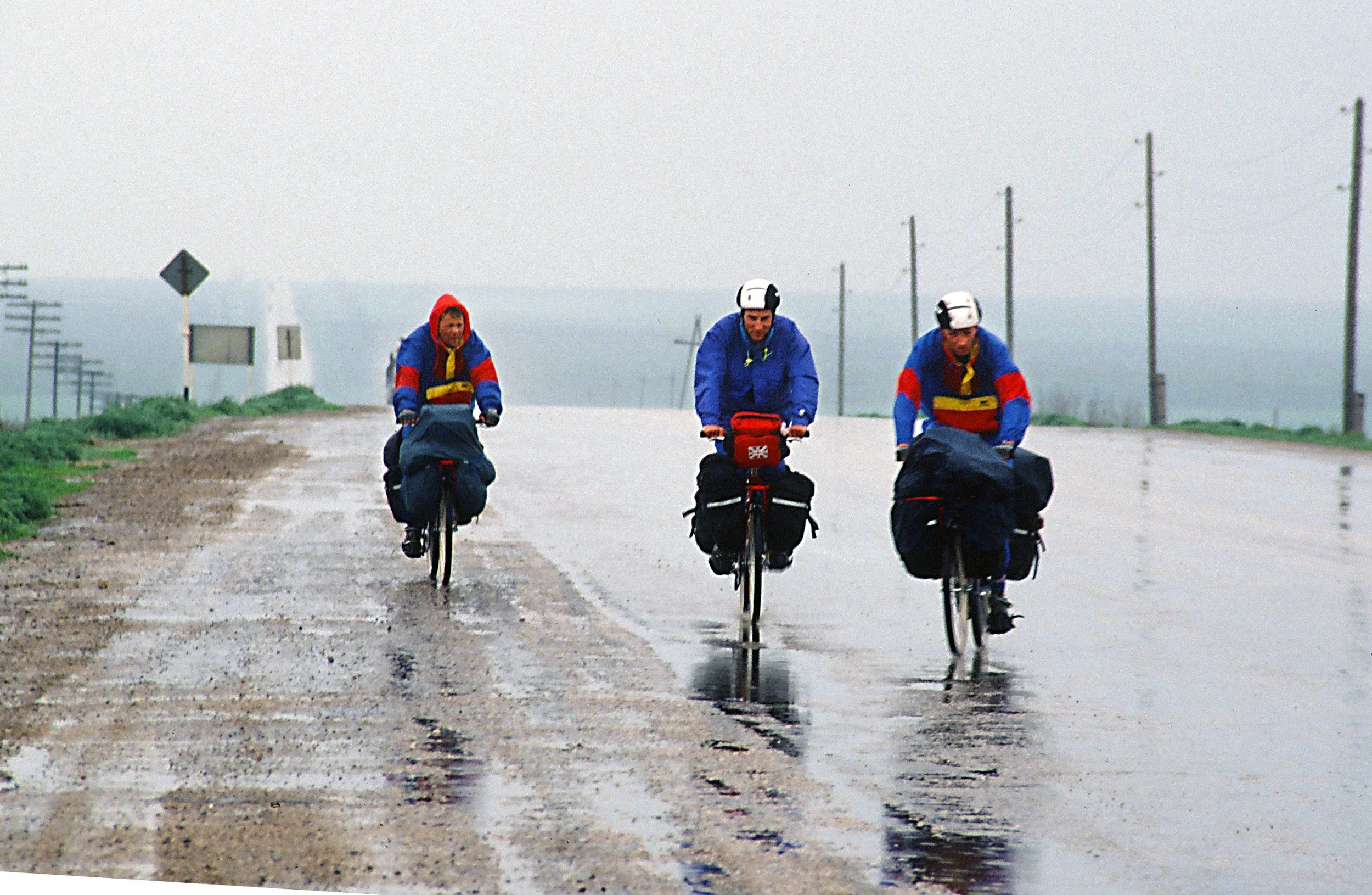
Howard wears the right colors.
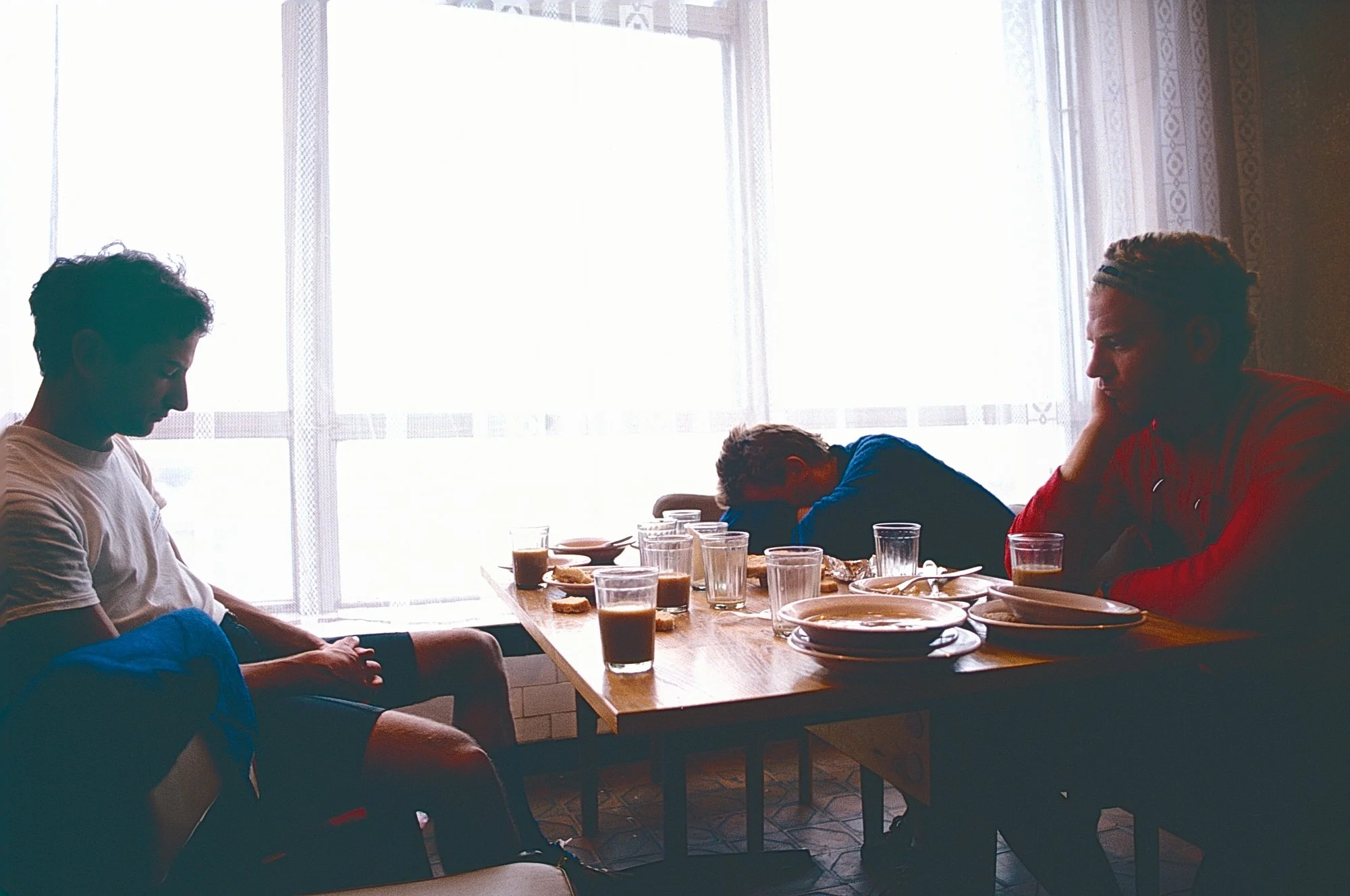
The mood after a depressingly Stolovaya meal during a brutal day of rain and headwind in the Russian plains.
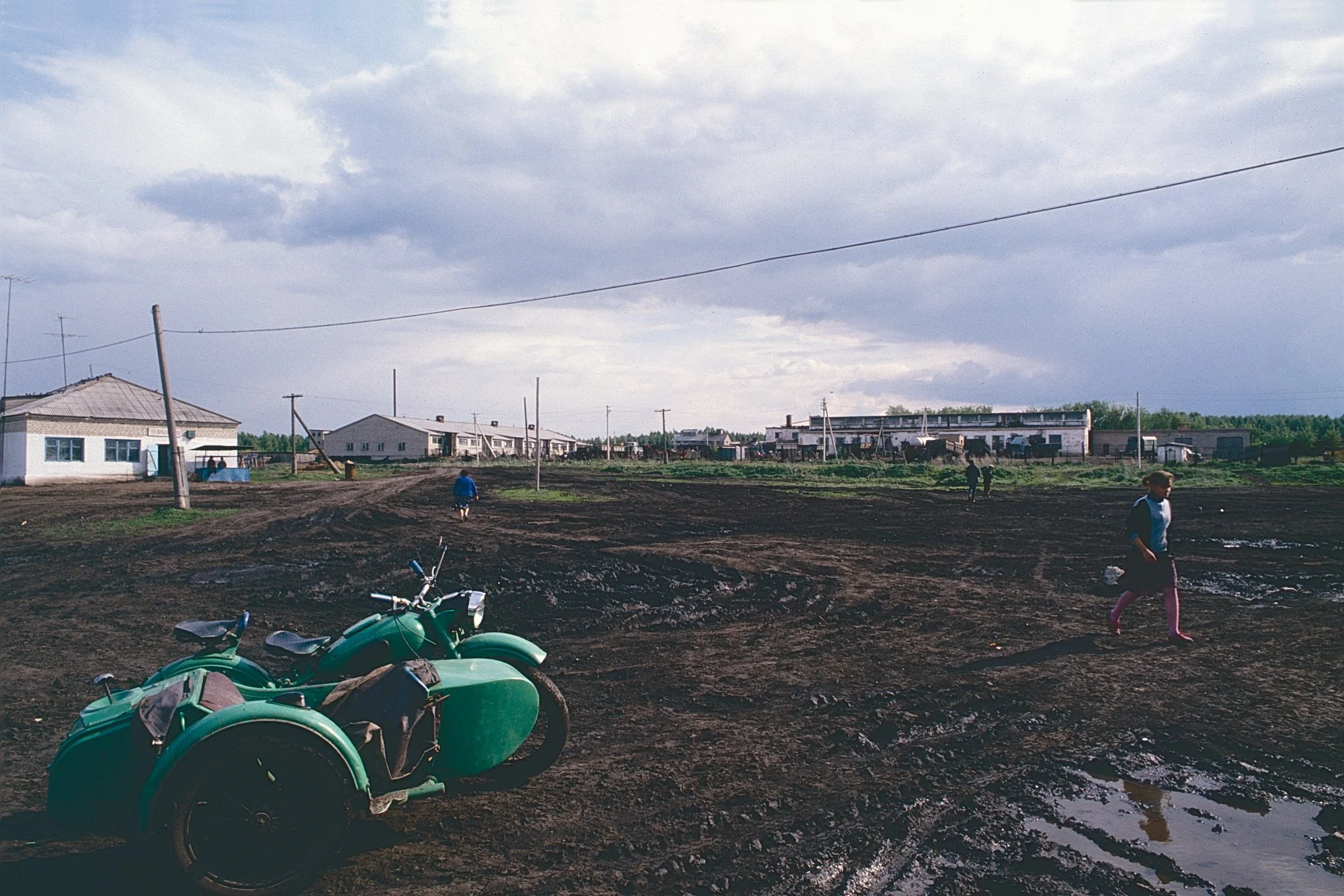
After the rain. Ubiquitous in the countryside, the Ural sidecar is an awesome Soviet steel beast.
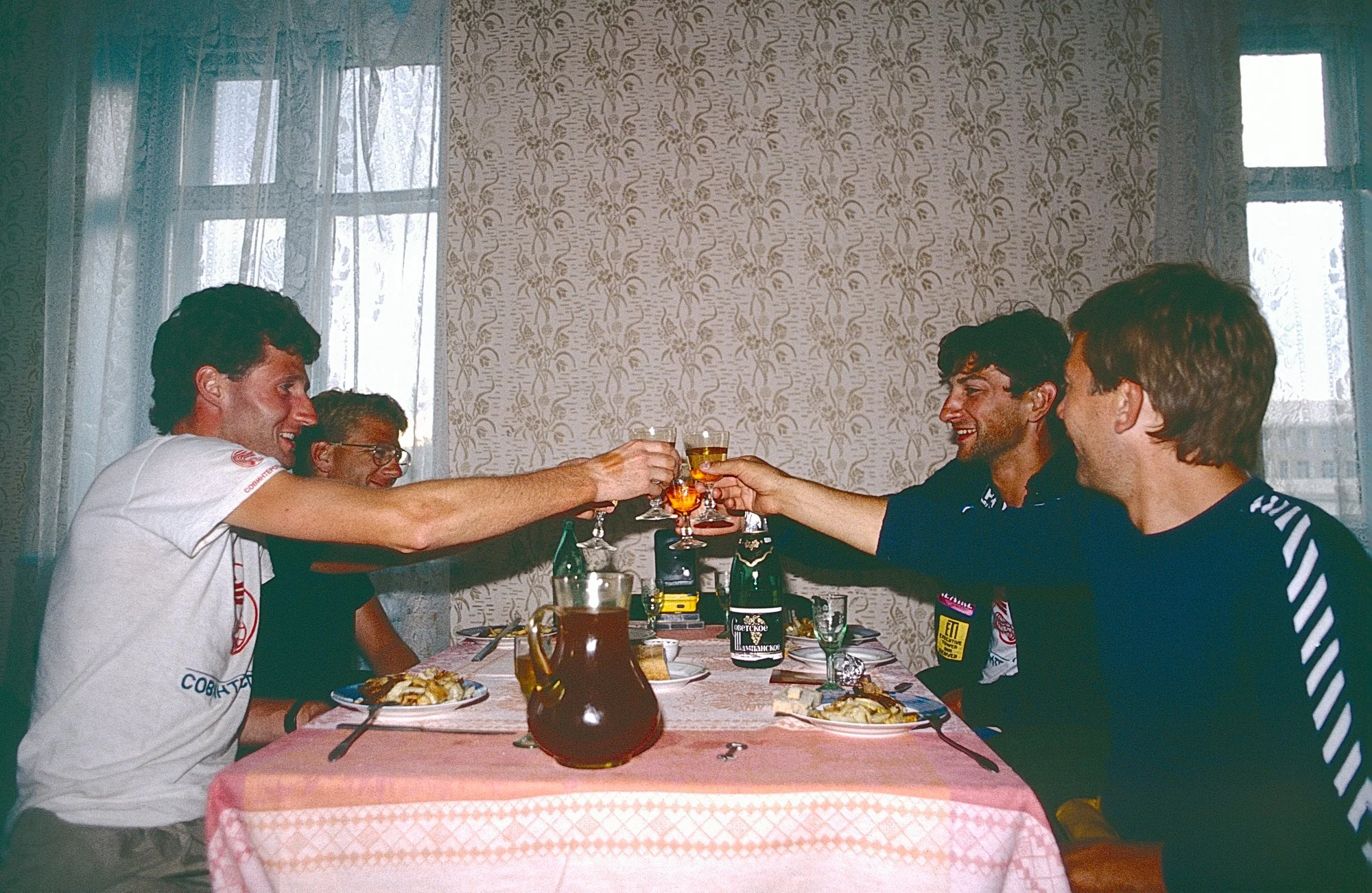
Mood adjustment after a decent meal and a bottle of very sweet Russian champagne. In the lead for best cycling gloves tan lines.
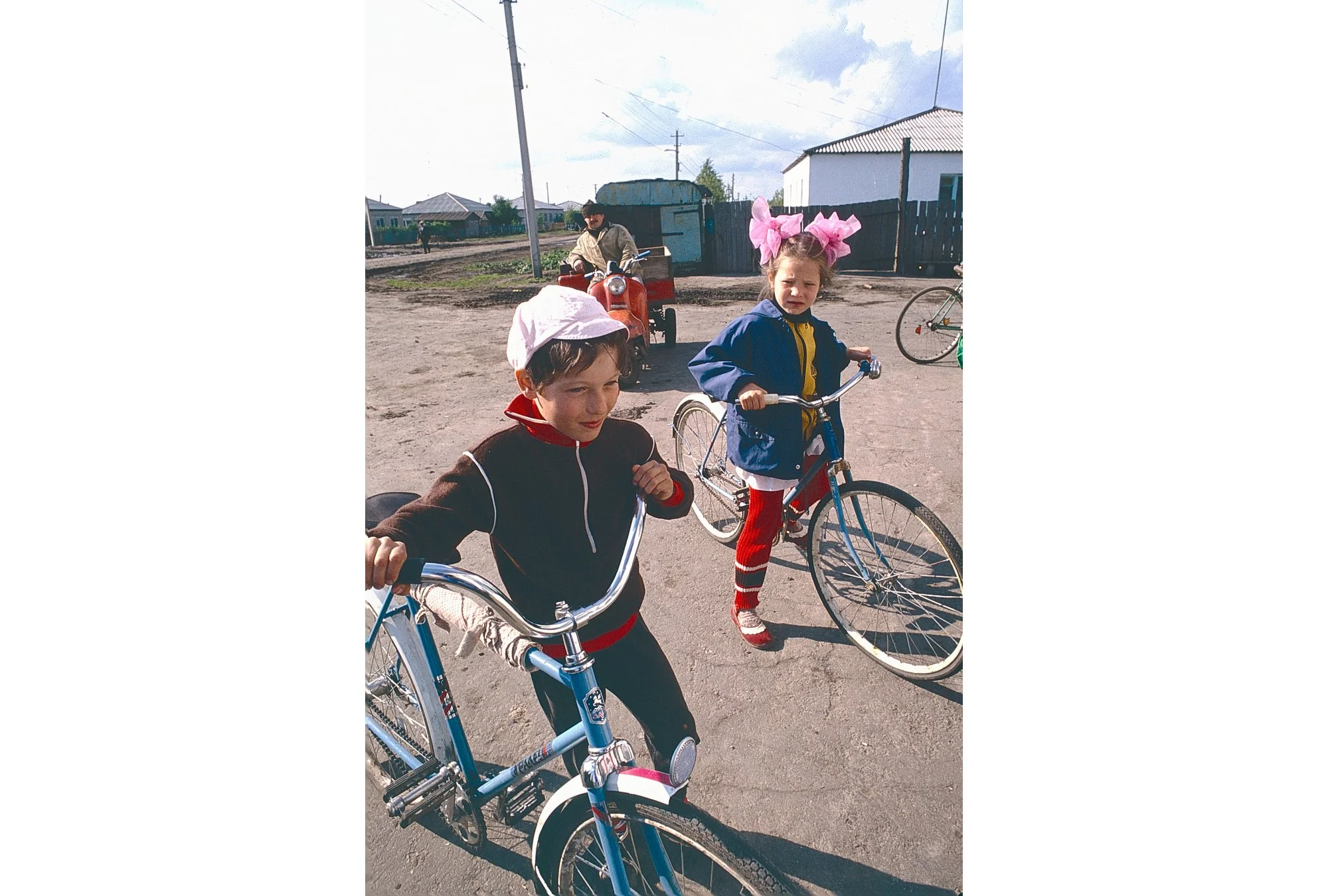
Fellow cyclists.
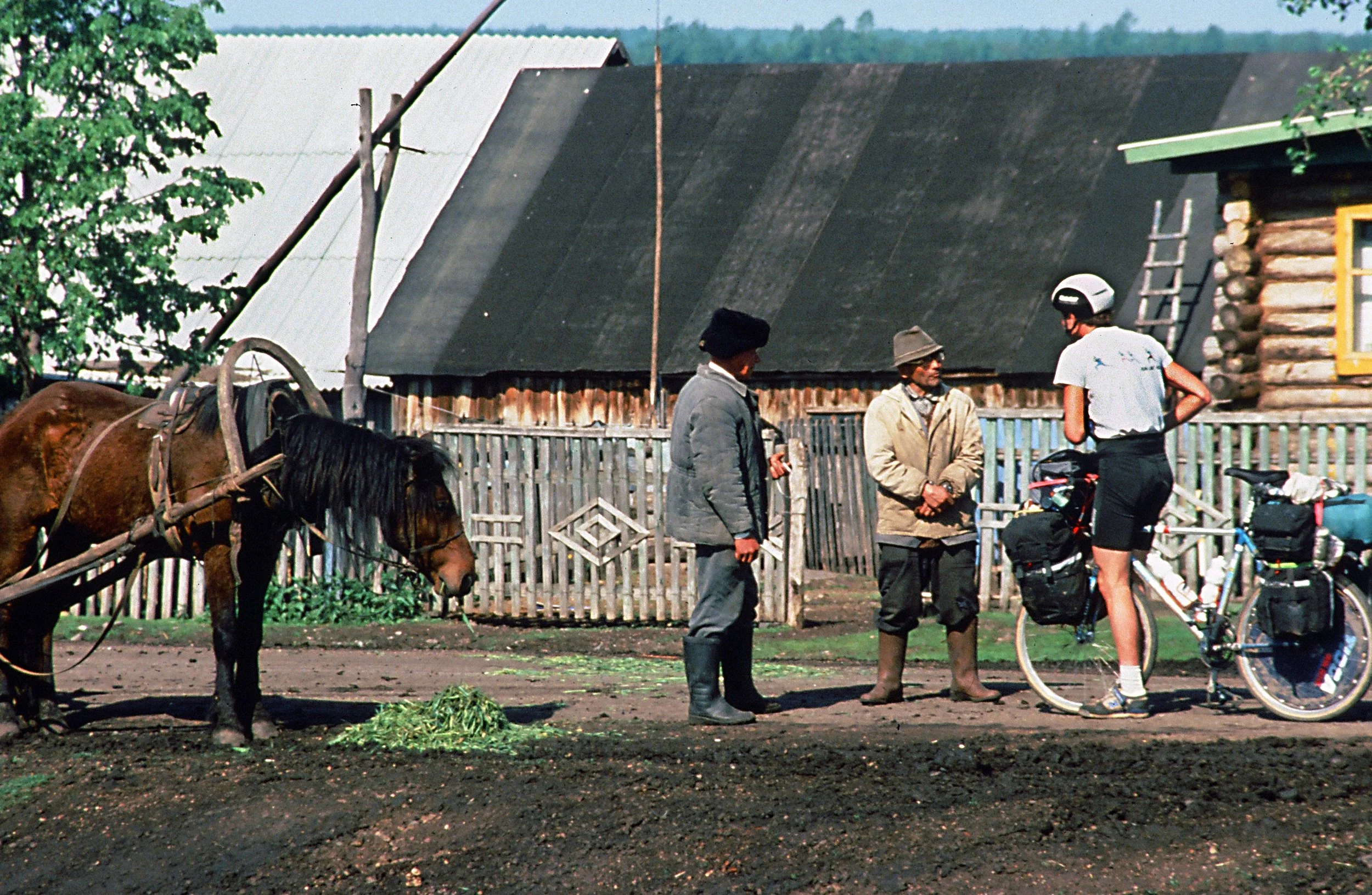
Using my non-existent Russian to ask for permission.
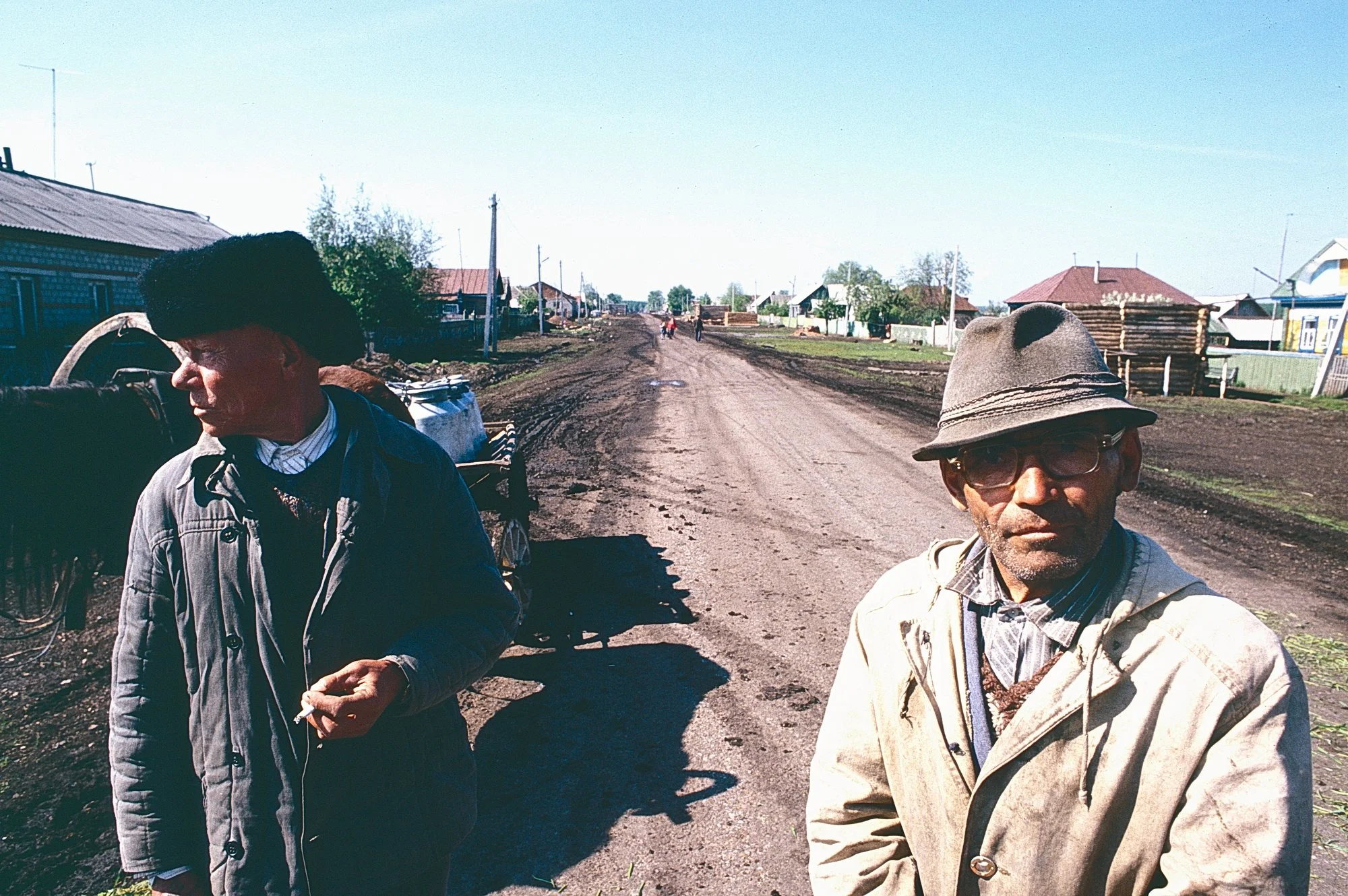
Tatar farmers with their horse drawn cart wait for the collective farm's milk truck in the Russian plains.
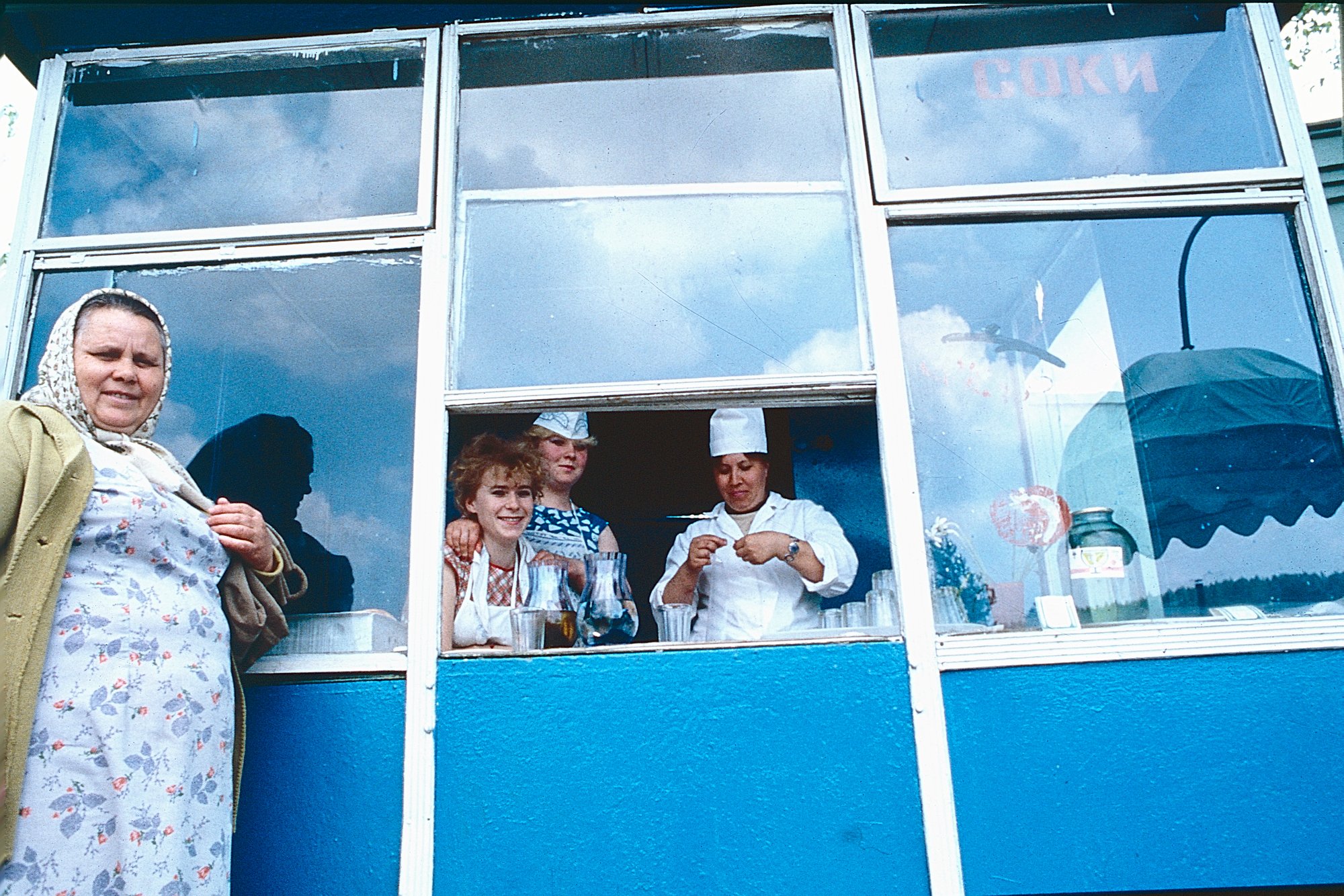
Hanging with the ladies at a fruit juice stand.
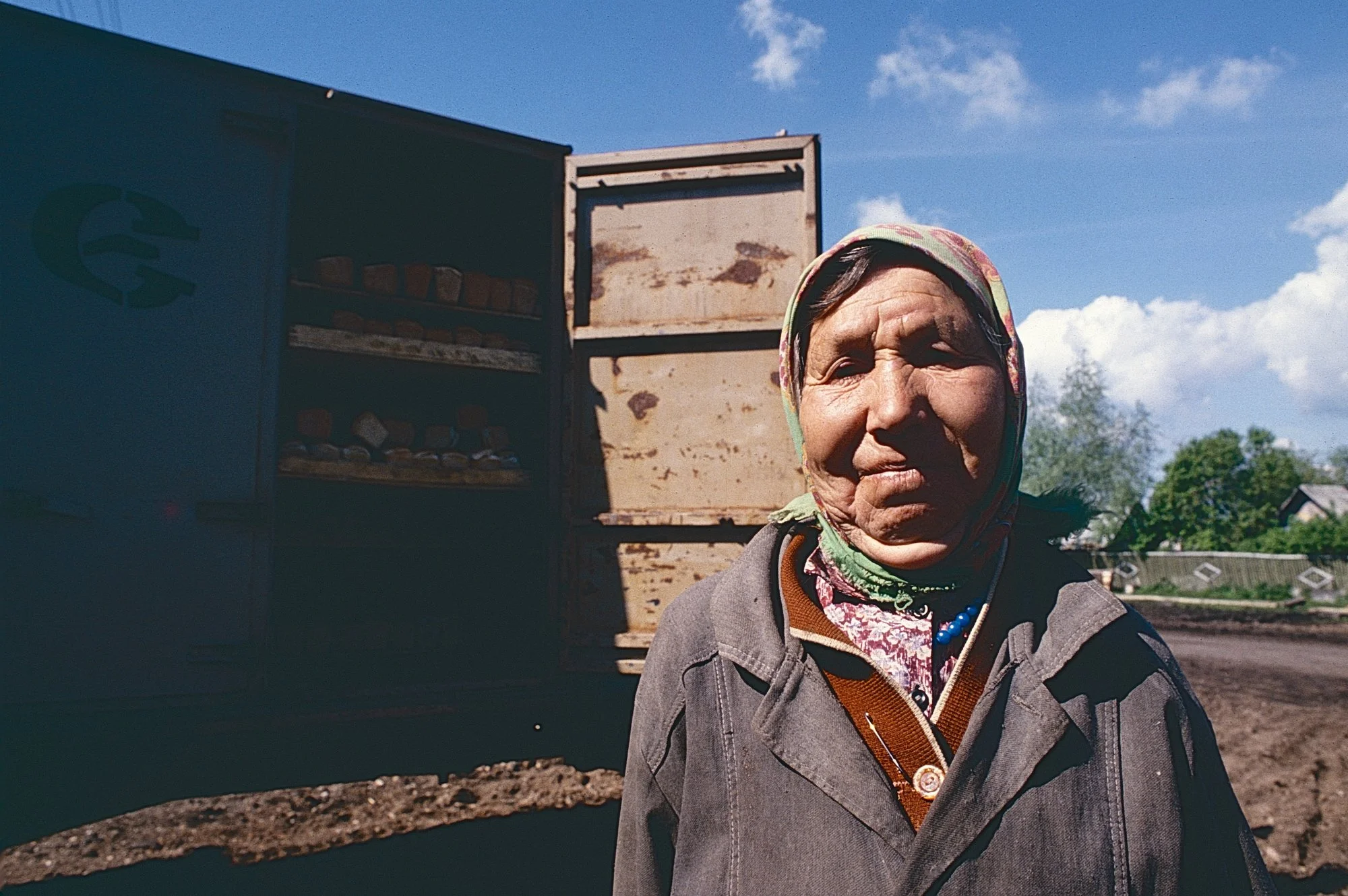
A woman near a bread truck.
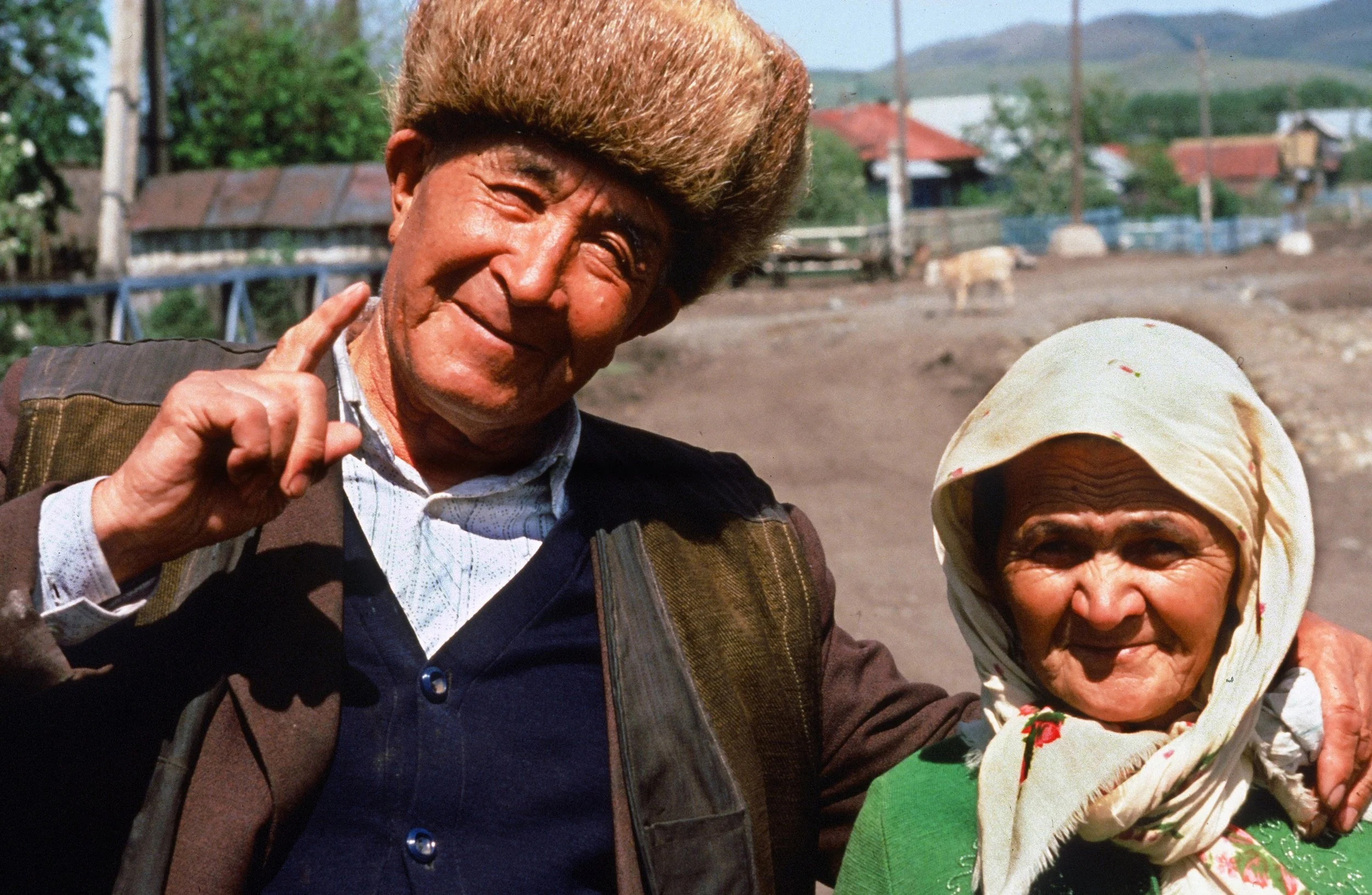
Tatar gang members flash their sign.
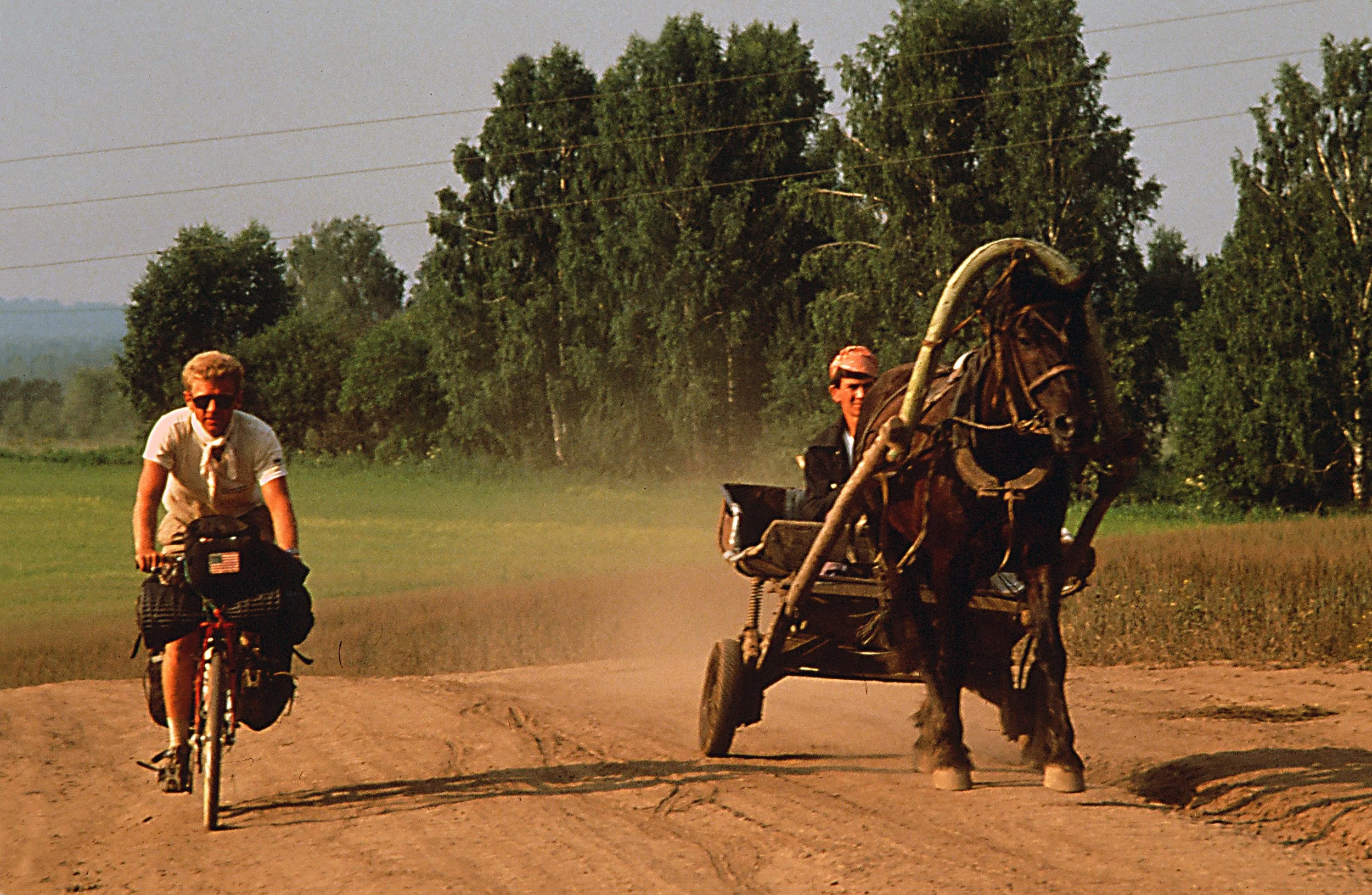
Howard drag races a horse cart.
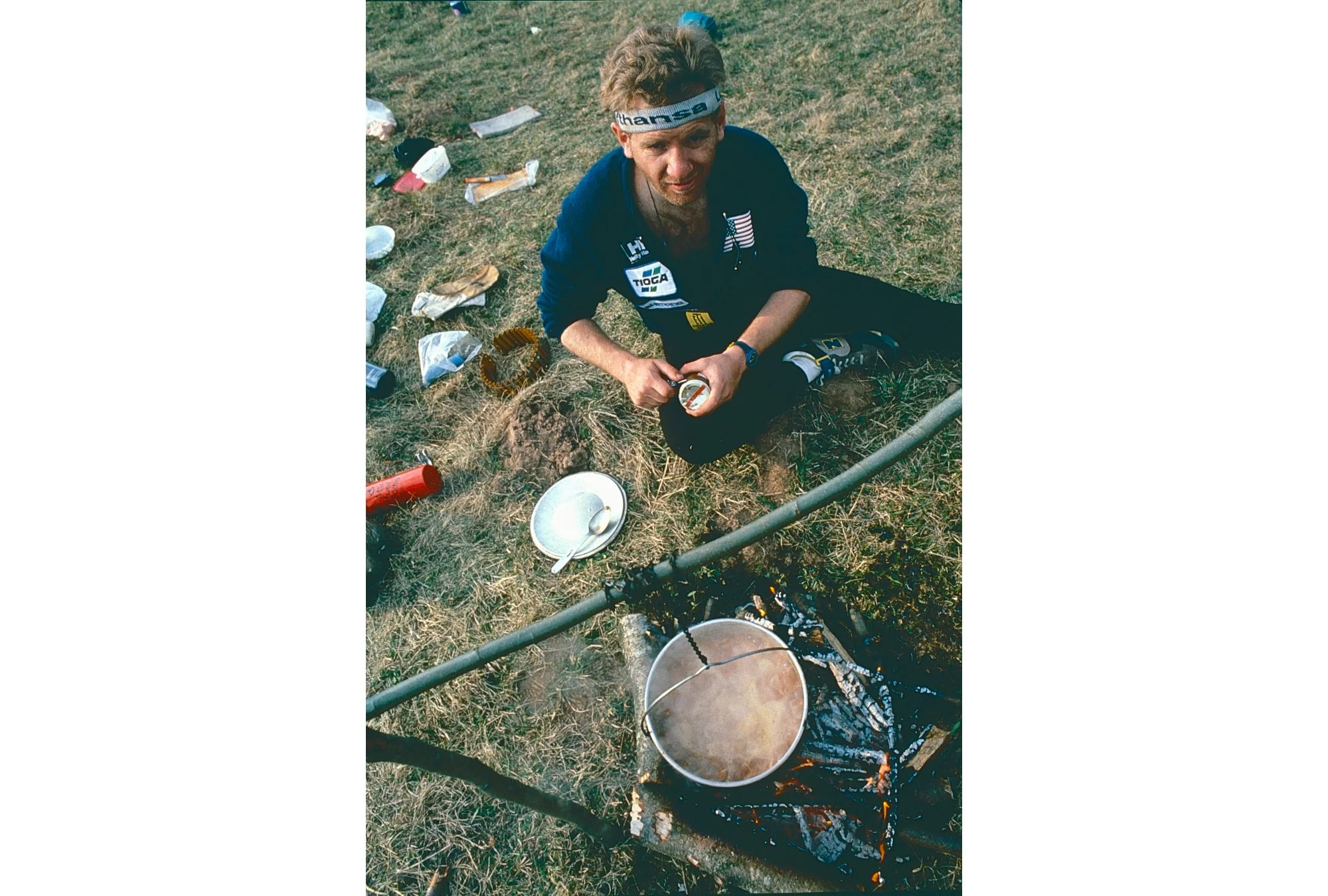
Howard prepares the evening stew.
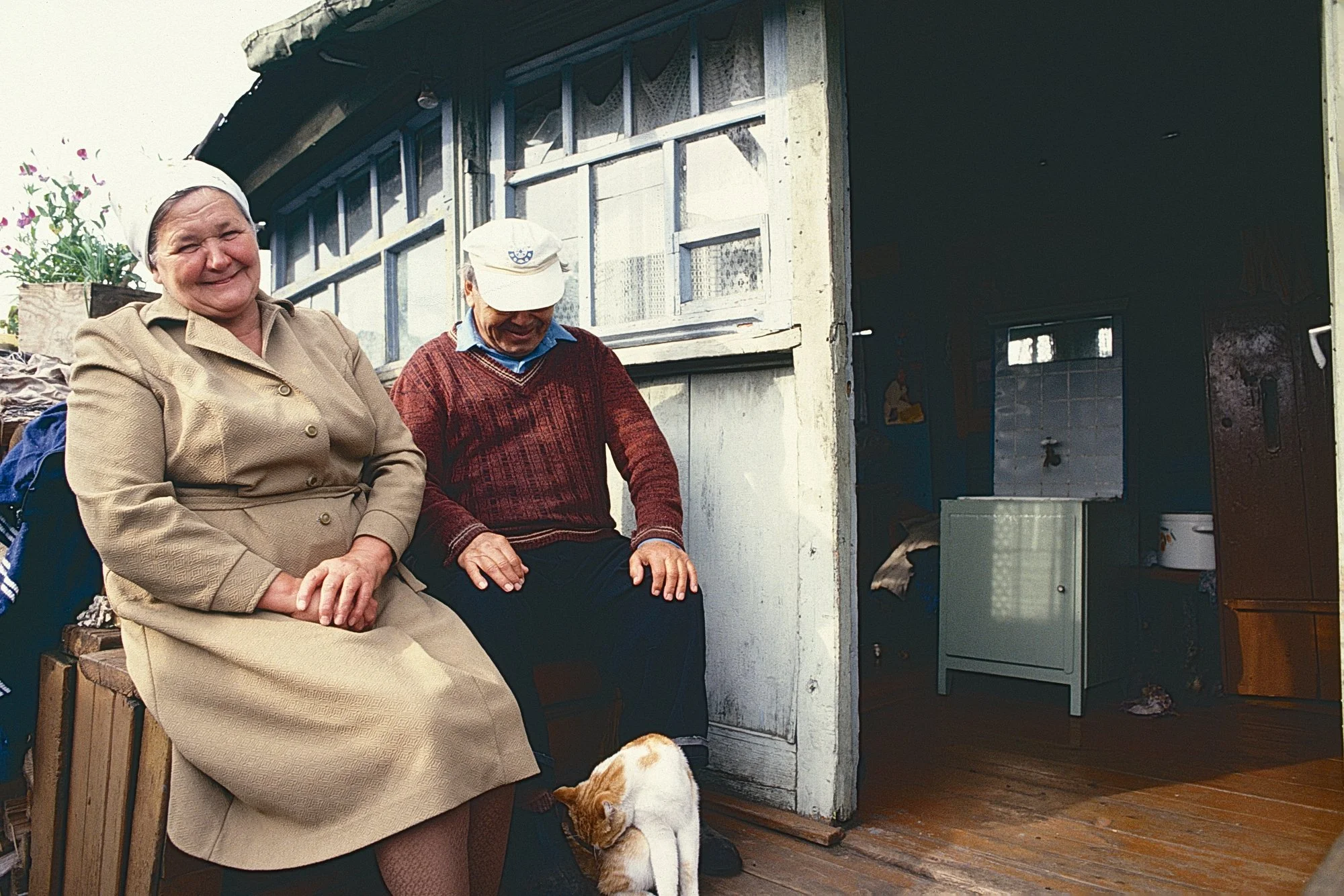
A couple opens their home for an afternoon tea break.
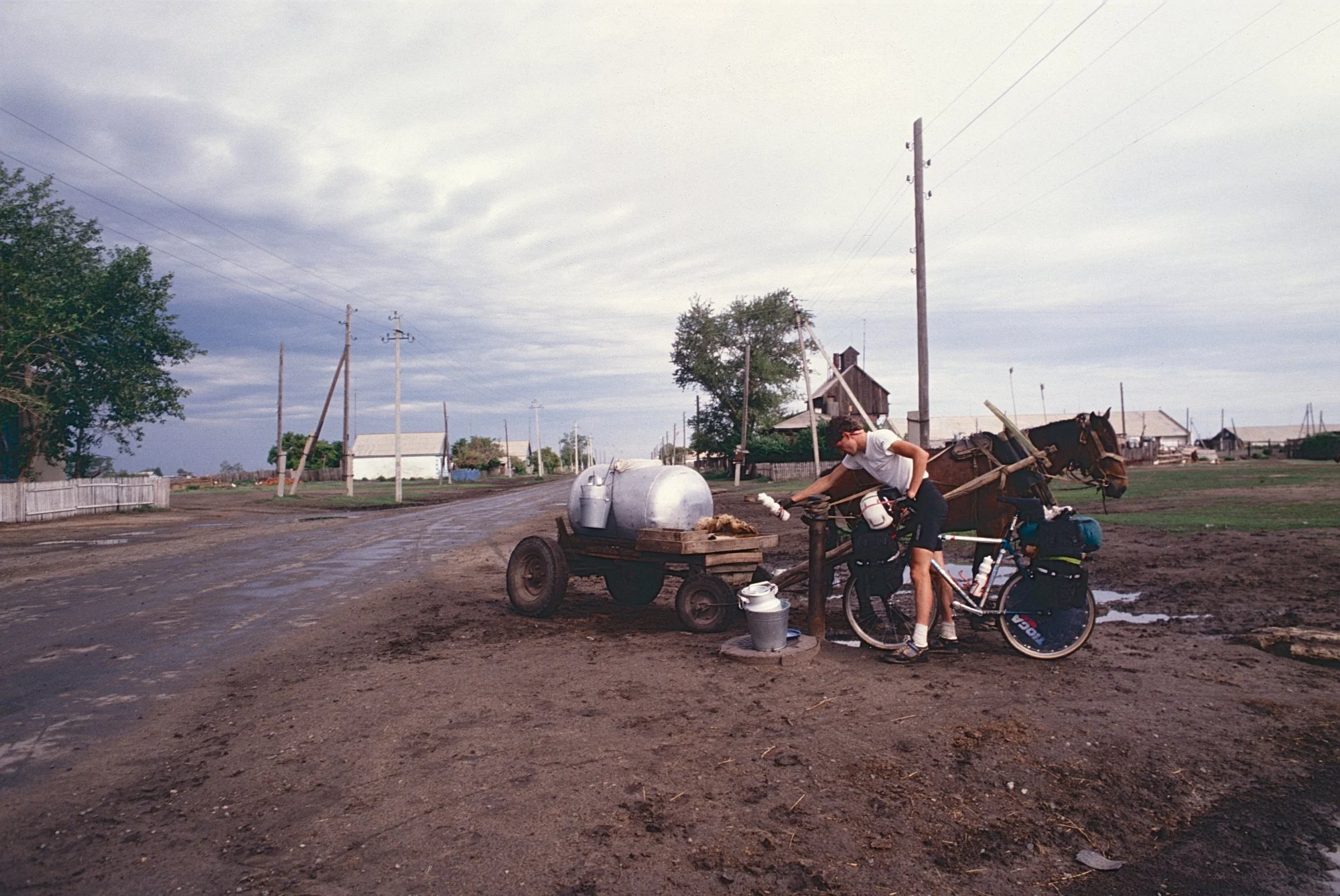
Fetching water at a road side pump in the Russian plains.
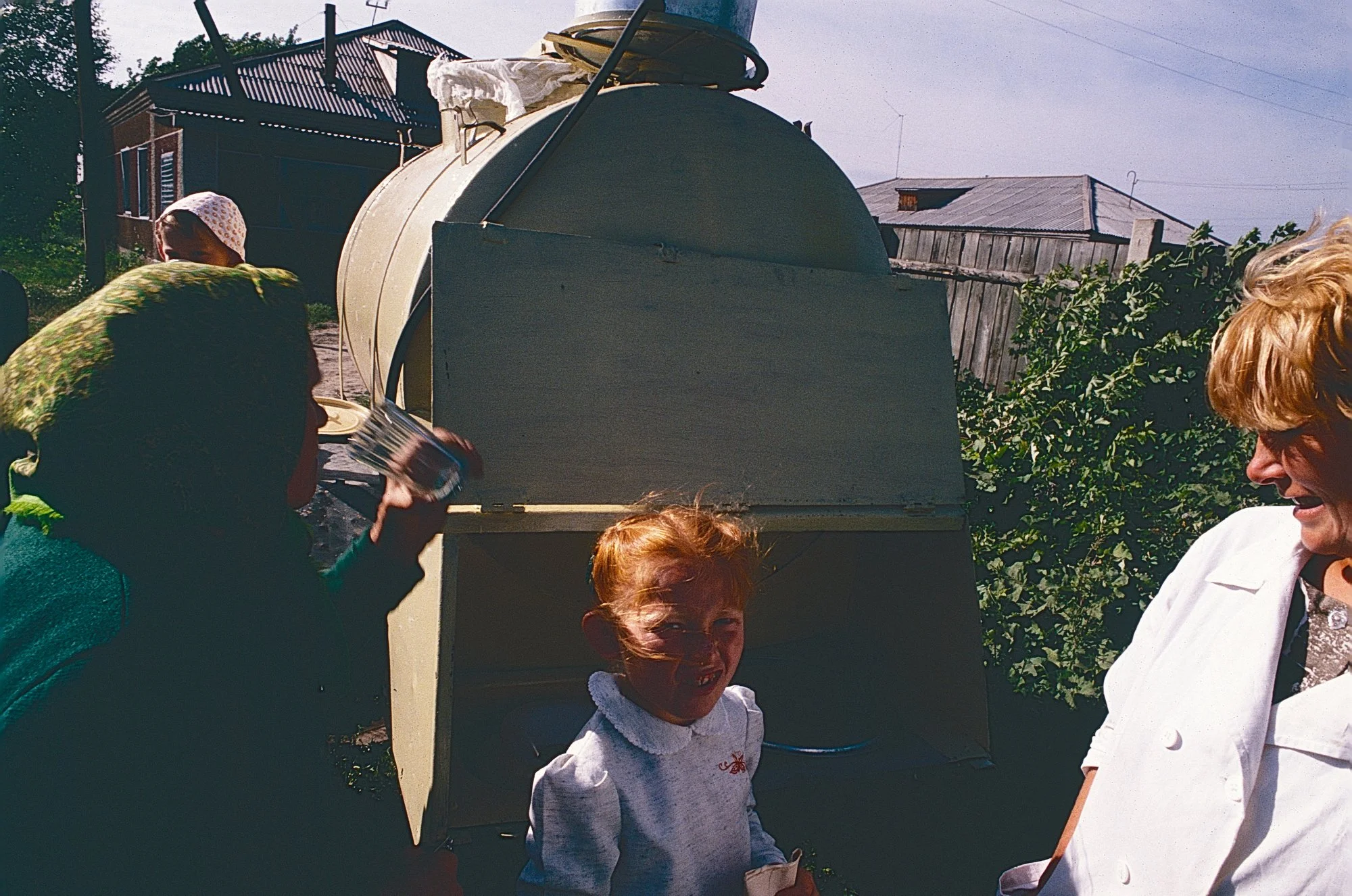
Kvas truck, Russian plains.
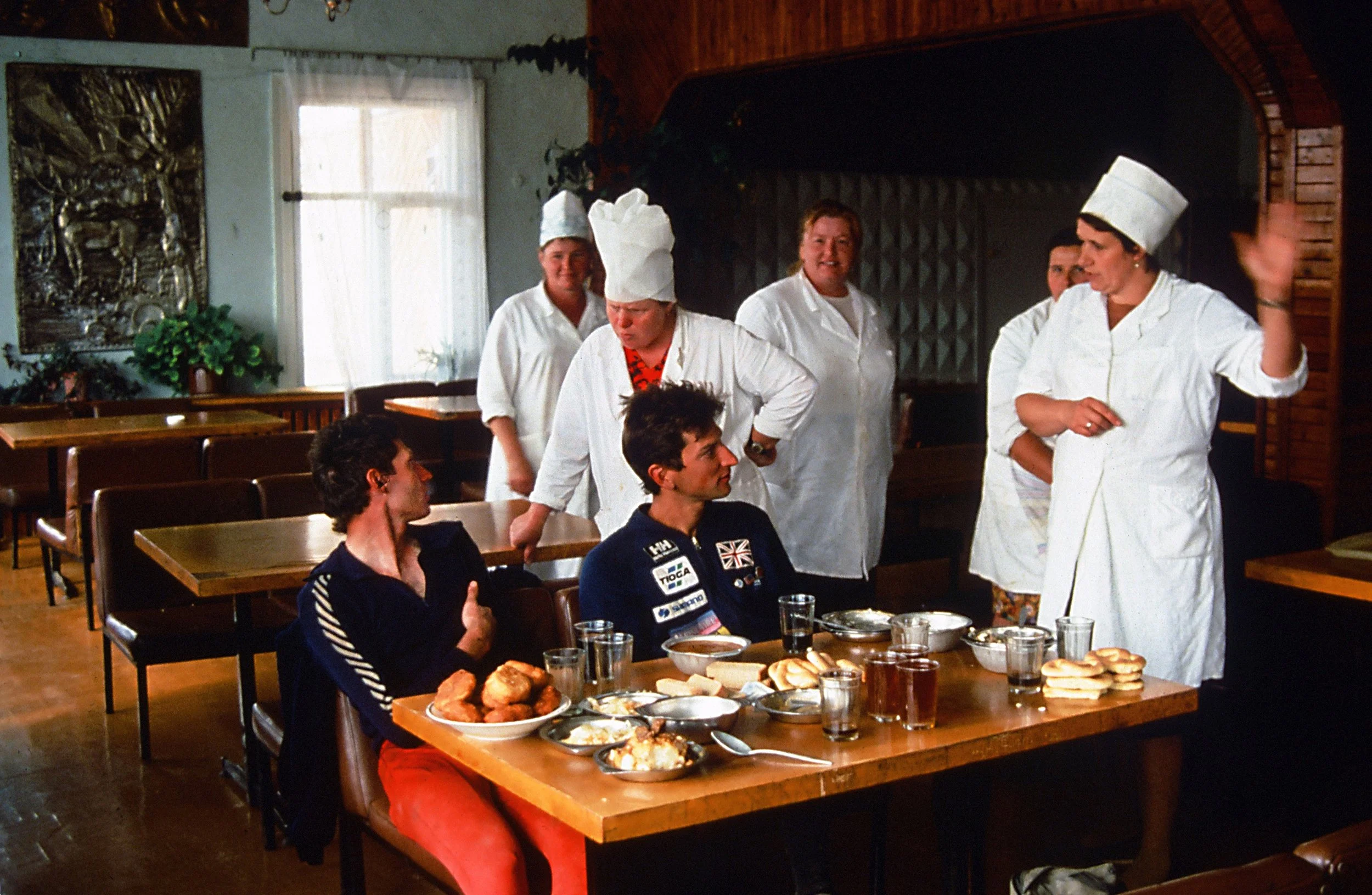
Making friends with Stolovaya workers. The food was never great, but we consumed lots of it.
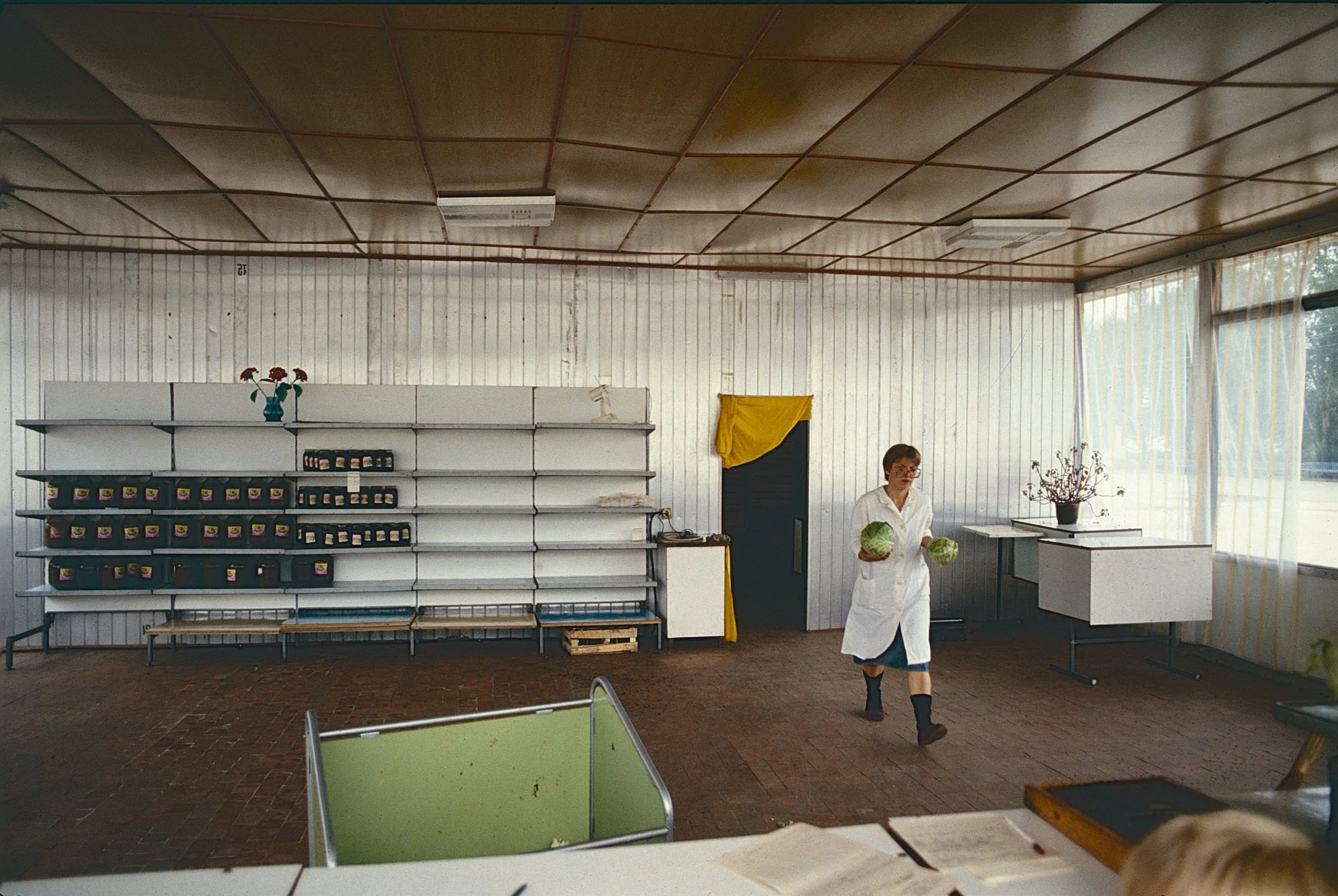
Pickled mystery food and cabbage were the only items for sale at this state store. We passed, as the cabbage atop our panniers would have messed with our aerodynamic coefficients.
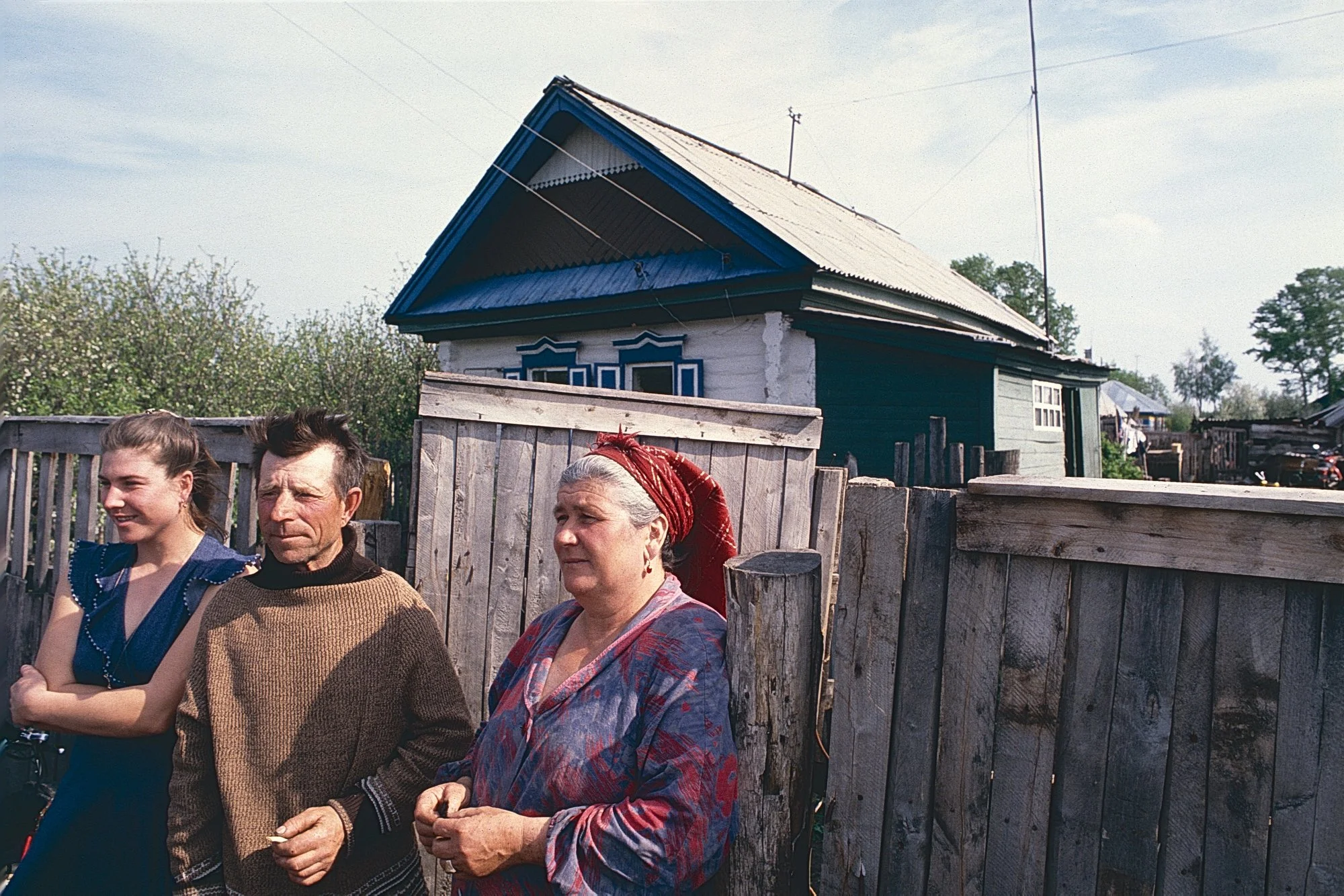
Another family invites us in for tea.
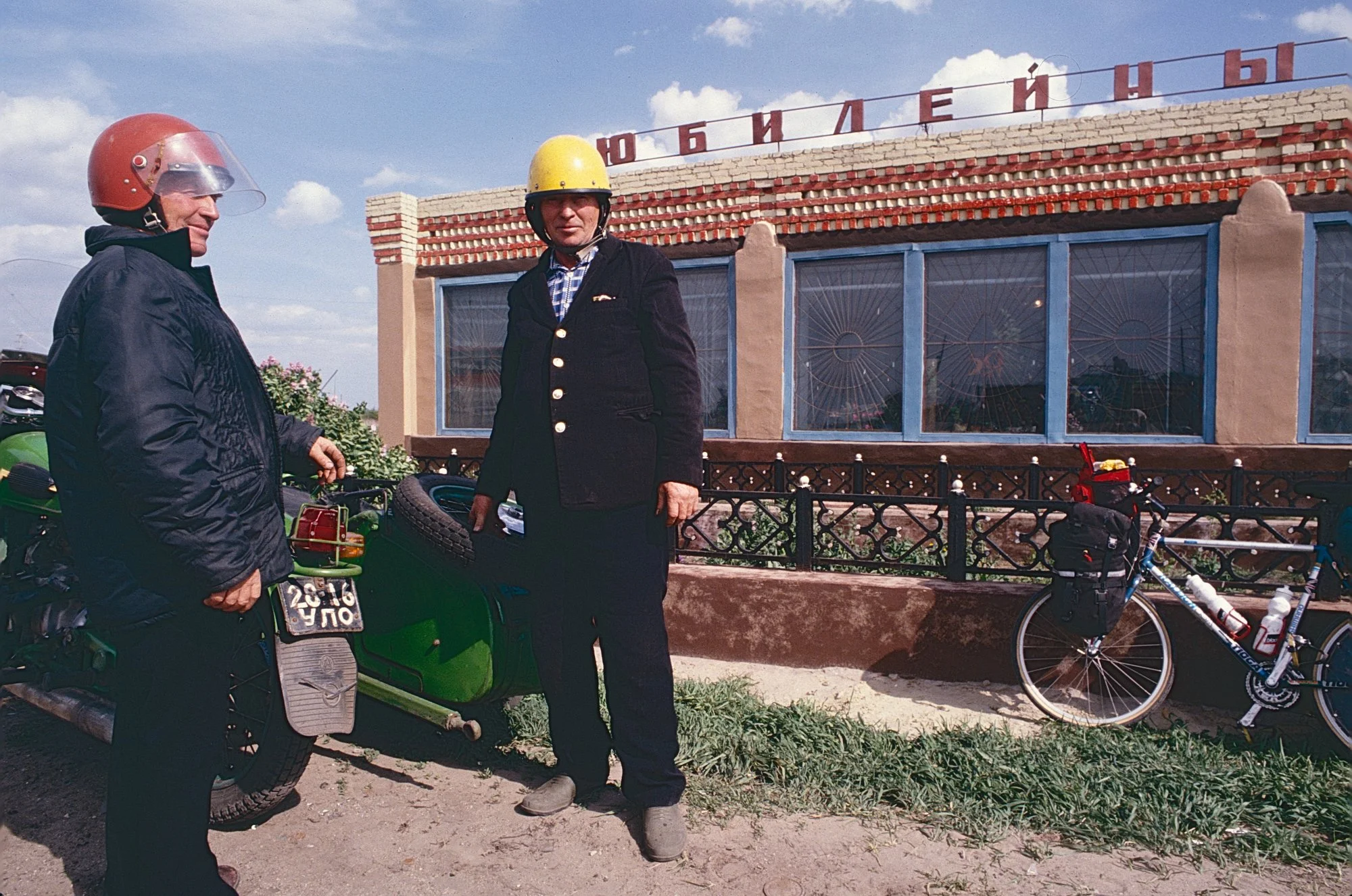
Local Ural sidecar riders.
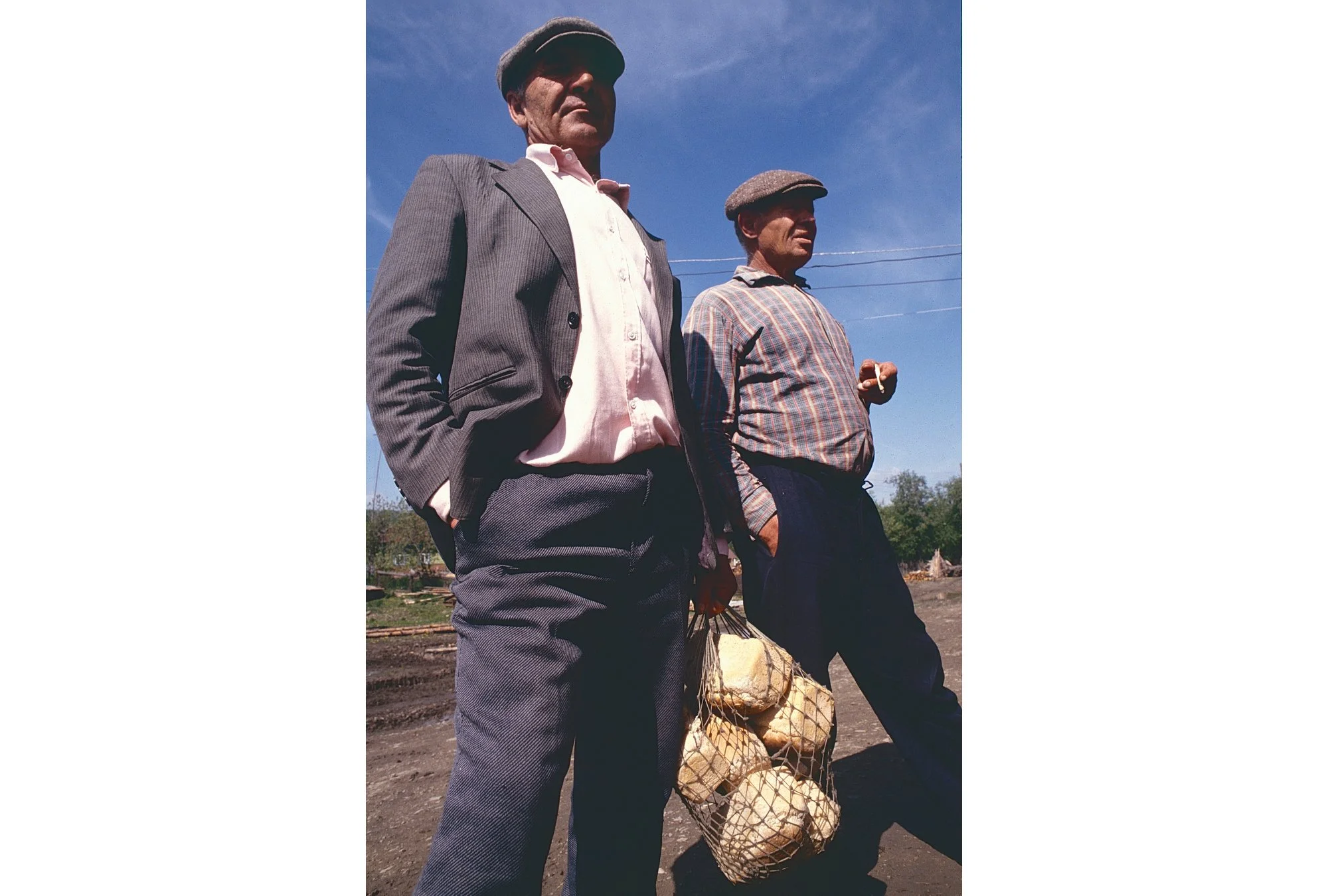
Russian bread, one kopeck per slice.
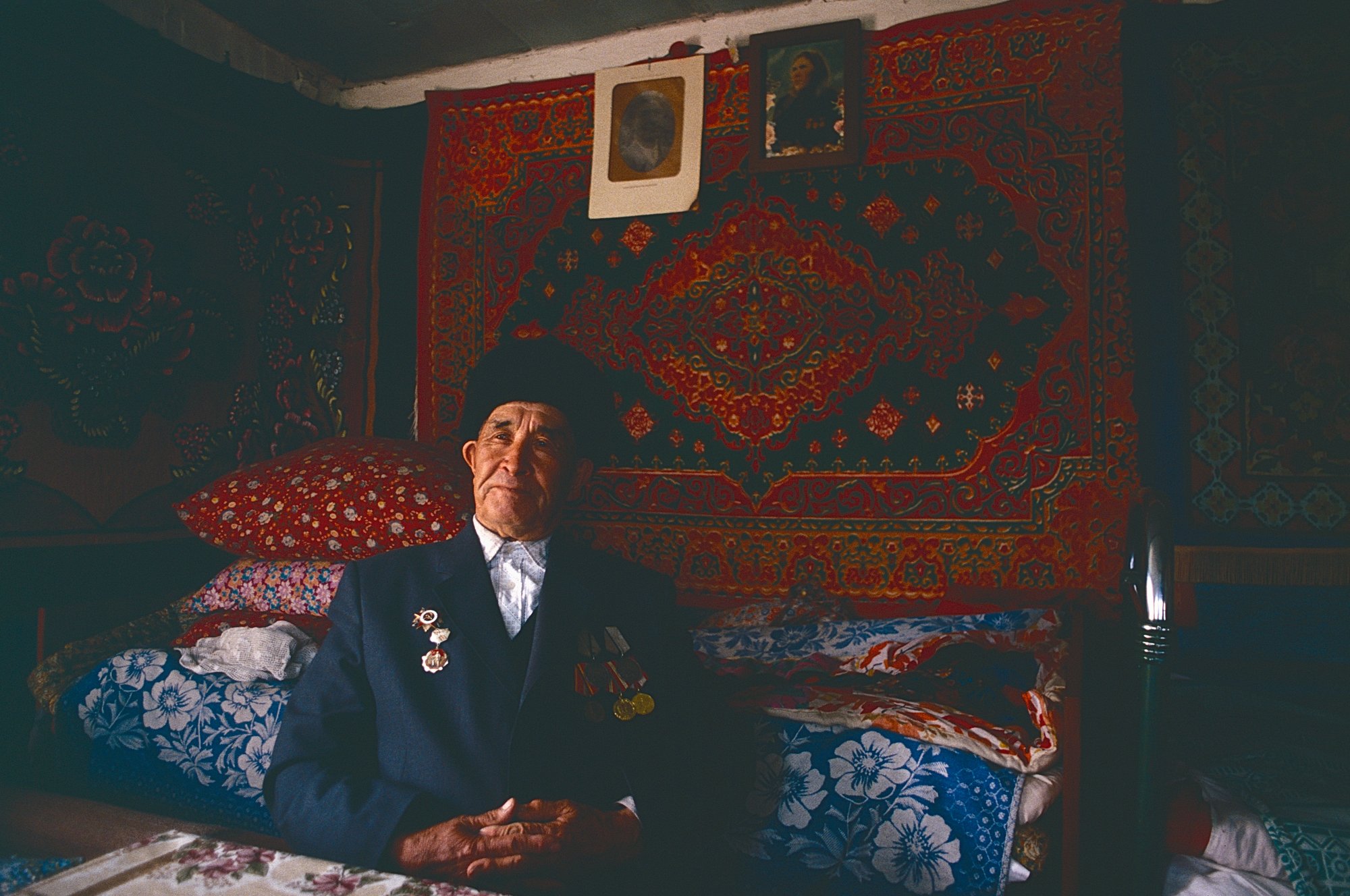
Ethnic Bashkir veteran in his home near the Ural Mountains.
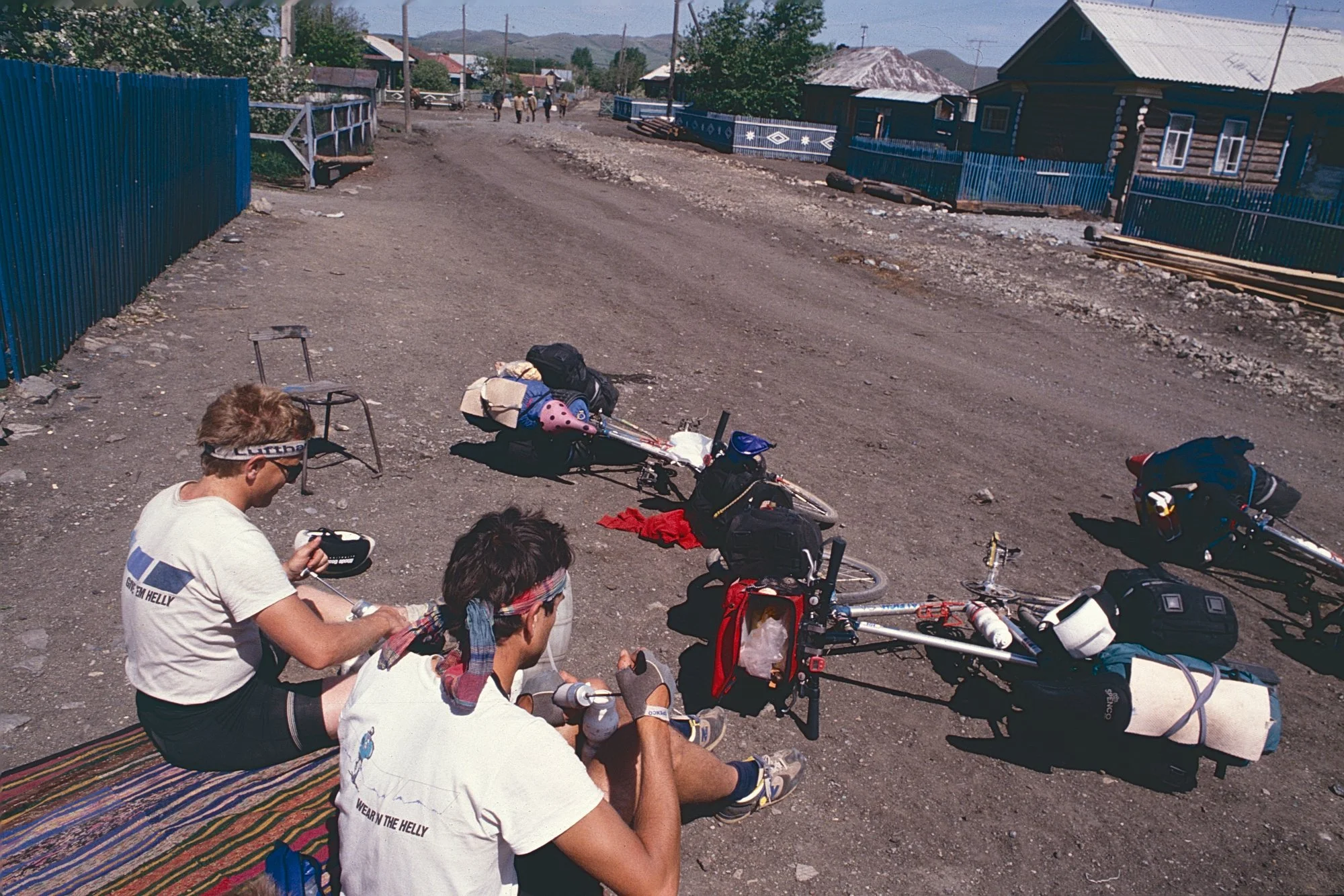
Howard and Simon filtering water.
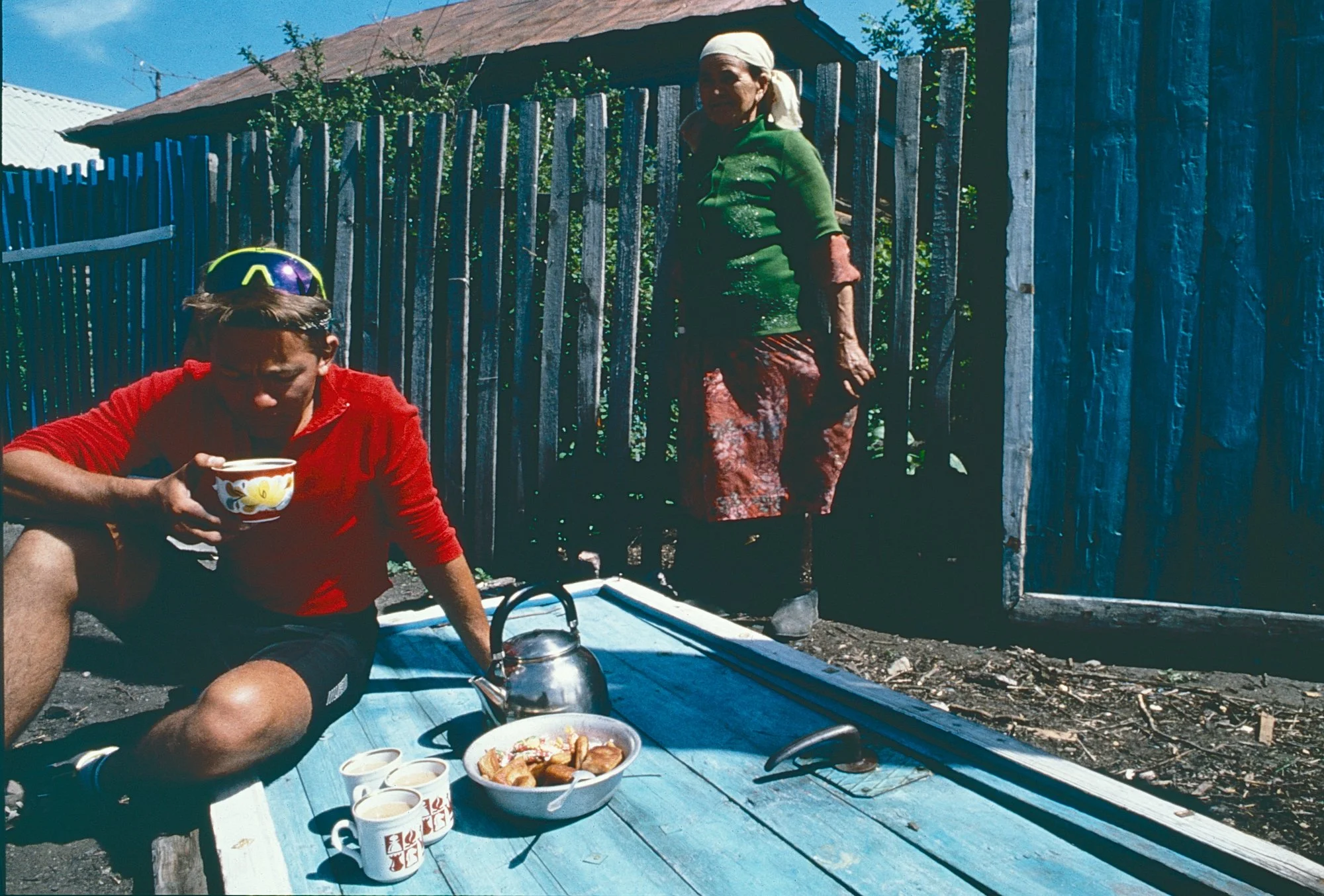
Vitale enjoys local hospitality.
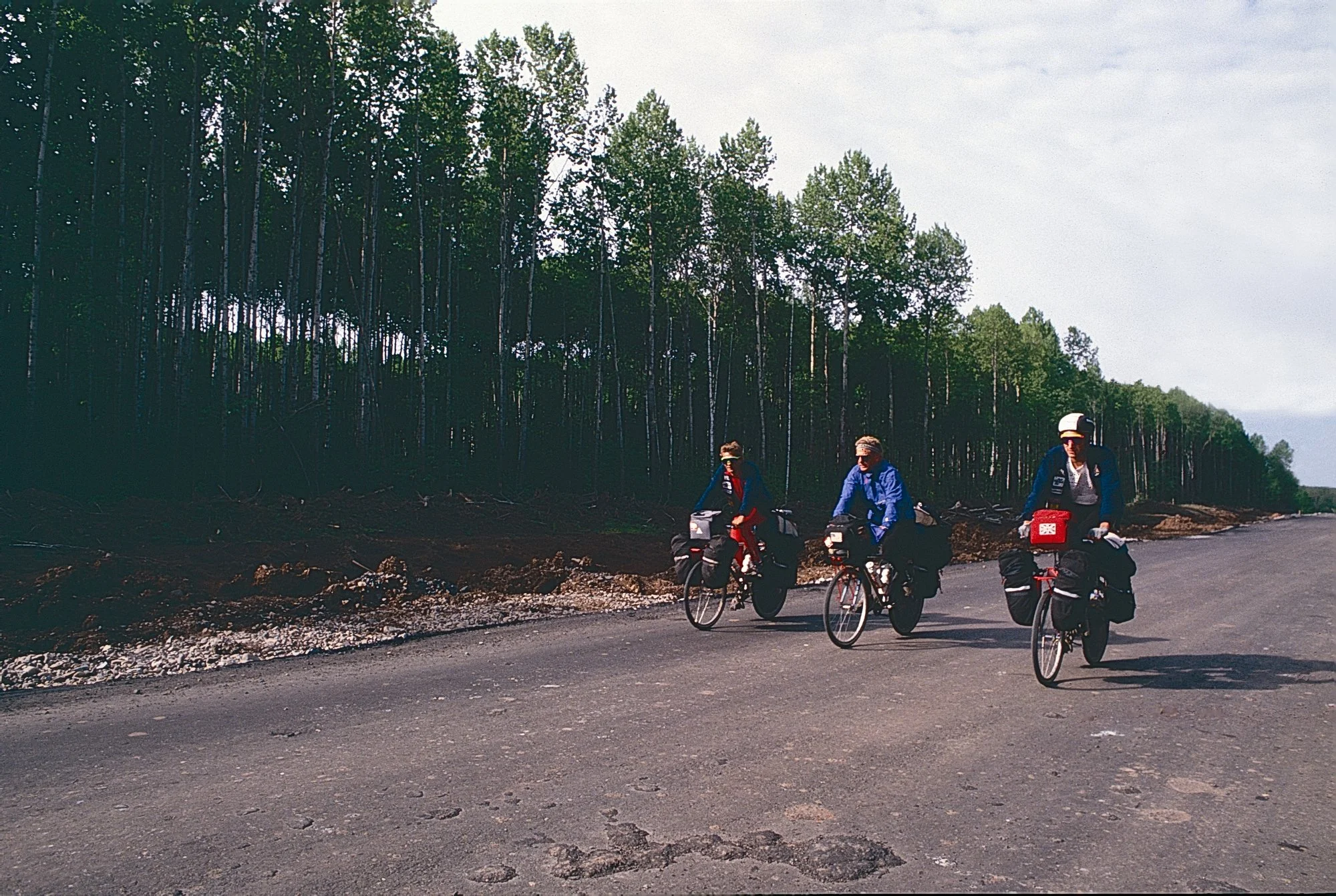
The landscape changes as we approach the Ural Mountains, a welcome sight after the featureless Russian plains.
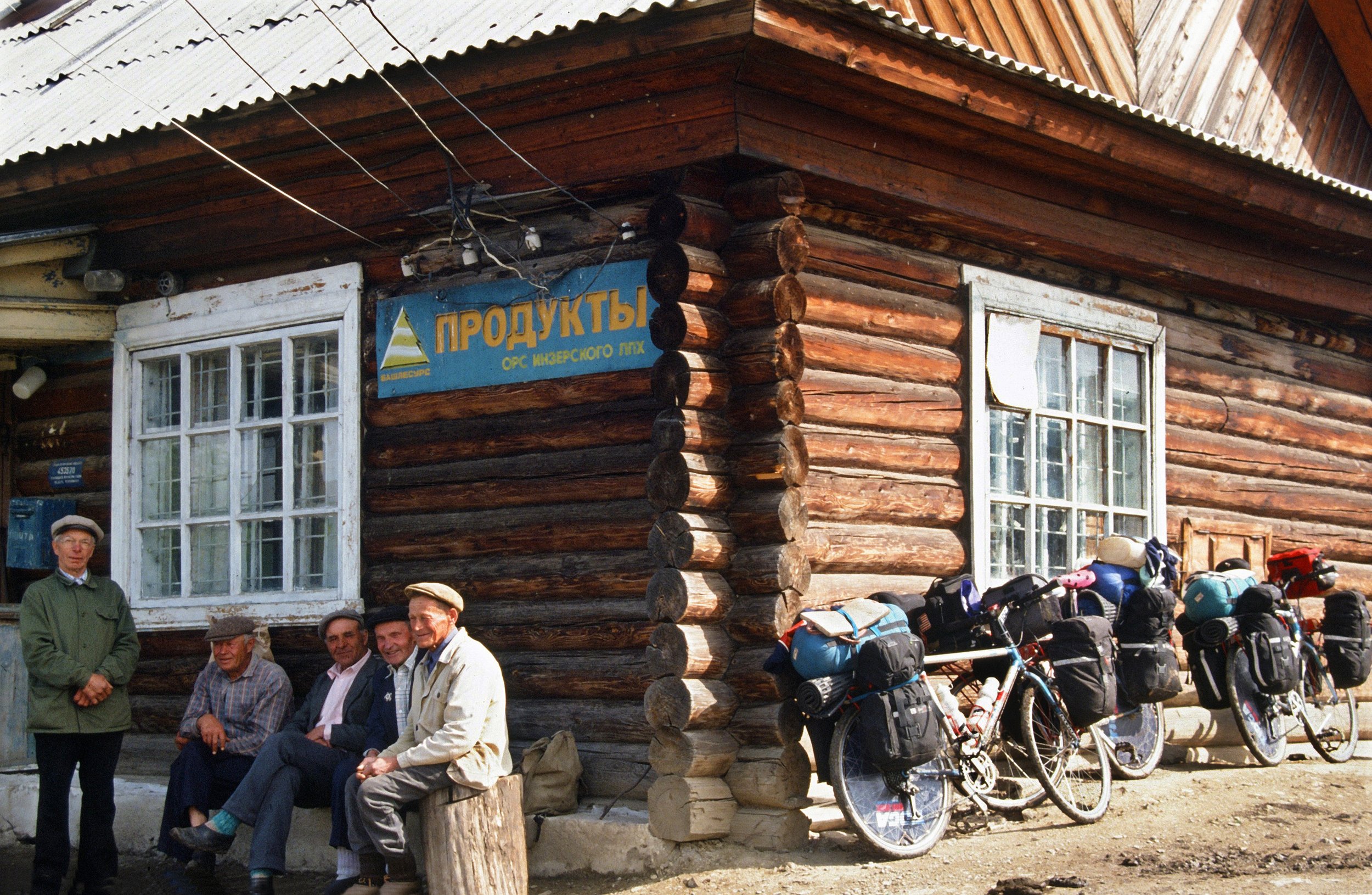
In the Urals.
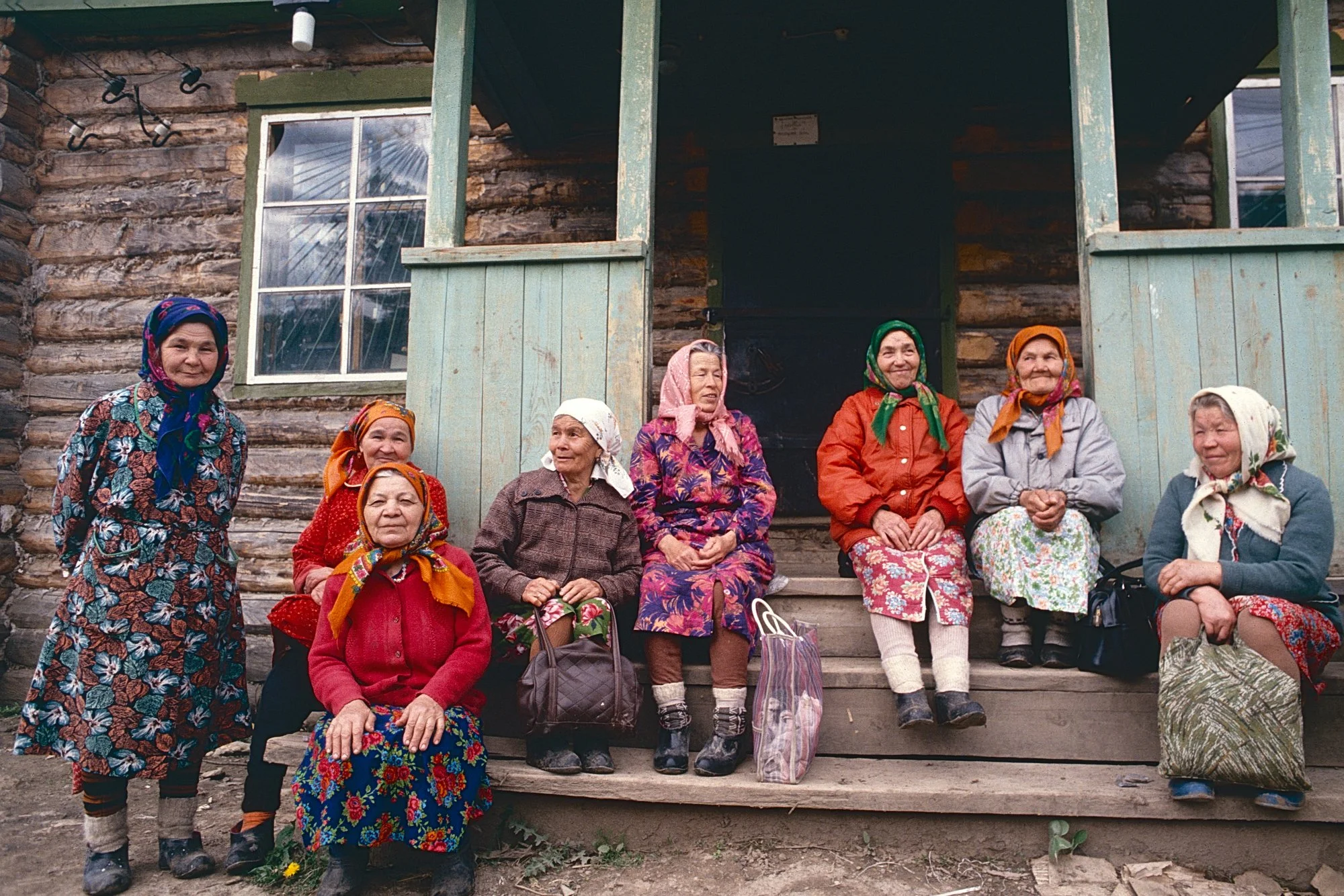
Babushkas wait for the store to open in a Ural Mountains village.
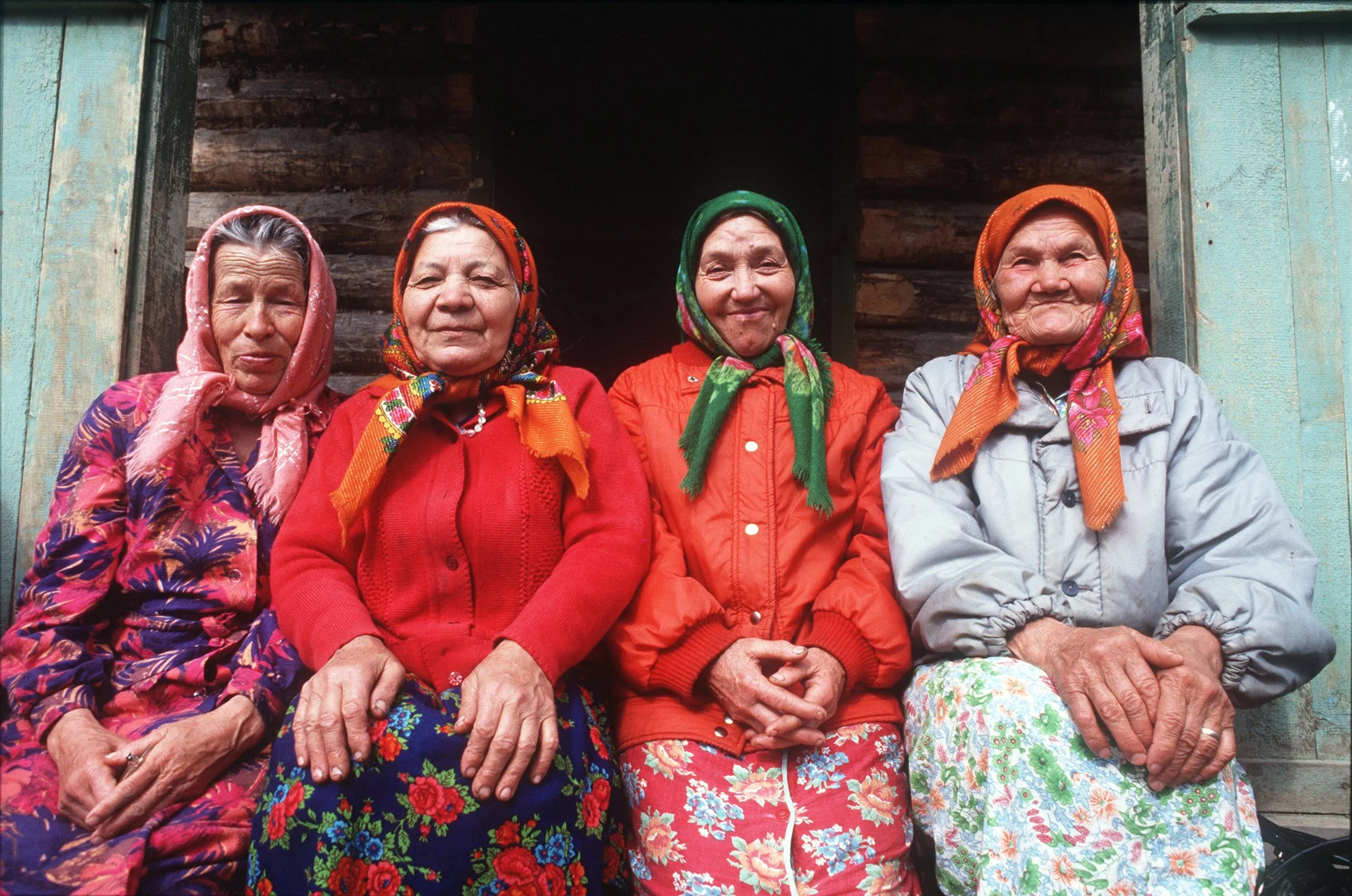
Those hands attest to a lifetime of work.
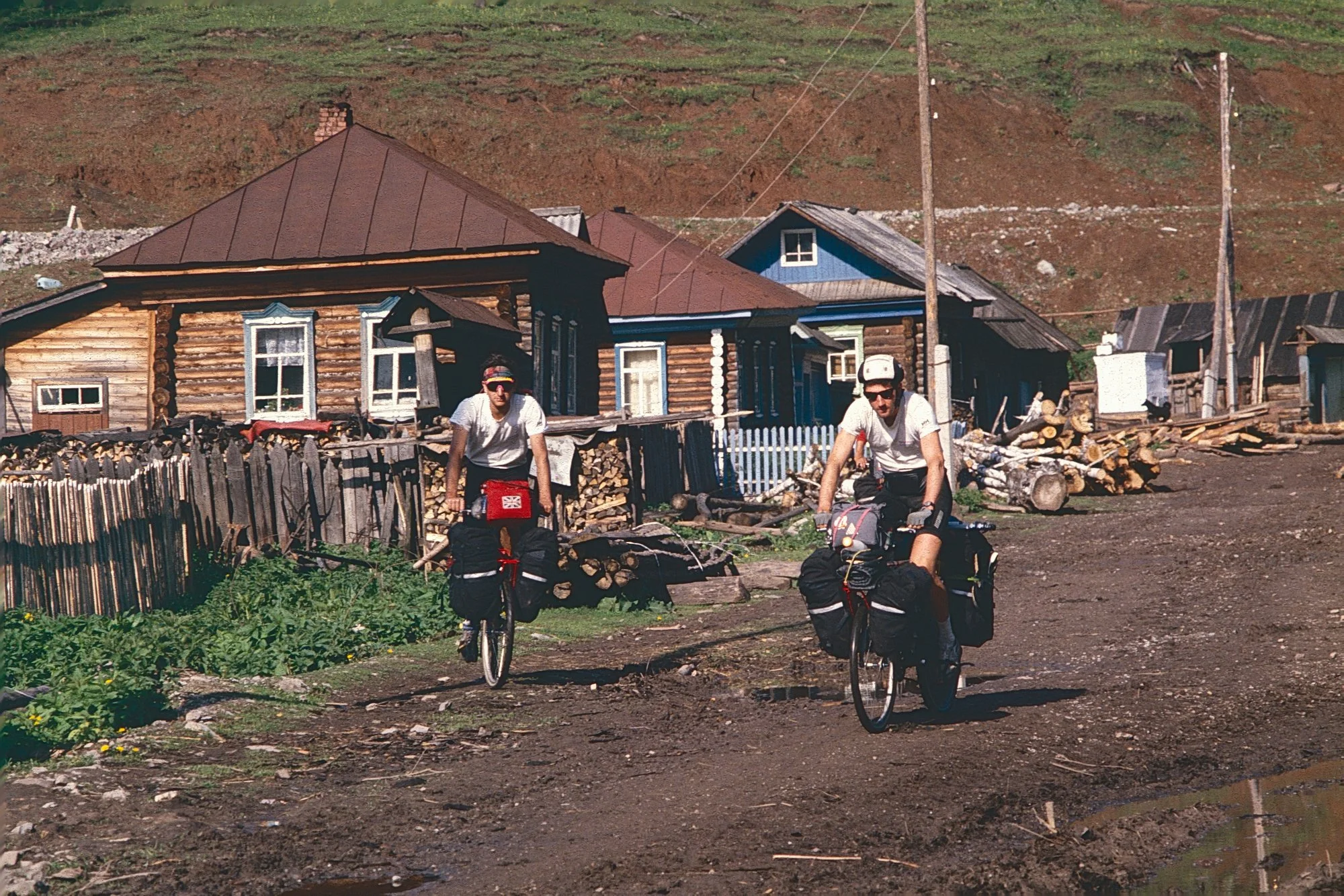
Enjoying crips fresh air and unpaved road in the Ural Mountains.
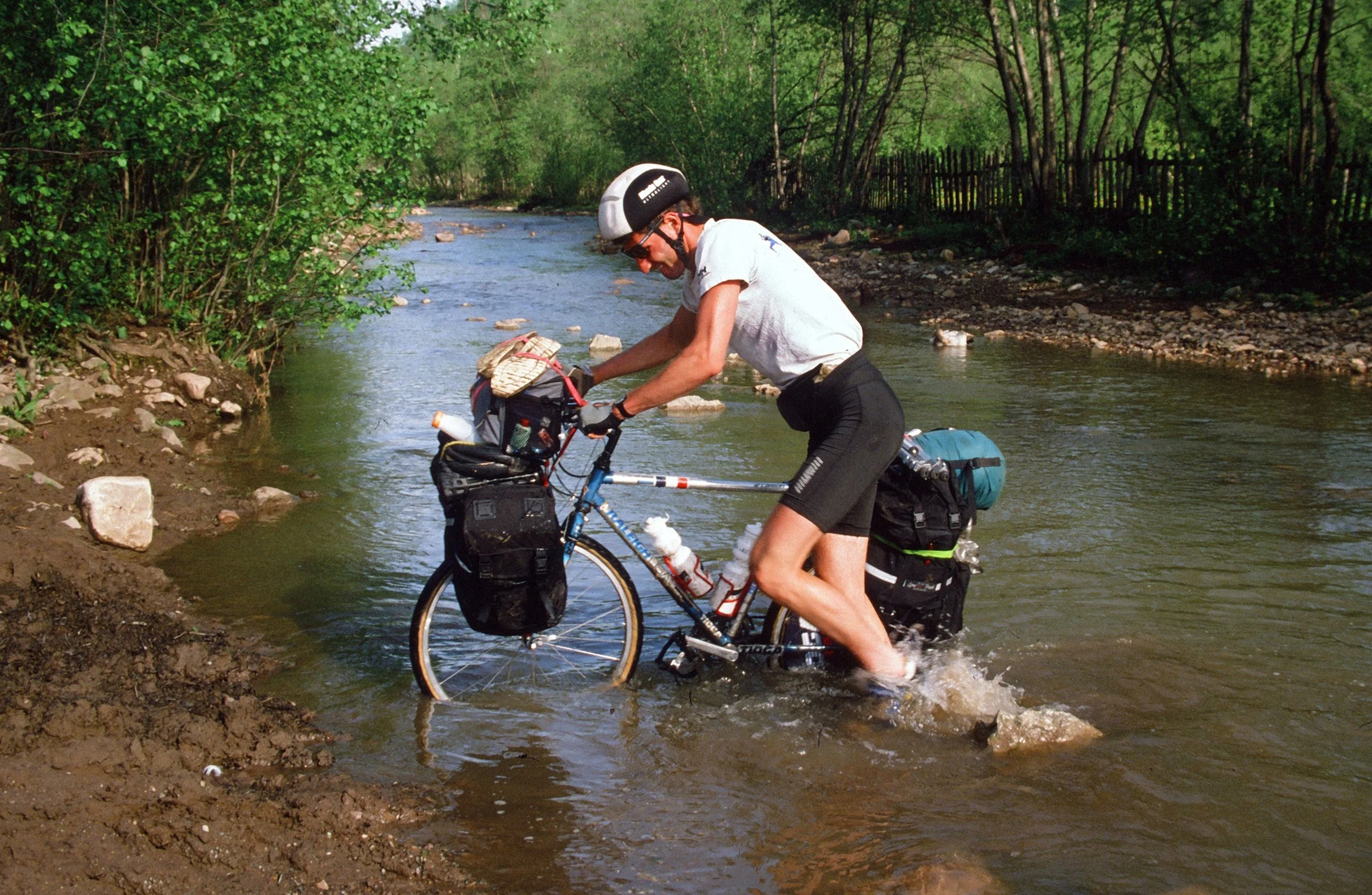
Tucked in T-shirt, check. Fanny pack, check. Effort overbite, check.
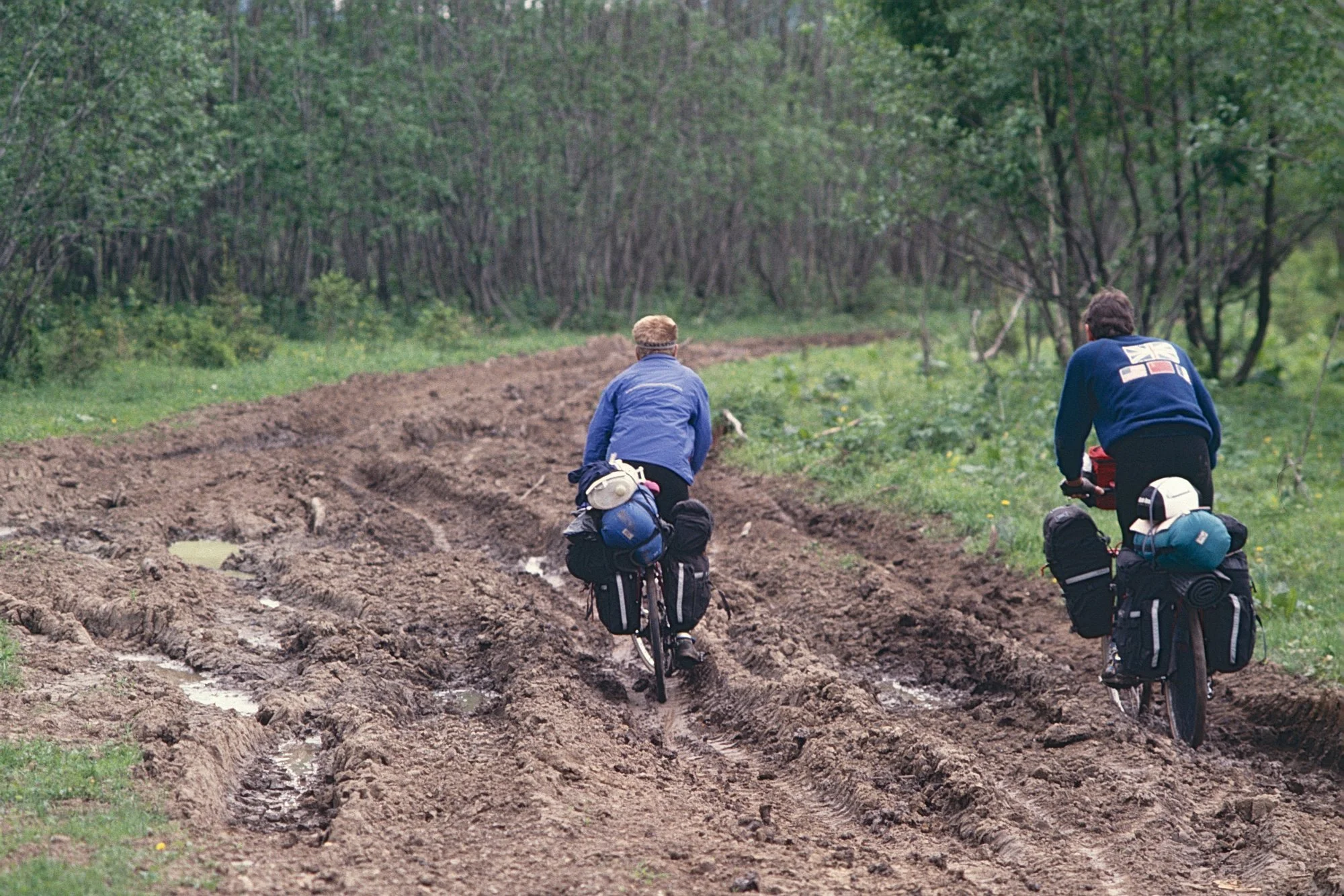
But regretting having shipped our knobby tires ahead to Siberia.
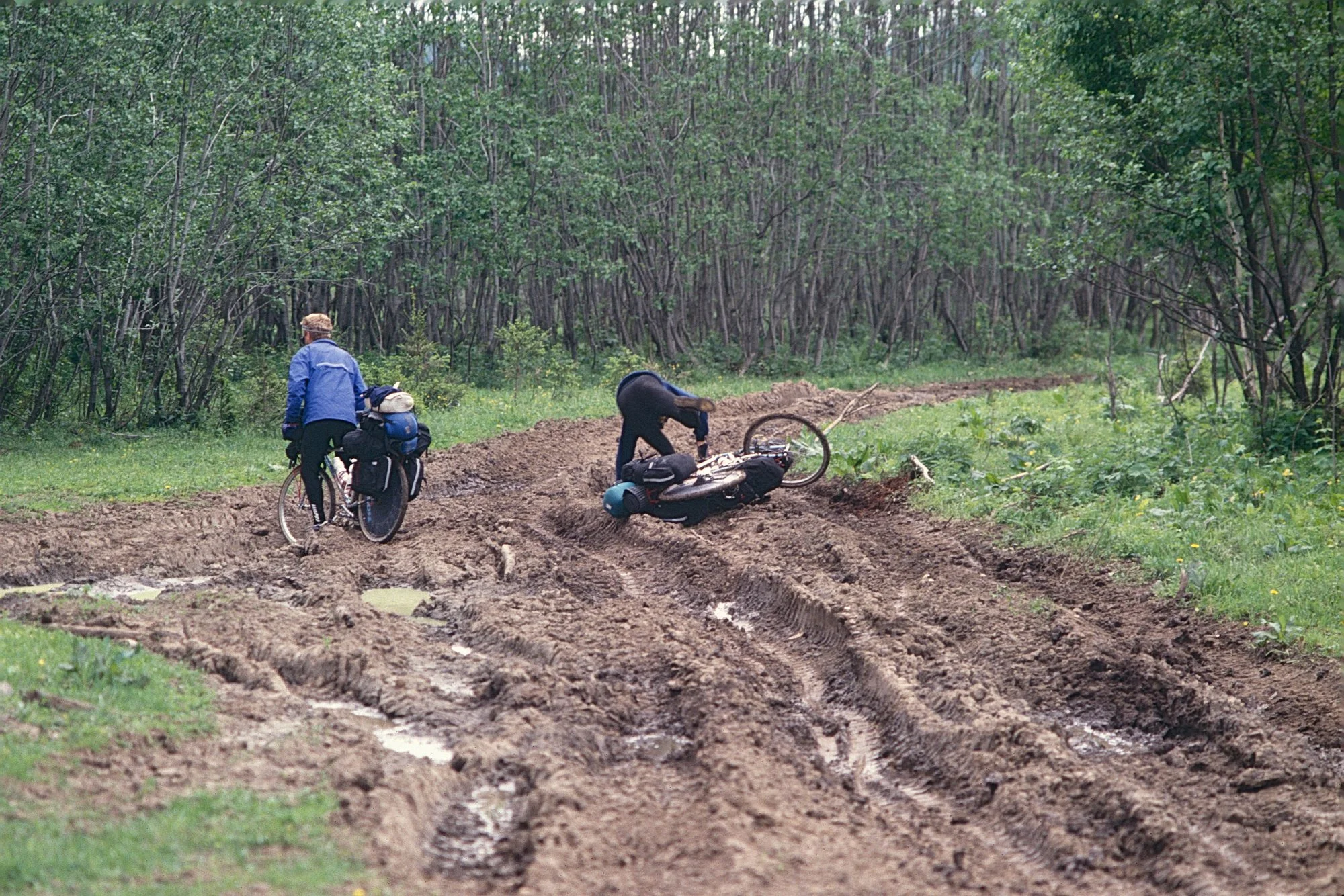
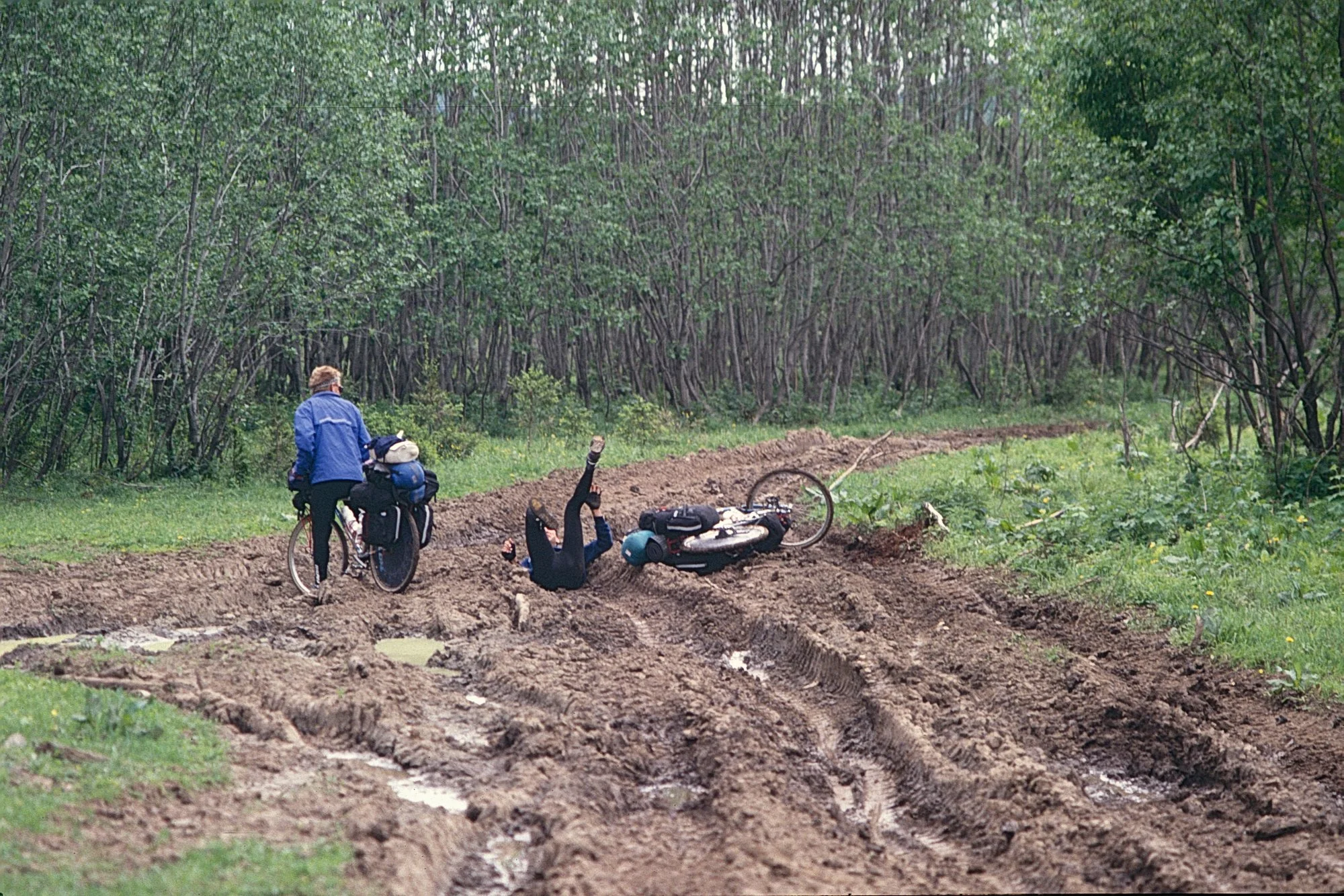
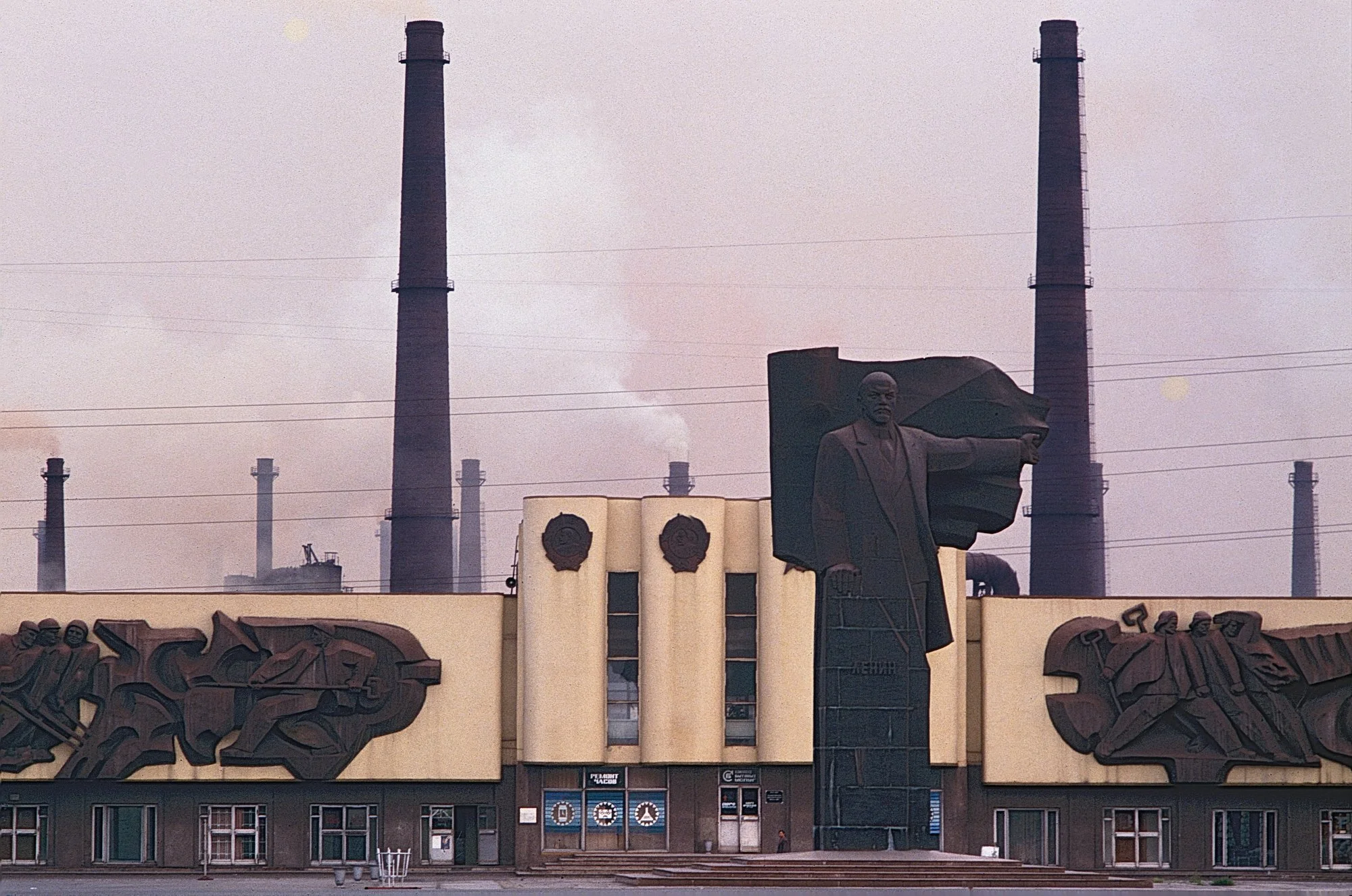
After cycling through the verdant Ural Mountains marking the boundary between European Russia and Siberia, we are greeted by Lenin and the smokestacks of Magnitogorsk.
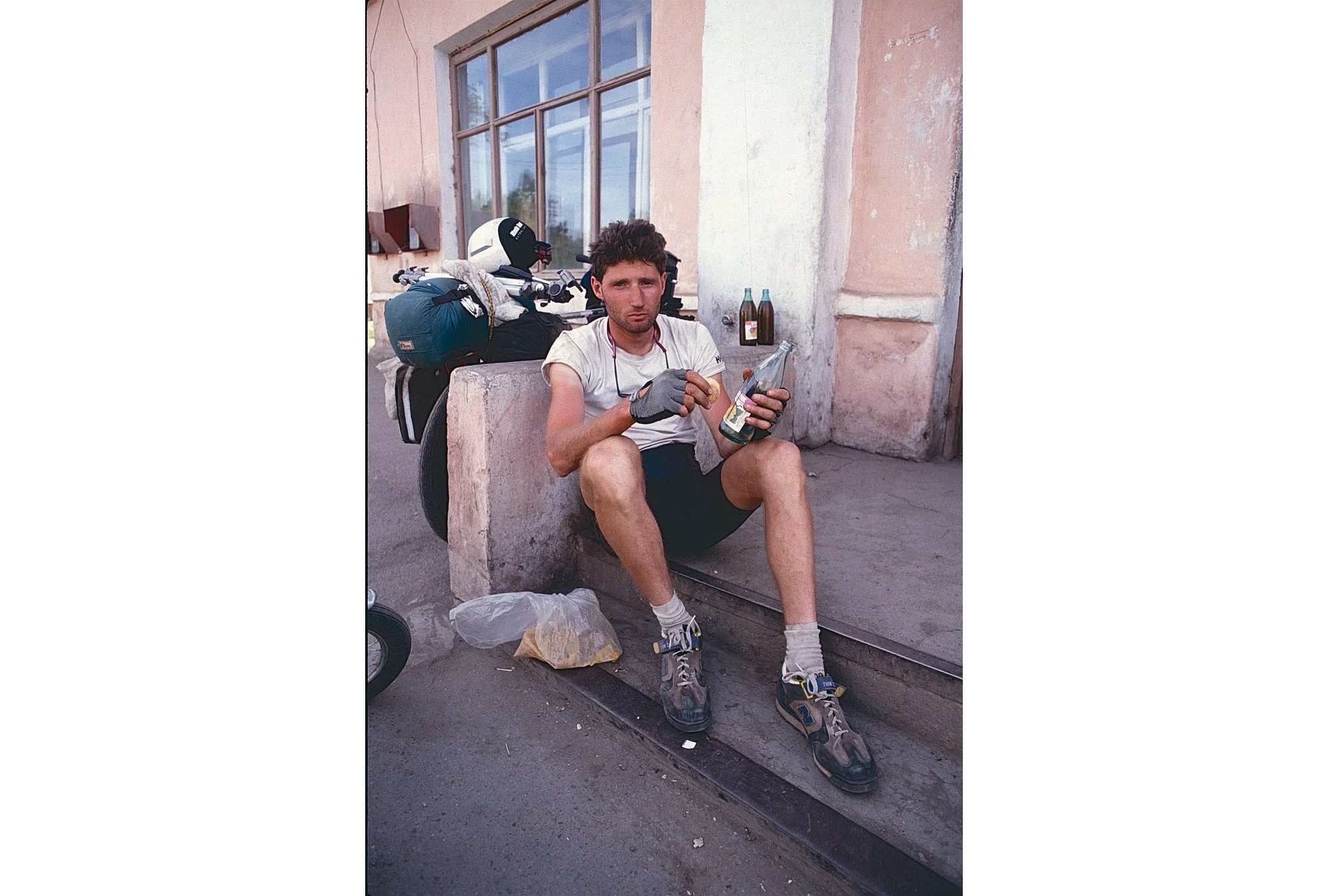
General mood after a long day of riding, the smell of foul air and a daily Leningrad Brick.
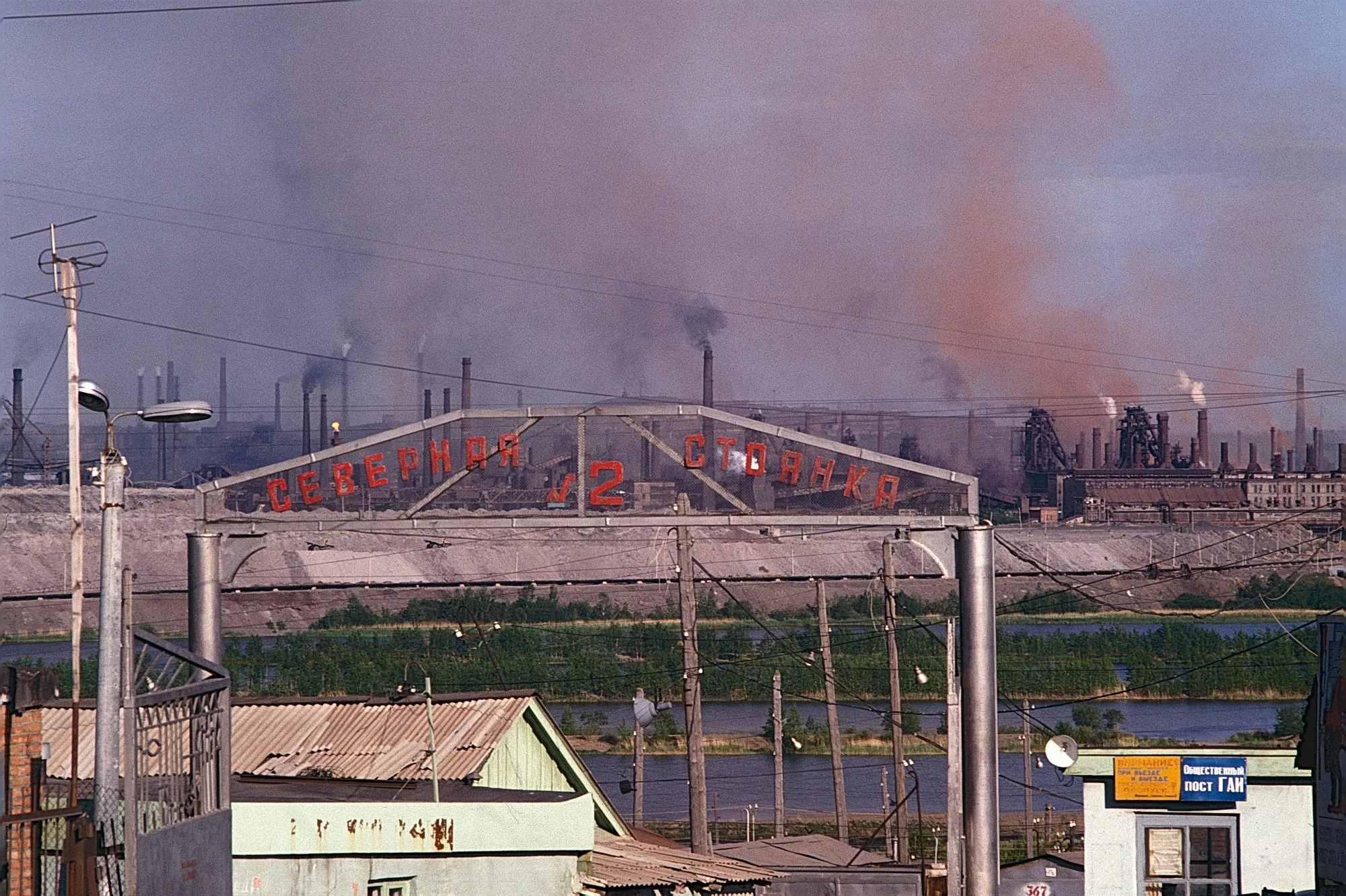
Magnitogorsk's colorful skyline.
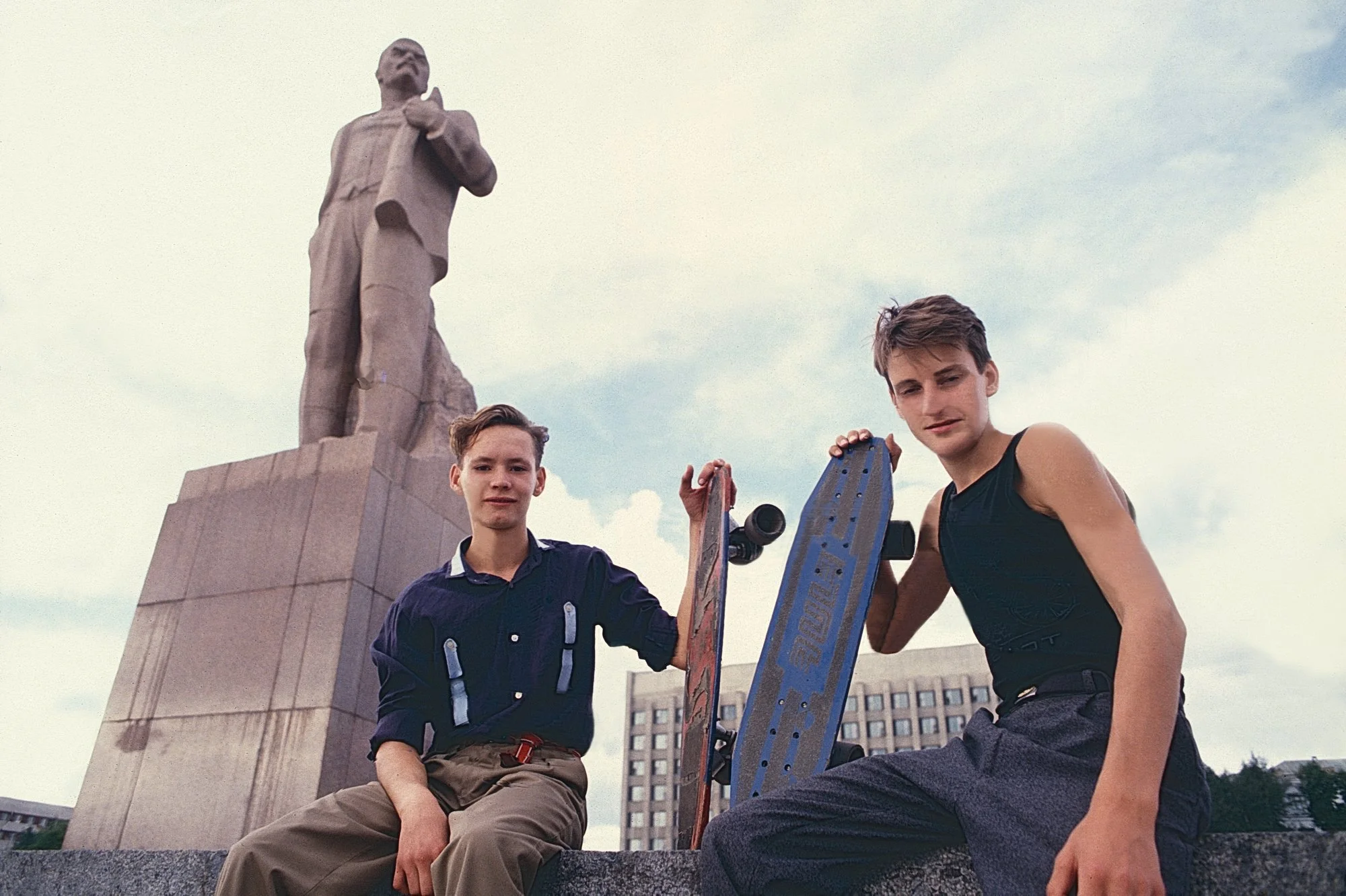
Siberian skateboarders.
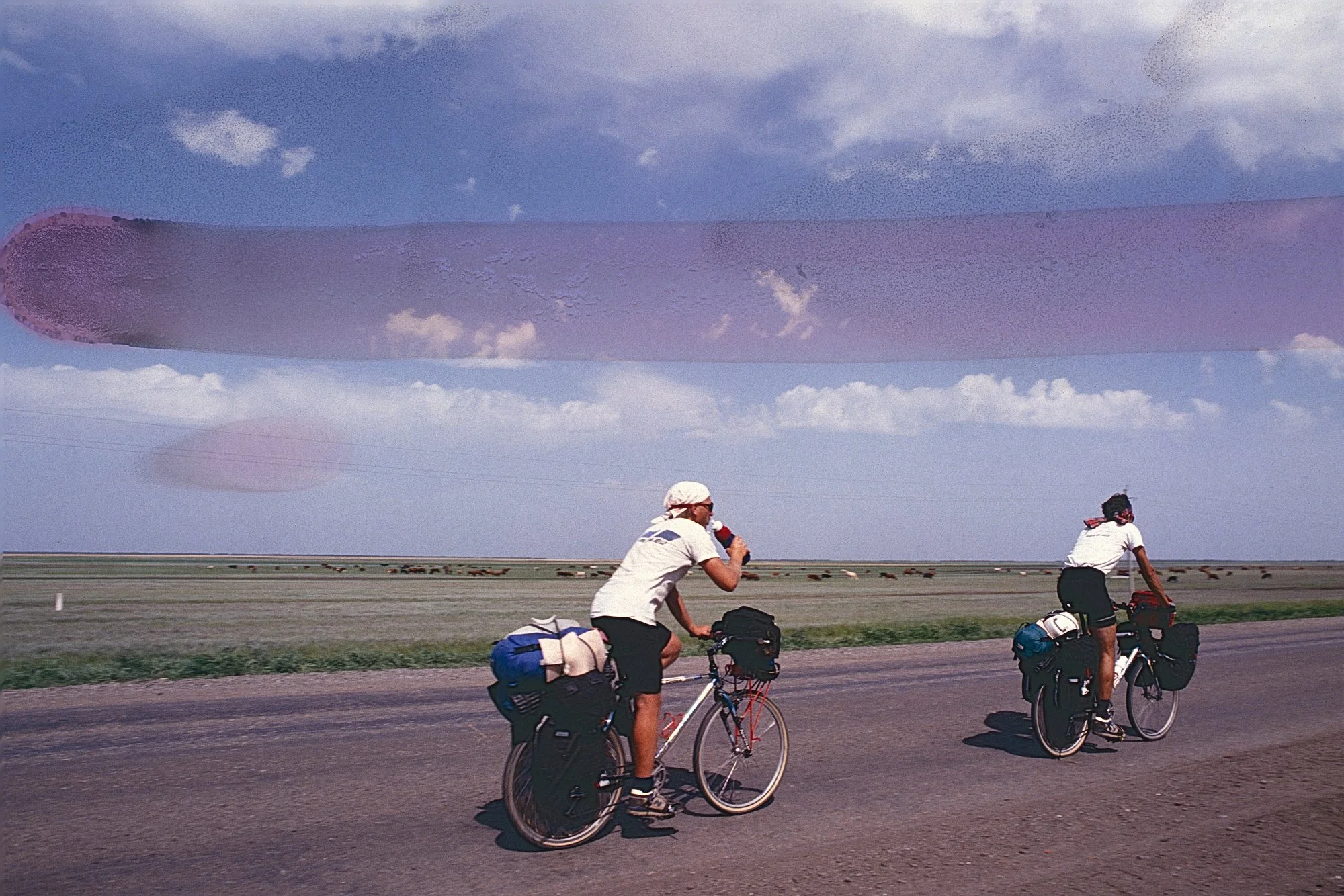
Back on the Russian plains, we battle endless mind numbing straight roads, summer heat, boredom, and constant seasonal headwinds for three straight weeks. Like crossing Kansas seven times, with bad food.
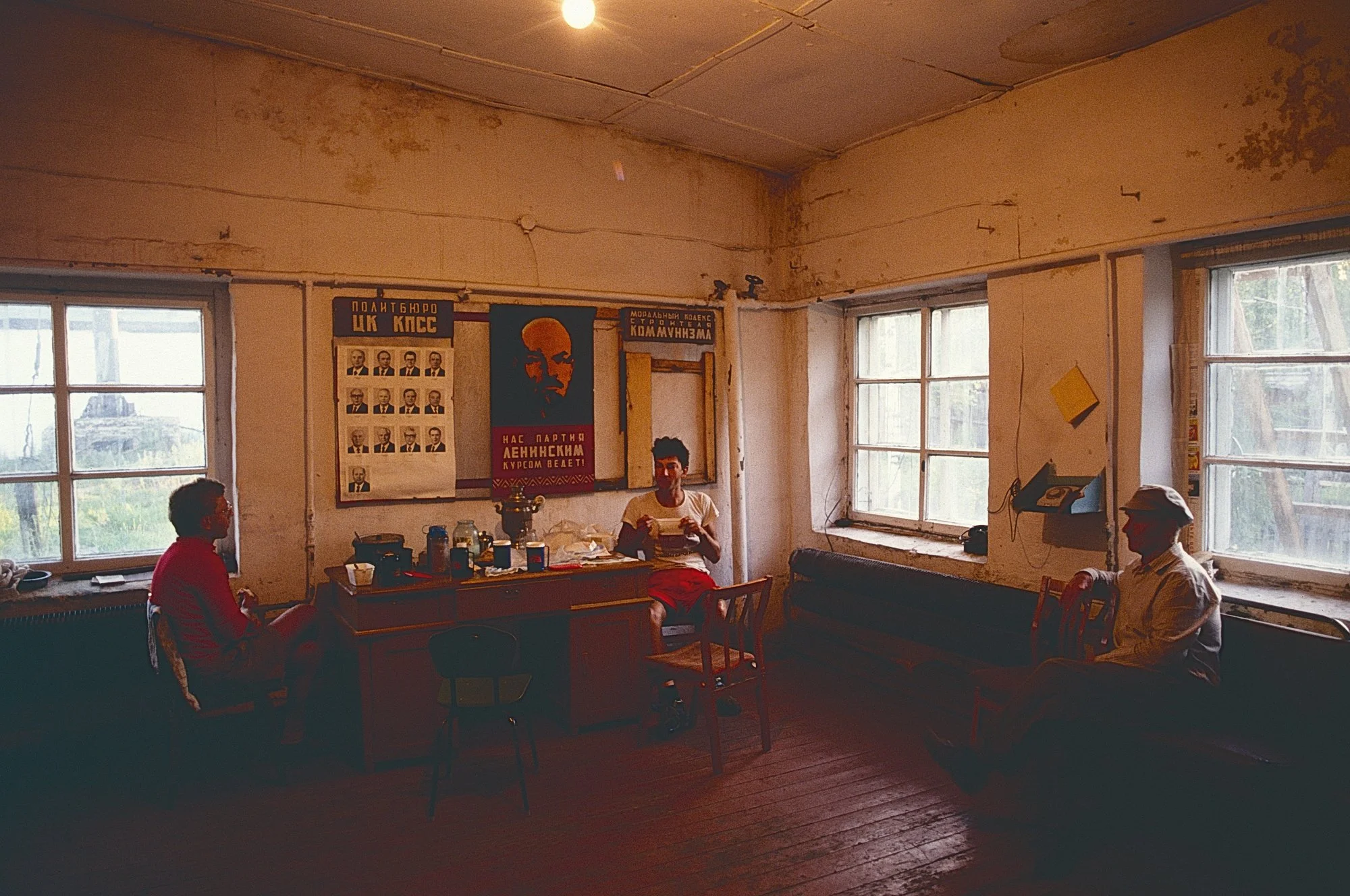
Dinner with Lenin. A local keeps an eye on us as we end the day in a village where the chief of the local Communist Parry opened the community room for us to spend the night.
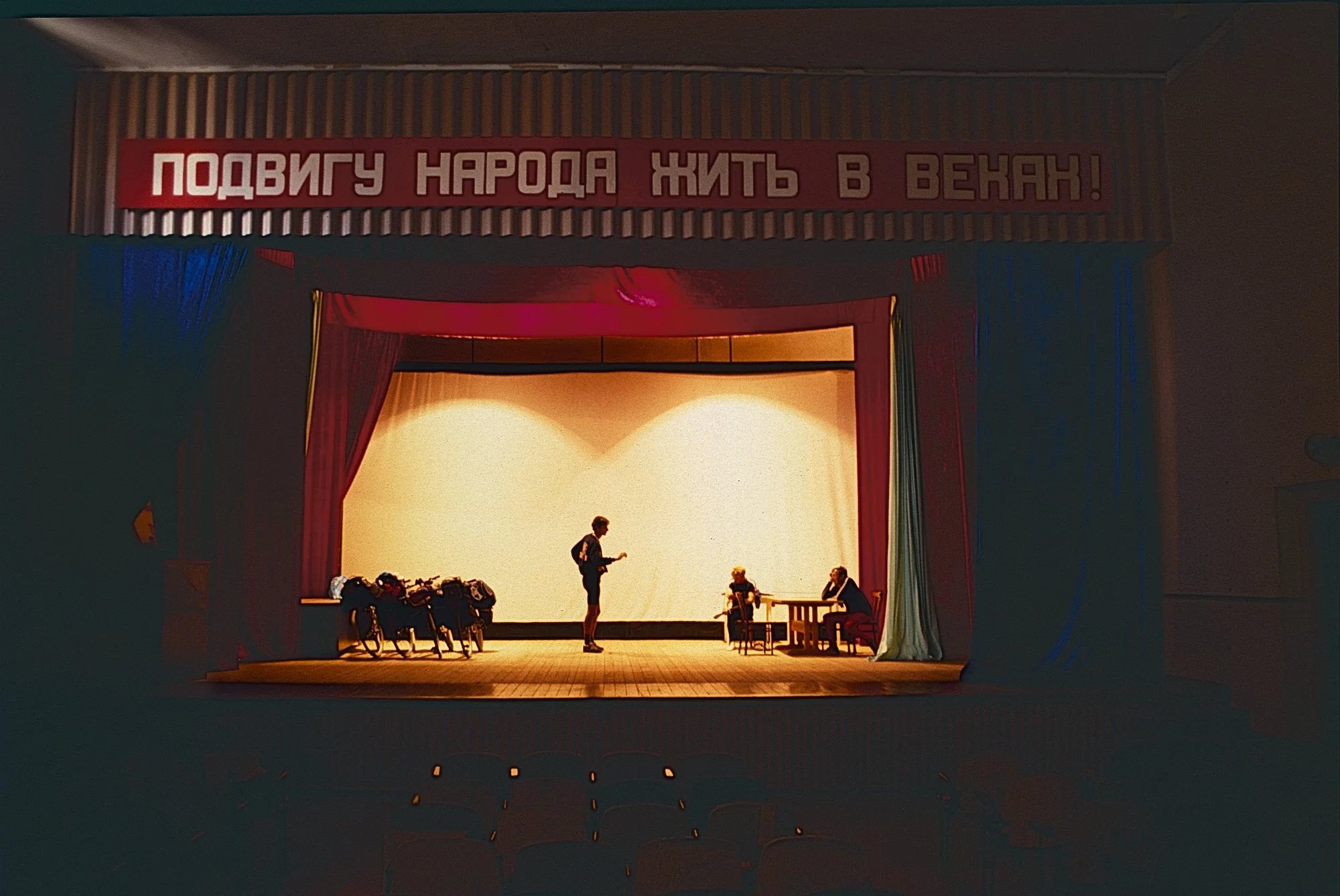
Temporary distracting us from exhaustion, Simon improvises a Soviet play. He mostly shouts "comrade" and "potatoes" in Russian before going to sleep.
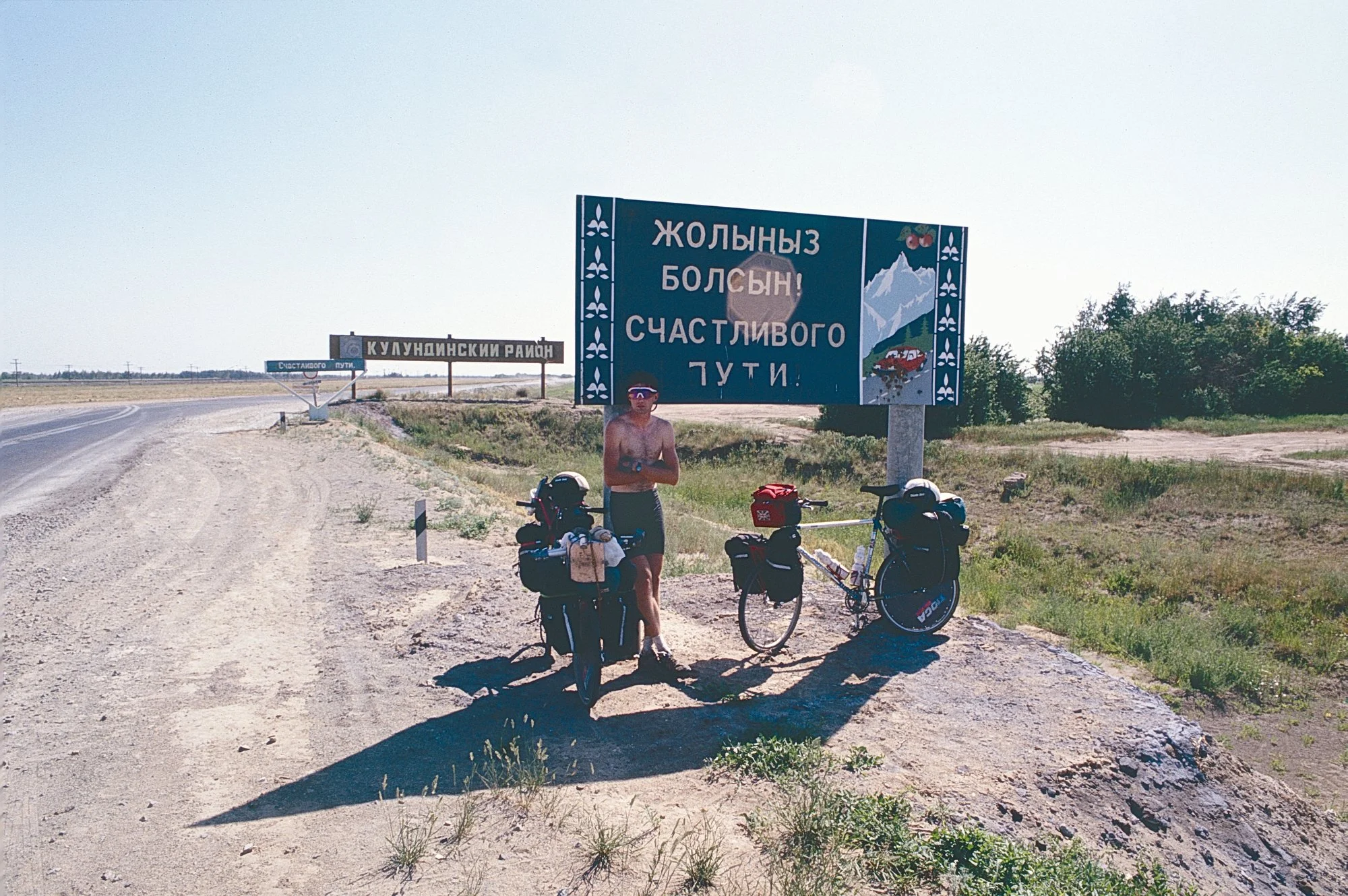
Finding shade and making a play for best tan lines of the week.
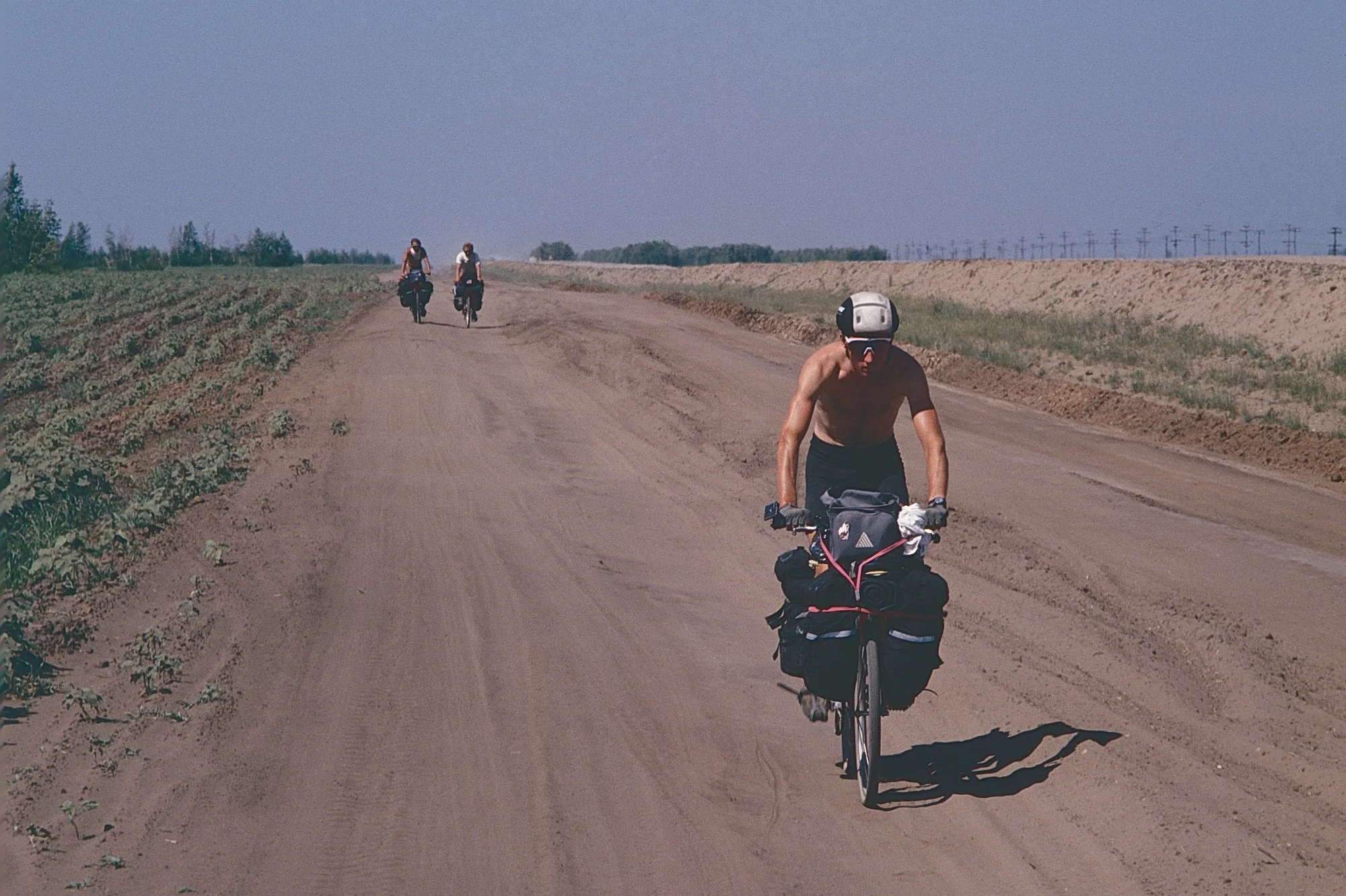
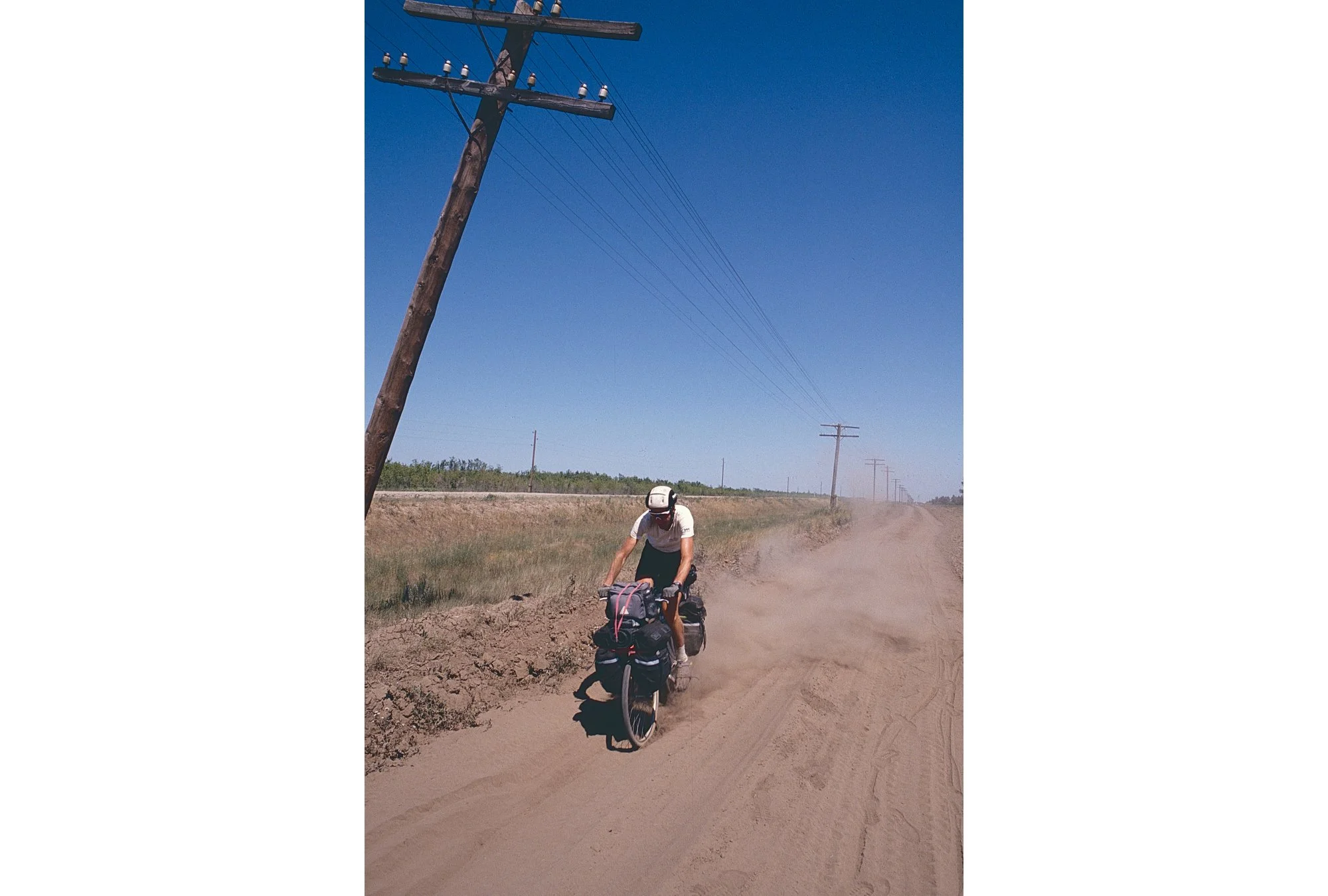
Battling the heat...
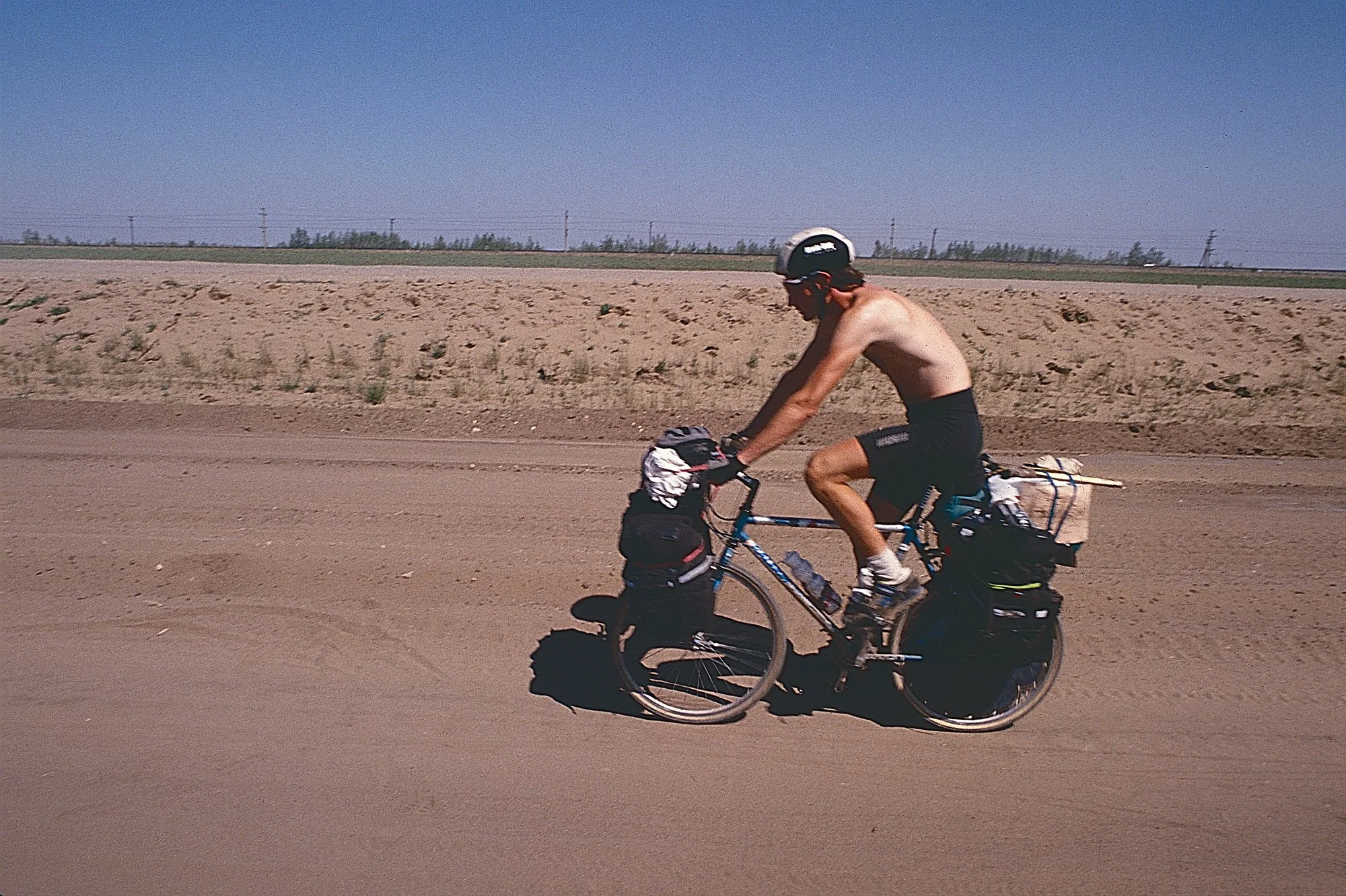
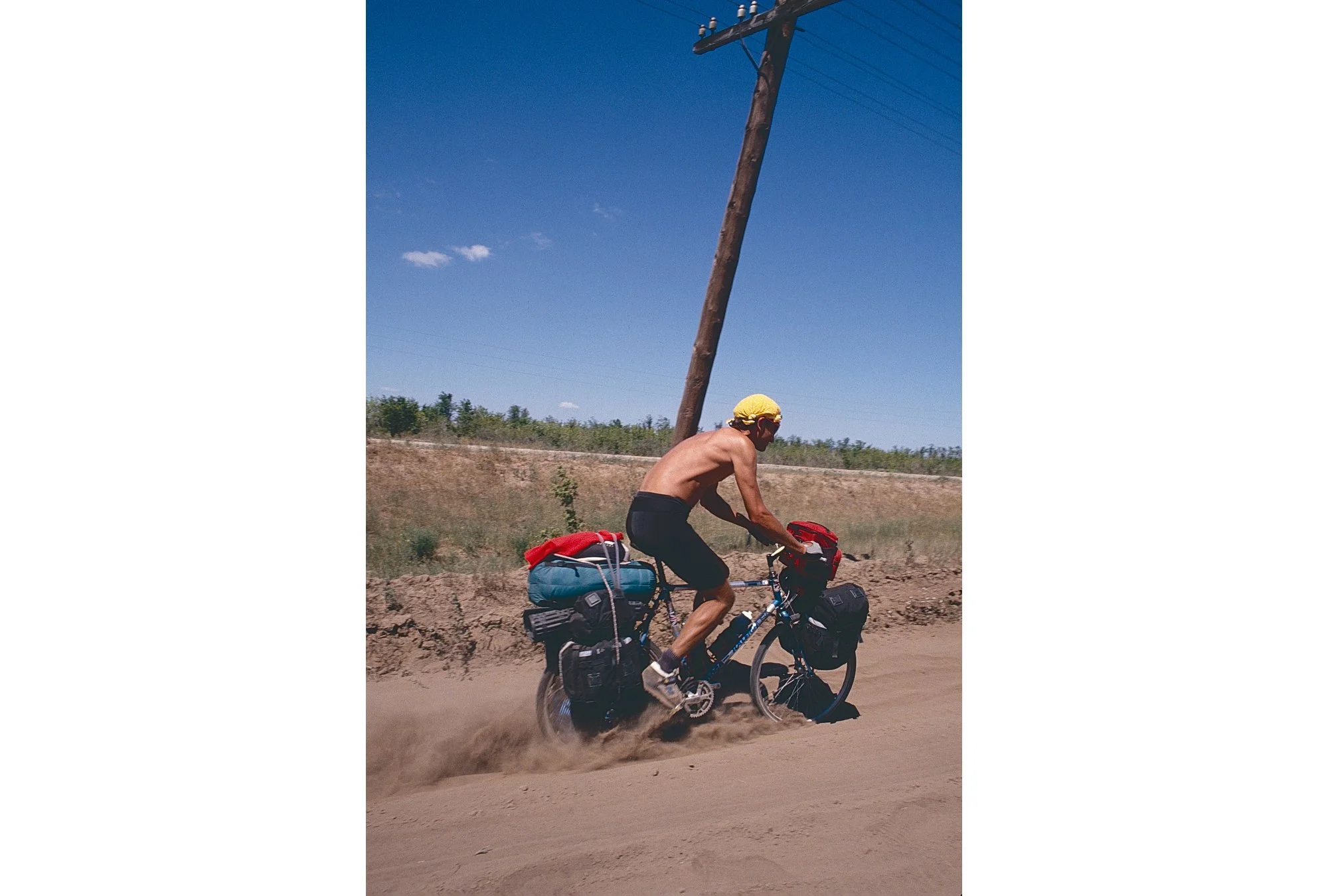
And soft sand.
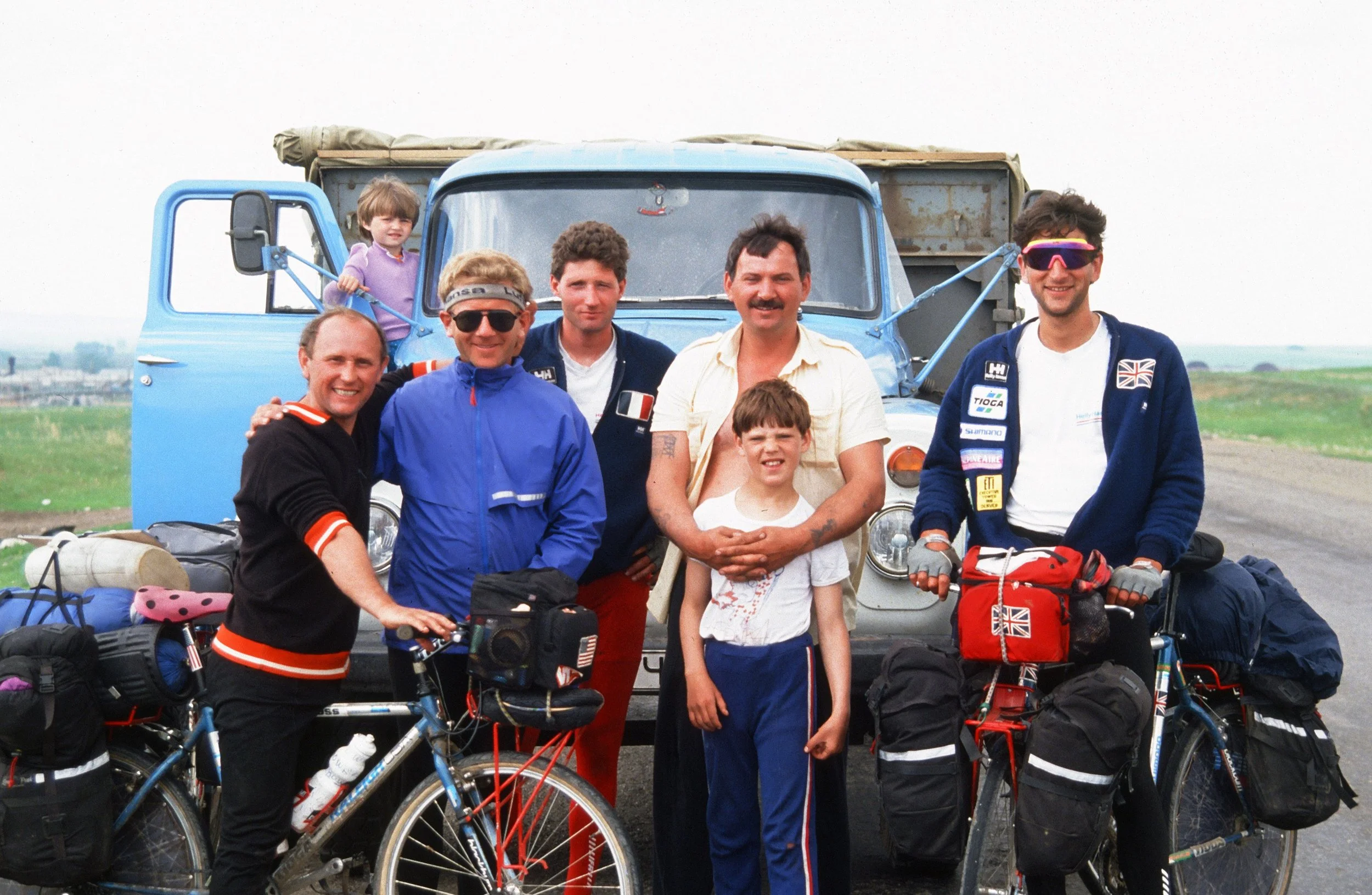
Making friend in Siberia.
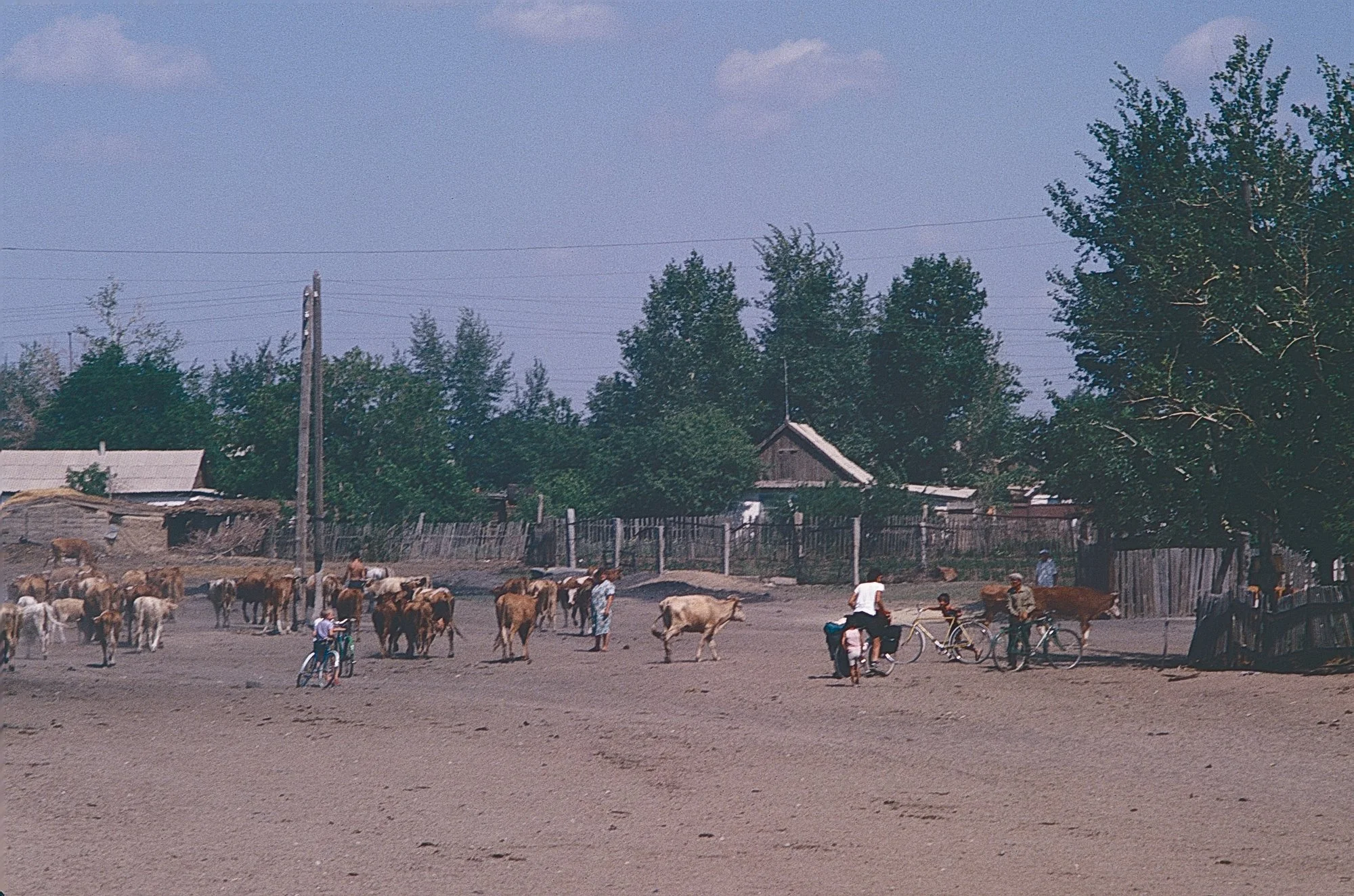
Simon asks fellow cyclists for direction.
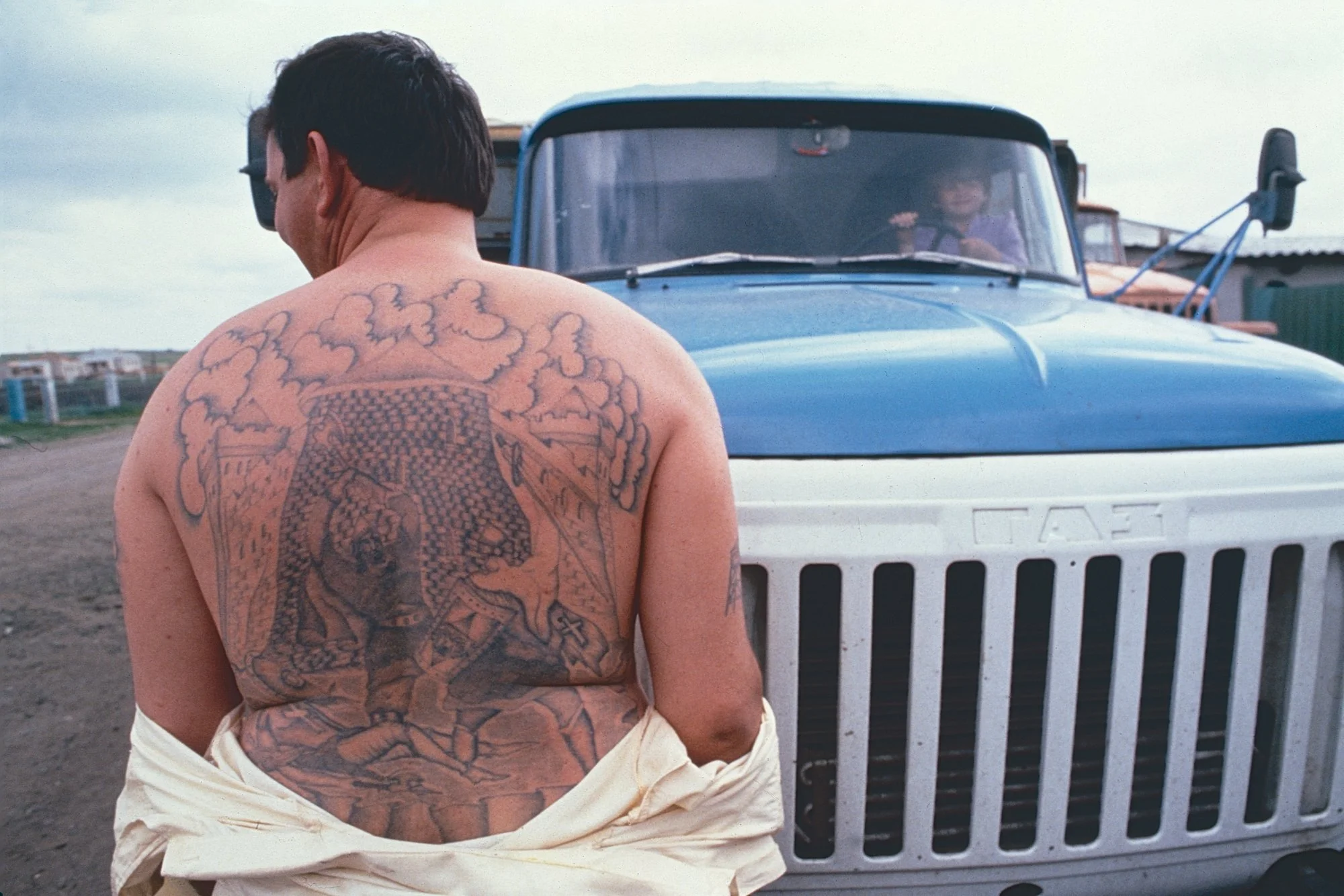
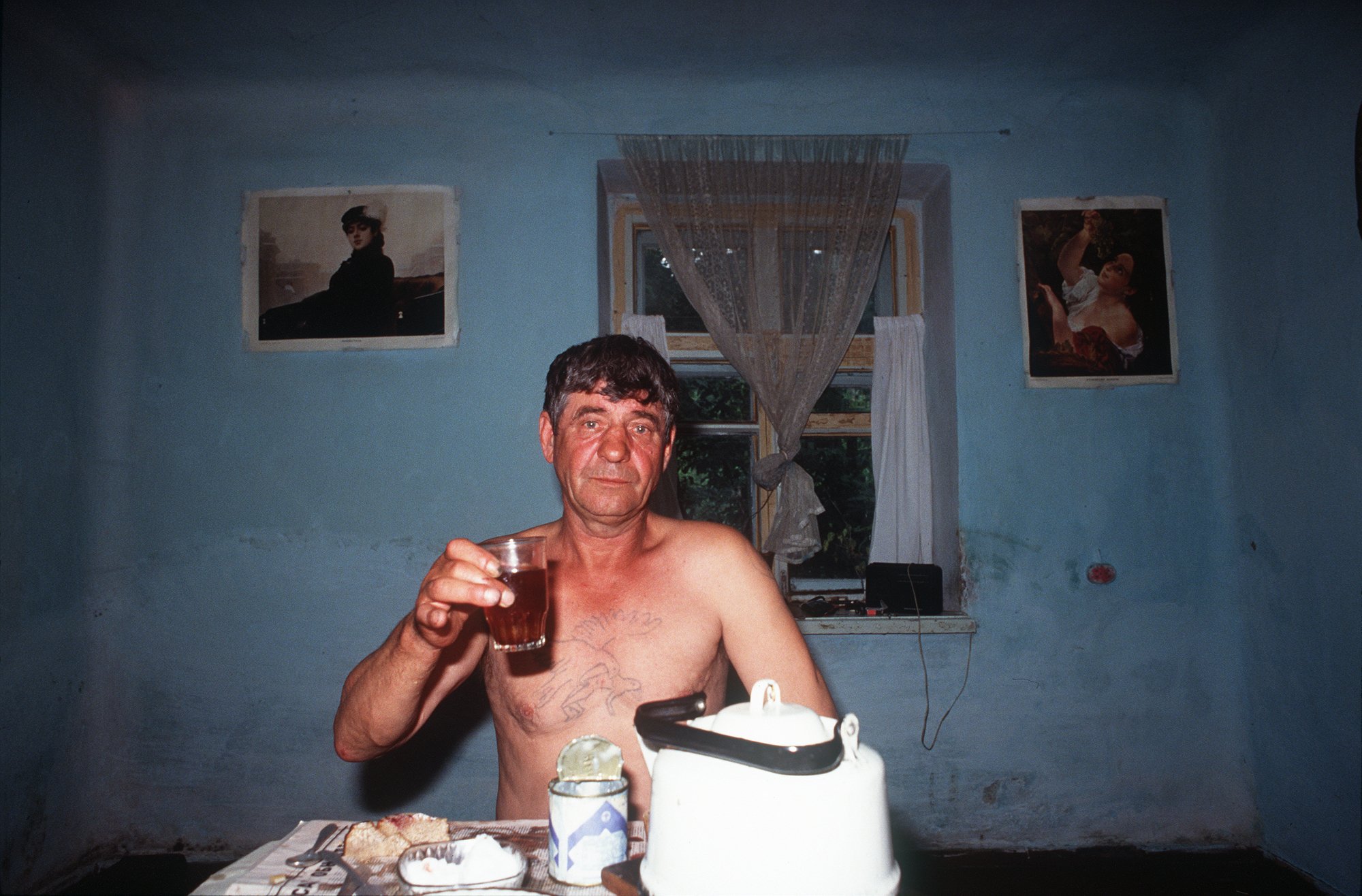
Igor, a Siberian truck driver who may or may not be familiar with the gulag, shows us his tattoos.
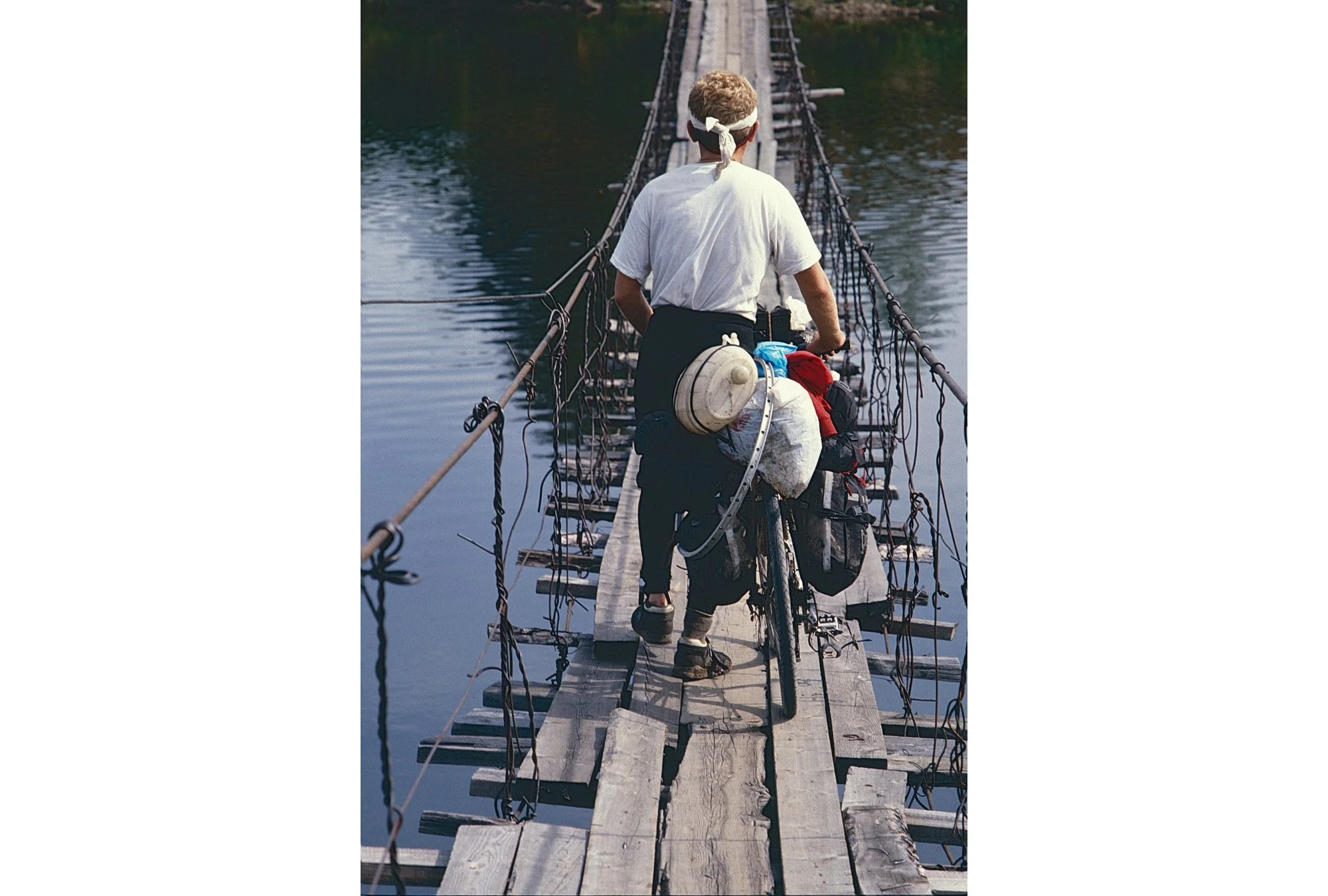
The trip was Howard's idea, so we send him first across the bridge.
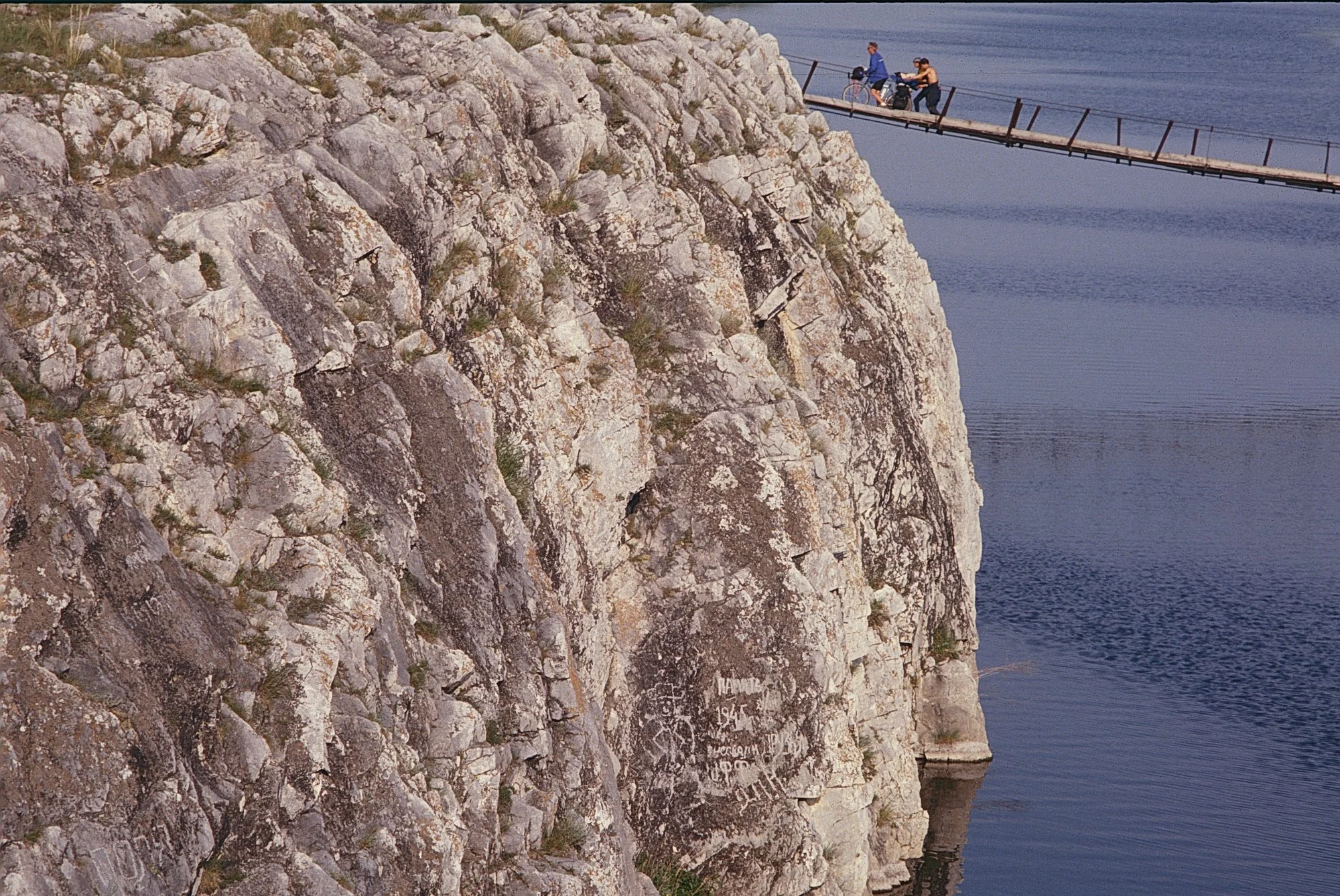
Bored after weeks of cycling flat and windswept plains, we decide to head south into Kazakhstan. A detour from our planned itinerary, which we hope will provide a new scenery and not set us back too much, as we need to cross Siberia before winter sets in and the swamp becomes impassable. The first day doesn't disappoint.
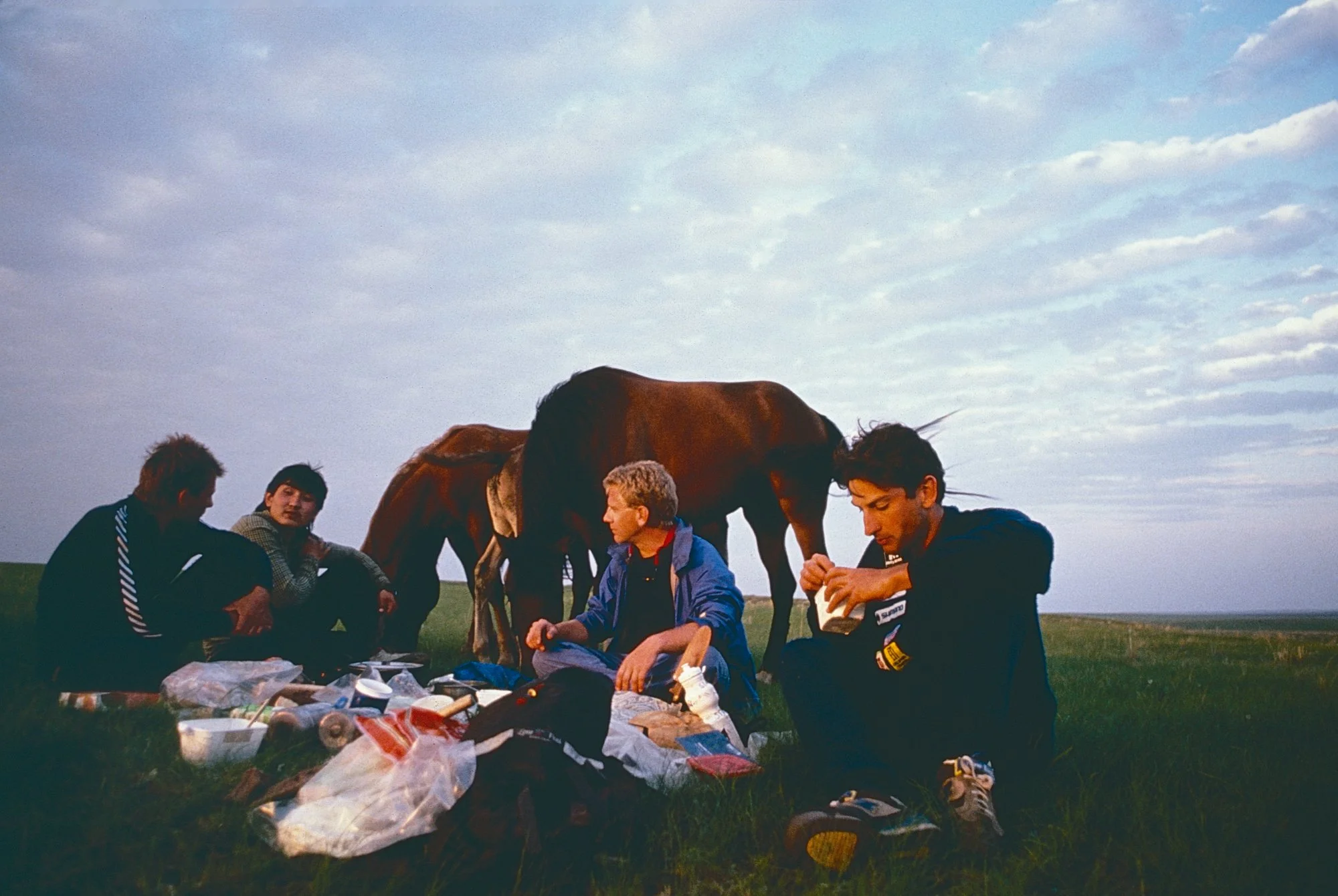
Our first evening in Kazakhstan, we are greeted by a local horseman who appears from the steppes and brings us fermented mare milk, an acquired taste.
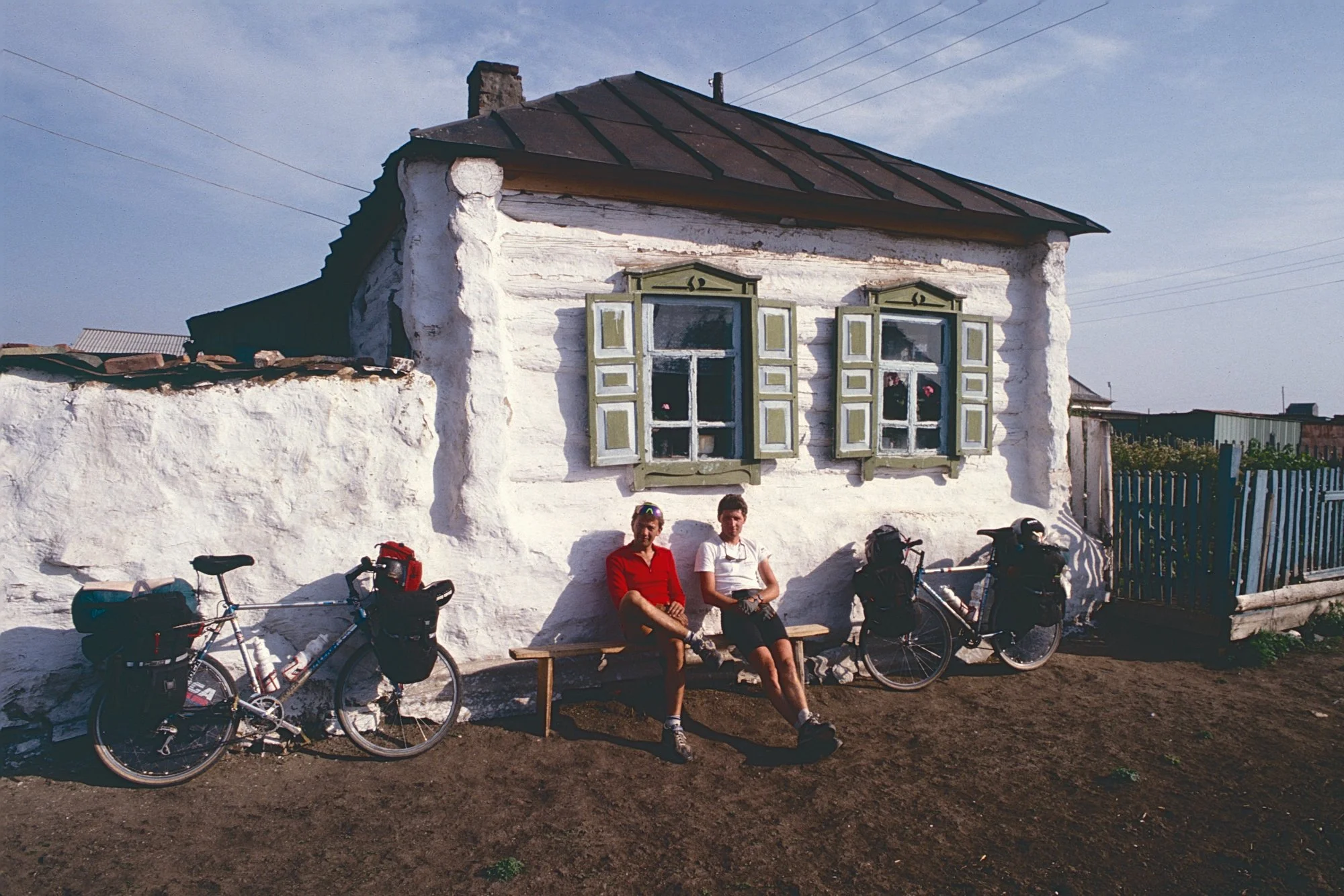
Taking a break with Vitale.
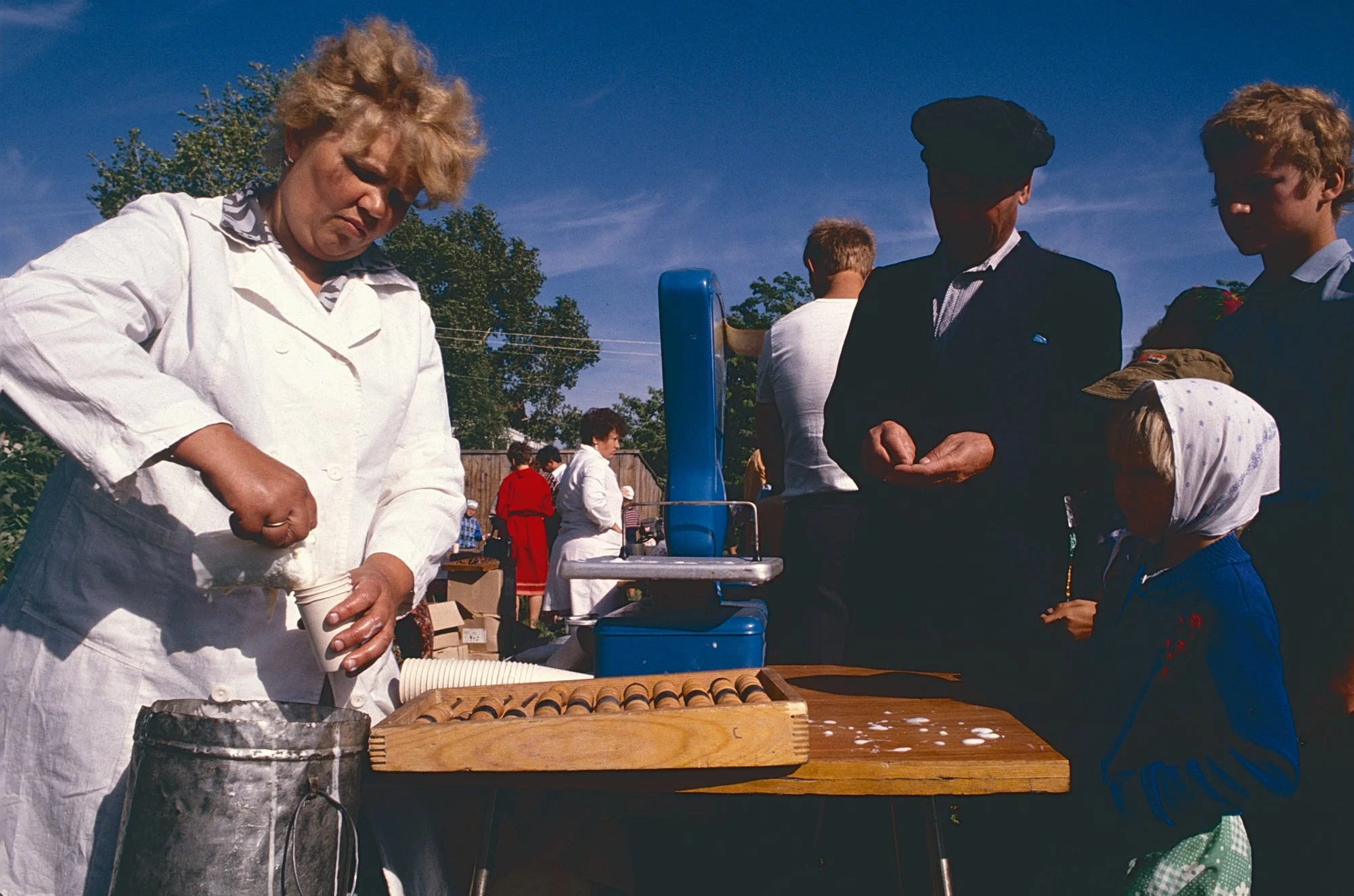
Ice cream (a rare delicacy)!
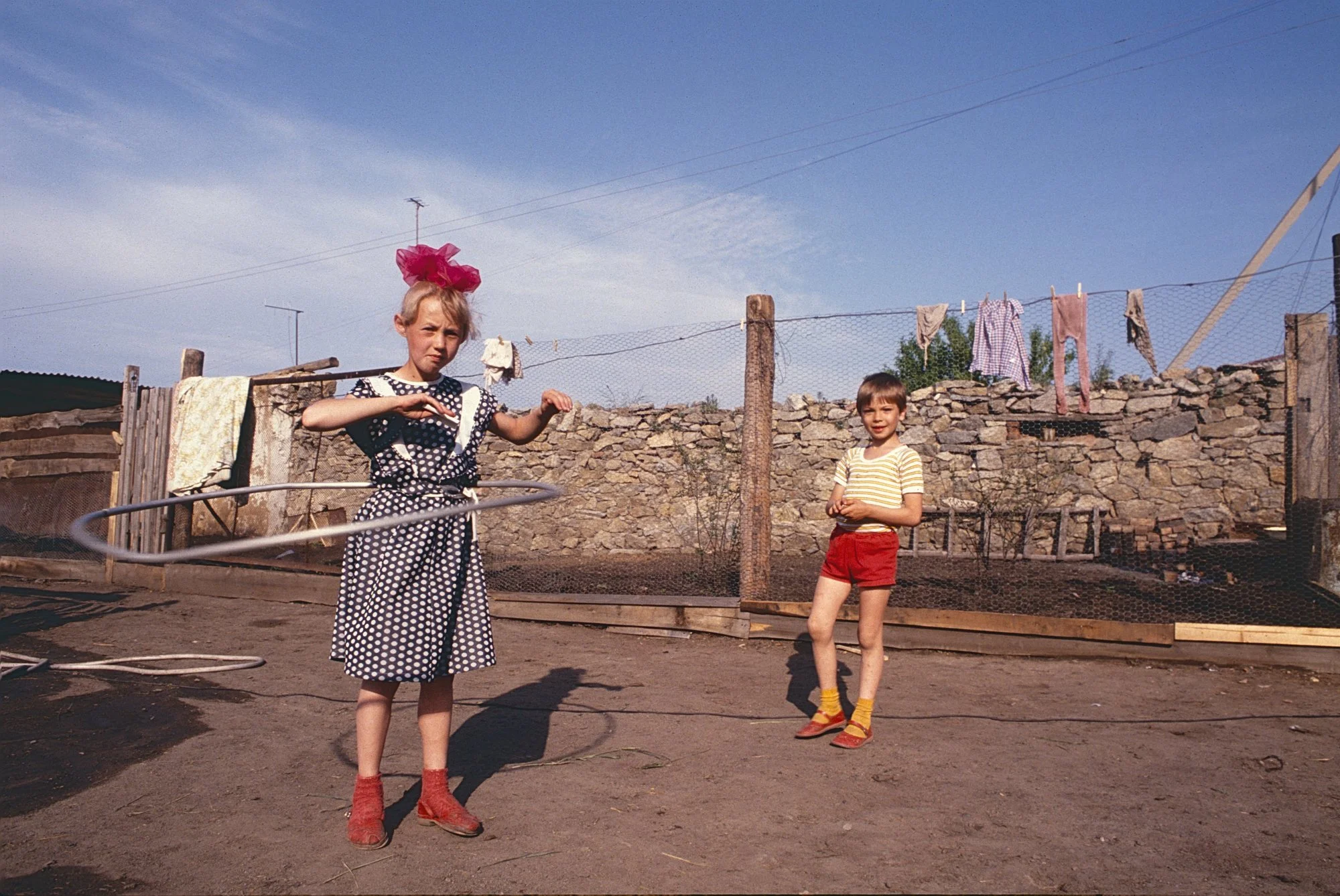
Kazakh hula hoop.
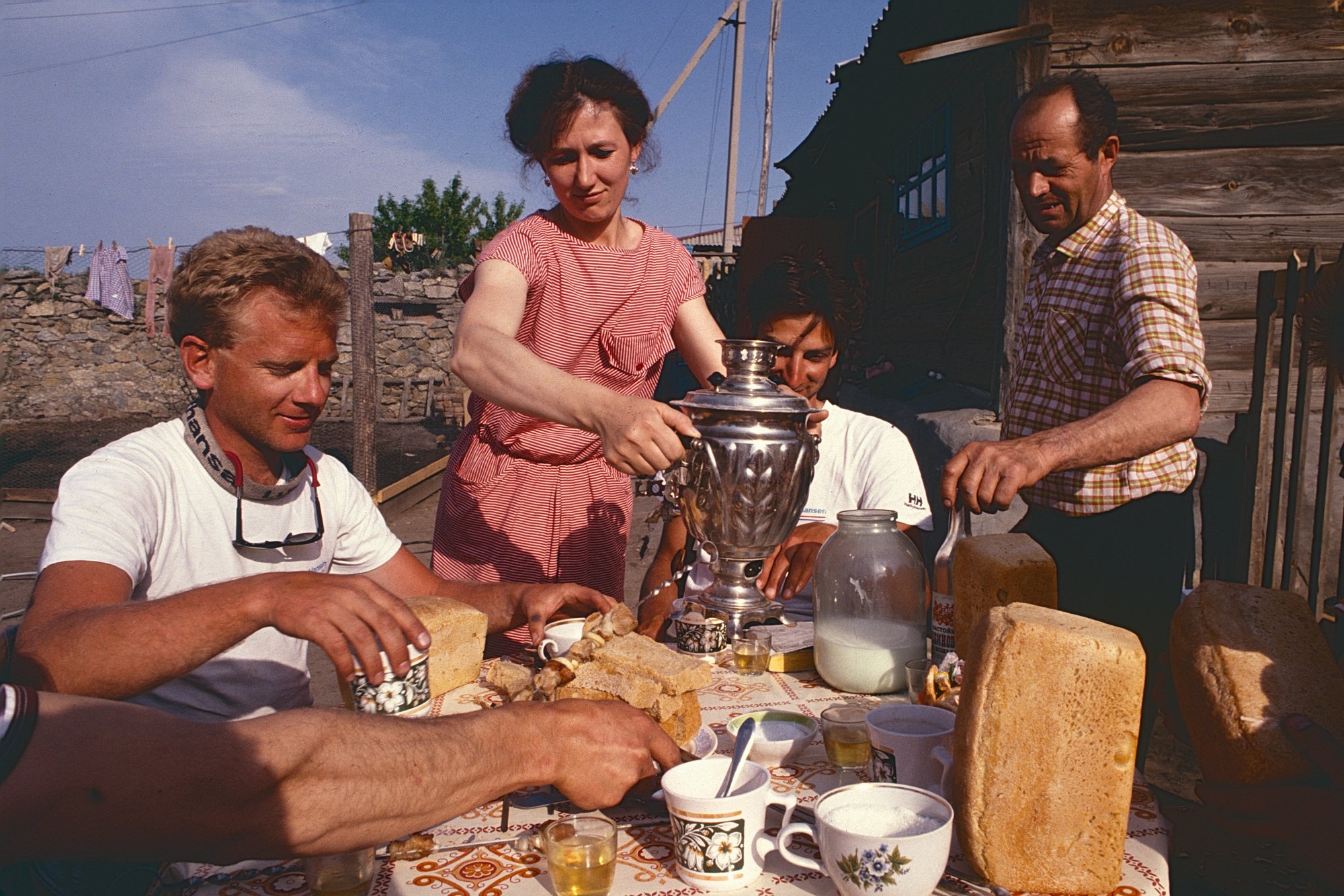
Kazakh hospitality.
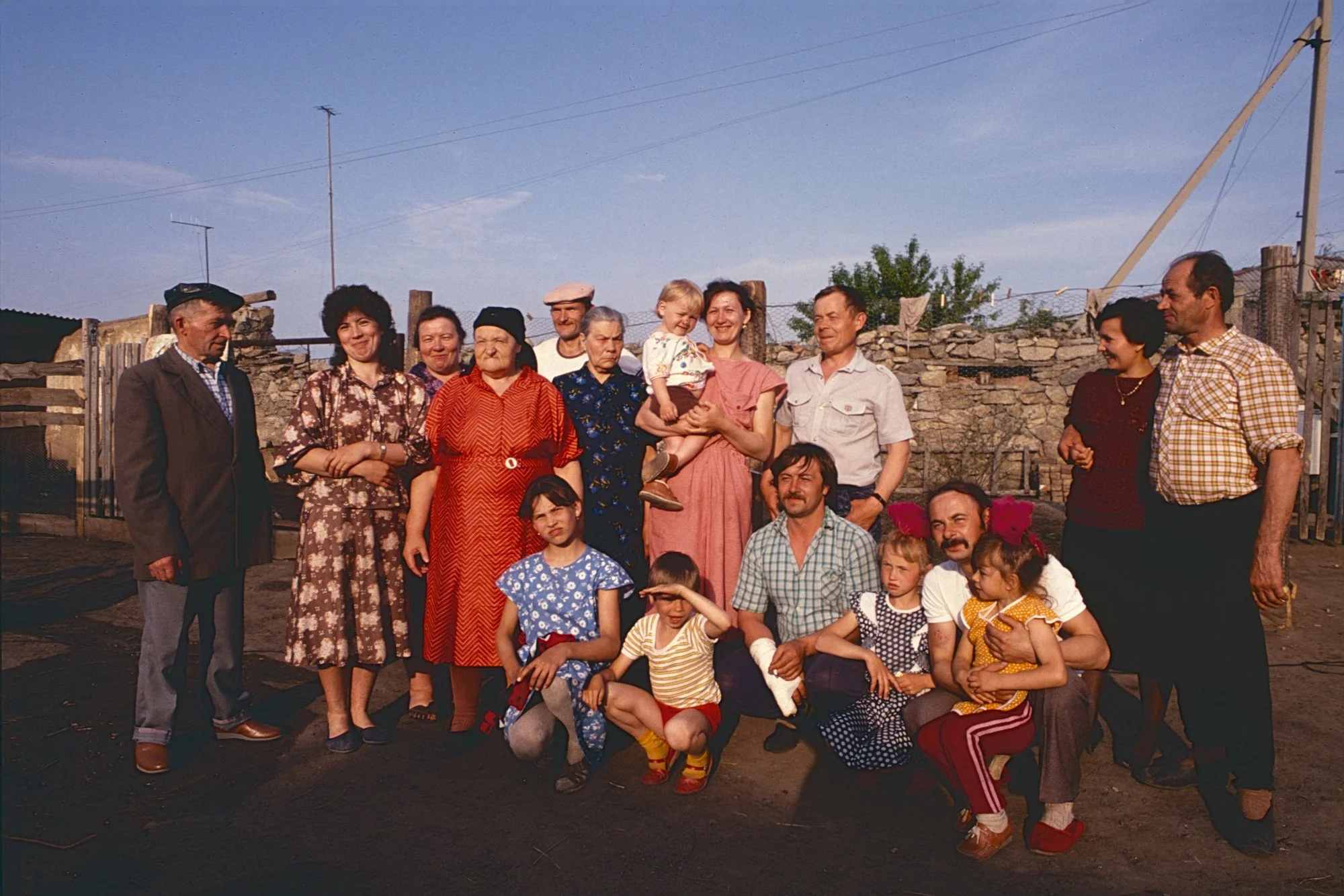
We basically crashed a family reunion.
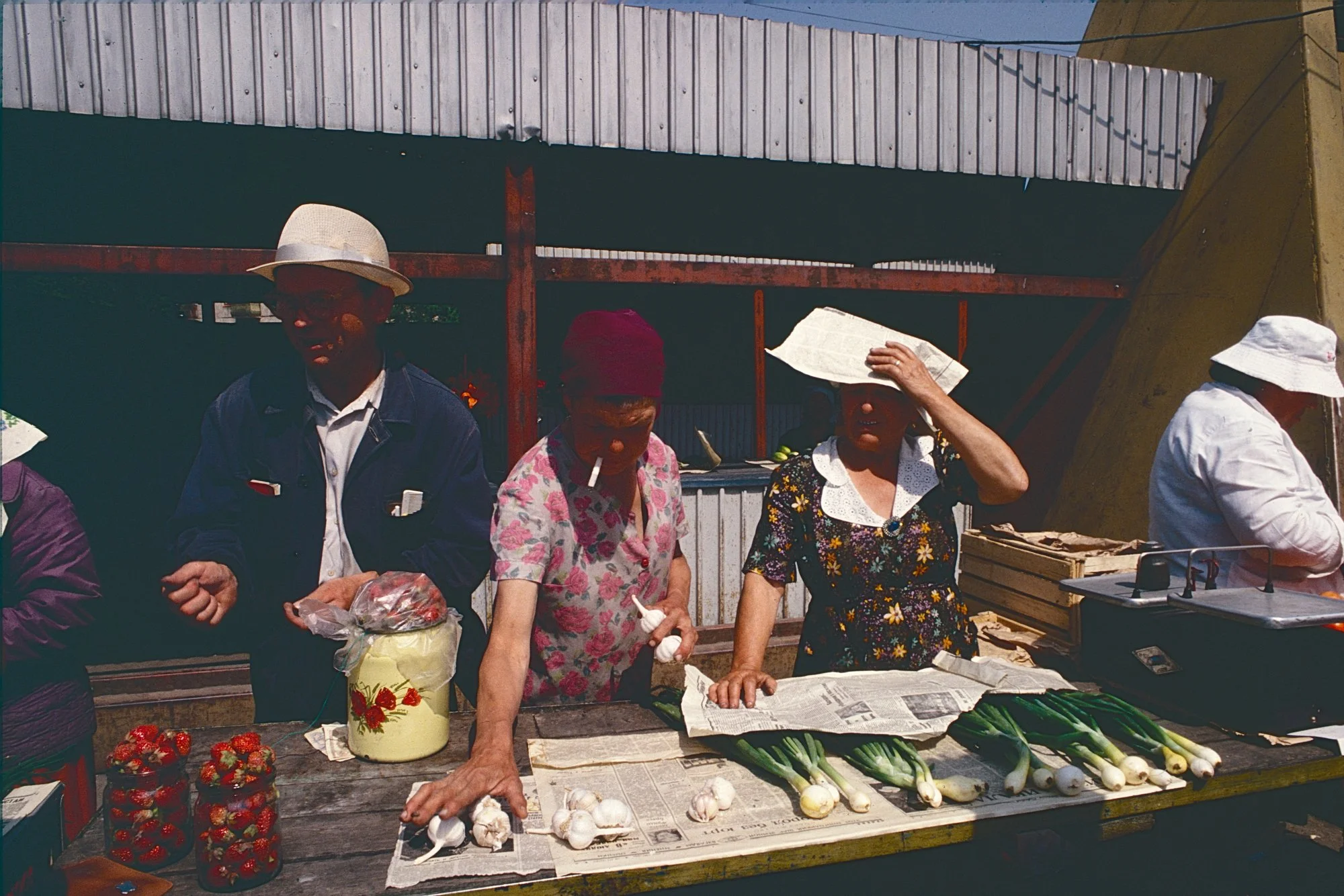
At the market.
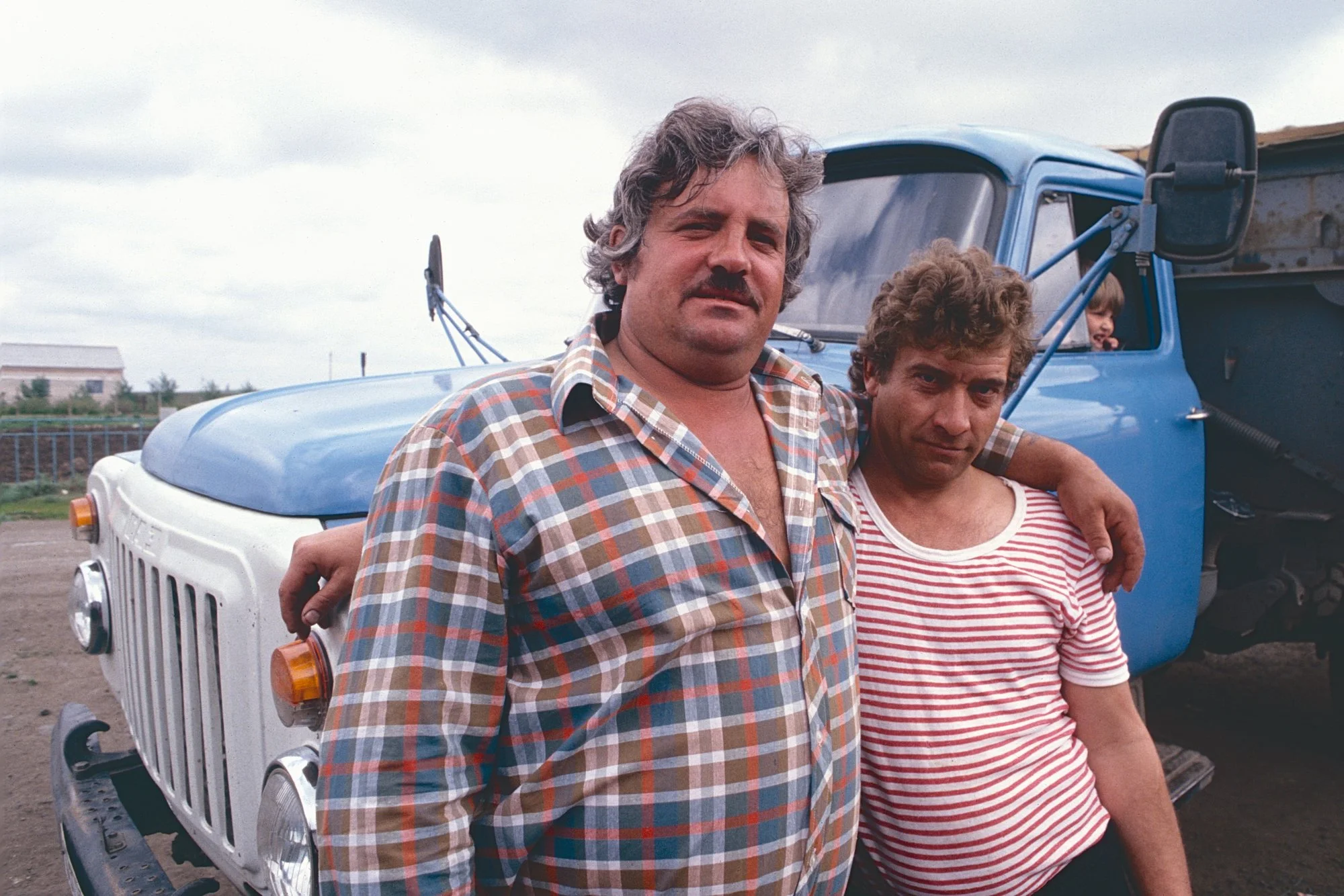
When truck drivers pass us several time a day, they sometime stop, curious to know why we are going so slow. Invitations to homes and vodka shots usually follow.
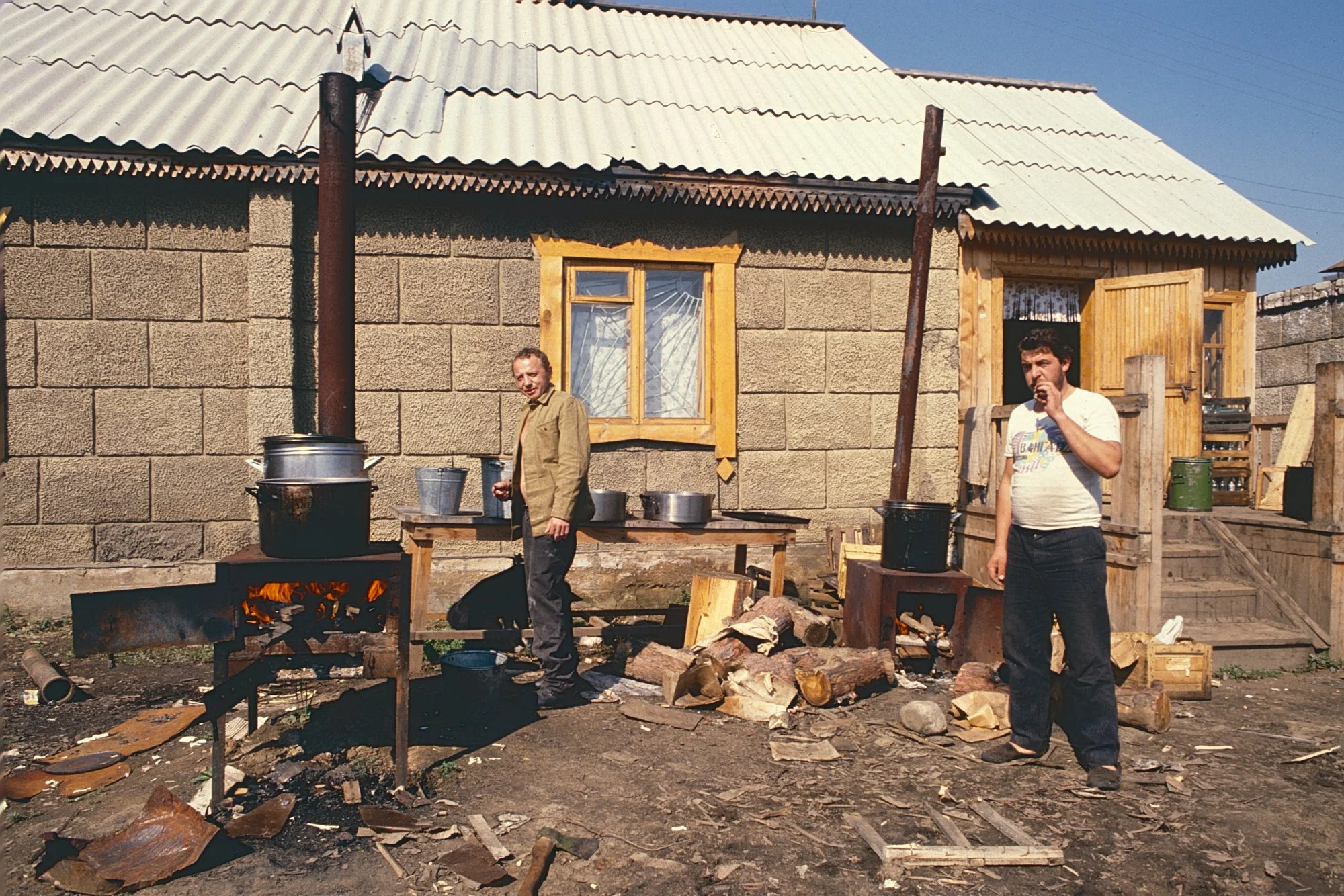
Migrant workers from the Republic of Georgia host us for the night.
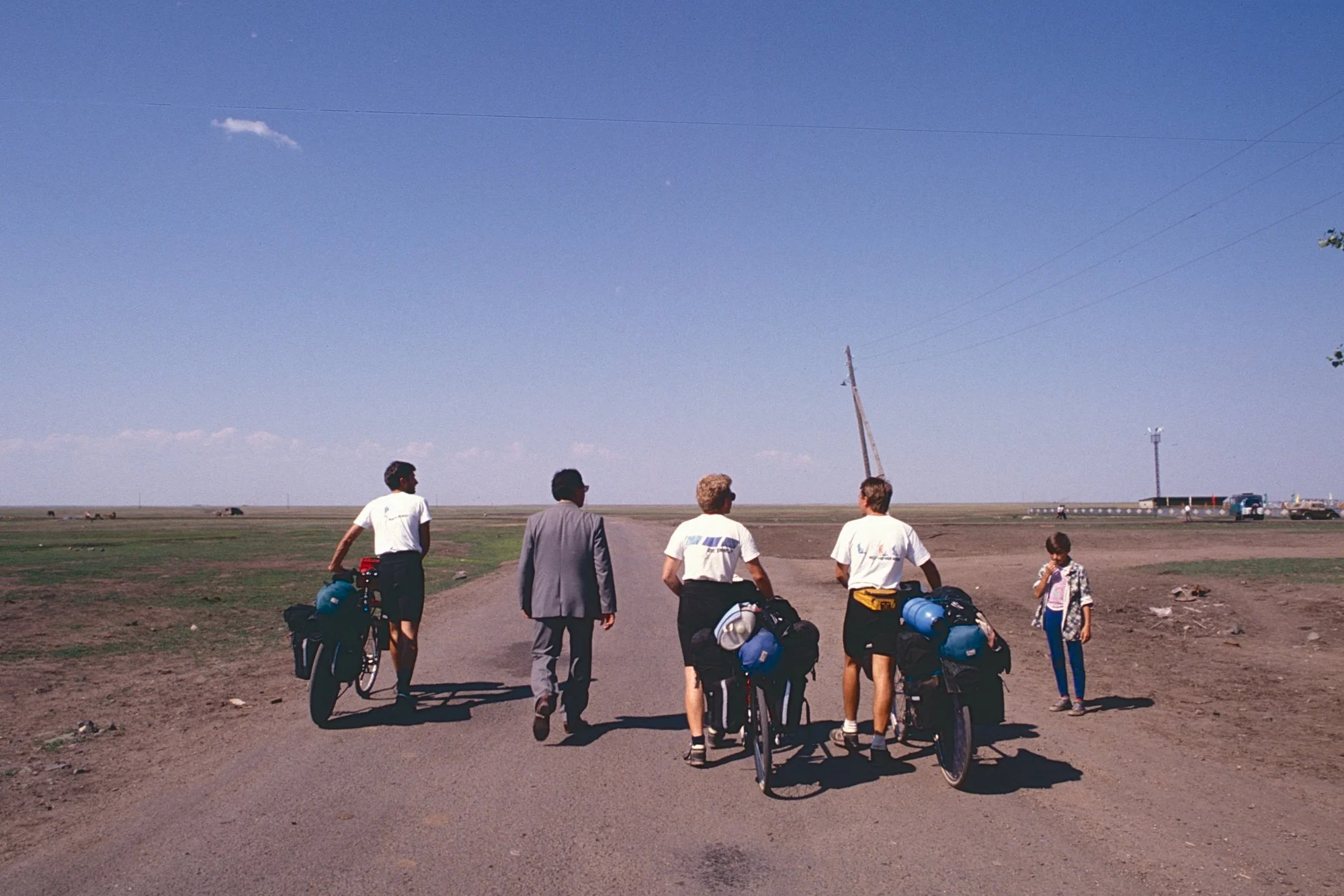
As we are about to leave Kazakhstan, the chief of the local Communist Party invite us to the grand opening of a stadium as guests of honor.
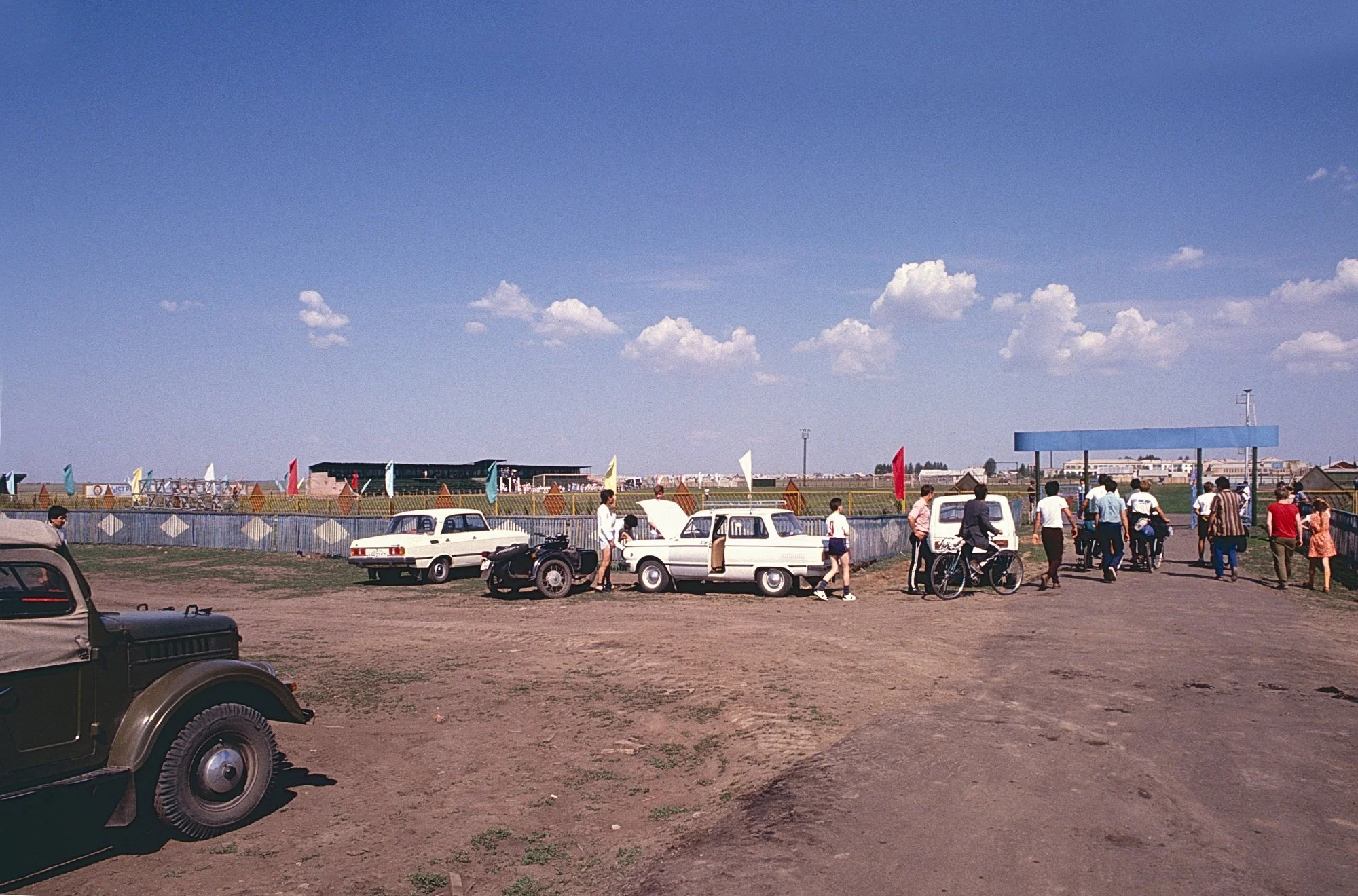
Approaching the stadium.
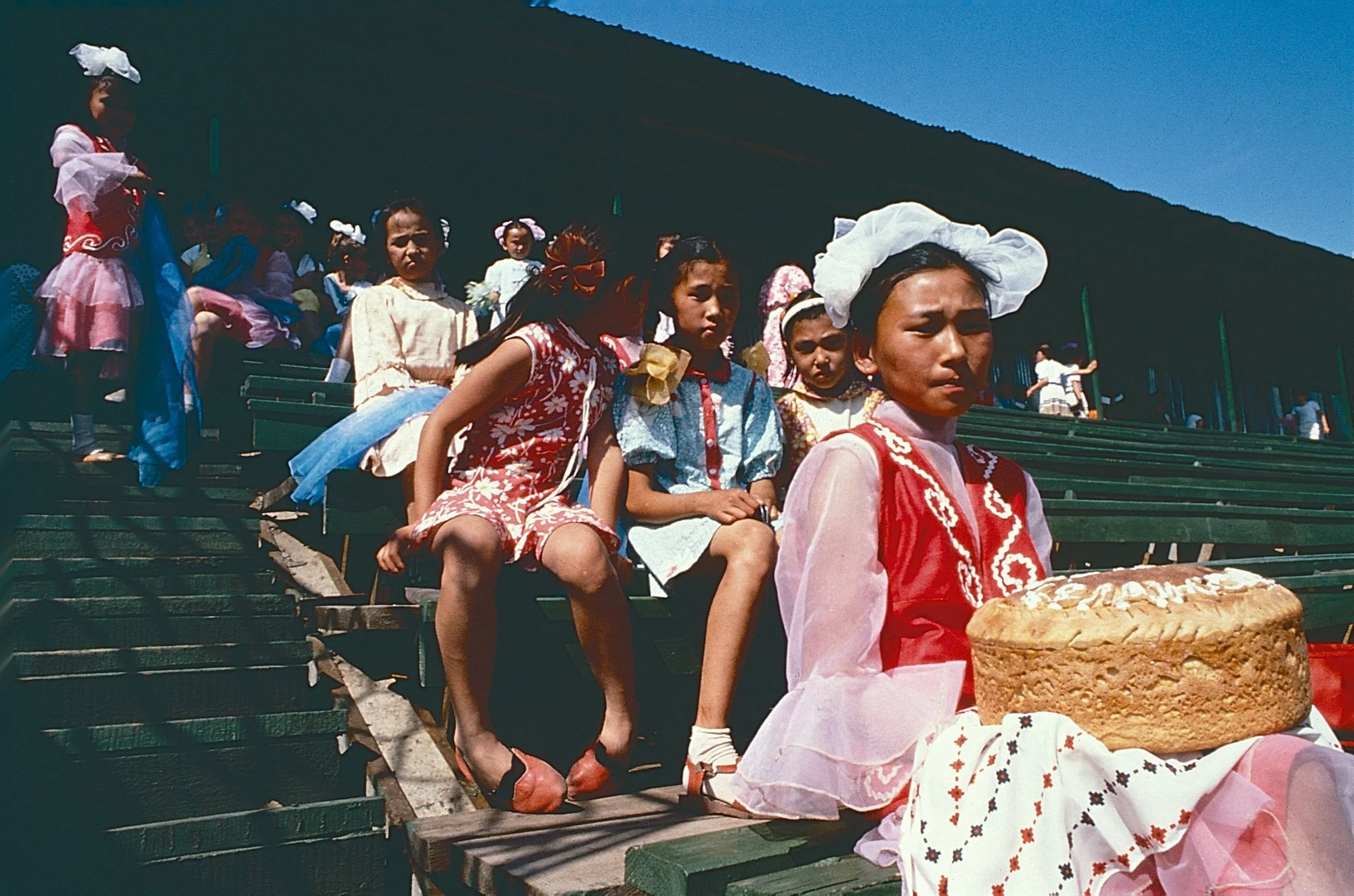
Kazakh stadium opening.
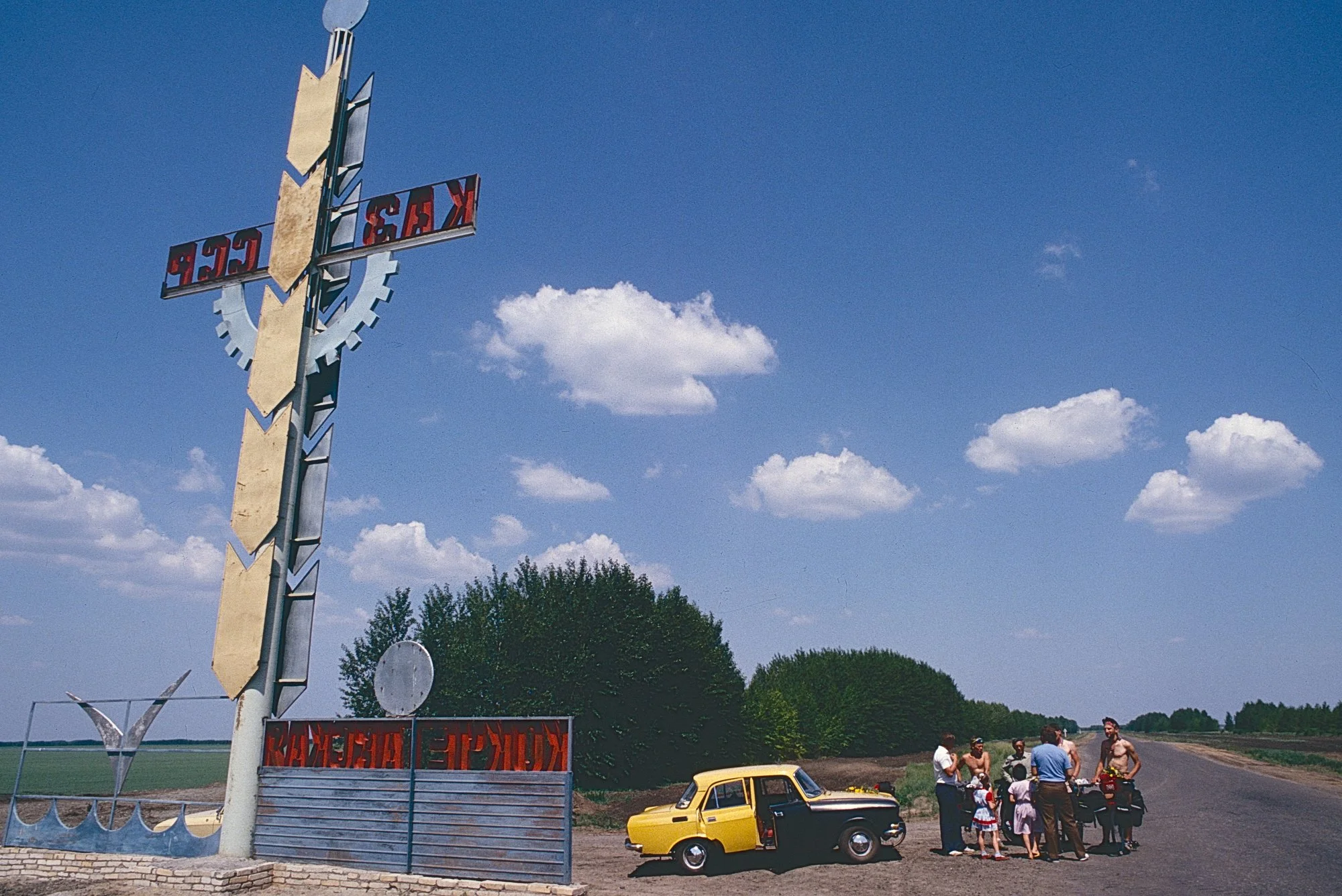
Meeting locals at the border between Kazakhstan and Siberia.
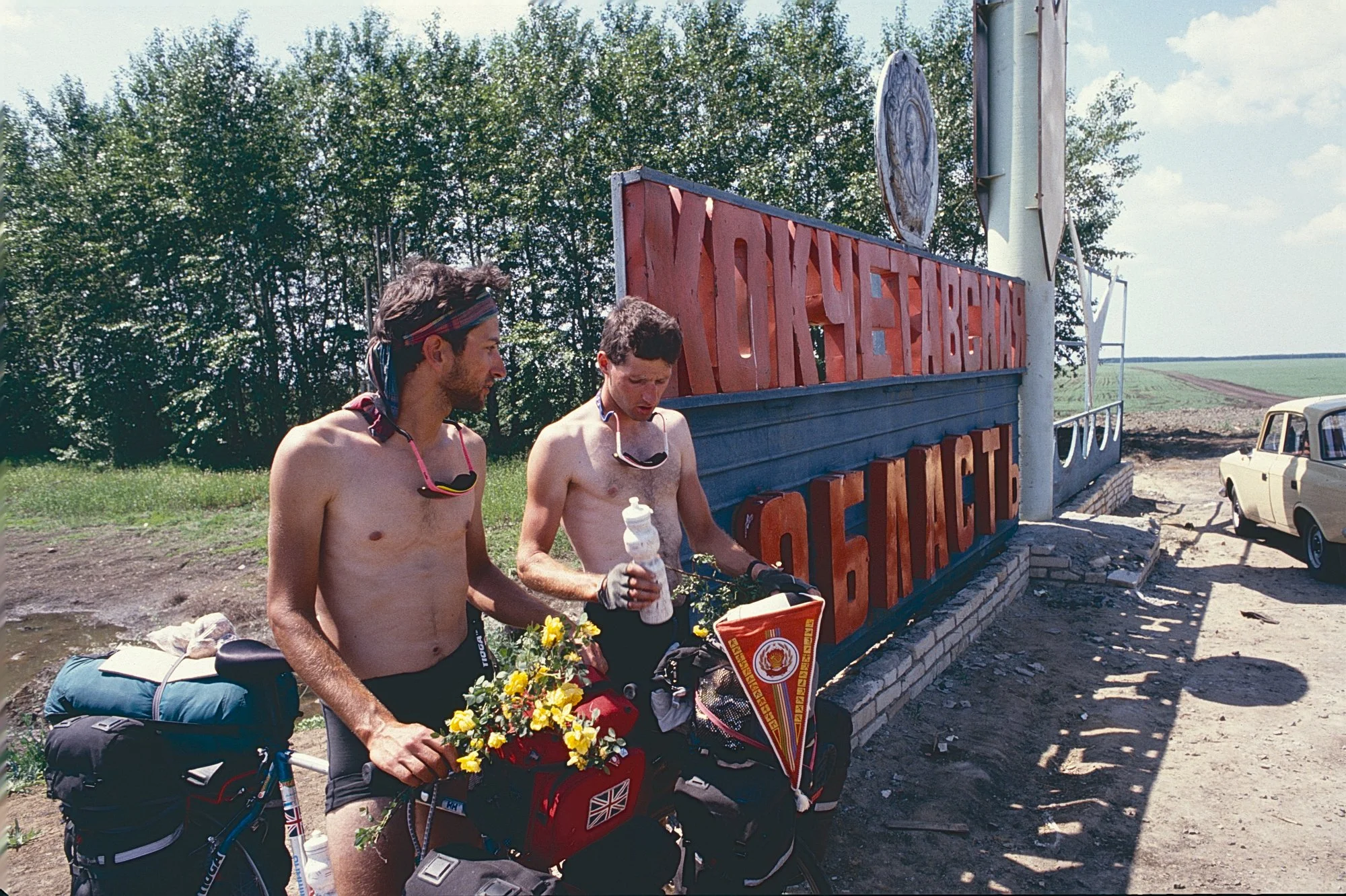
At the border between Kazakhstan and Siberia.
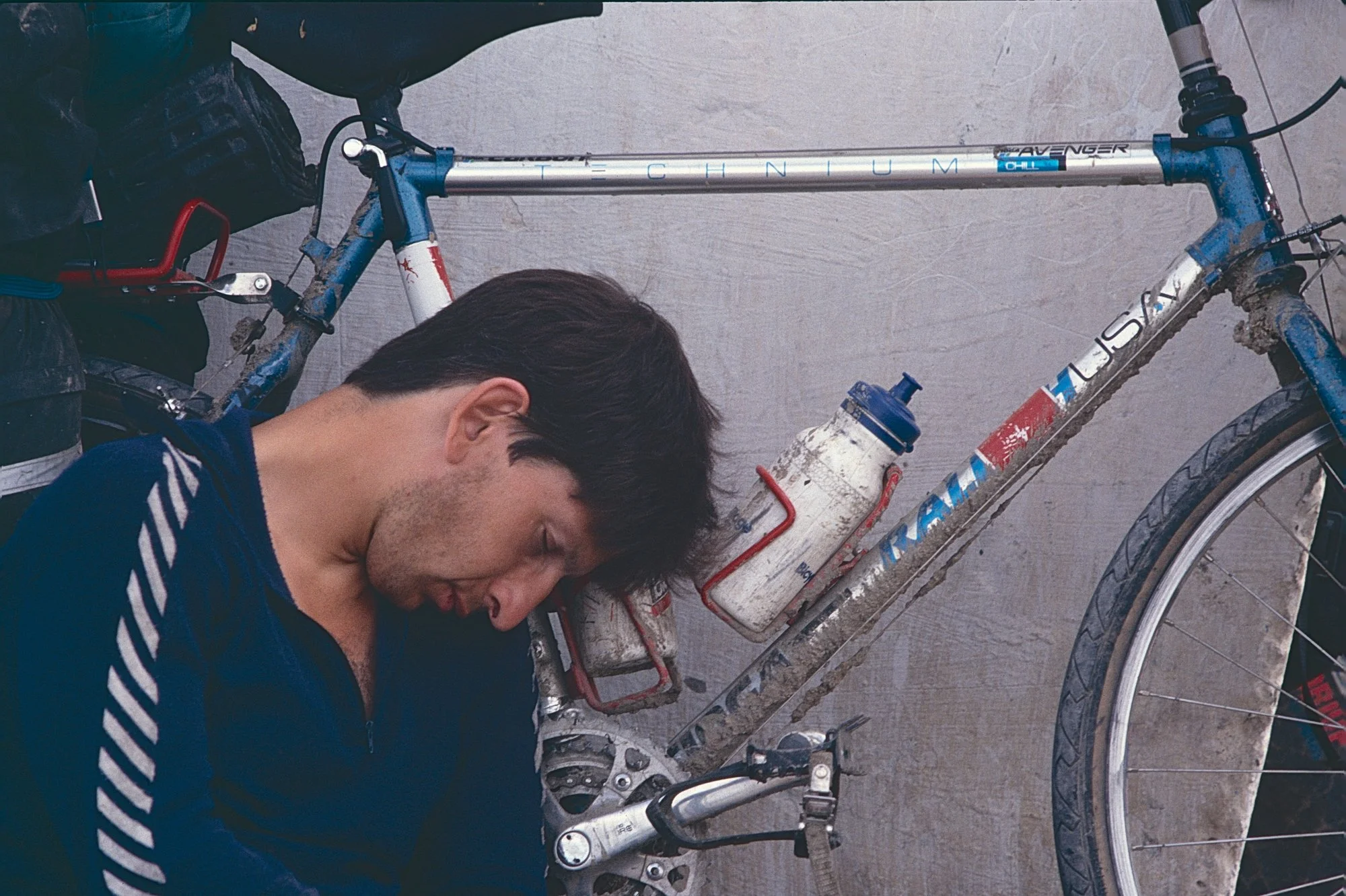
Sadly, Vitale has to go back to Moscow to care for his sick dad. Sasha, a cyclist friend, joins us. On his first day, he keeps up as we ride 120 kms in hilly terrain.
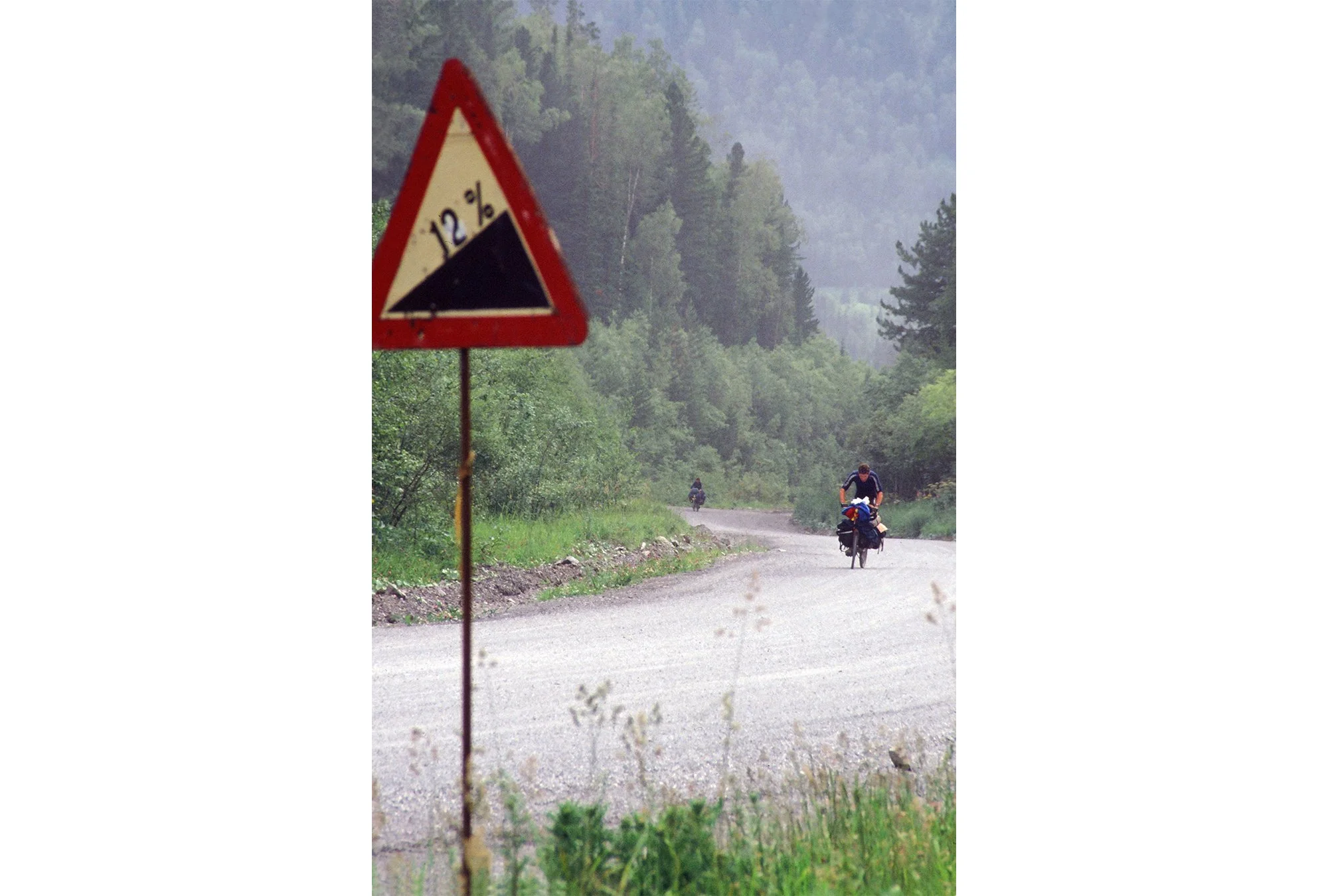
Sucking eggs in the Altai Mountains.
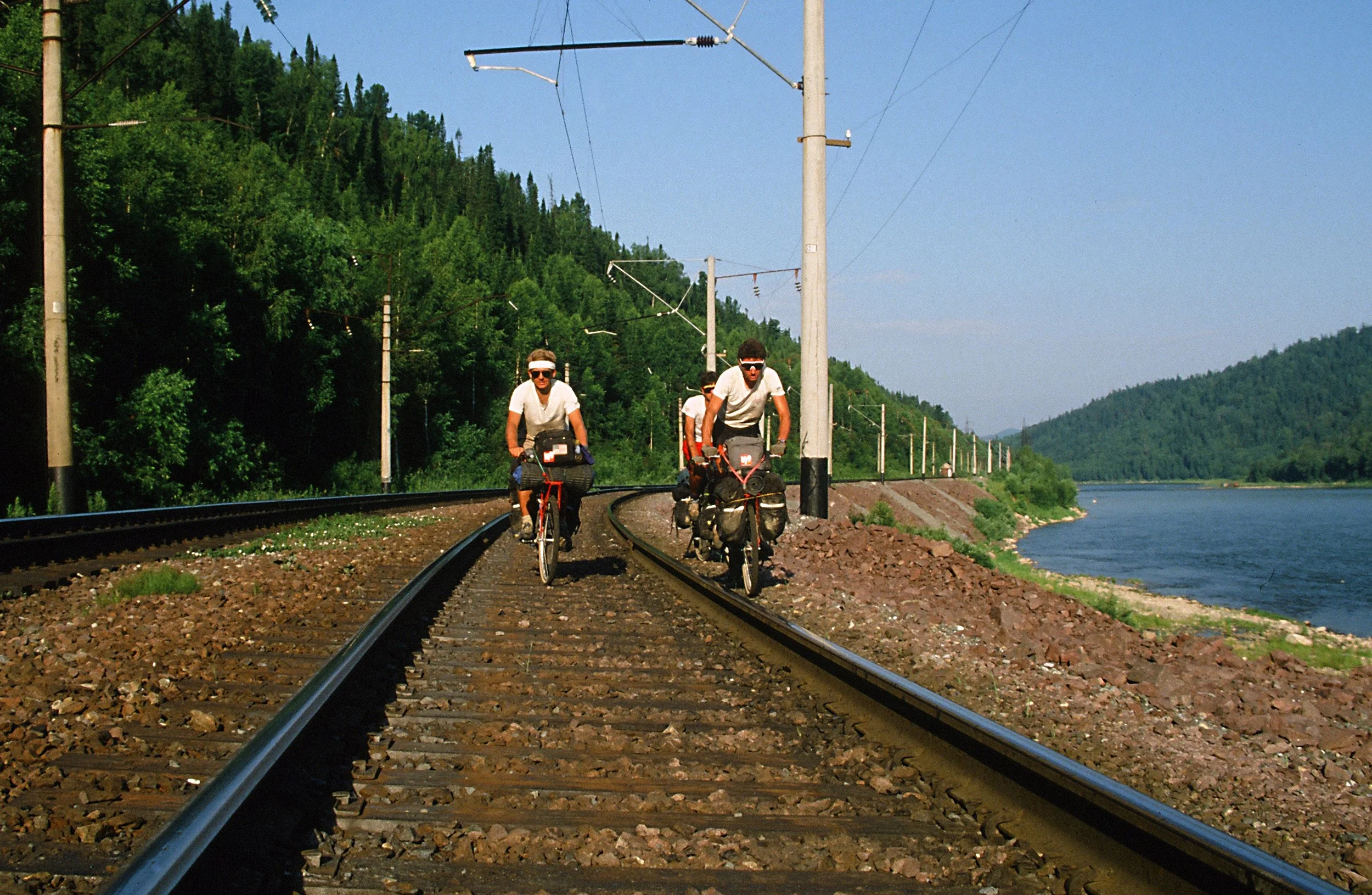
Eager to escape the flat plains, and having been assured that there was a road through the mountains (our declassified CIA maps, the only ones available the time, didn't show one), we decide to take another detour, this time across the Altai Mountains. After a couple of days, the road ends, and our only option is to ride the railroad tracks.
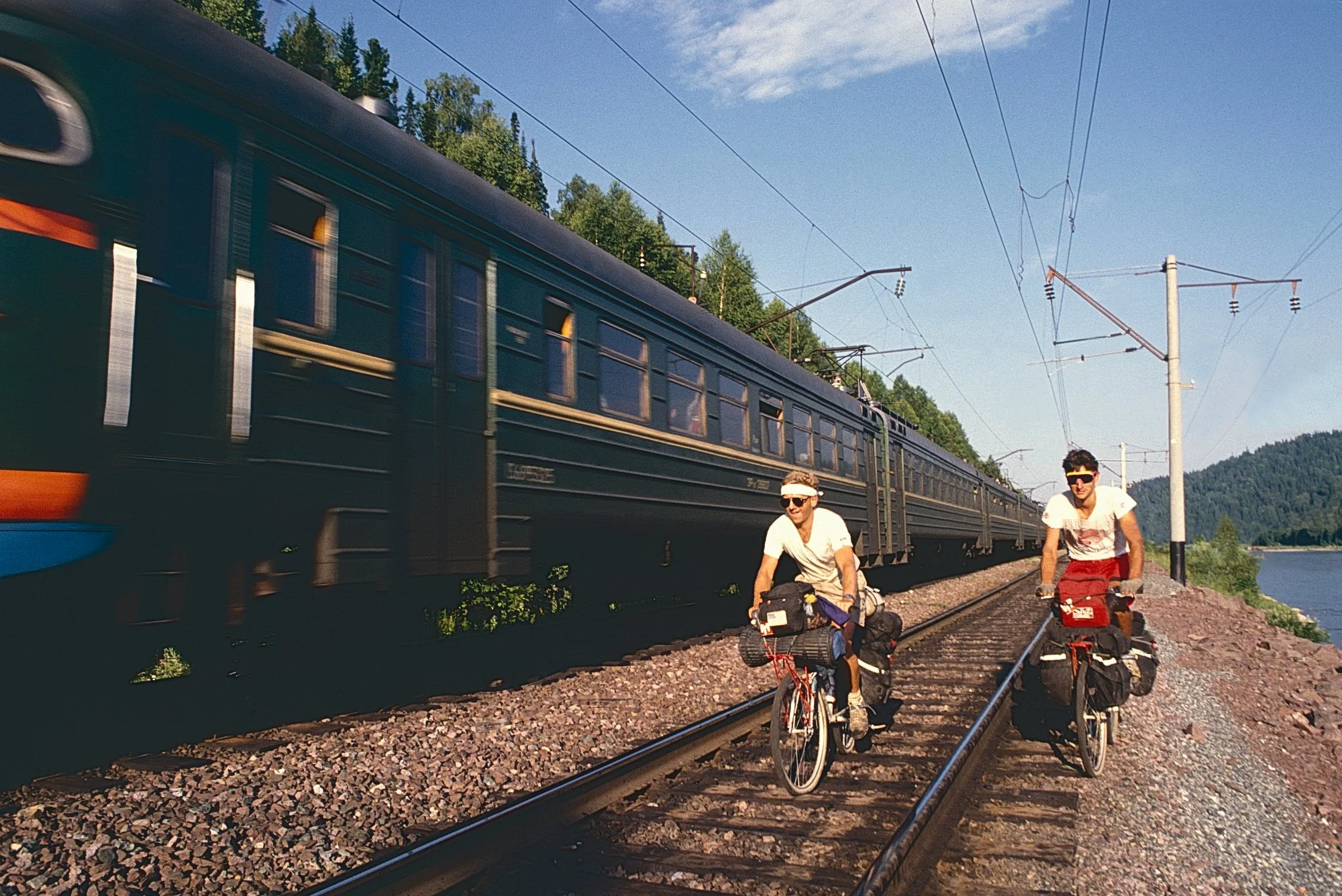
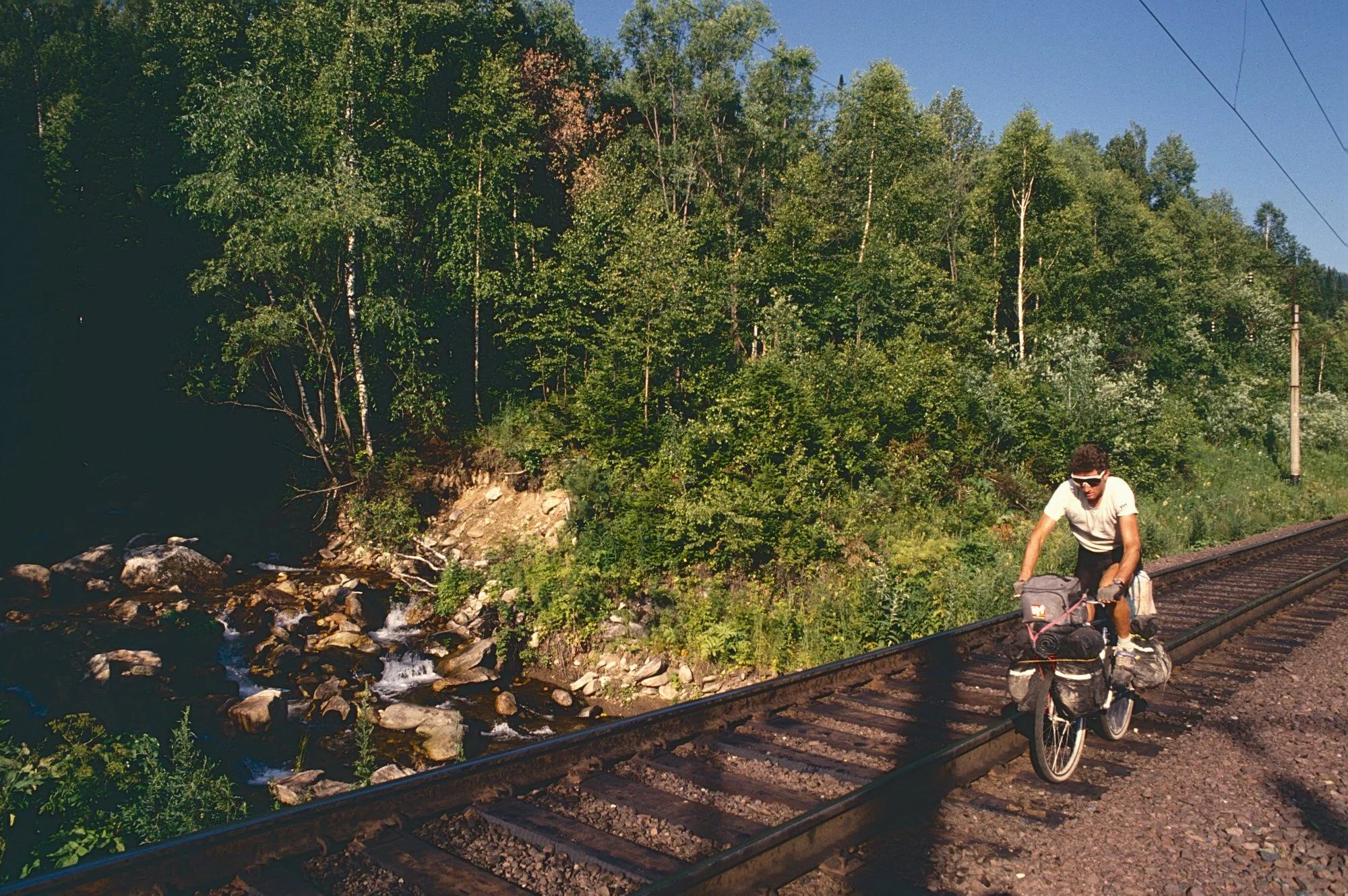
We first ind it amusing, but riding the trestles results in broken pannier racks and saddle rashes
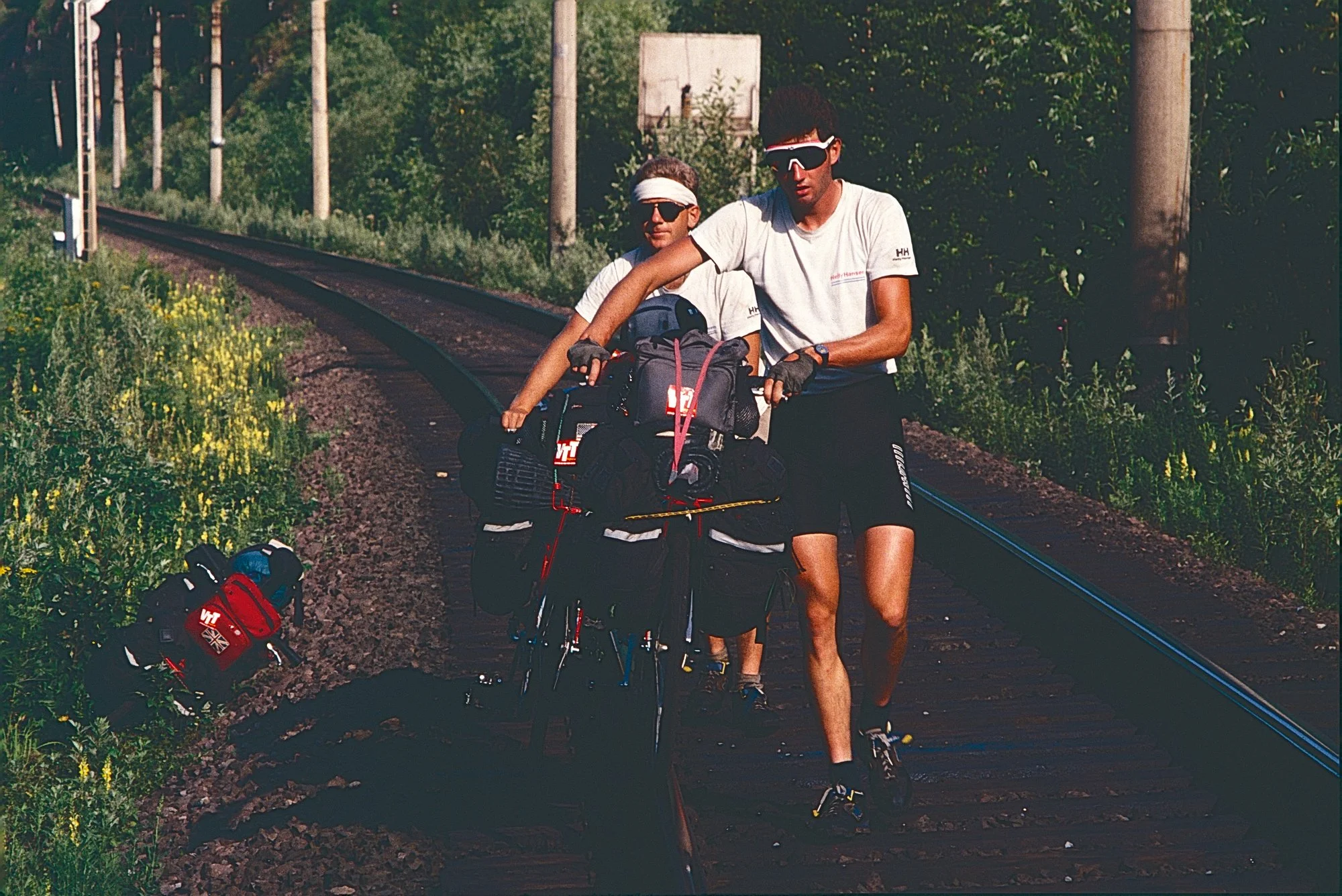
The smoothest option on the gear is to balance the bikes on a rail.
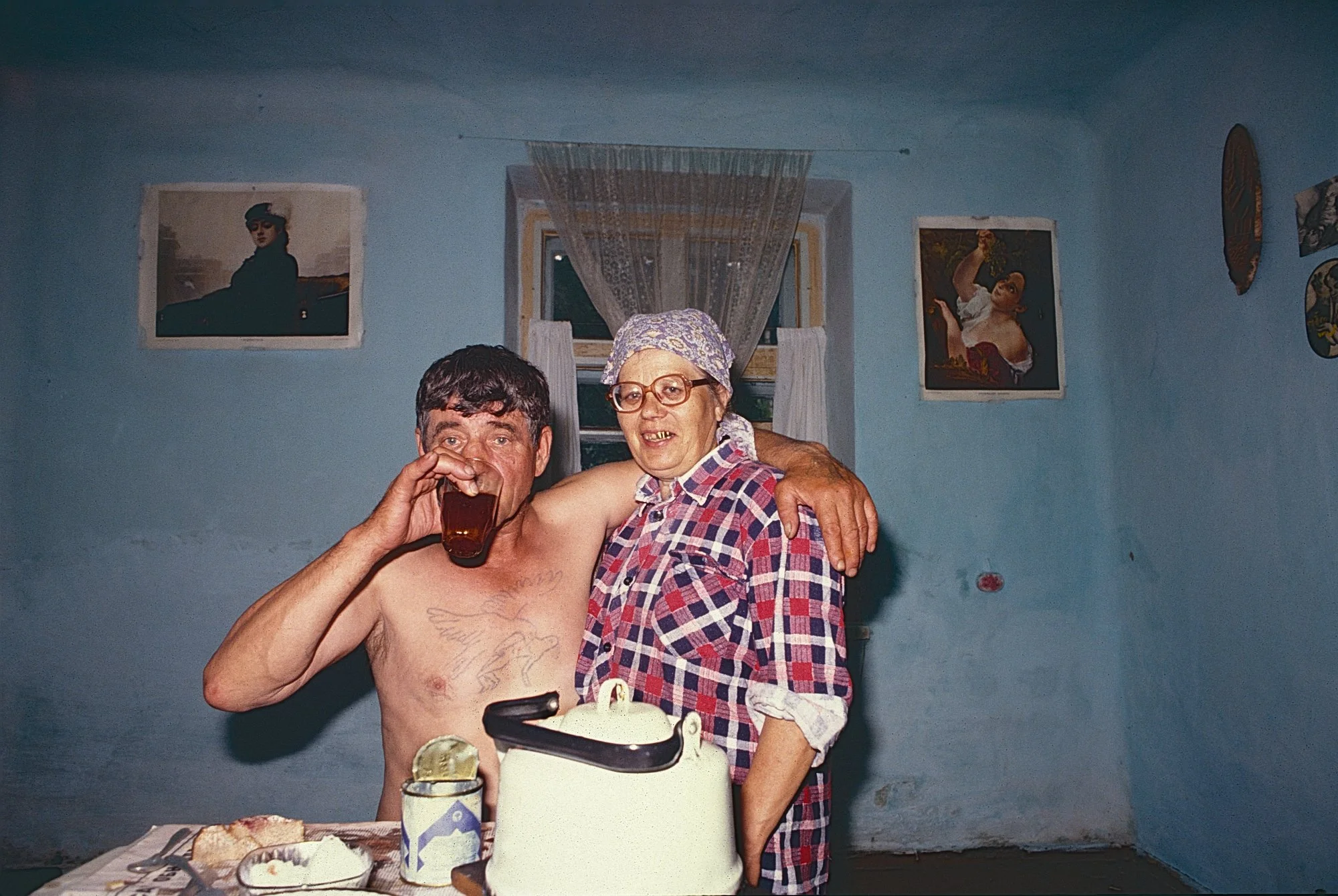
A couple invites us for drinks in a remote Altai Mountains settlement.
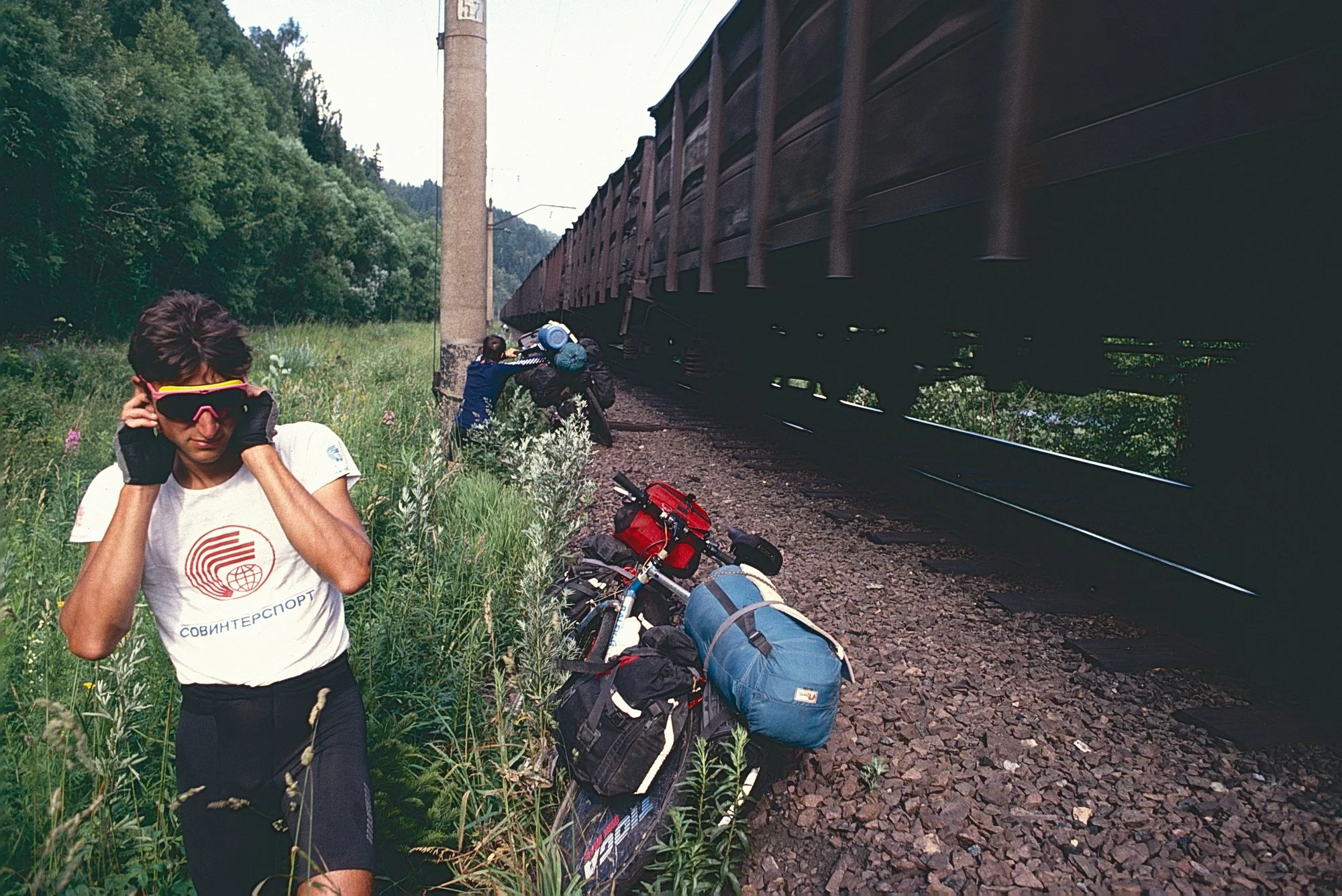
We scramble to the side everyime a train approaches.
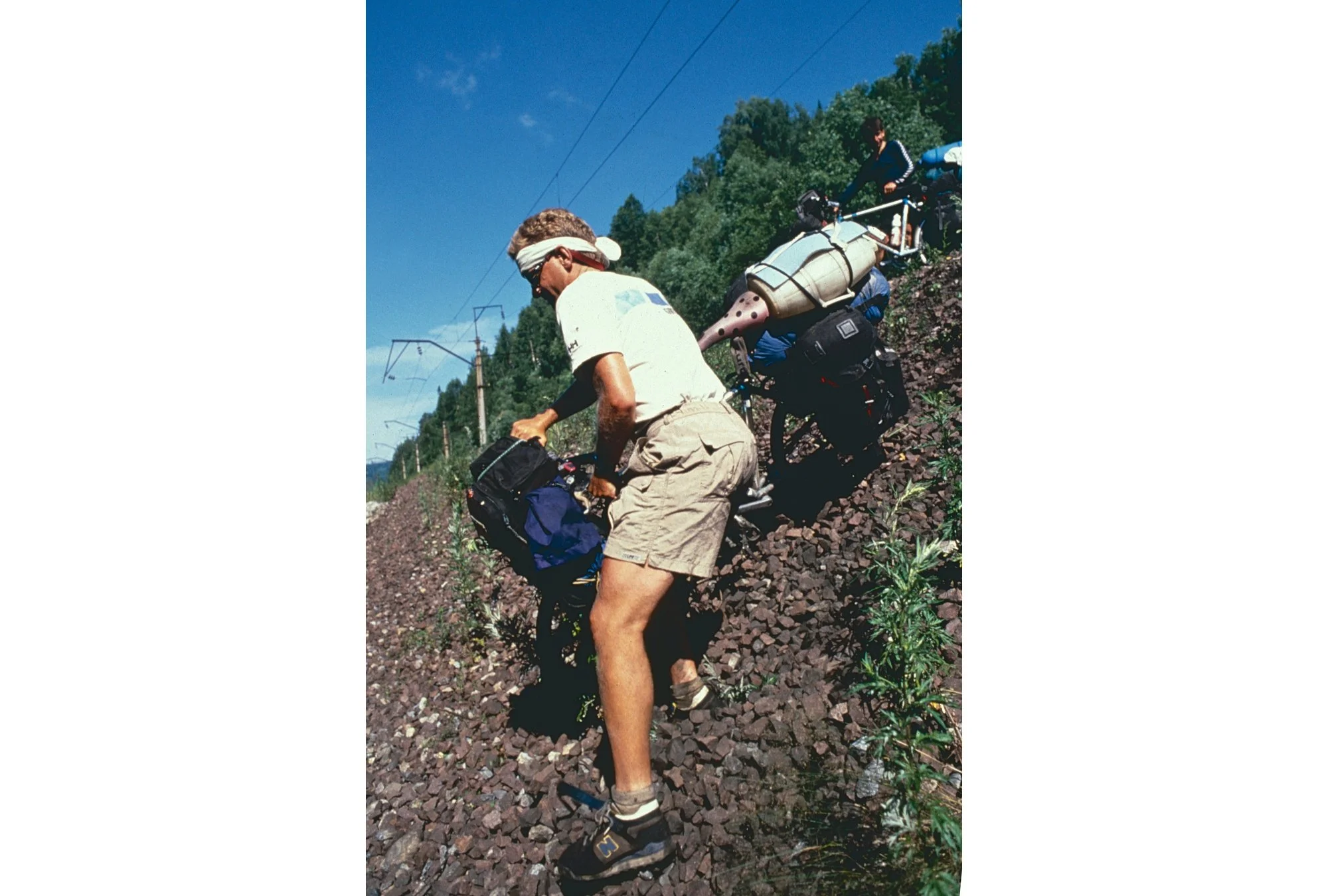
Or just get off the tracks.
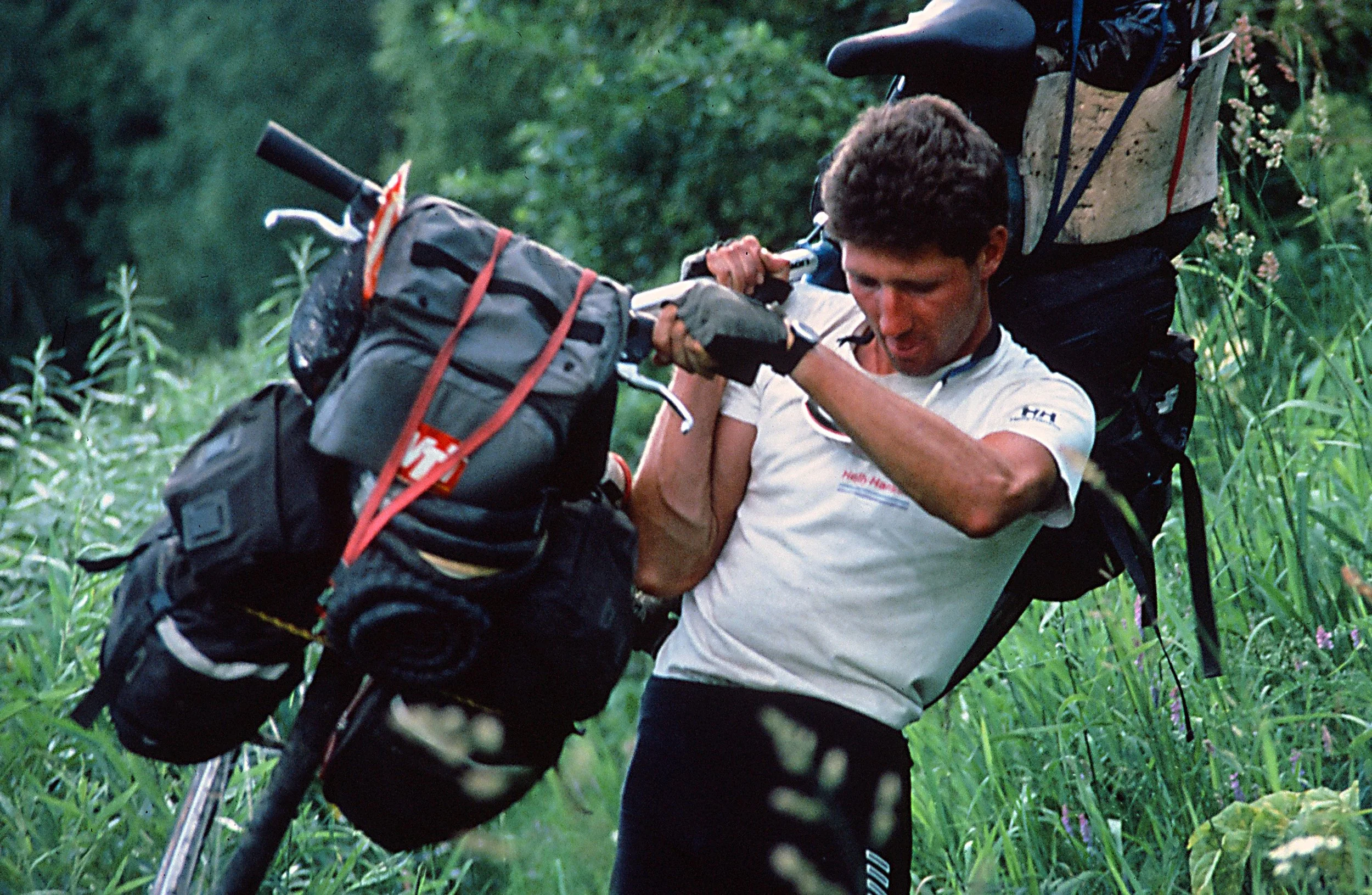
Bike carry.
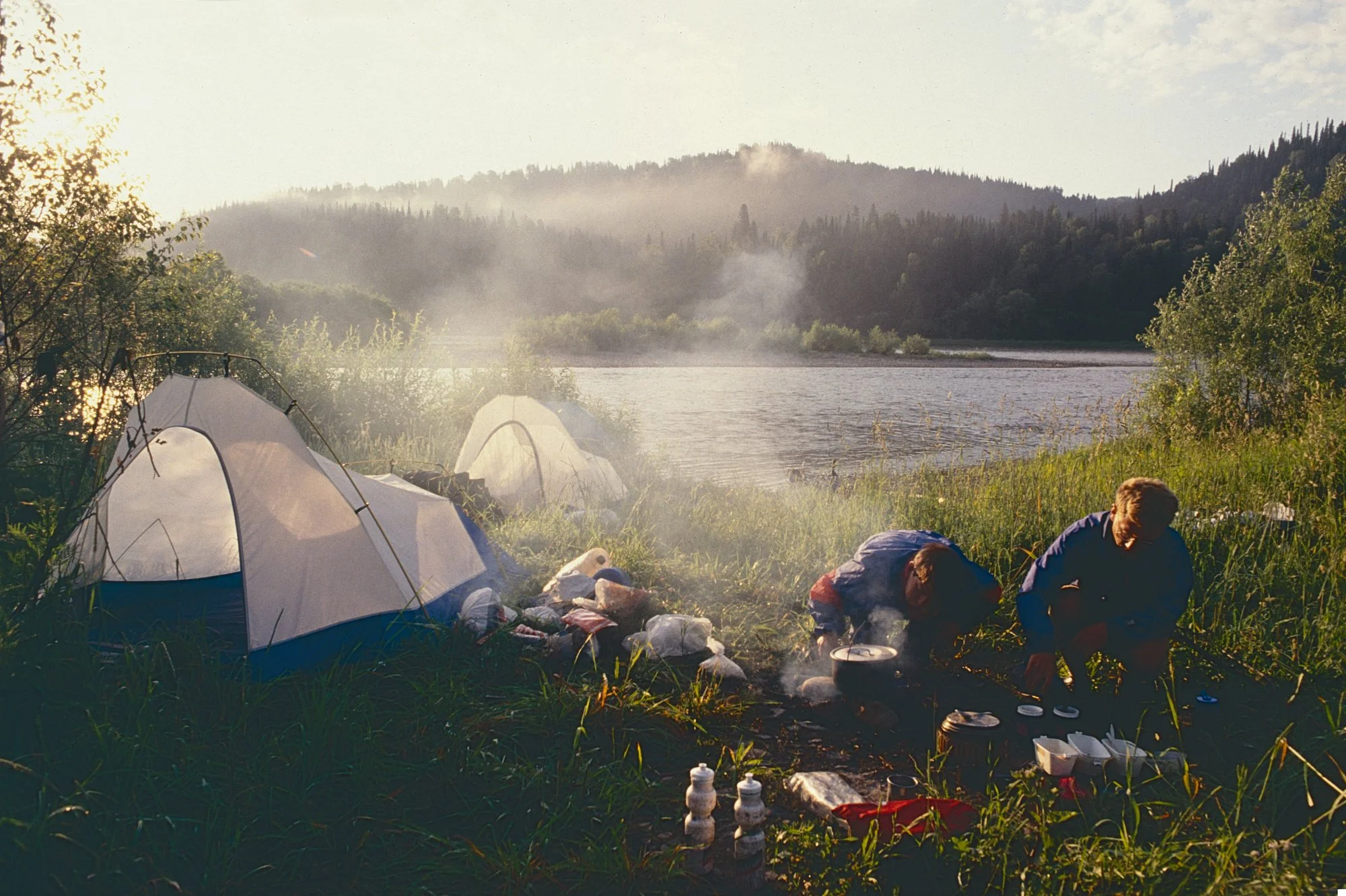
Stopped by a broken rim and having advanced only a few kilometers, we set up camp on the river edge.
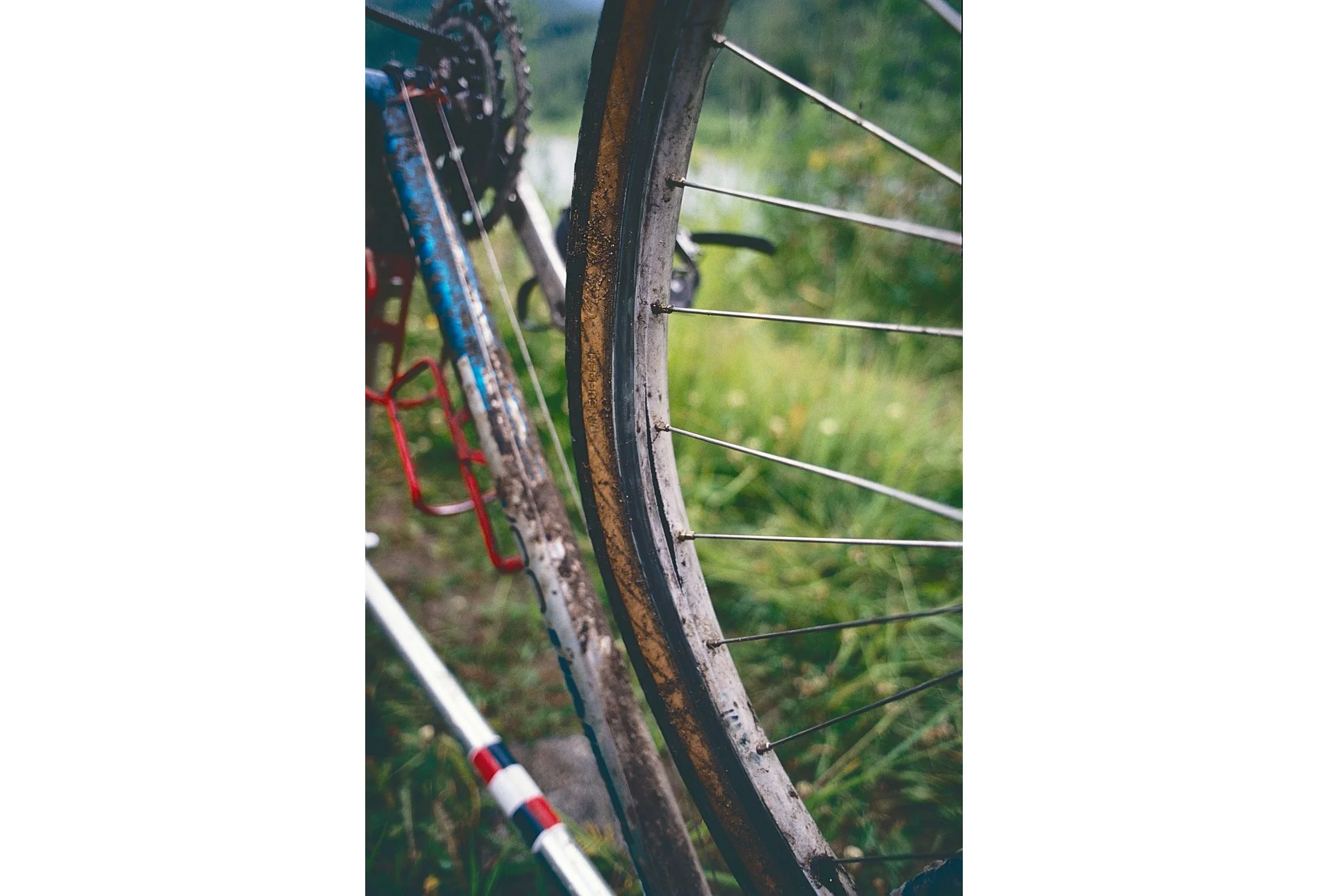
Tired of pushing our bikes on the train tracks and eager to make up time, we try to ride on the river edge, where boulders decide otherwise.
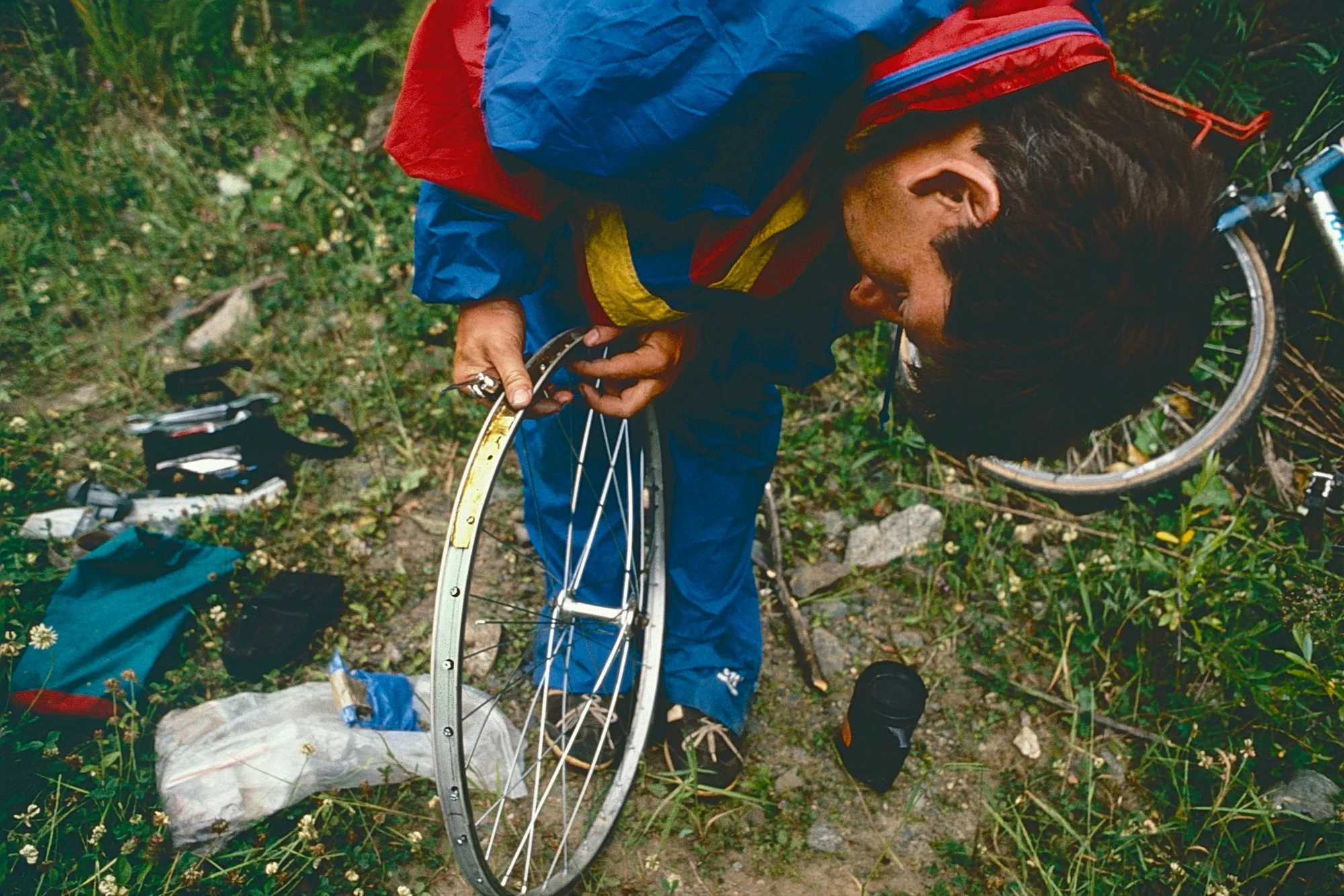
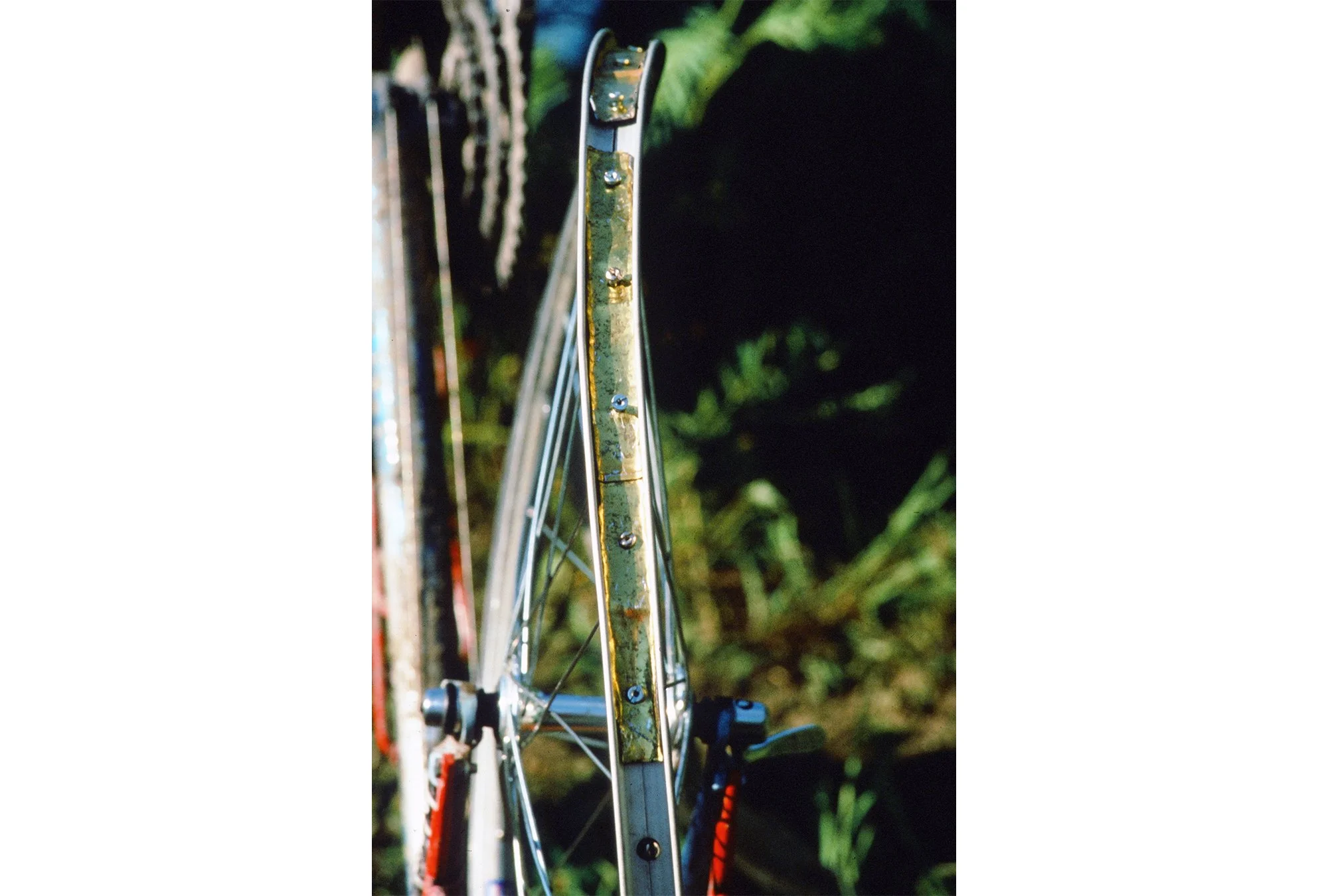
Fresh out of wheels: not expecting to go through as many rims and spokes as we did between Leningrad and the Altai, we shipped the bulk of our spare rims to a post office in Siberia, where we planned on loading up on spare parts before tackling an 800 kms roadless swamp section. Sasha tries to mend my cracked rim with a strip cut from a Chinese sardine can, but the wheel buckles again after a few meters. The next morning, we shuttle the four bikes with three front wheels to the next village.
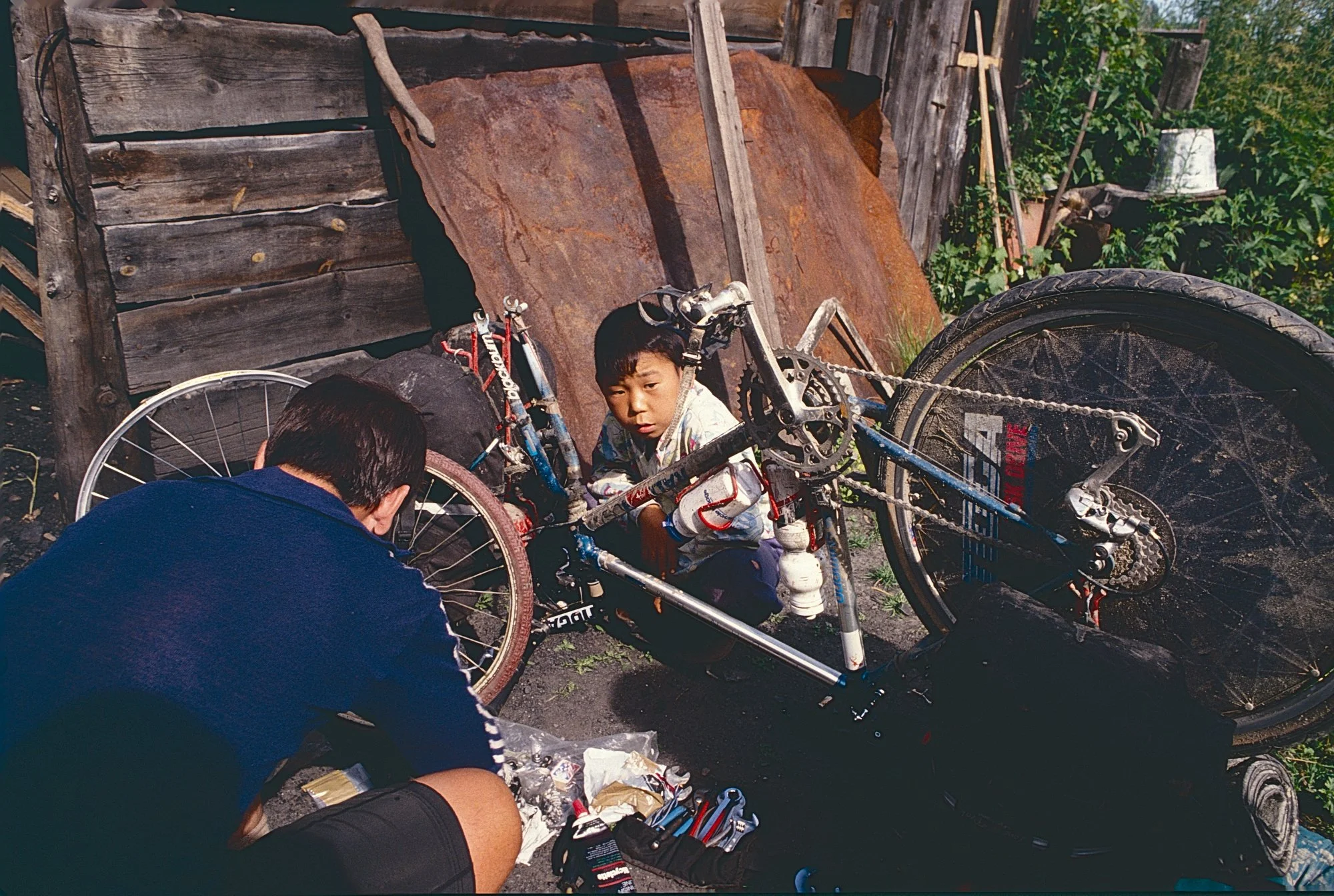
There, the head the Communist party shows an unusual Soviet trait (perhaps less surprising in the remote Altai): initiative. He summons a front wheel from a local kid's bike (sorry, kid), and we manage to "secure" it to the fork.
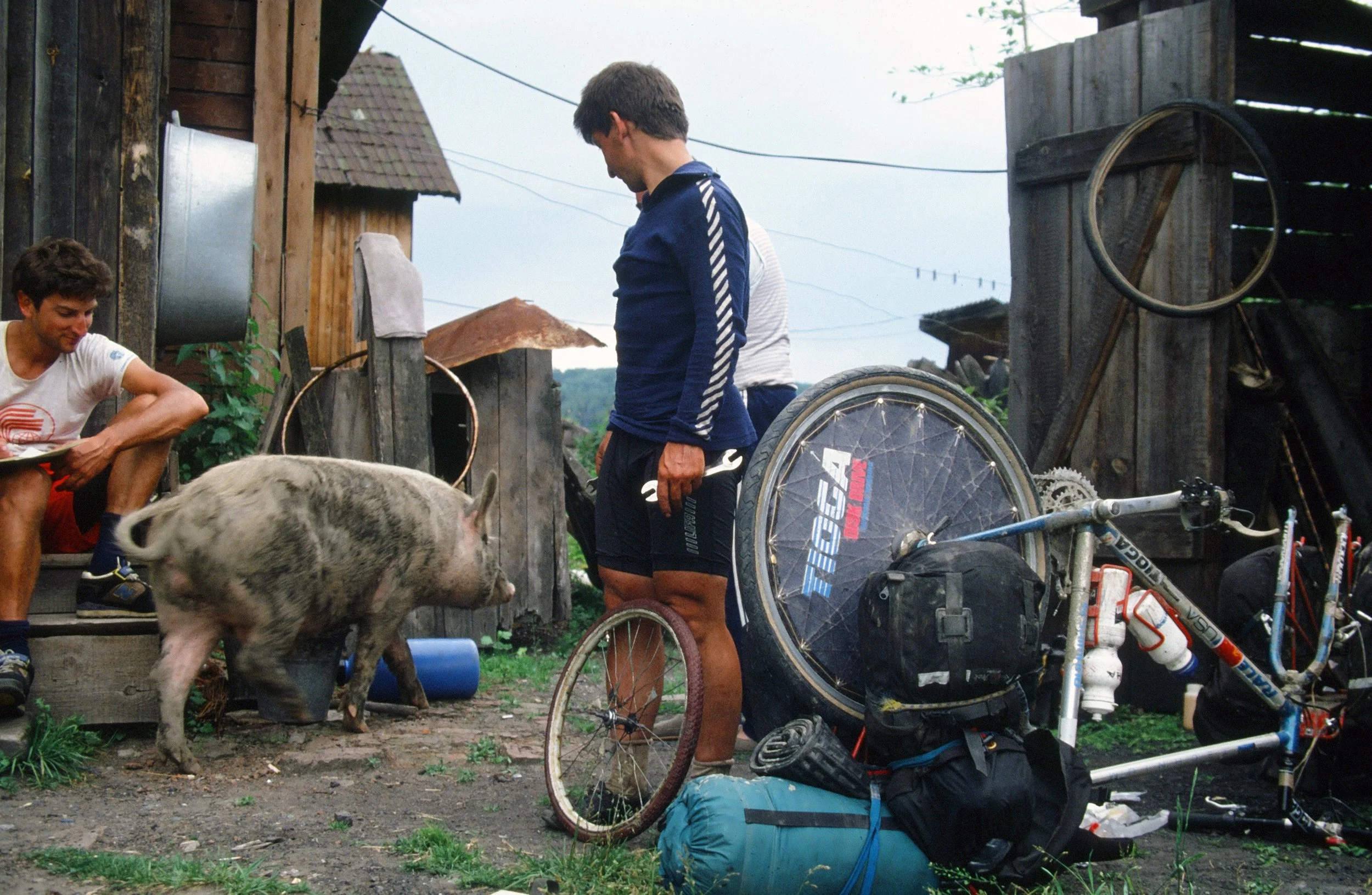
Making a friend in the Altai.
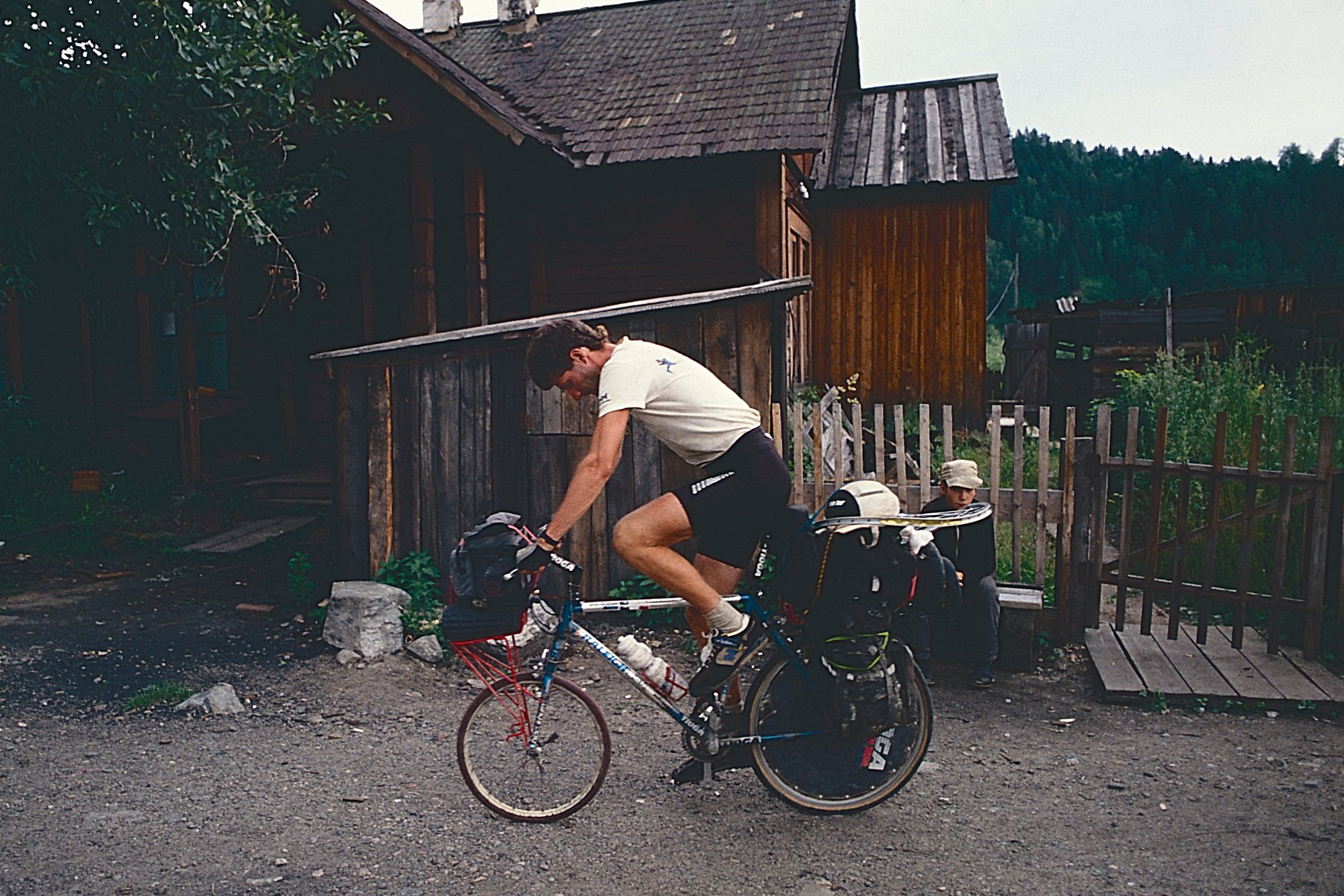
Circus bike: it's wobbly, the front brake pads are too high above the small wheel to serve any purpose -no high speed decent off the Altai for me- and the time trial vibe is odd, but it will hold until we find a replacement..
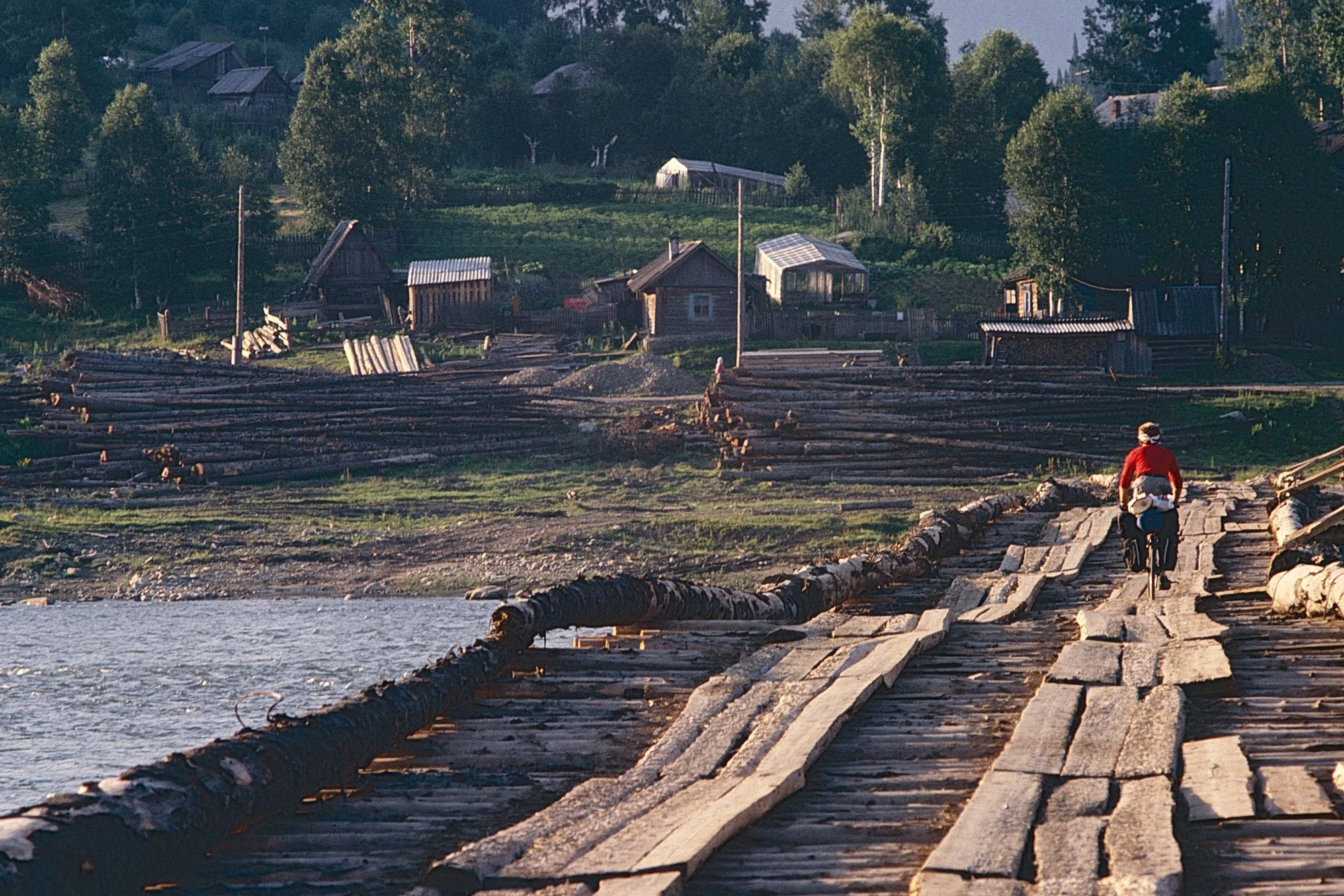
In the Altai.
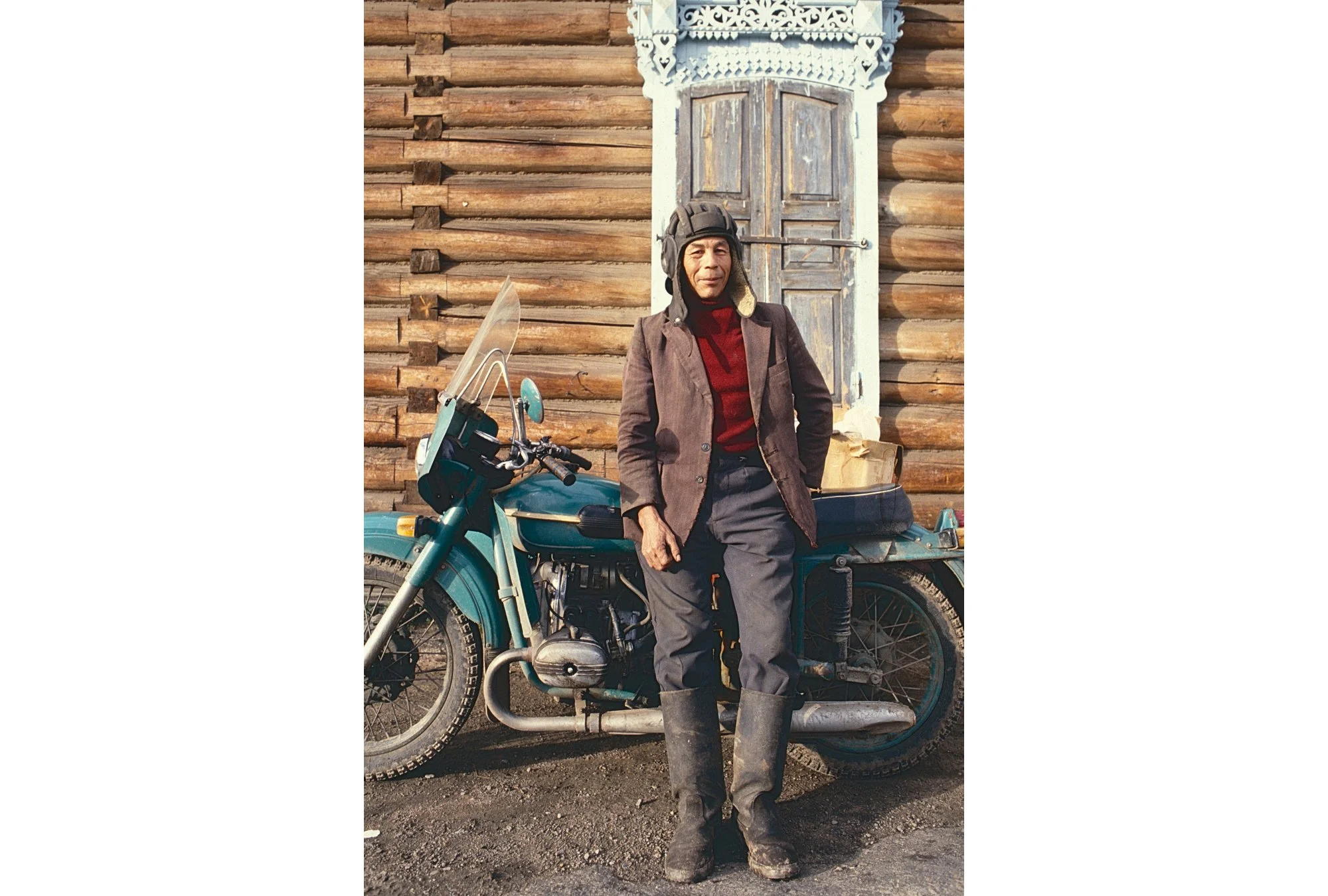
Proud Ural sidecar owner.
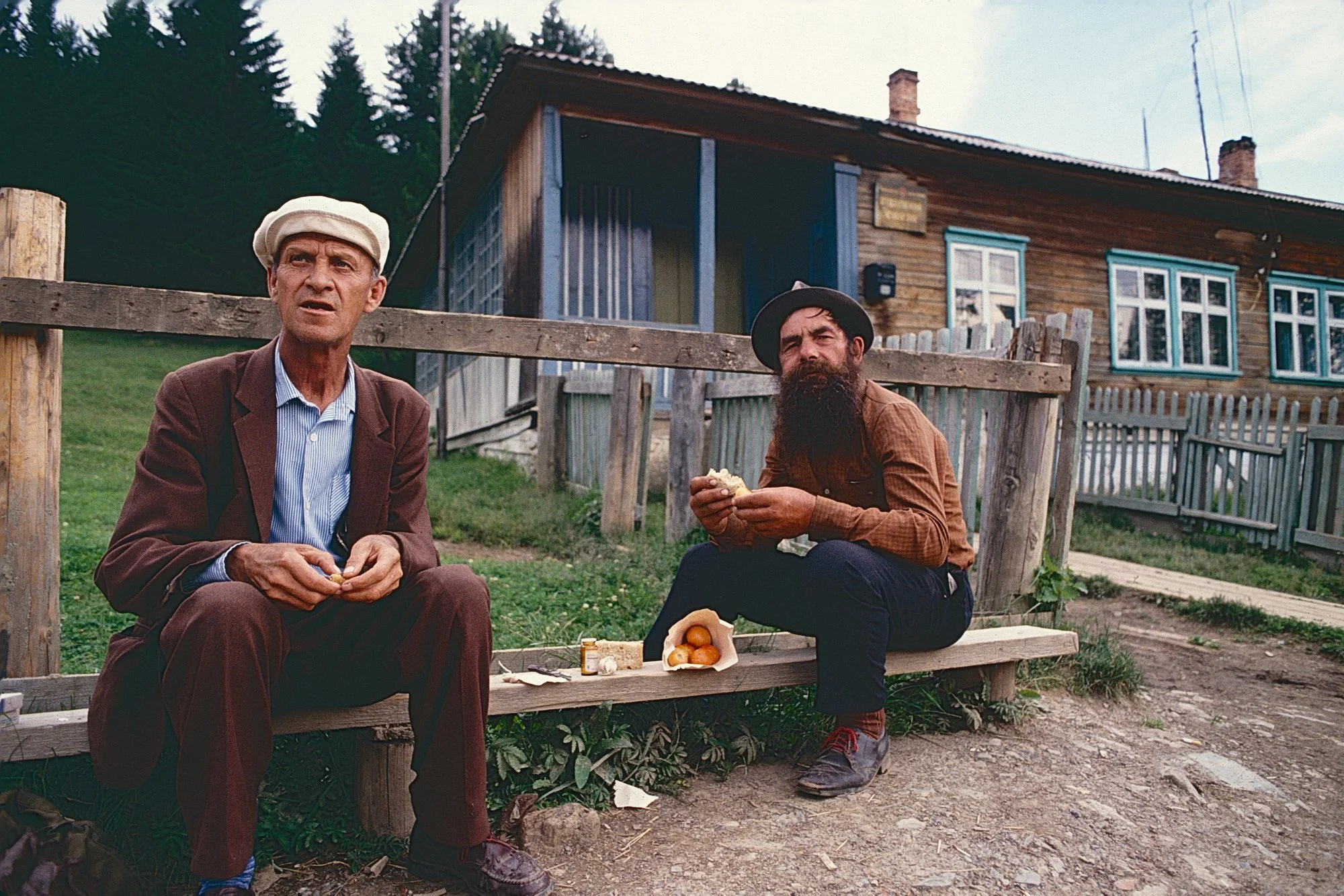
Local trappers on a lunch break.
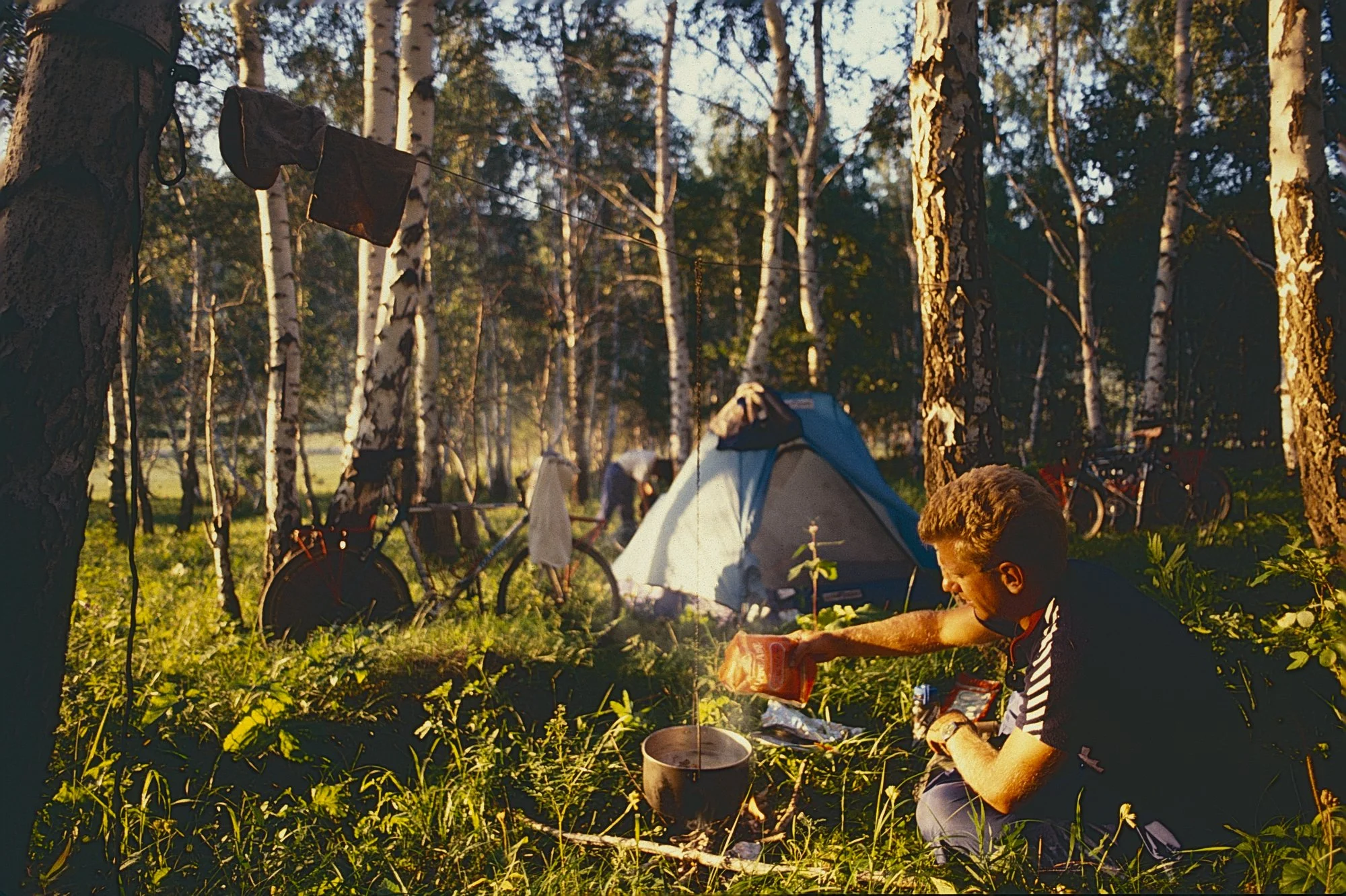
We set up camp in a forest just east of the Altai Mountains. The crossing put us behind by several days, but the crisp mountain air remote villages were a welcomed break from the hot Kazakh and Siberian plains.
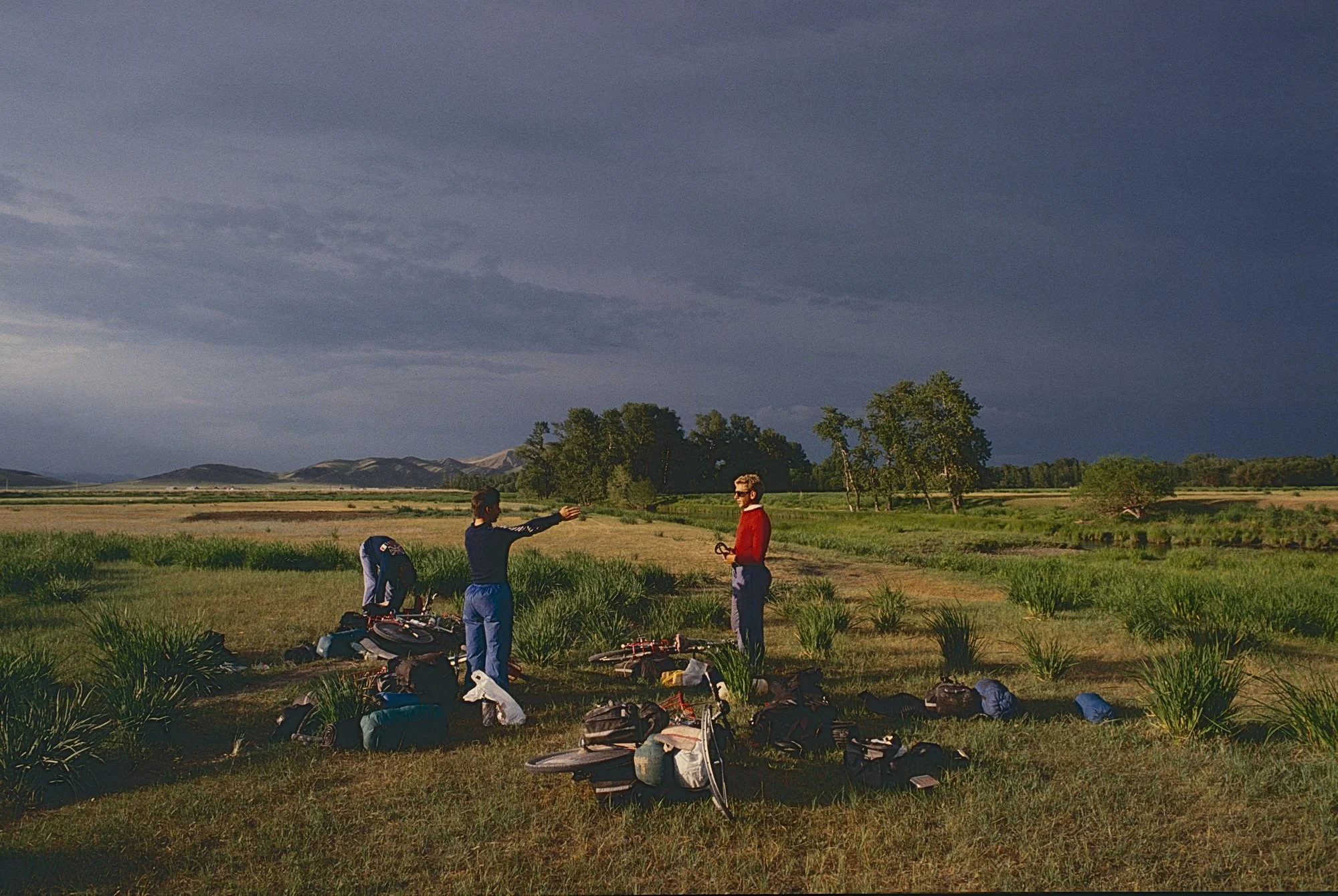
Getting ready for a day of riding on the Siberian steppes, near the Mongolian border.
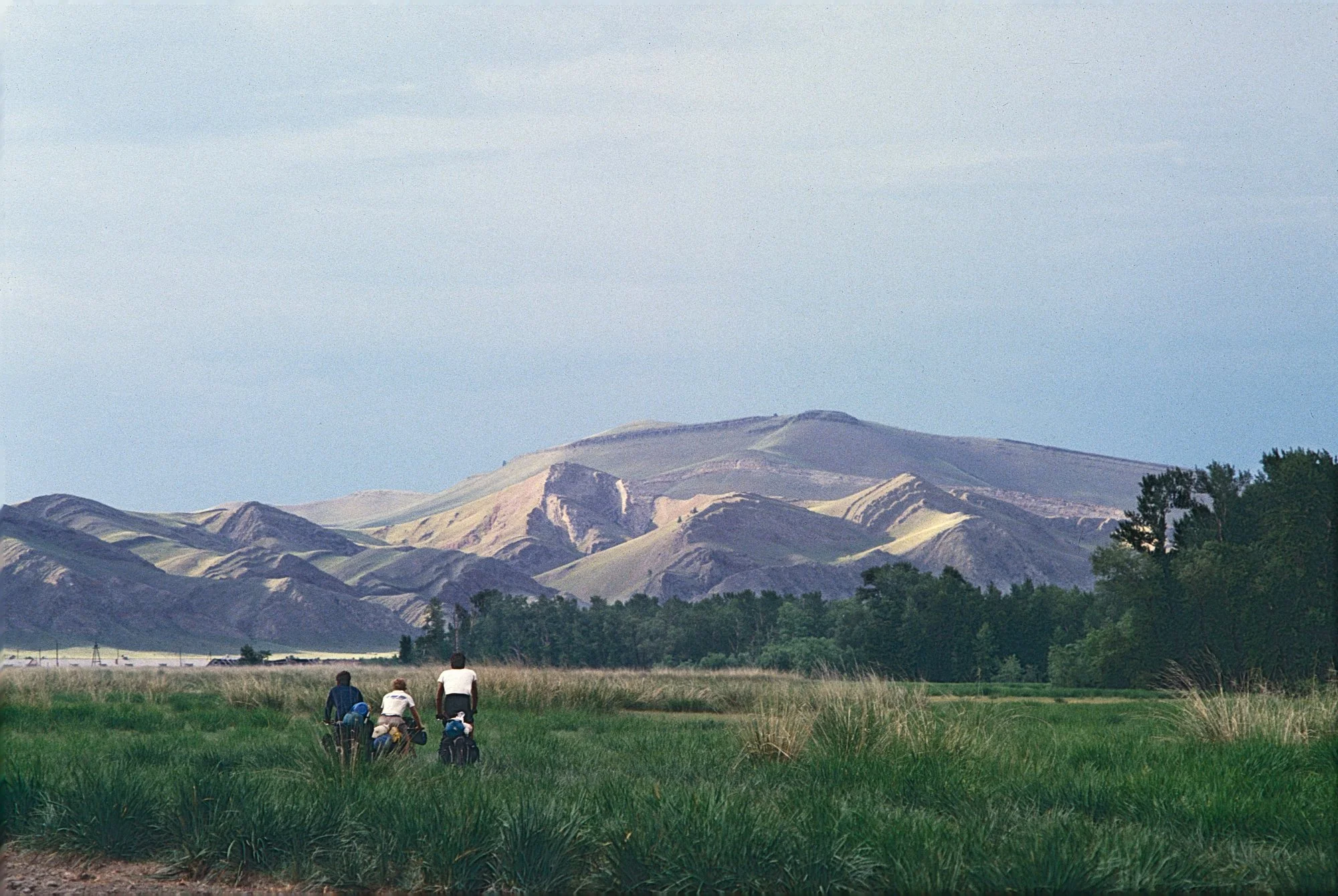
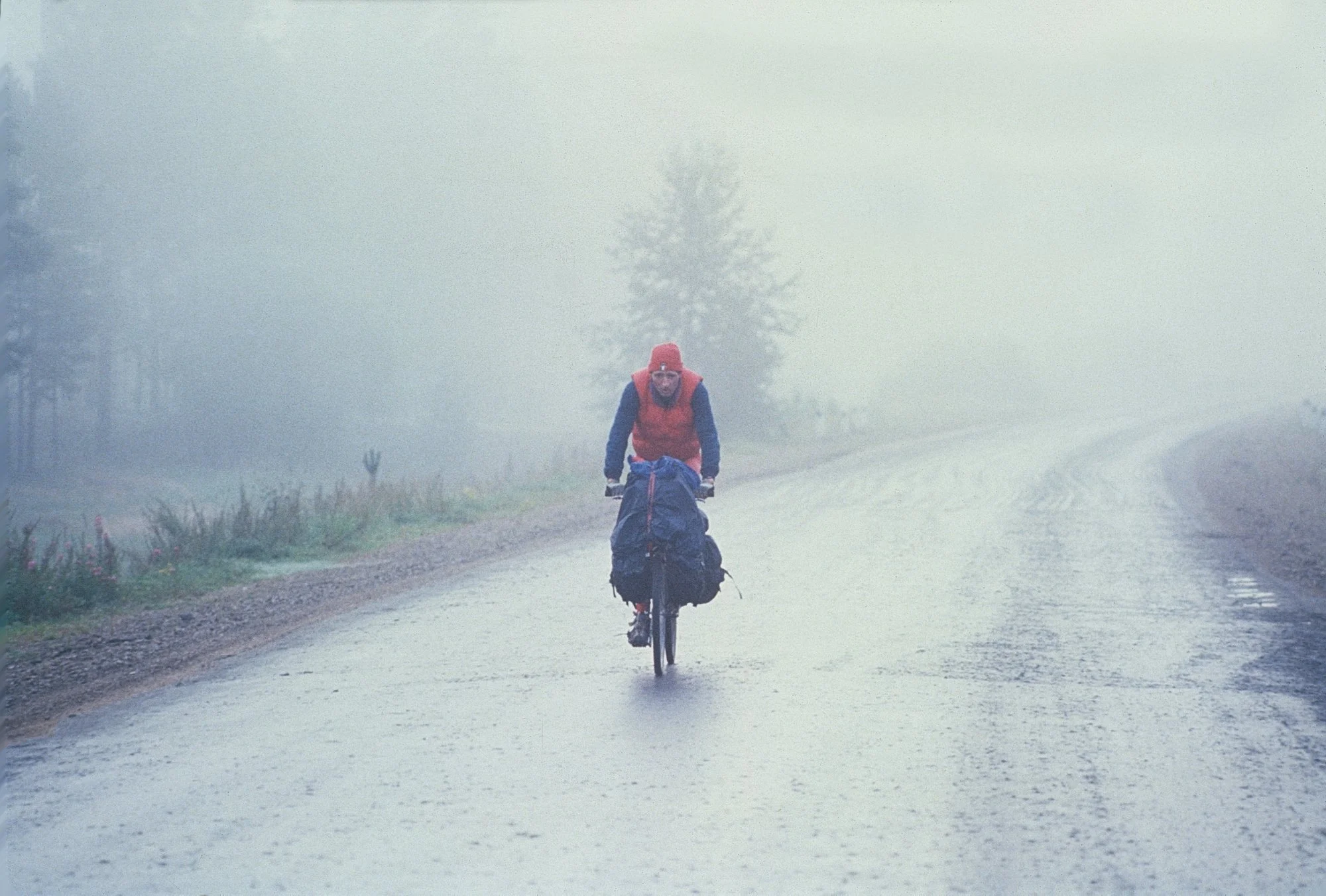
Enjoying an early taste of Siberian weather, but back on paved road and a new wheel sent from Moscow, where we had left an entire spare bike.
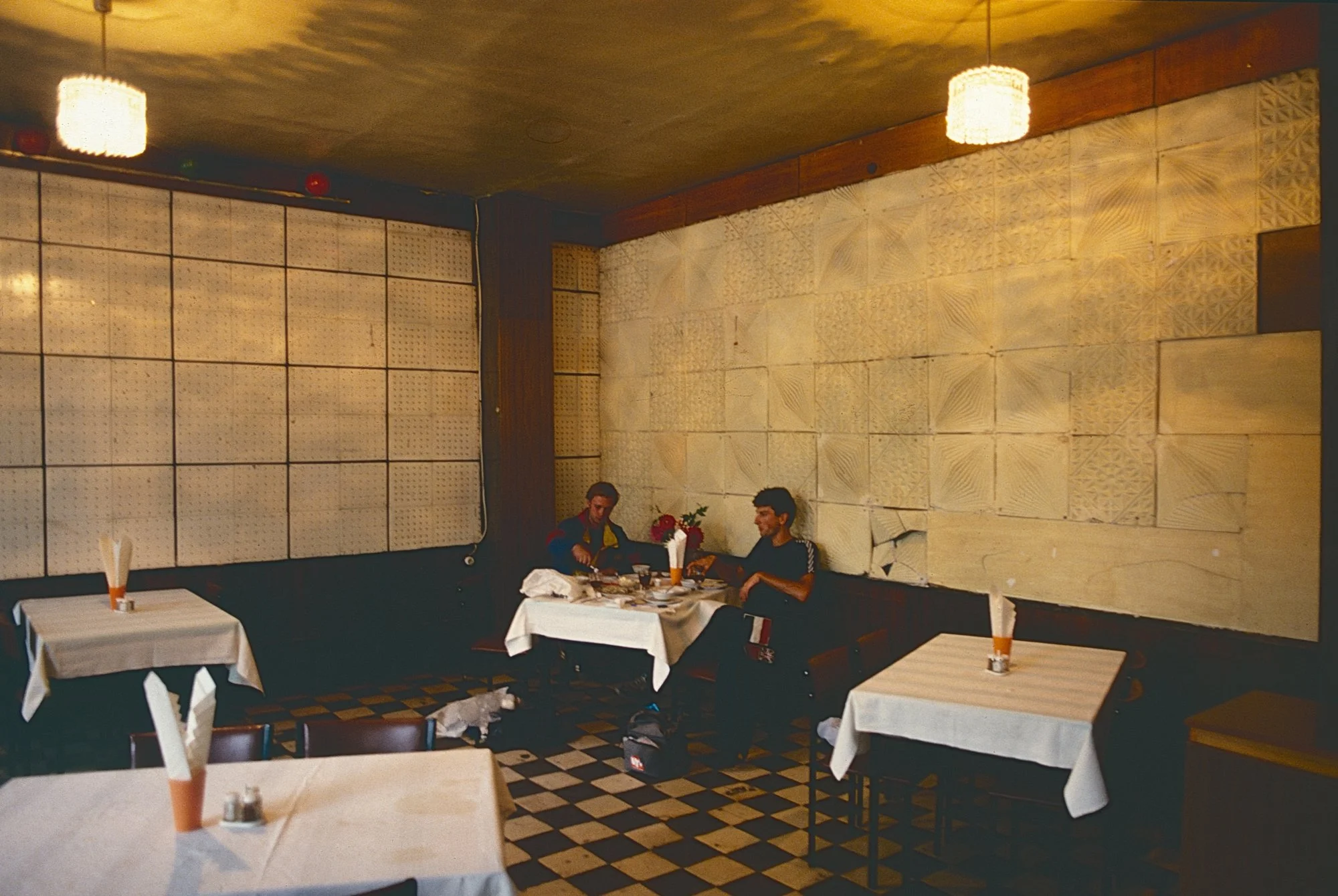
Another drab Stolovaya.
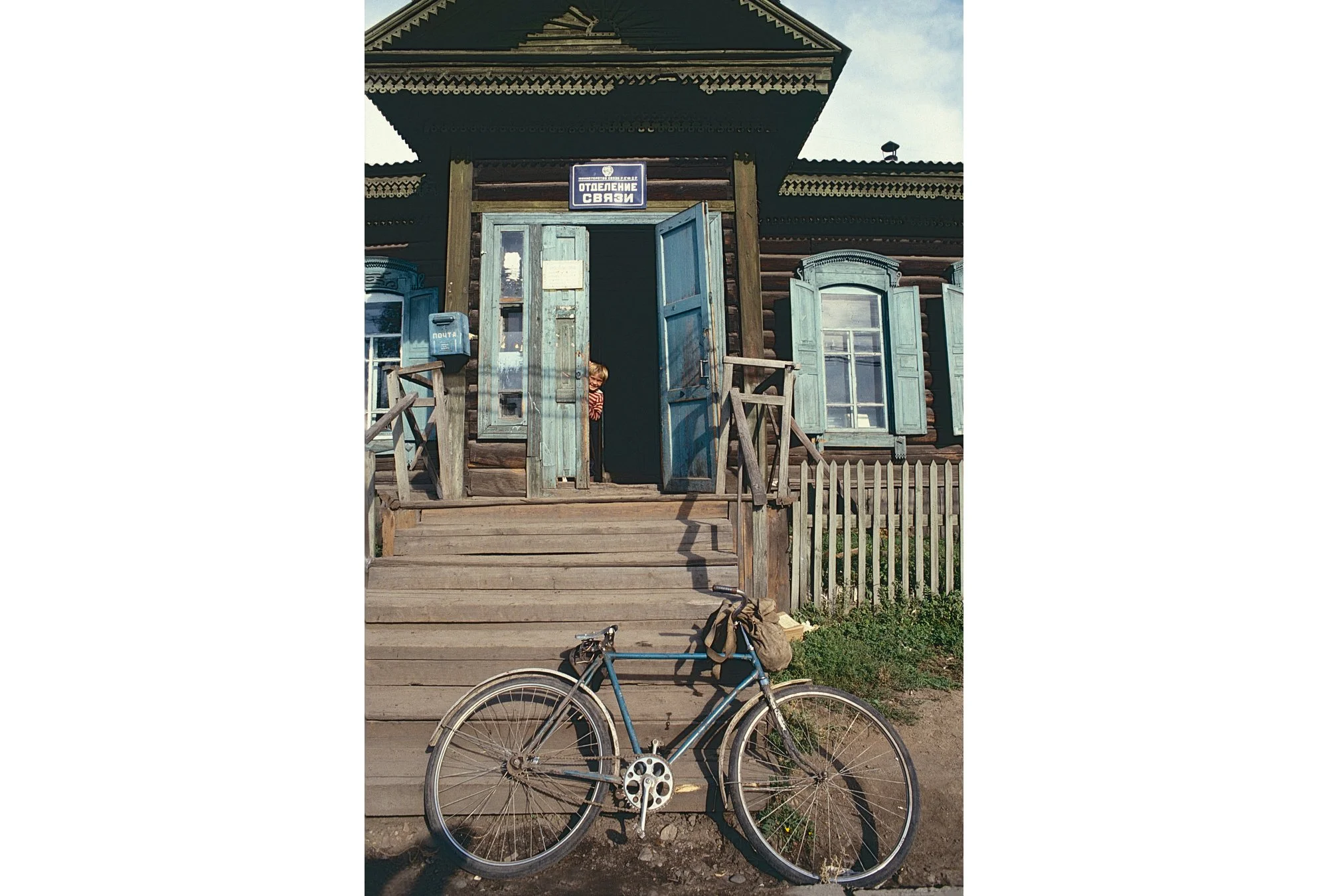
Curious kid in at a Siberian post and telegram office.
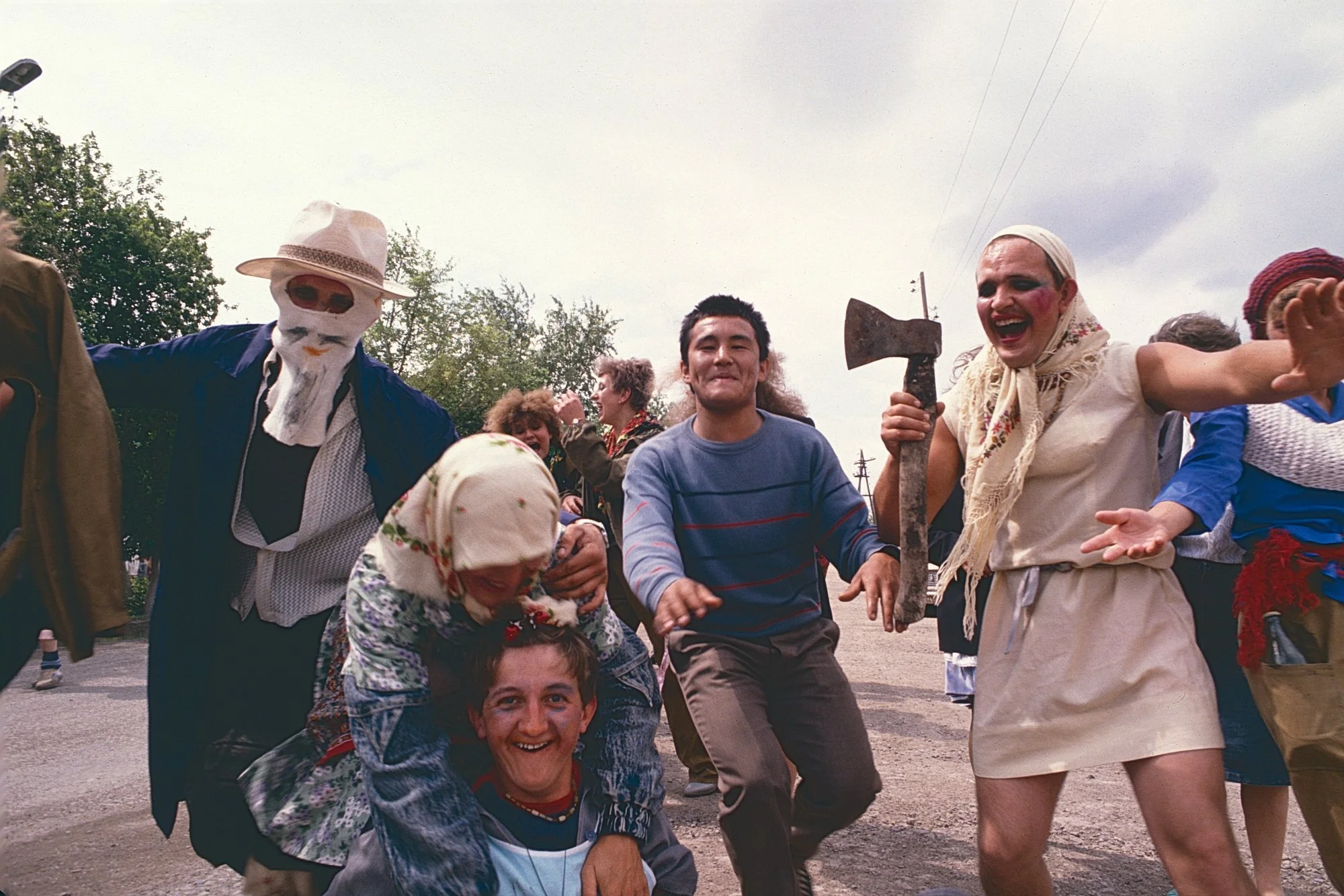
Friendly Siberian university hazing session. Those people are futur doctors.
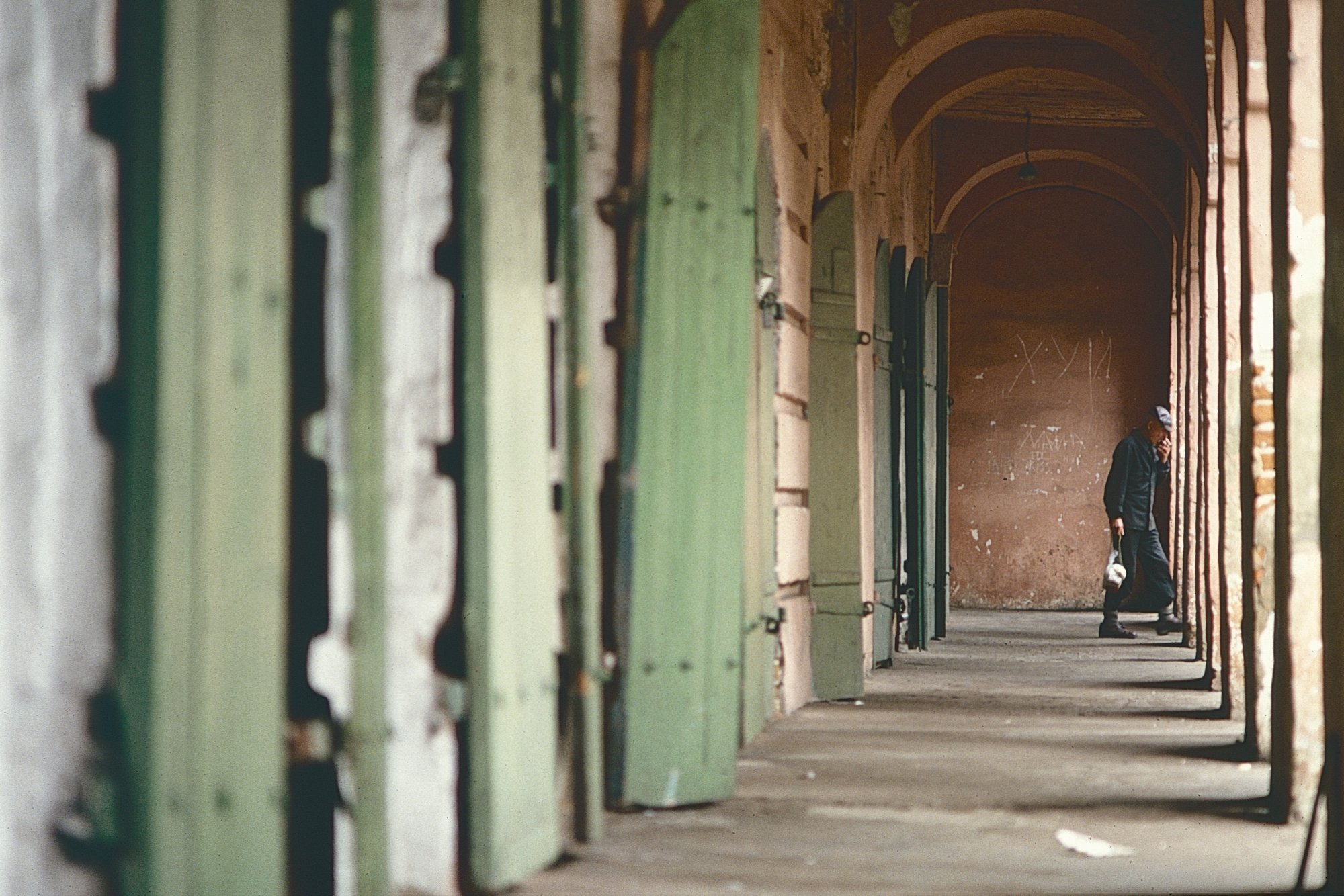
Siberian town.
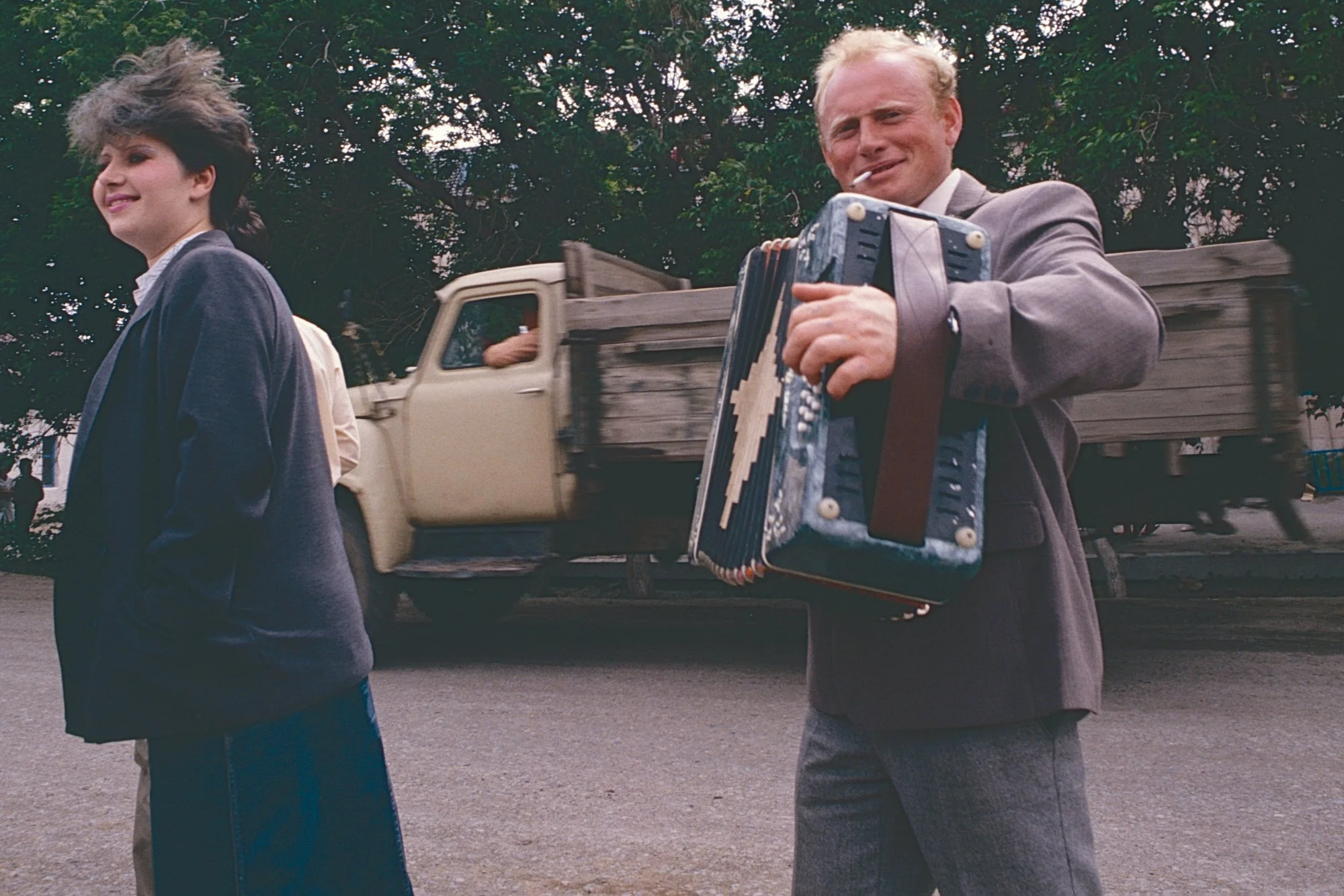
Free Soviet tune for weary cyclists.
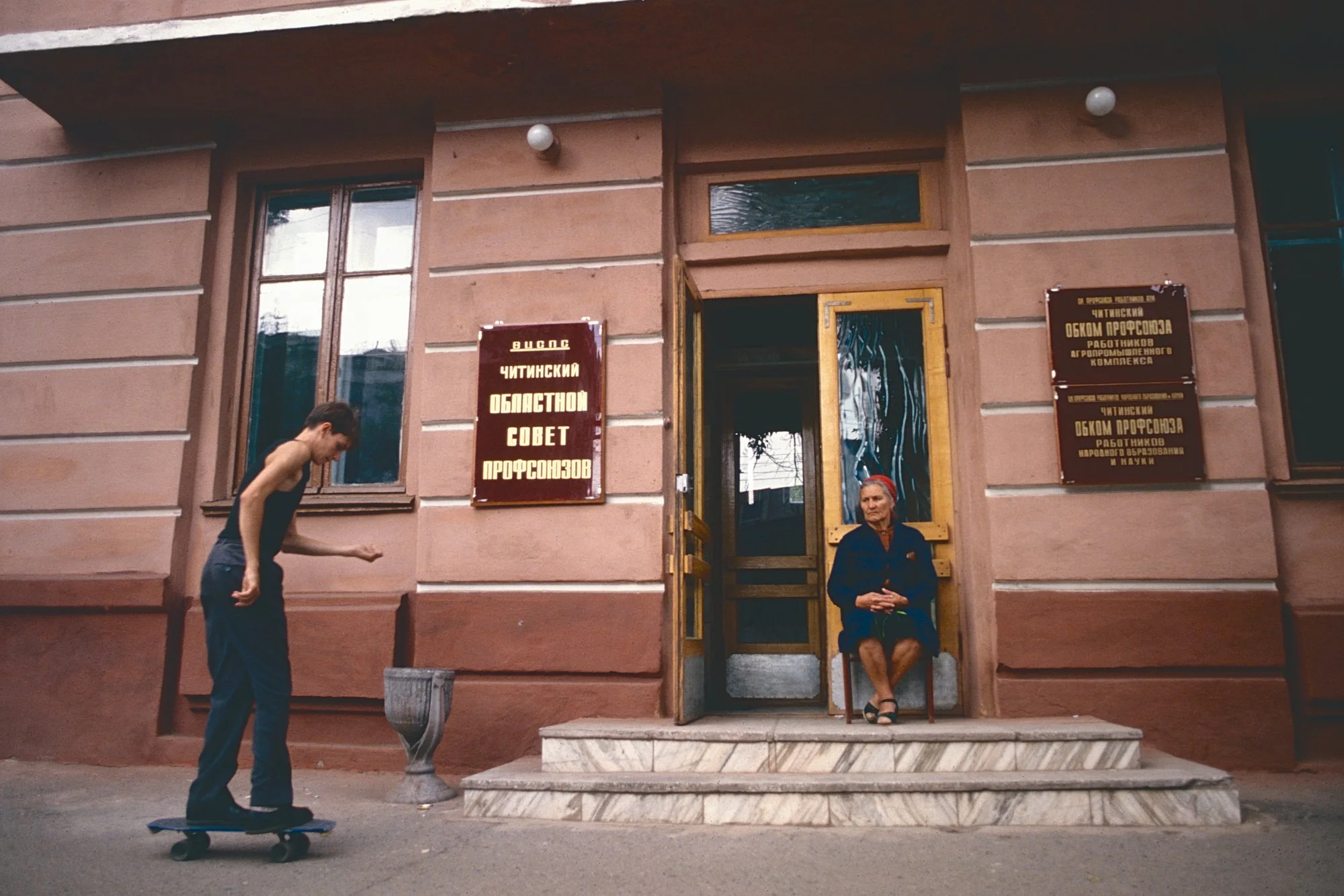
Skateboarder and suspicious Babushka.
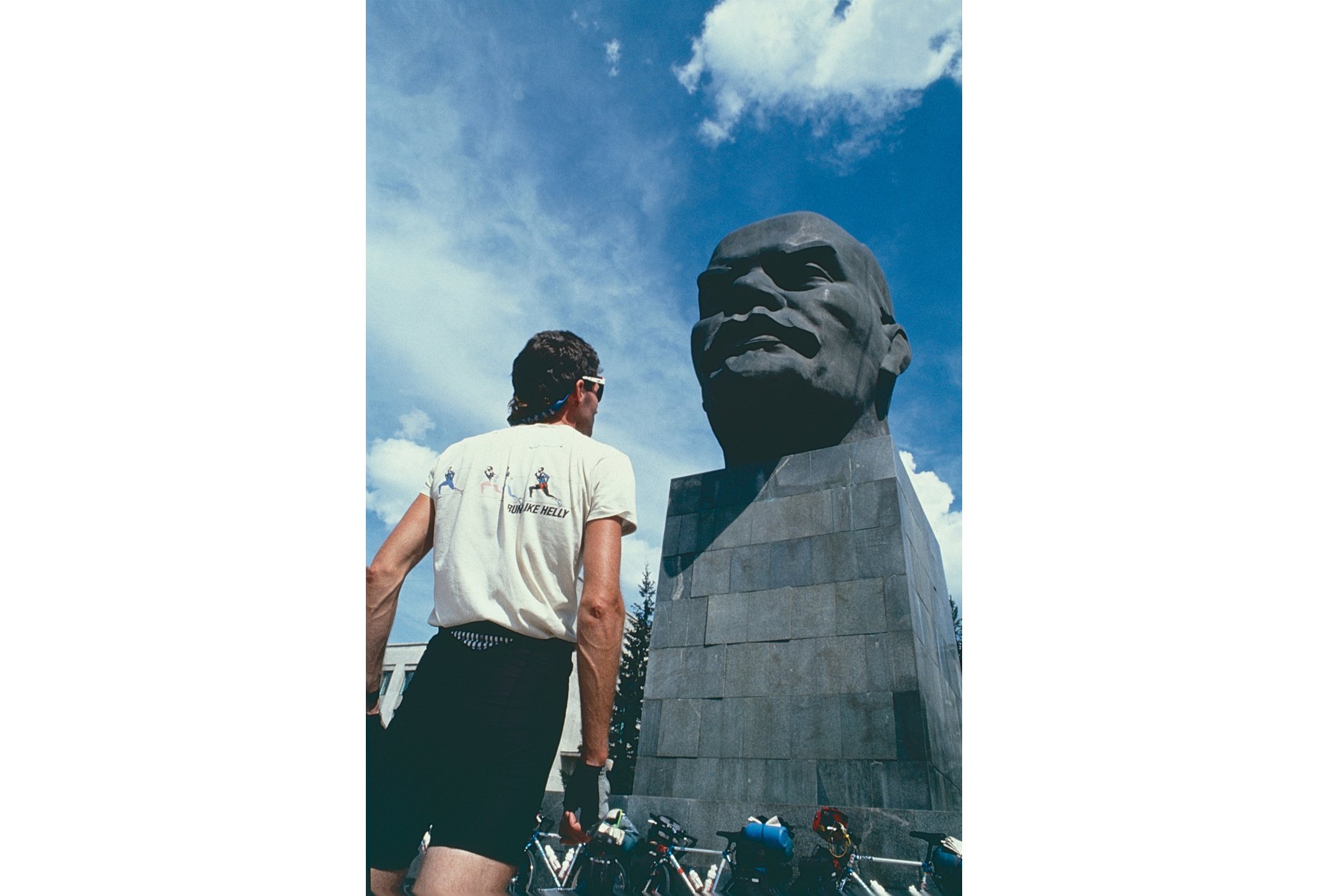
Facing off with the largest Lenin head between Leningrad and Vladivostok.
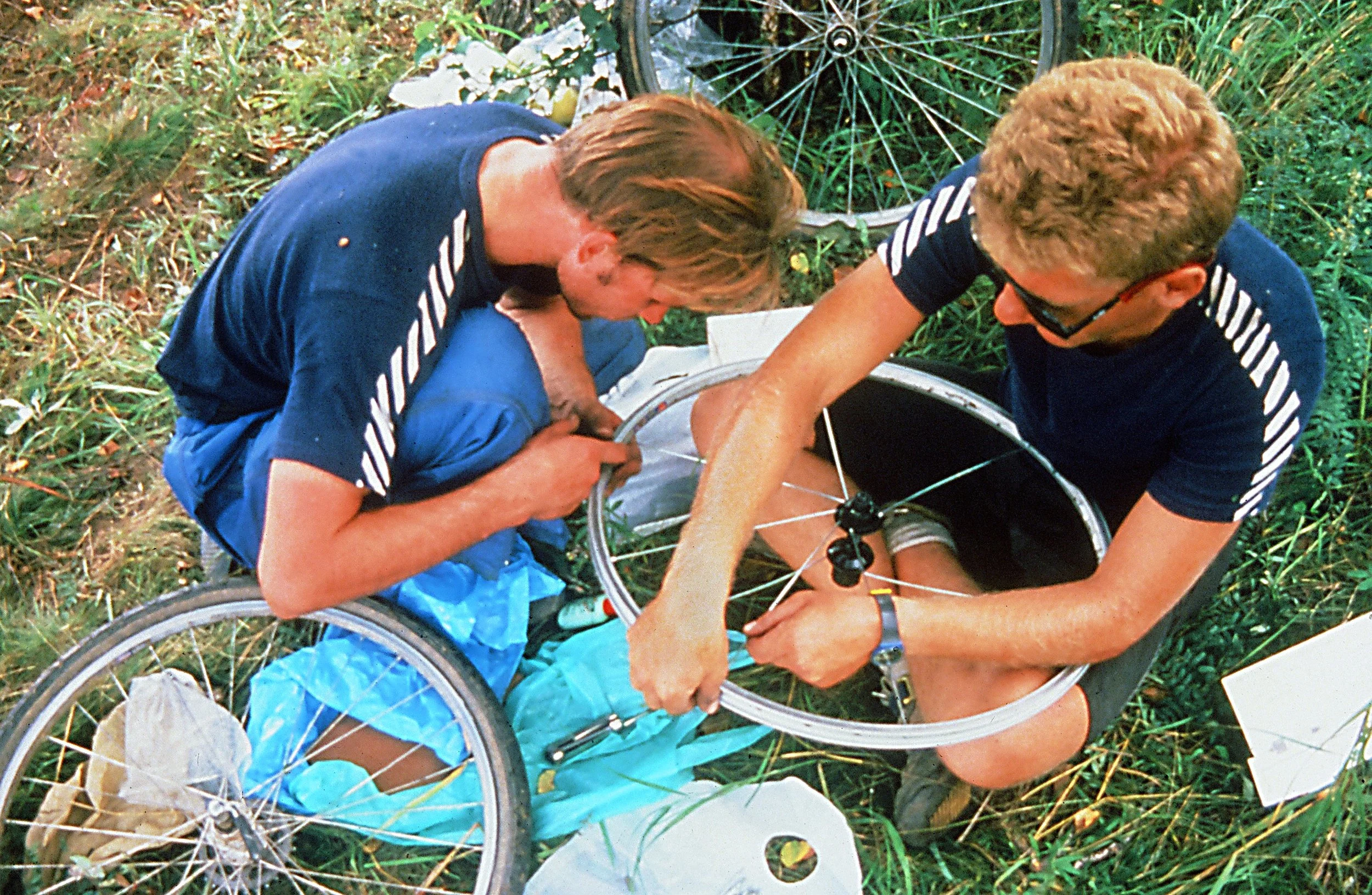
Building a wheel on the side of the trail.
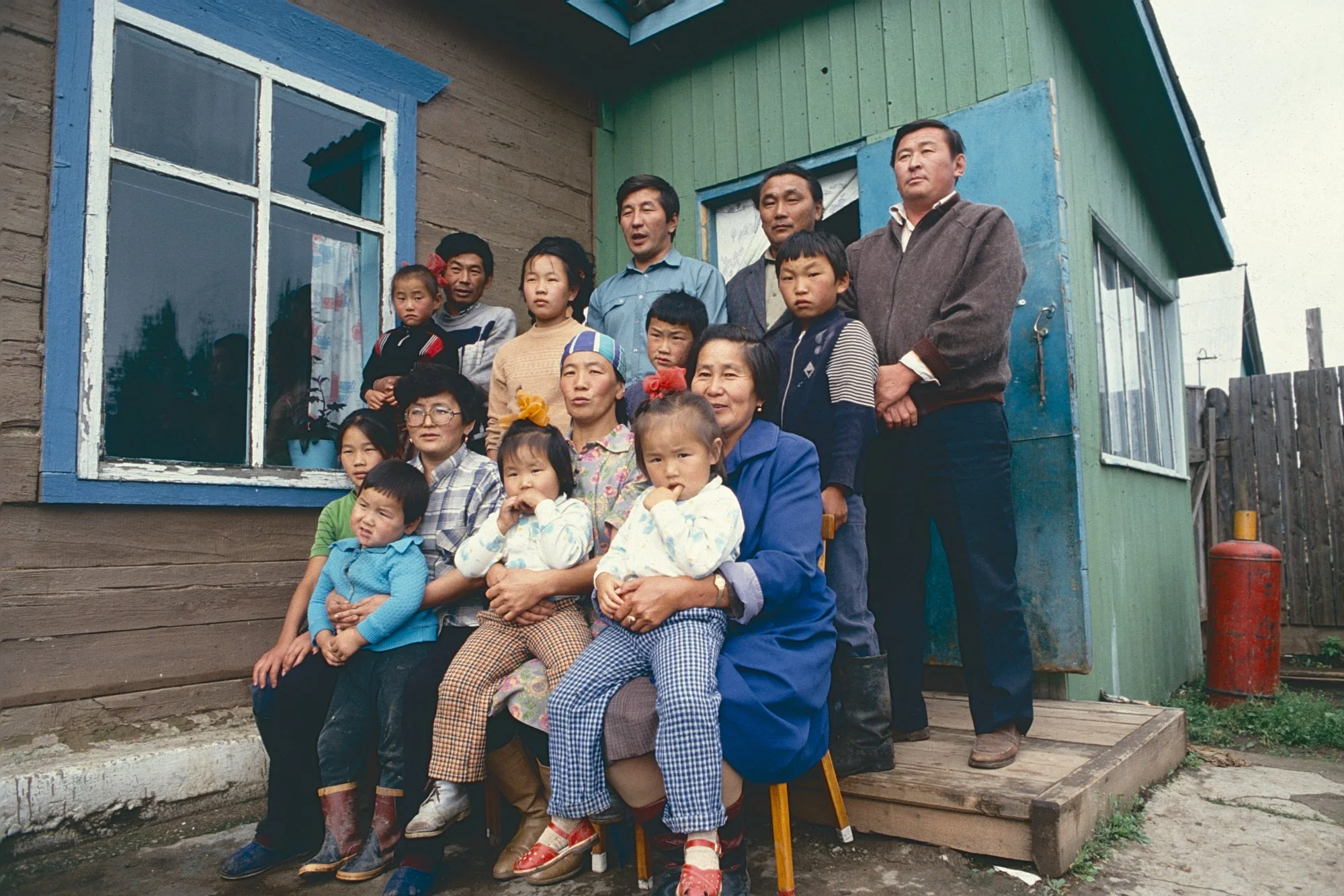
A Buryat family near Irkutsk. 2nd family reunion that we crash.
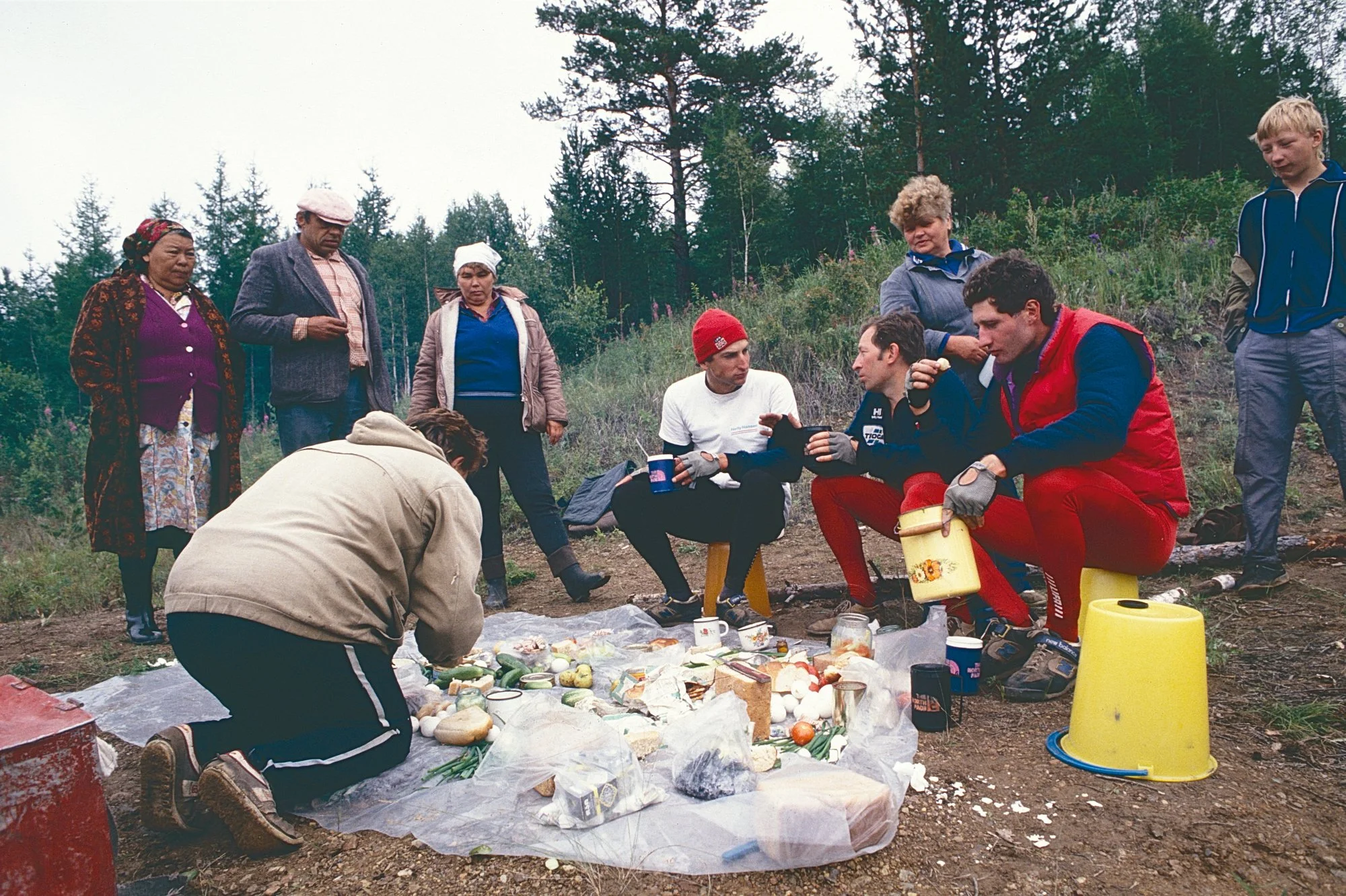
Mushroom pickers share their lunch with us.
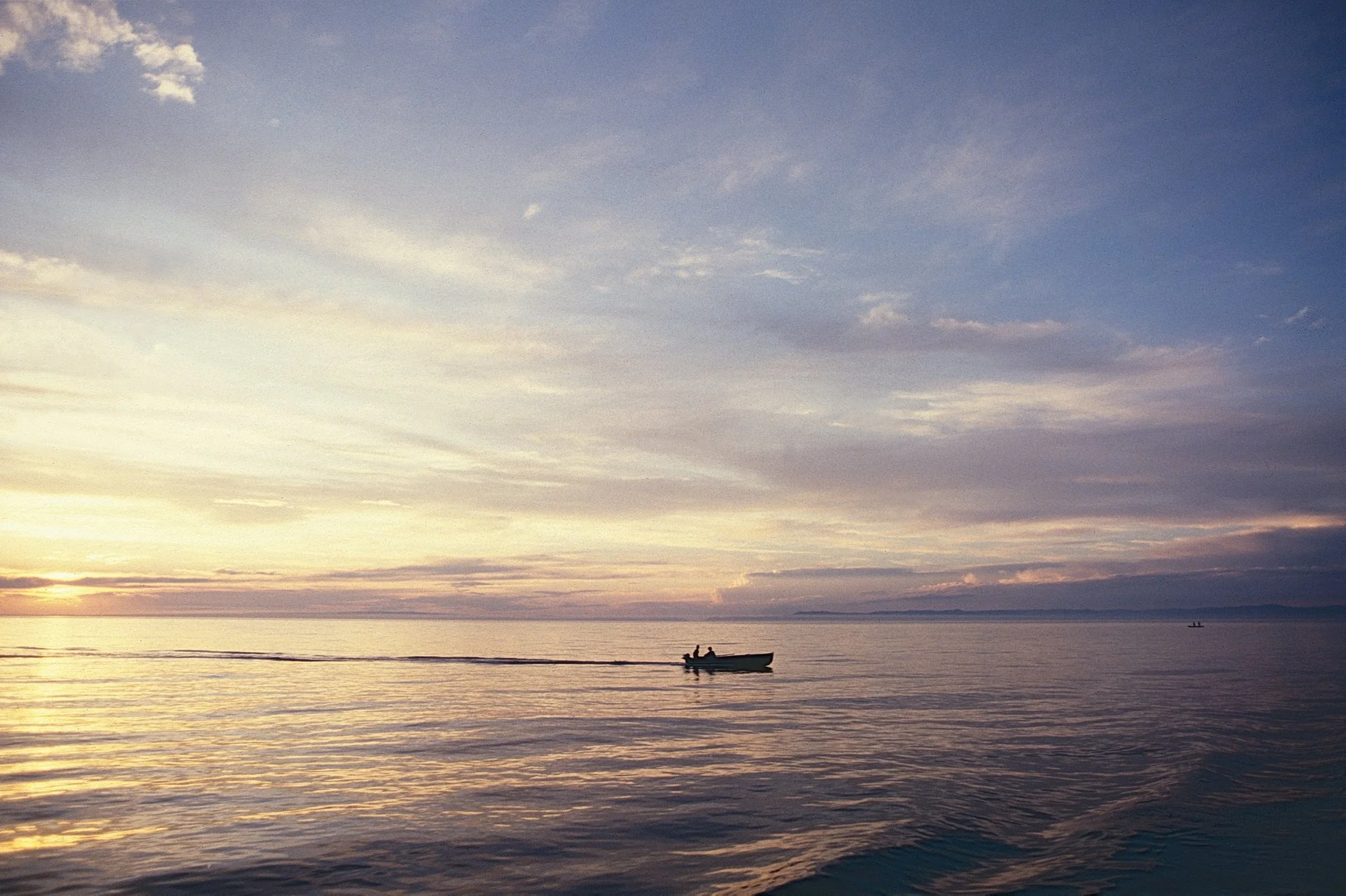
The sun sets on the world's largest and deepest body of fresh water. We spent a few days resting in Irkutsk, on Lake Baïkal's shores, before heading east the toward the swamp, the toughest part of the trip.
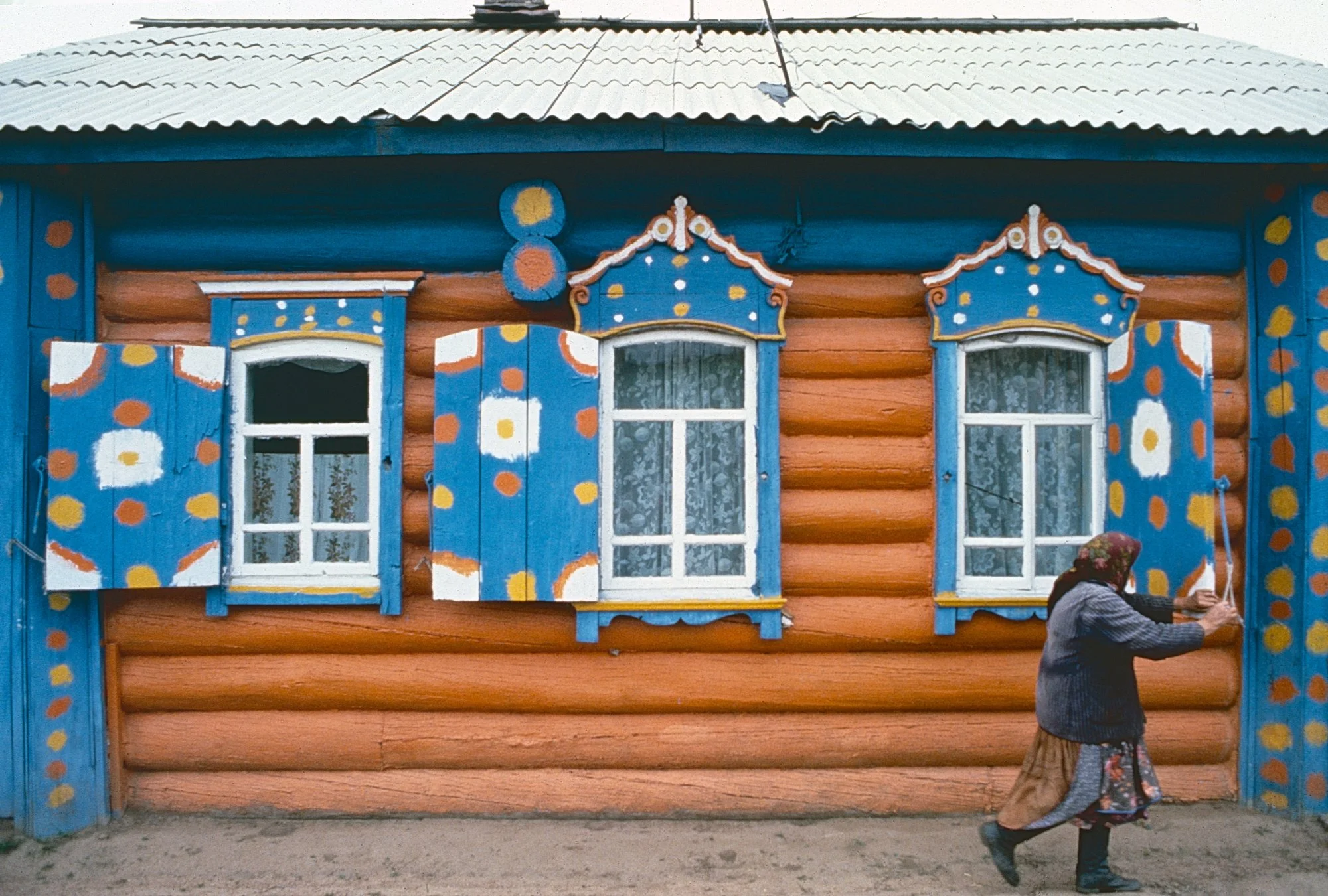
The furthest away from Moscow, the less conformity.
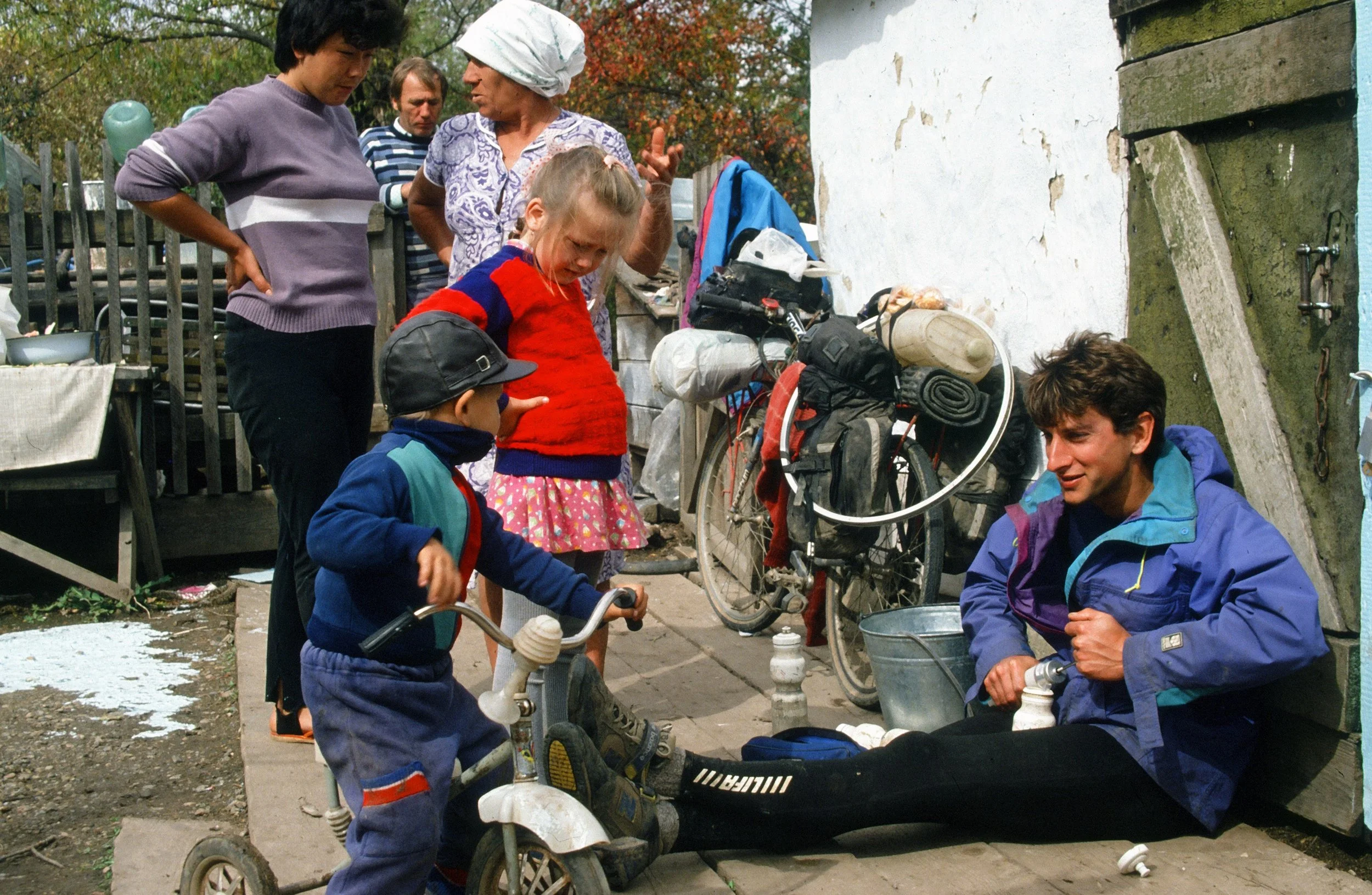
Locals ponder our water filtering.
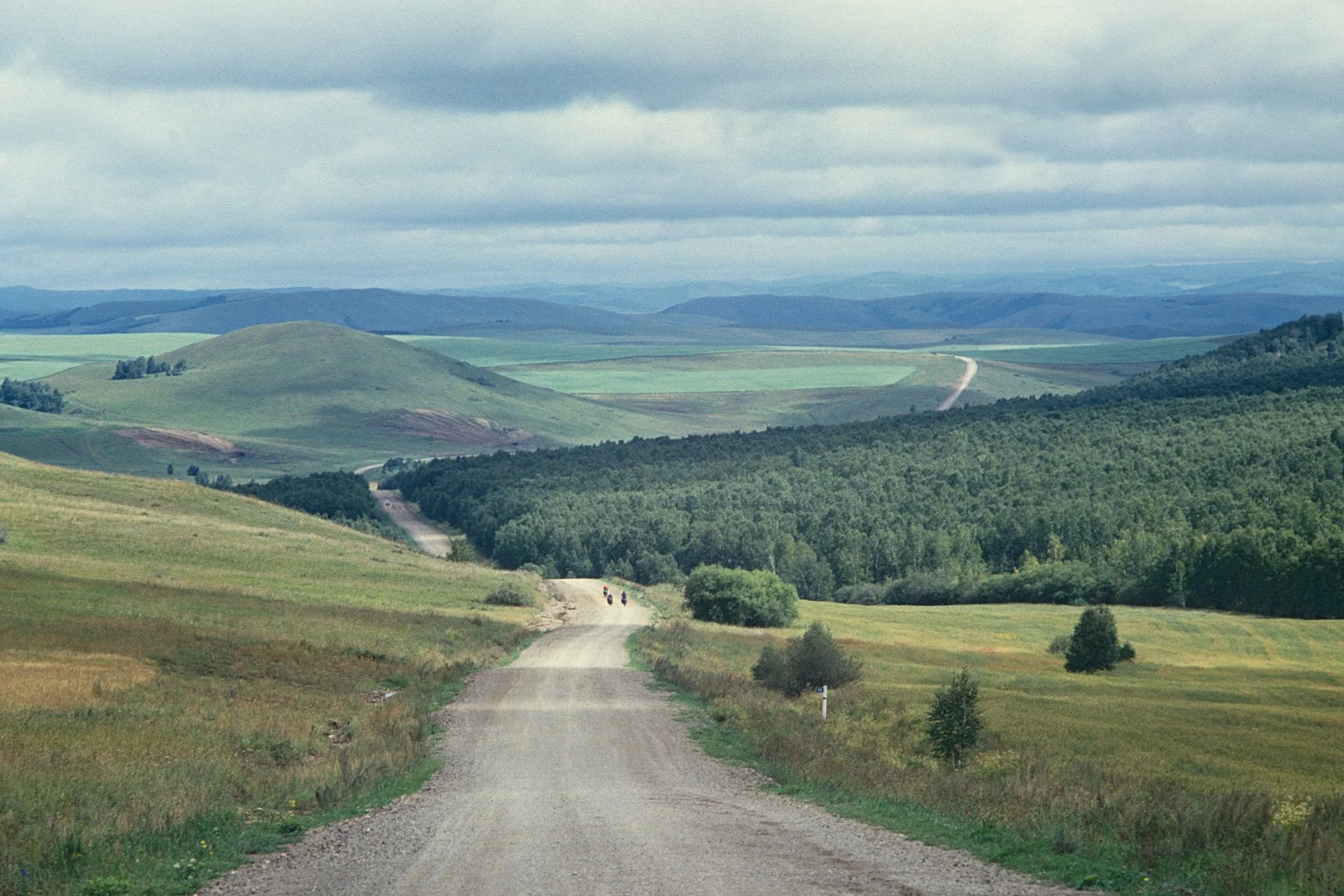
Enjoying the descent: the paved road comes to an end, but this section between Irkutsk and Chita offers decent dirt roads and a preview of Siberia's vast landscapes.
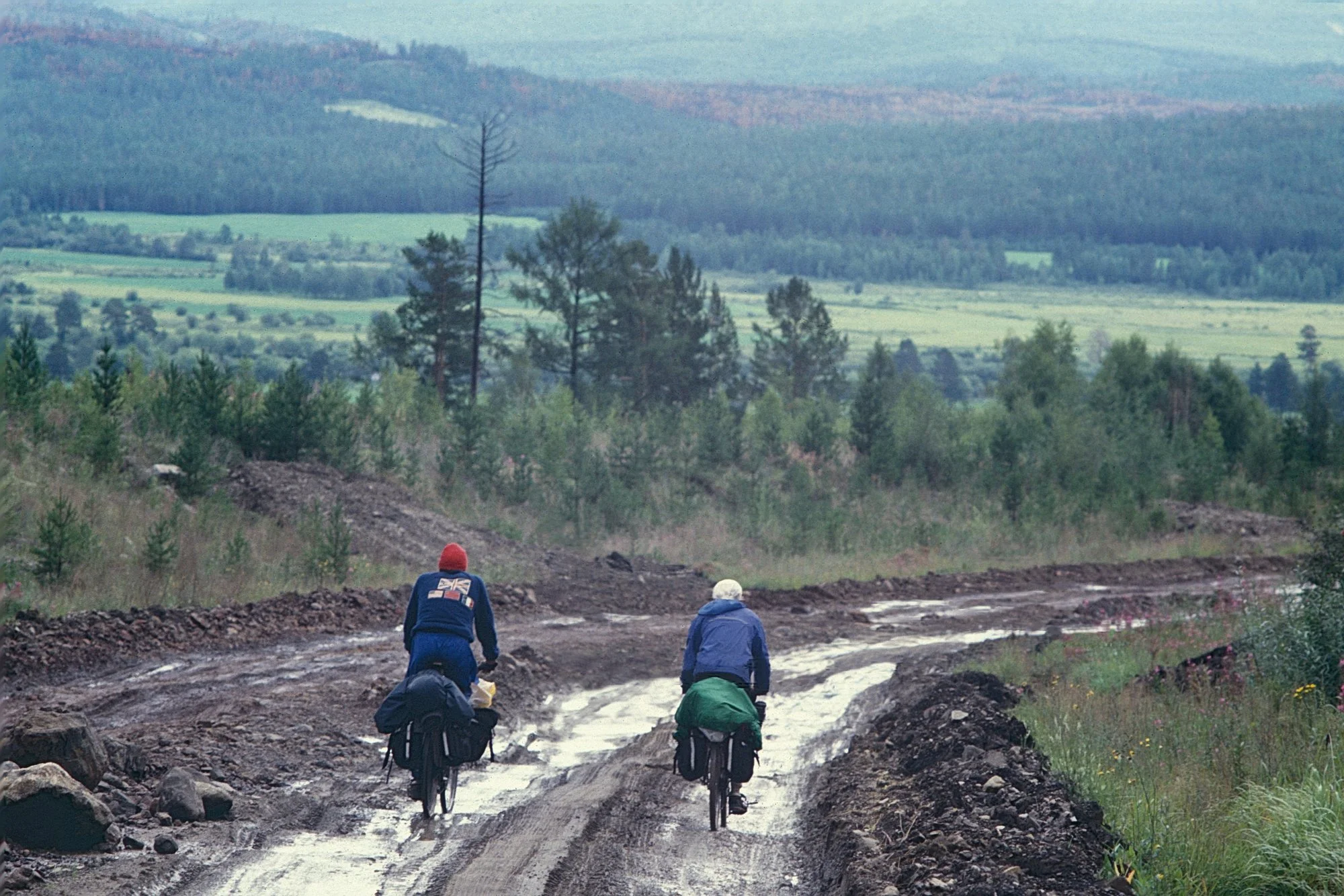
The first of many rainy days to come.
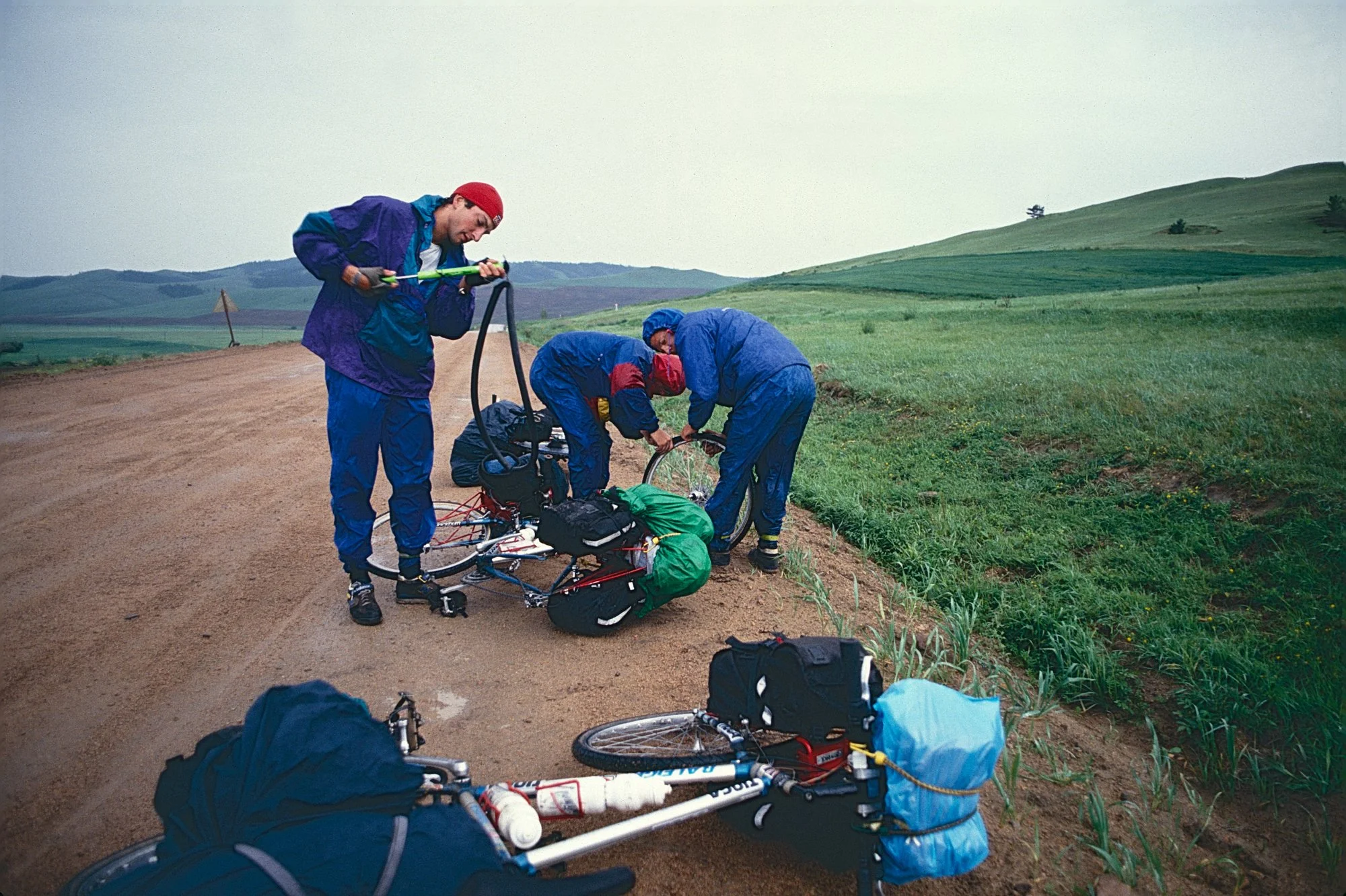
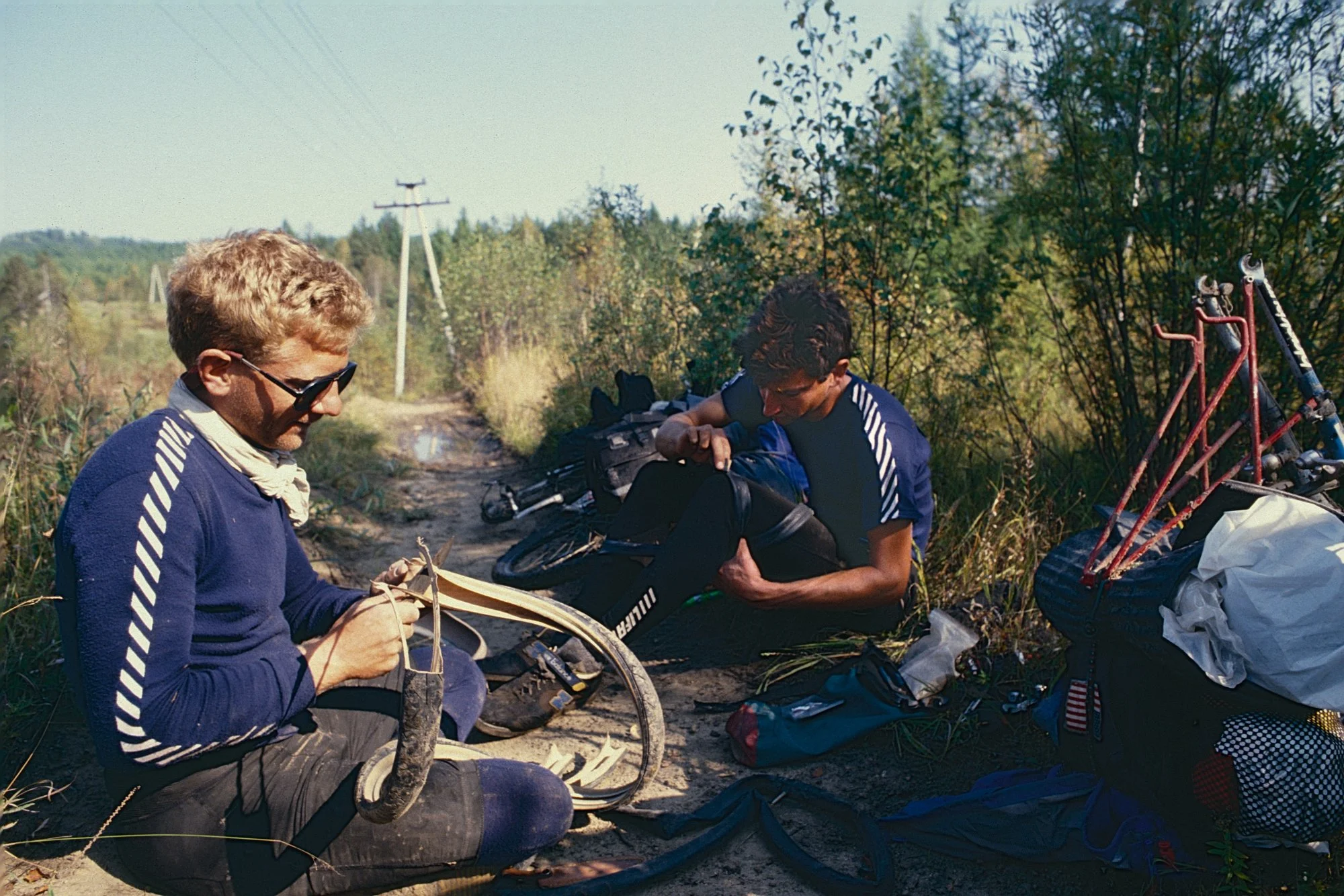
Under the weight of panniers overloaded with spare parts, food and winter gear, the wet and sandy dirt grinds our sidewall like sandpaper, shredding tires and causing punctures. We go through an alarming amount of tires and tubes. Chains and derailleurs also suffer, and tents and clothes don't dry, so we slip into cold, damp chammies in the morning.
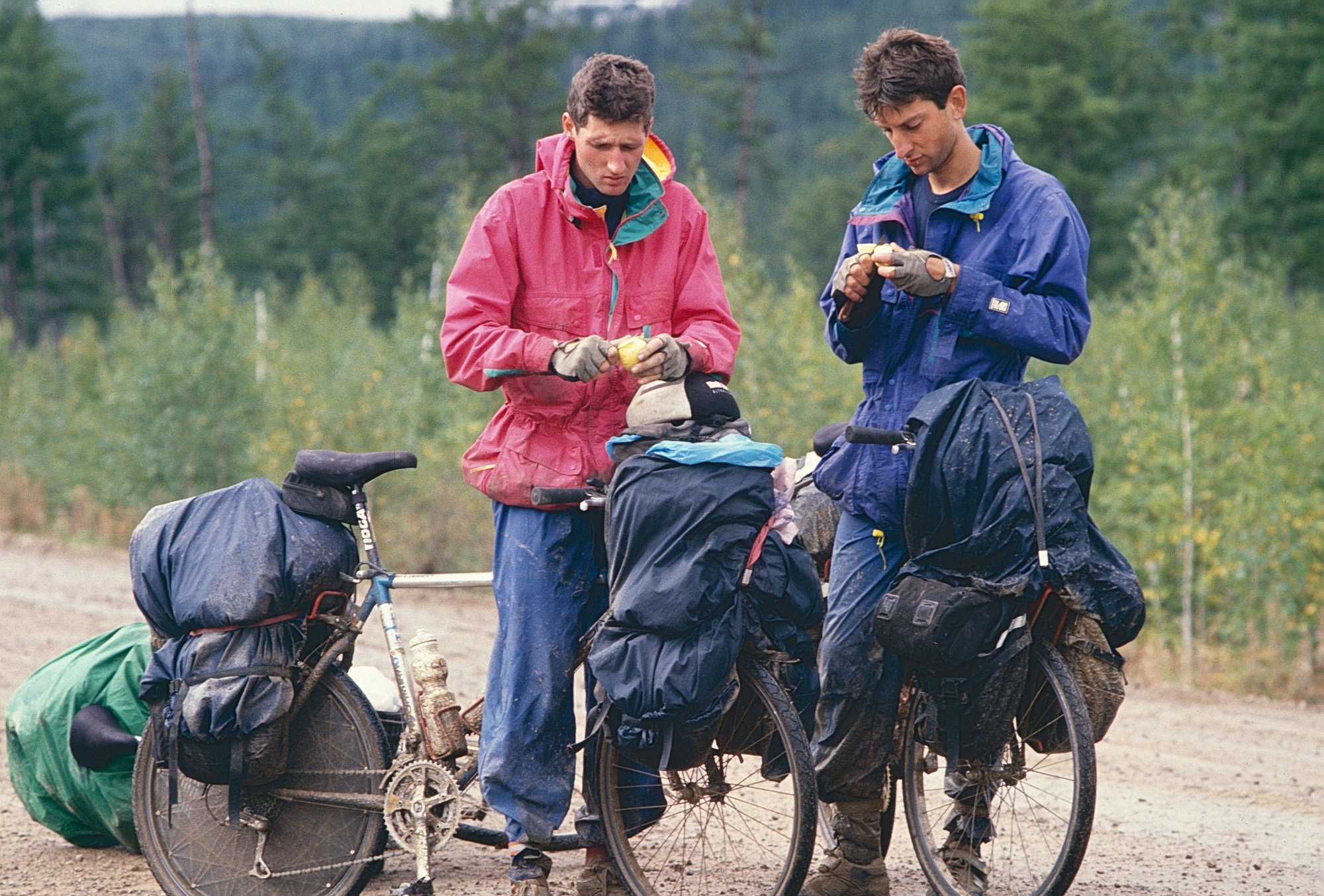
A rare treat: apples purchased at the market back in Irkutsk.
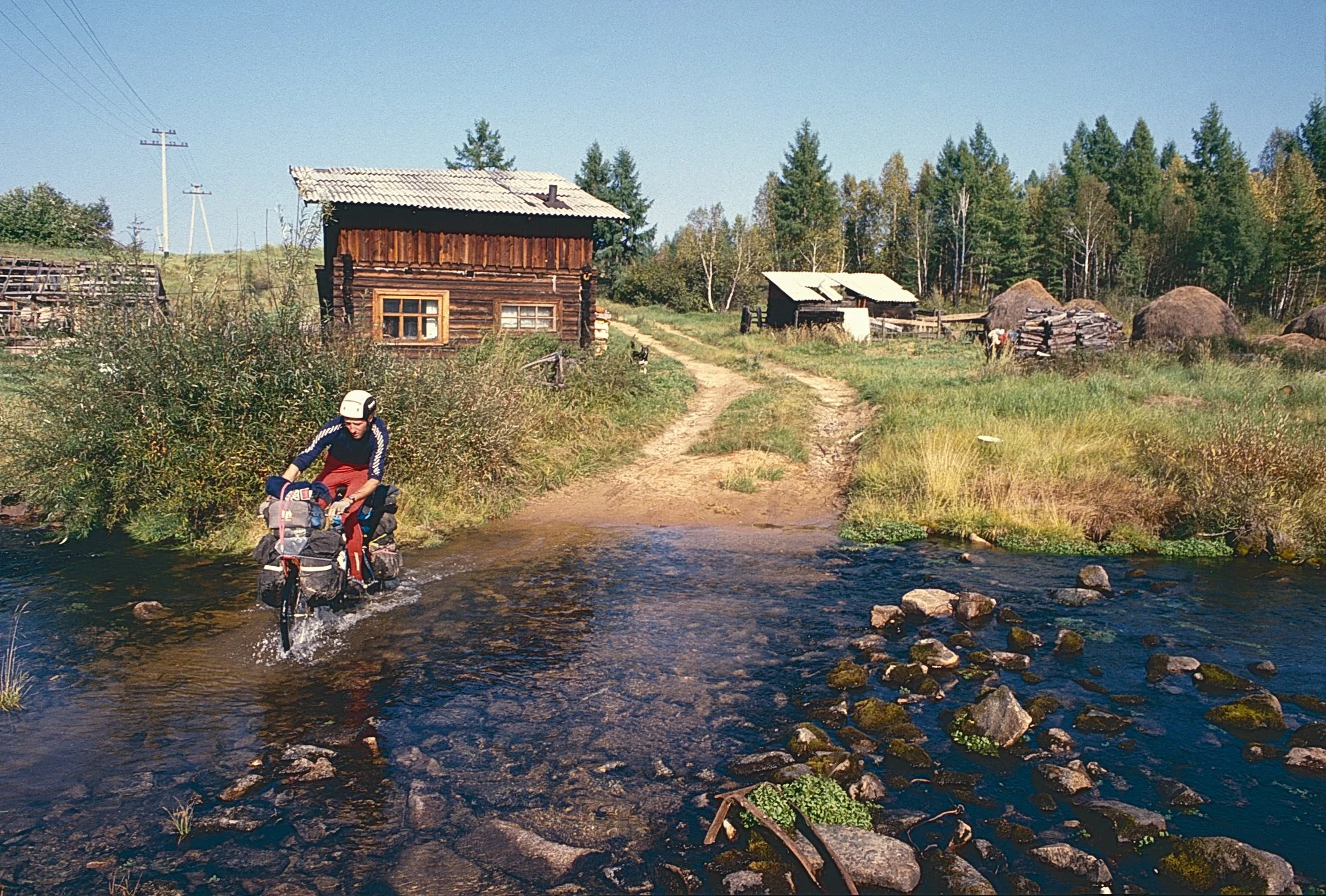
Trying not to ruin a dry sunny day.
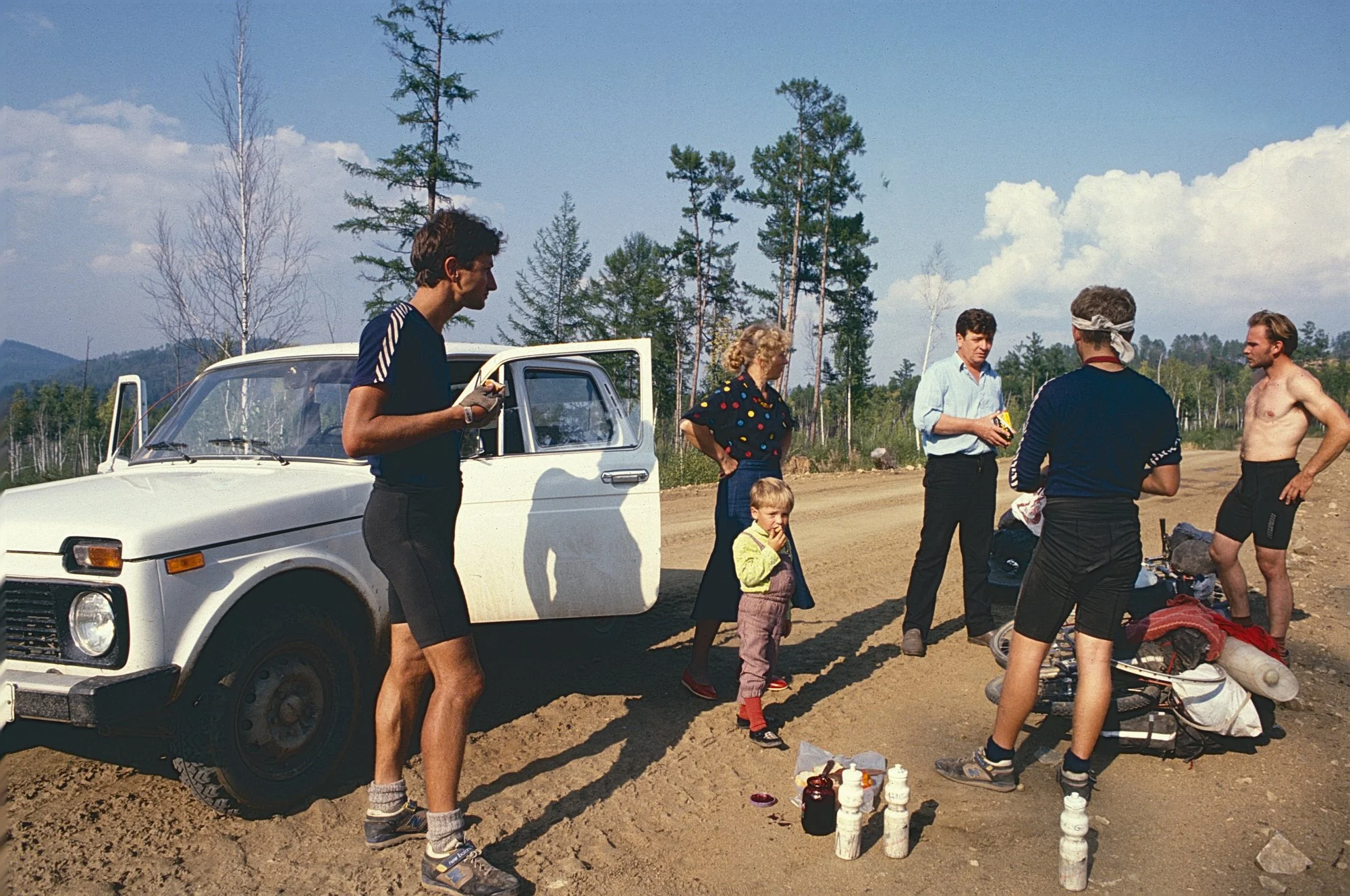
The director of a goldmine and his family stop for a chat, and invite us to spend the night at the mine, something unthinkable before the Gorbachev era.
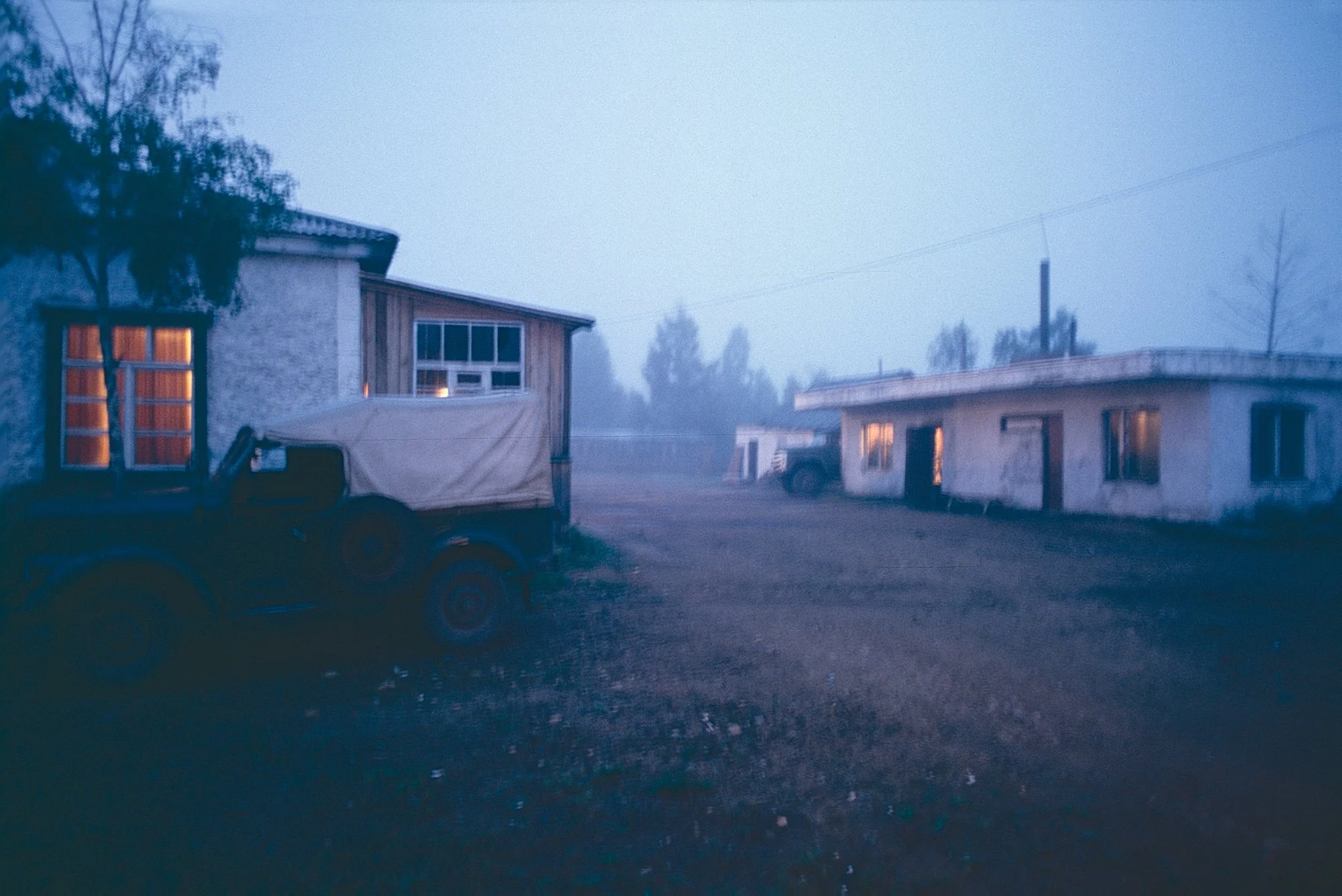
Morning fog at the gold mine. Mine workers, mostly adventure seeking fellows from far flung Soviet republics, work for six month straight without days off, but enjoy perks like fresh vegetable from a greenhouse, a gym, decent meals, and salaries many time the average Soviet worker's earnings. At dinner, we asked the assistant director if we could see the gold. He said we could, then slid his finger across his throat and served us more vodka.
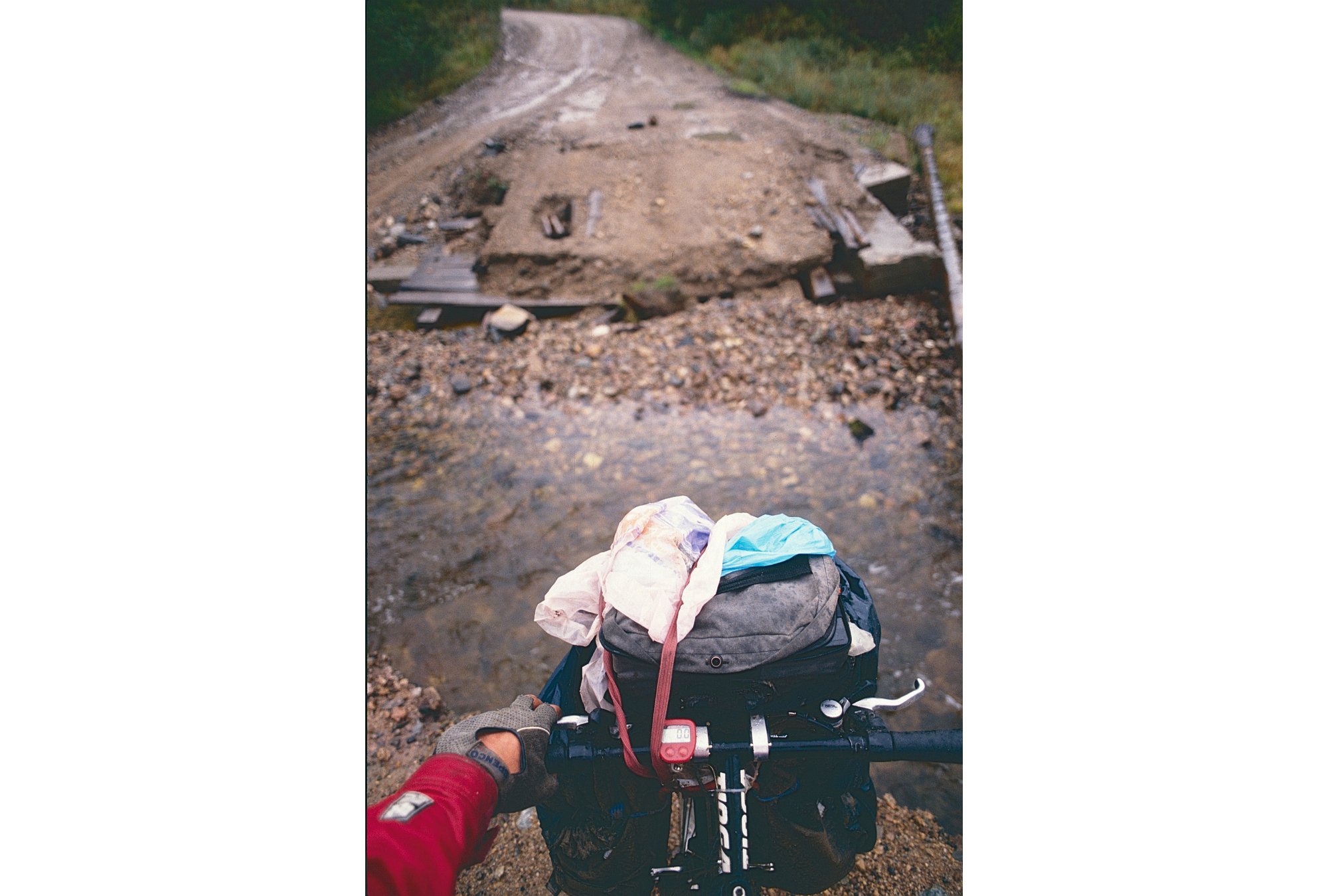
Road maintenance?
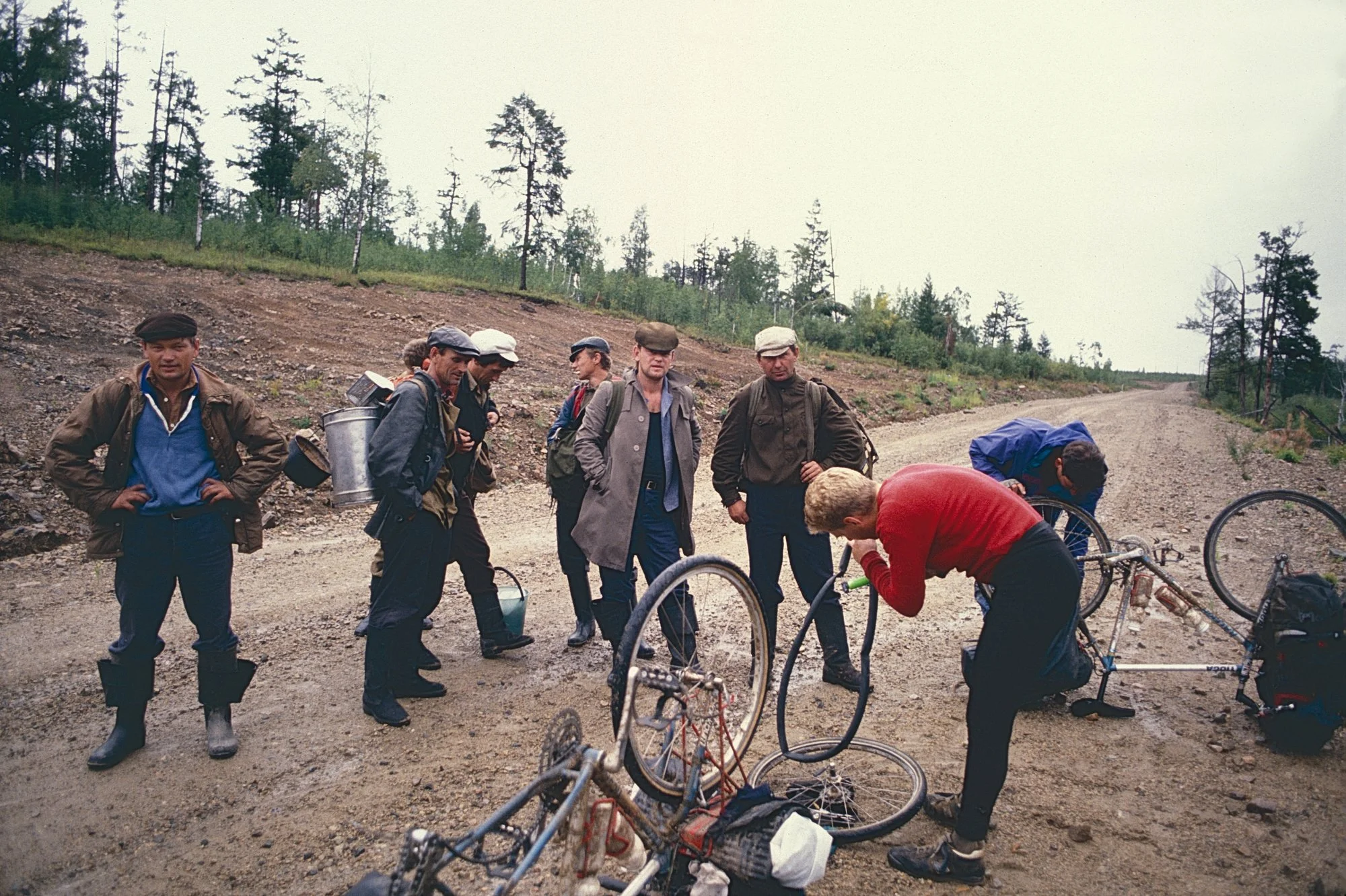
Blown sidewalls and intrigued mushroom pickers on our Siberian dirt highway.
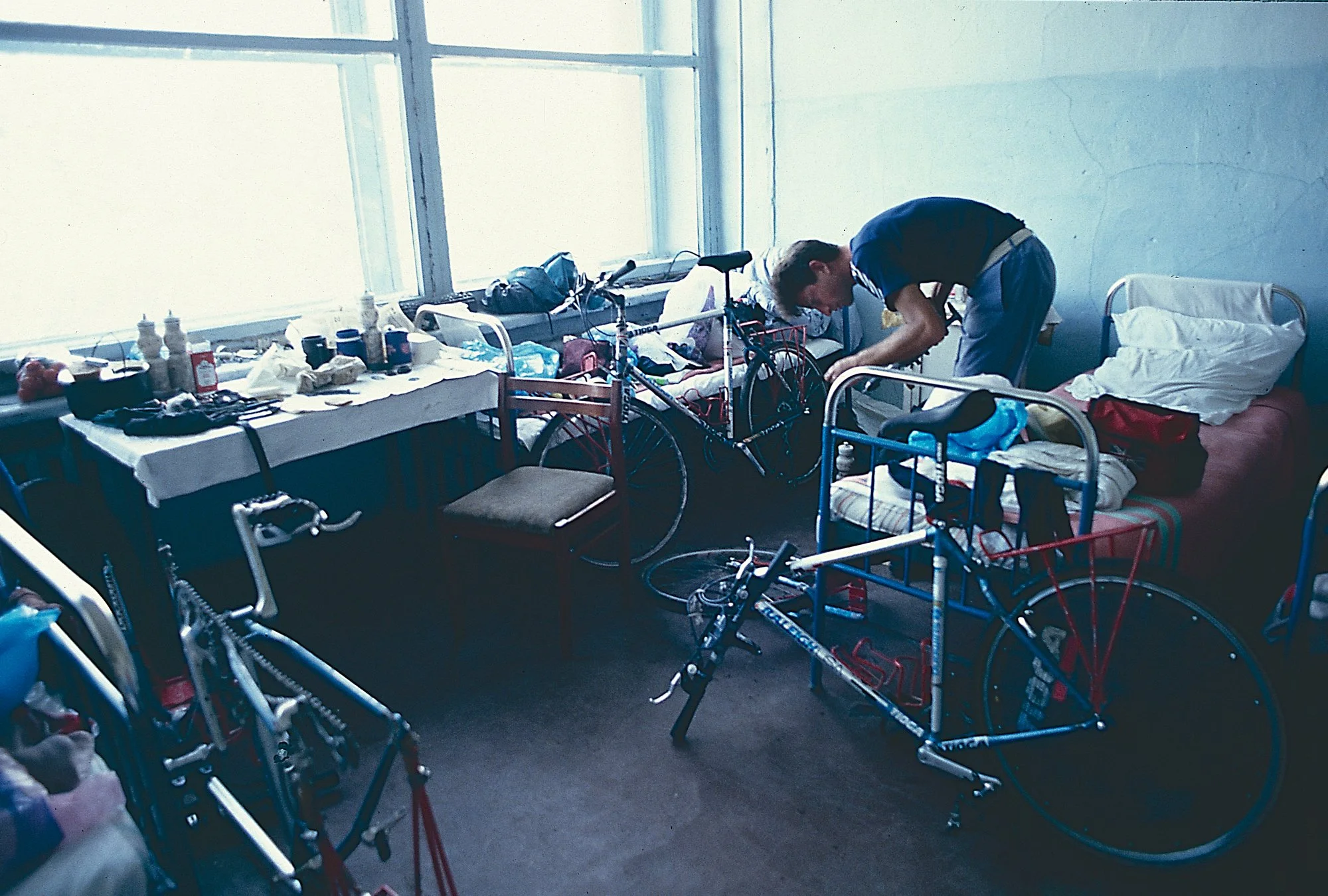
We'll take your best room: Simon at work in Chita's hotel at the end of the trail, where we overhaul the bikes before the swamp, an 800 kms section of roadless and water-clogged Siberian wilderness.
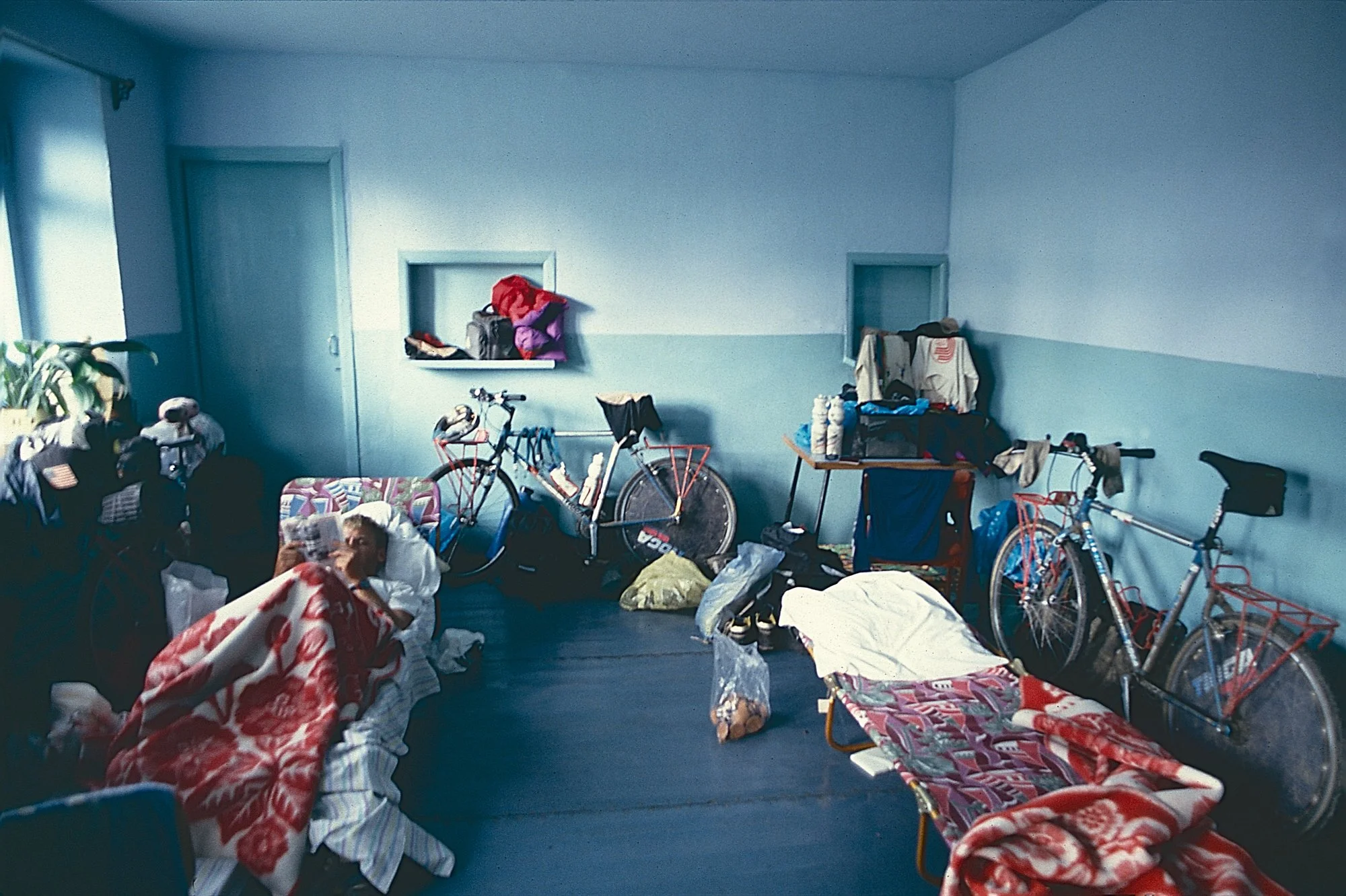
Howard catches up on reading as we dry clothes under our last roof for a while.
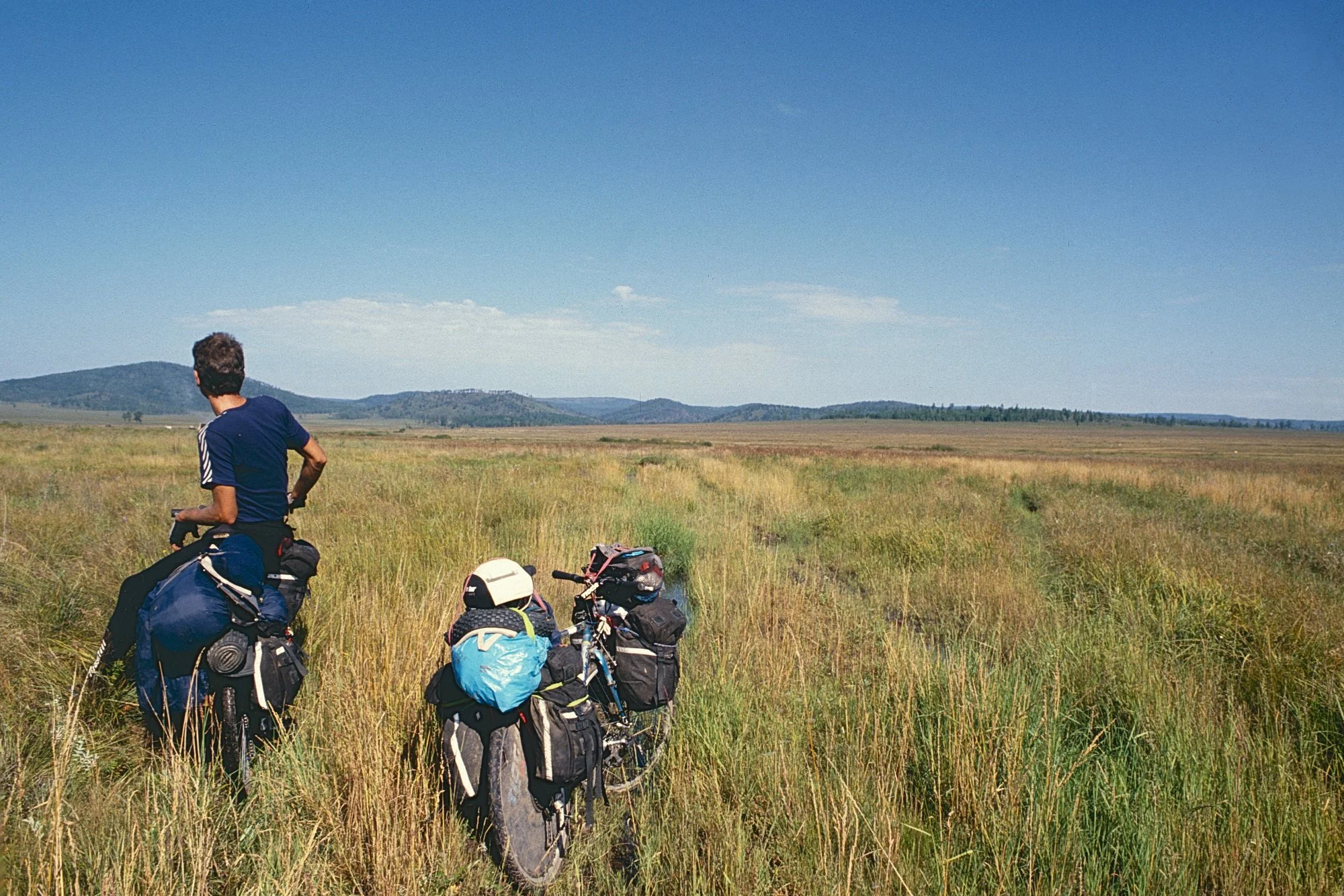
End of the road. Ahead is an 800 kms permafrost water clogged swamp with hungry mosquitoes that bite us through our cycling shoes.
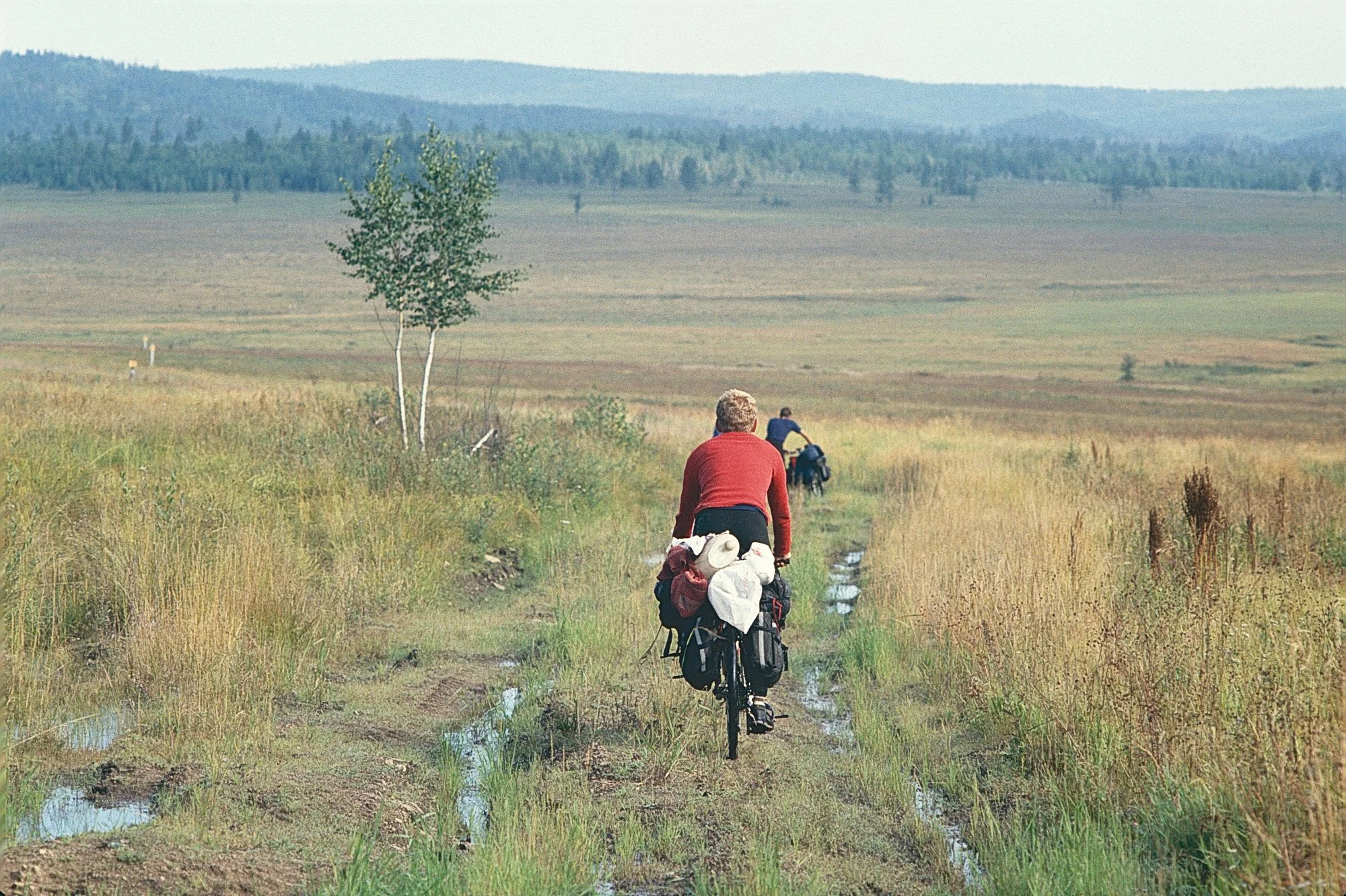
On elevated and partially drained sections, tracks made by off road track vehicles are sometimes rideable.
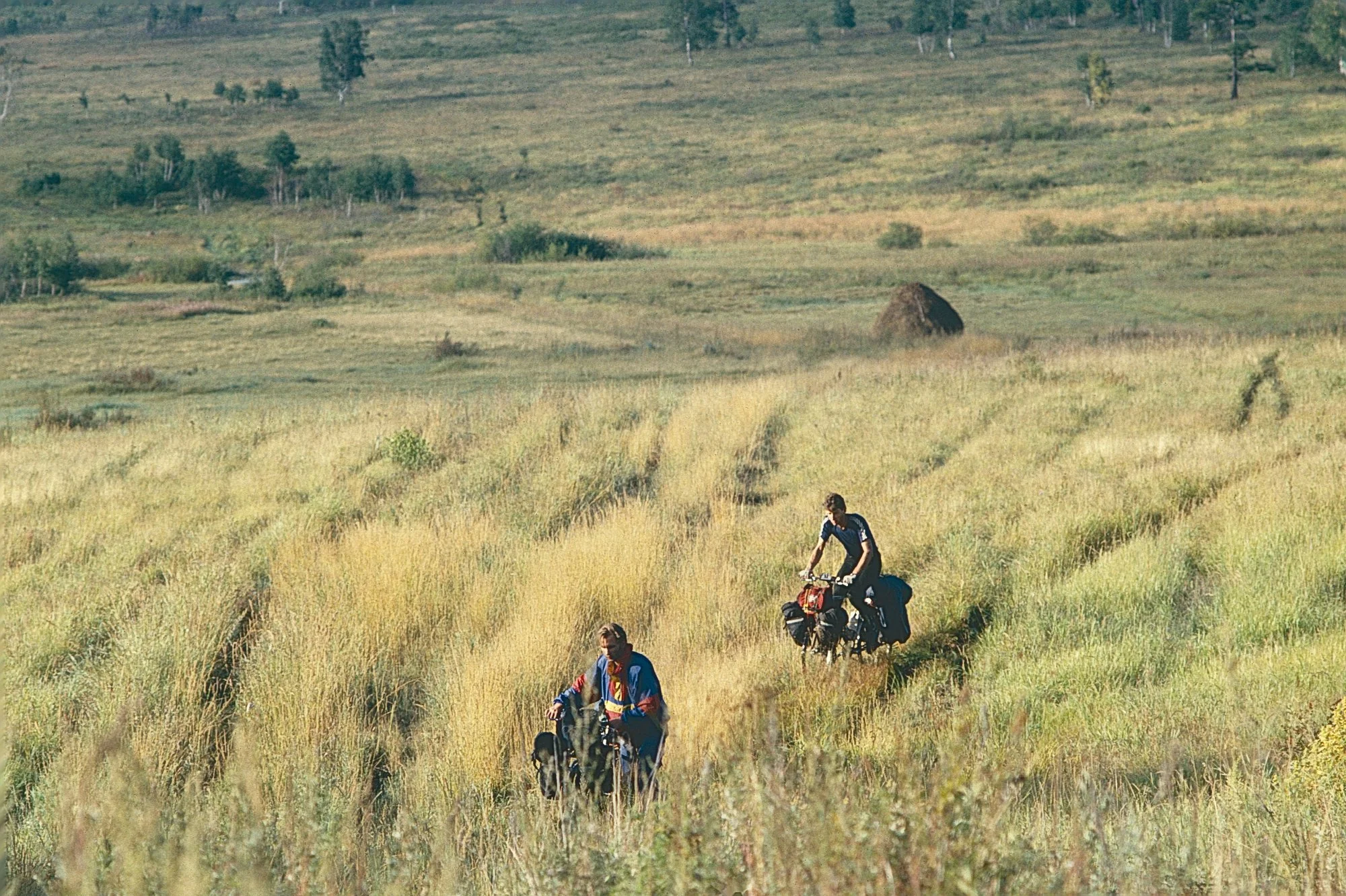
But rarely for long.
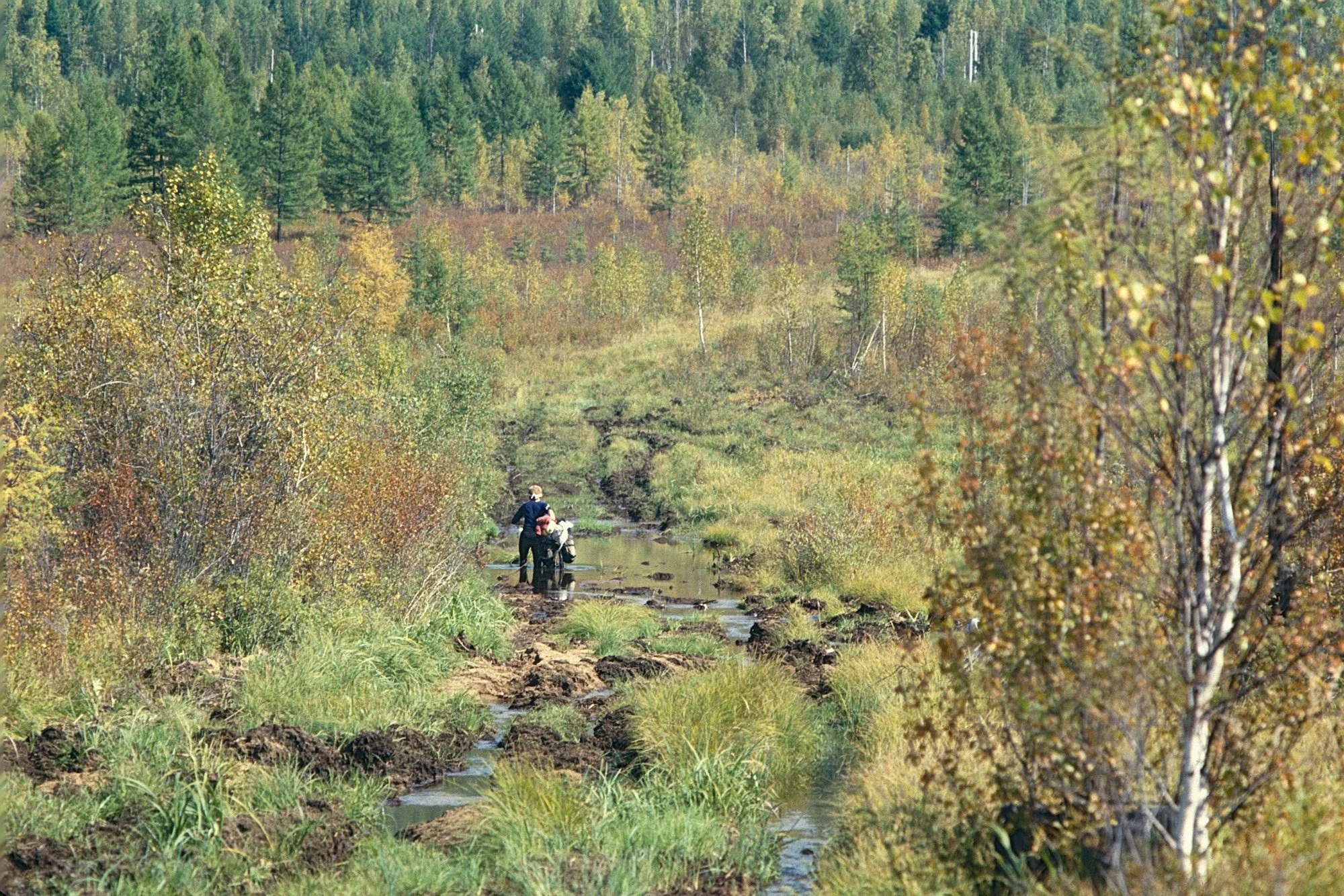
Howard navigates the swamp. The first Fall colors and cooler days remind us that winter is coming.
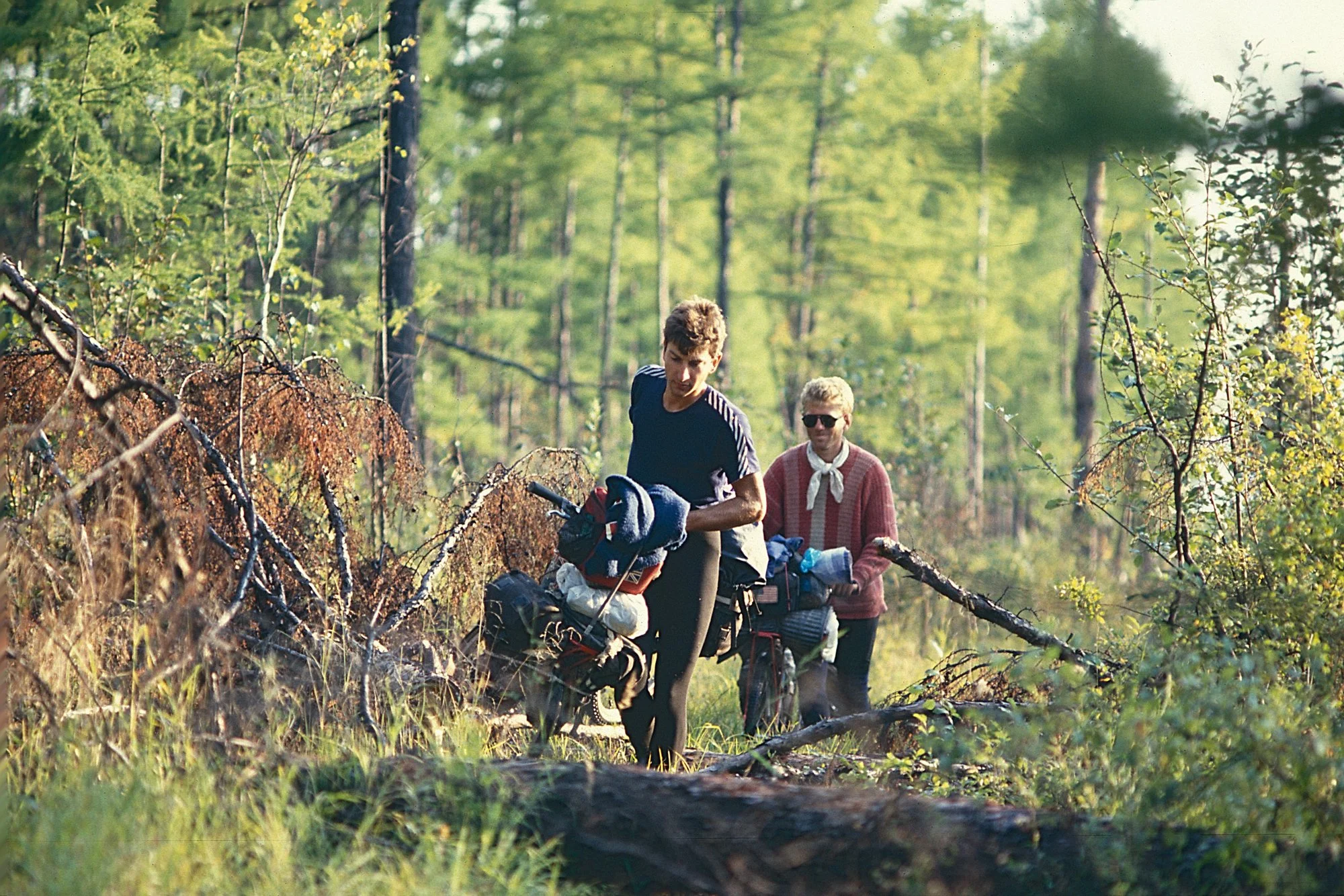
In the forest, branches snap derailleurs and slow us down. Our daily mileage drops drastically.
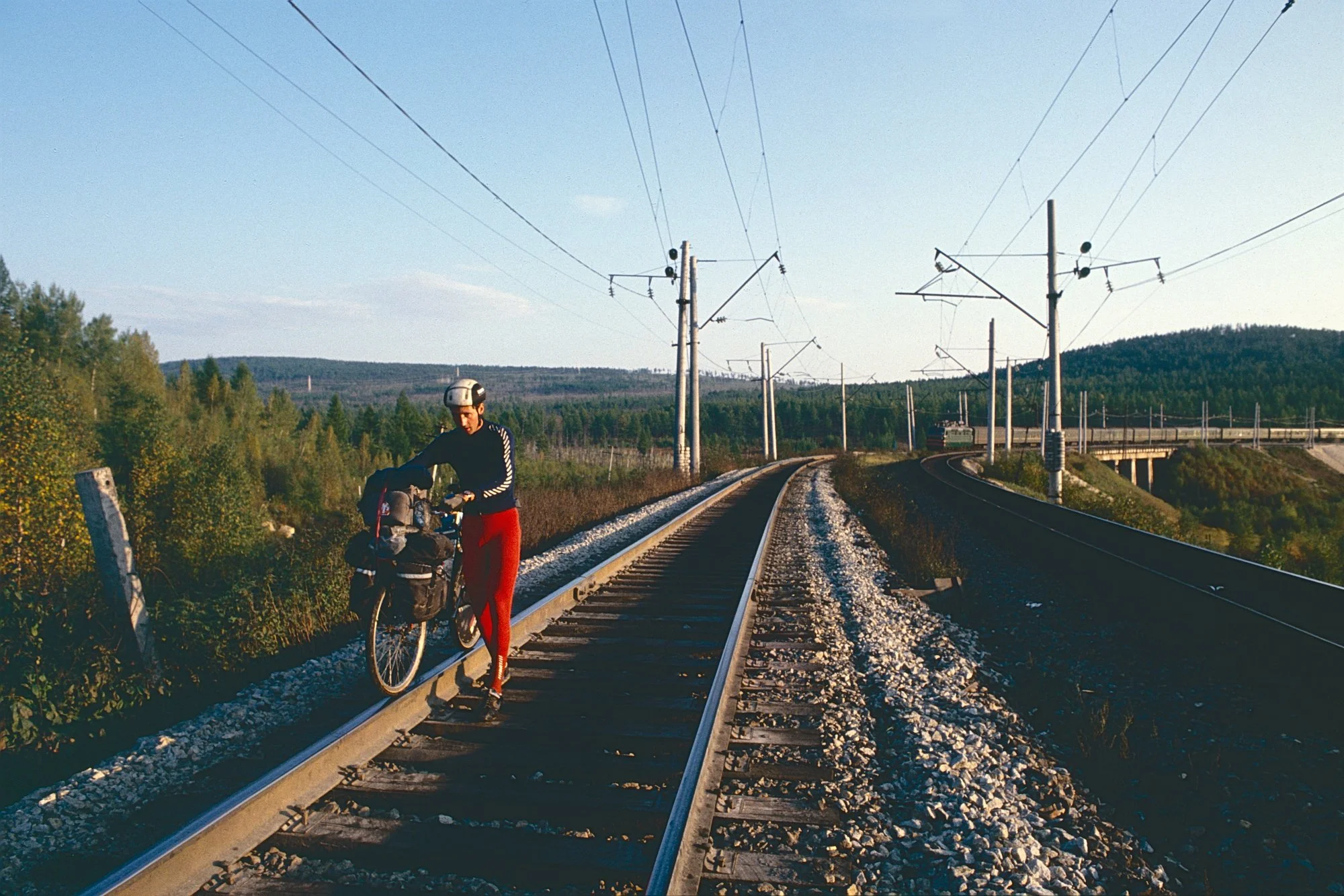
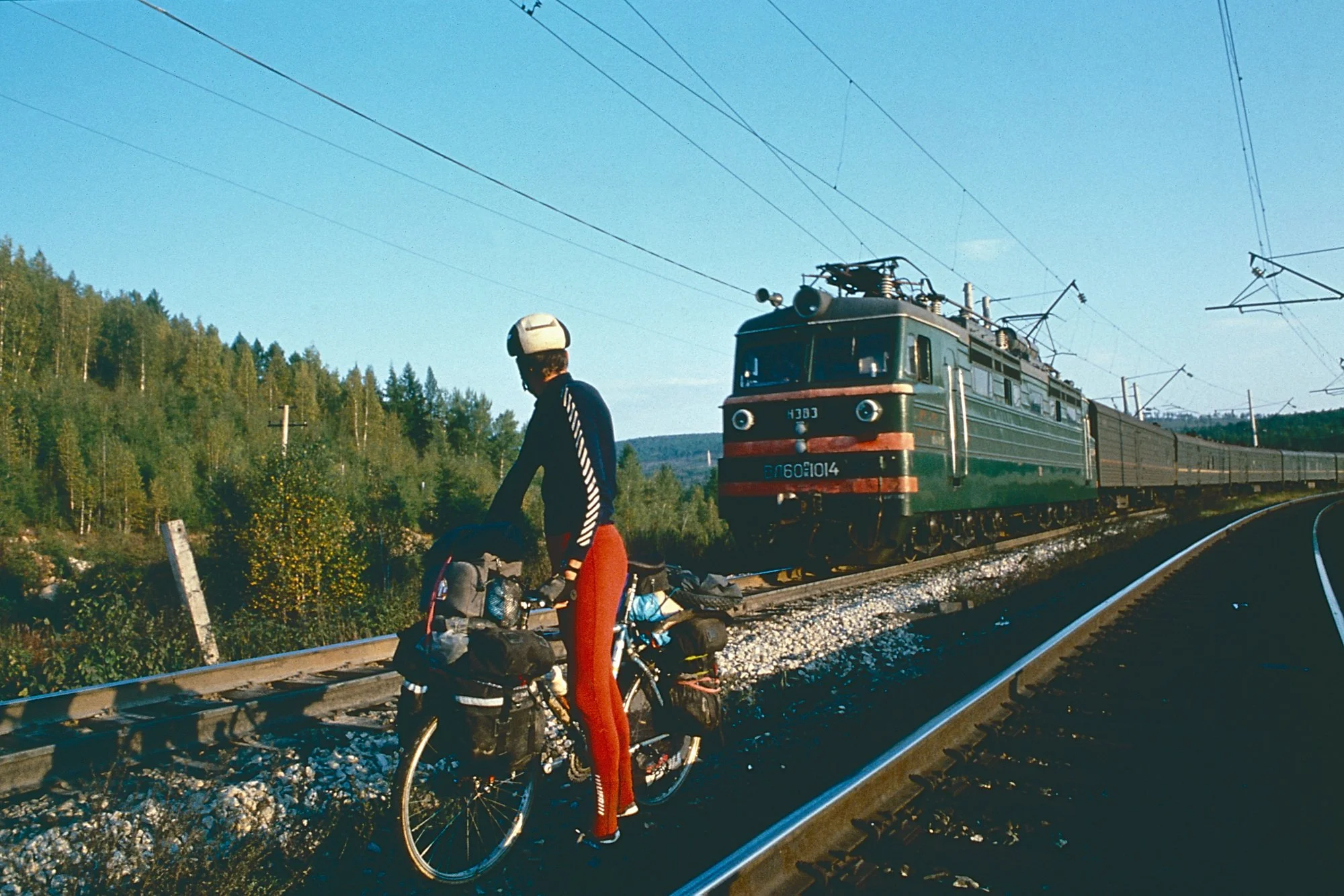
When the swamp becomes impassable, we climb on the Trans-Siberian railroad tracks, and push the bikes.
You go first.
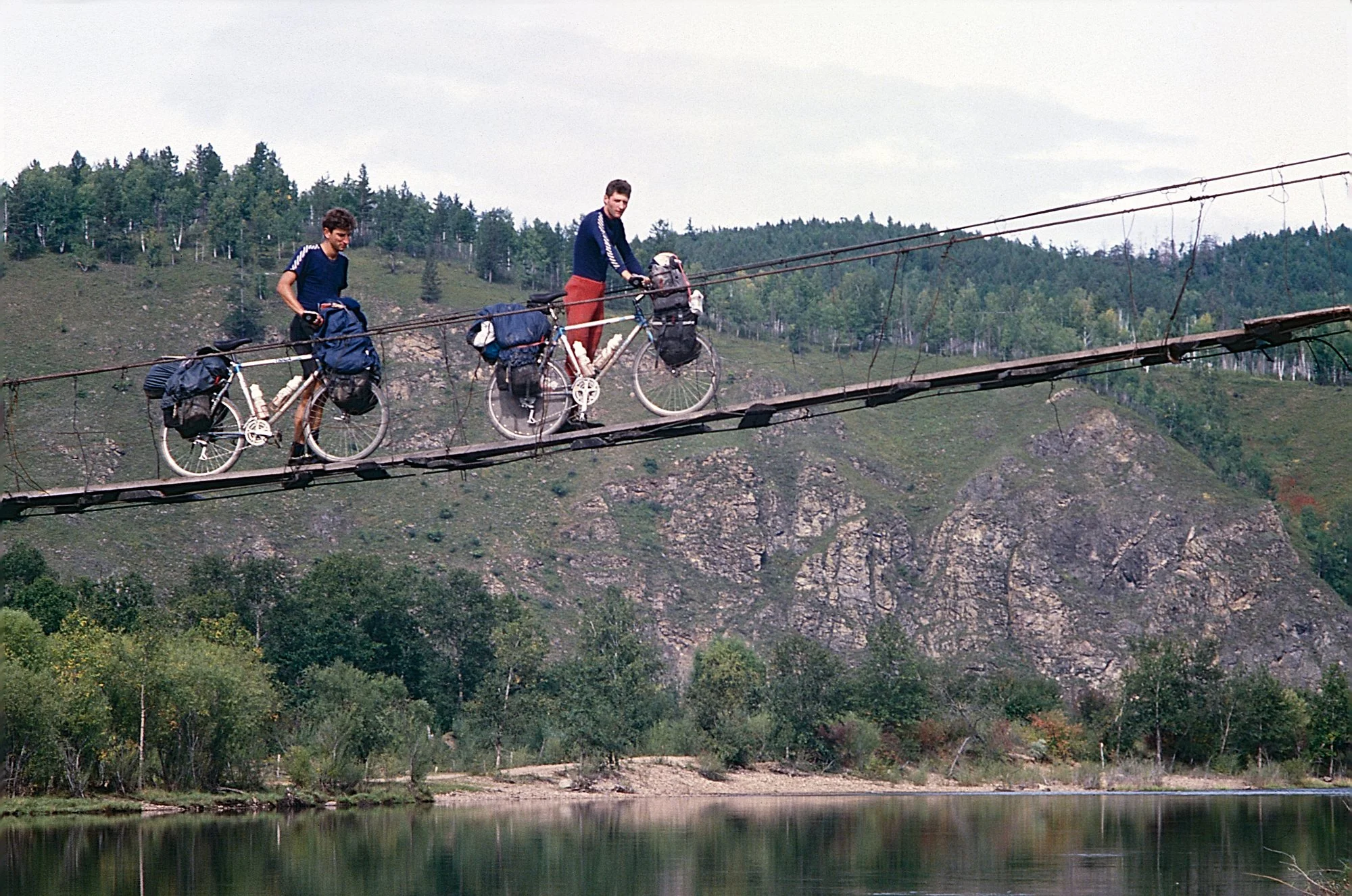
Sometime, we get a bridge.
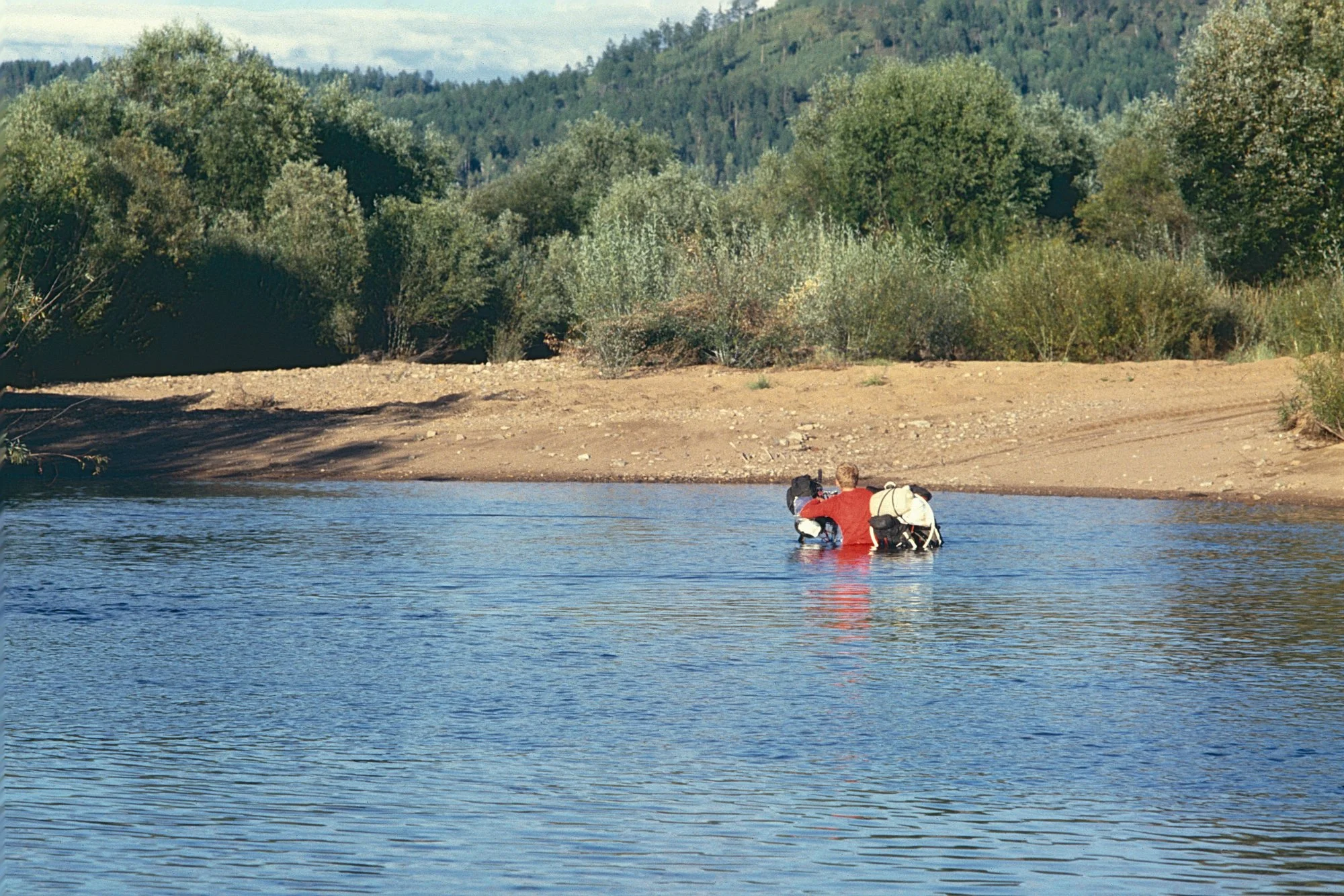
When we don't, we fall back on a proven tactical choice: send the shortest member of the group first.
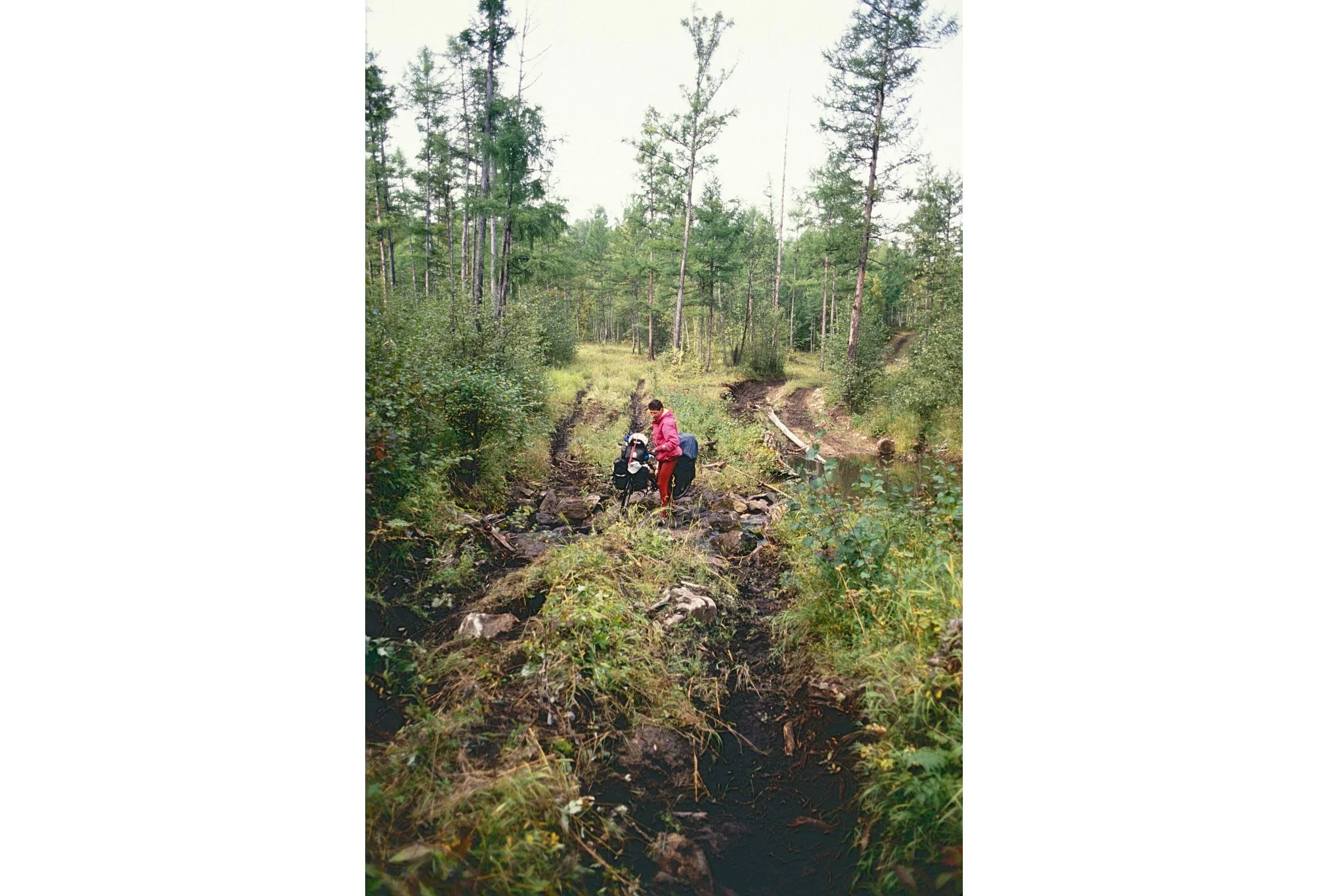
Another day in the swamp.
No progress. After spending the night in a settlement alongside the Trans-Siberian tracks, we head out early, blow a few sidewalls, and snap a pannier rack trying to ride the rails -a questionable idea, but the thought of doubling our 3 km/h walking speed was irresistible. Having gone only a few kilometers, we head back to the settlement to try to repair the rack. The locals are not impressed. They ask our Russian rider how we could possibly have made it all the way from Leningrad, a valid question.
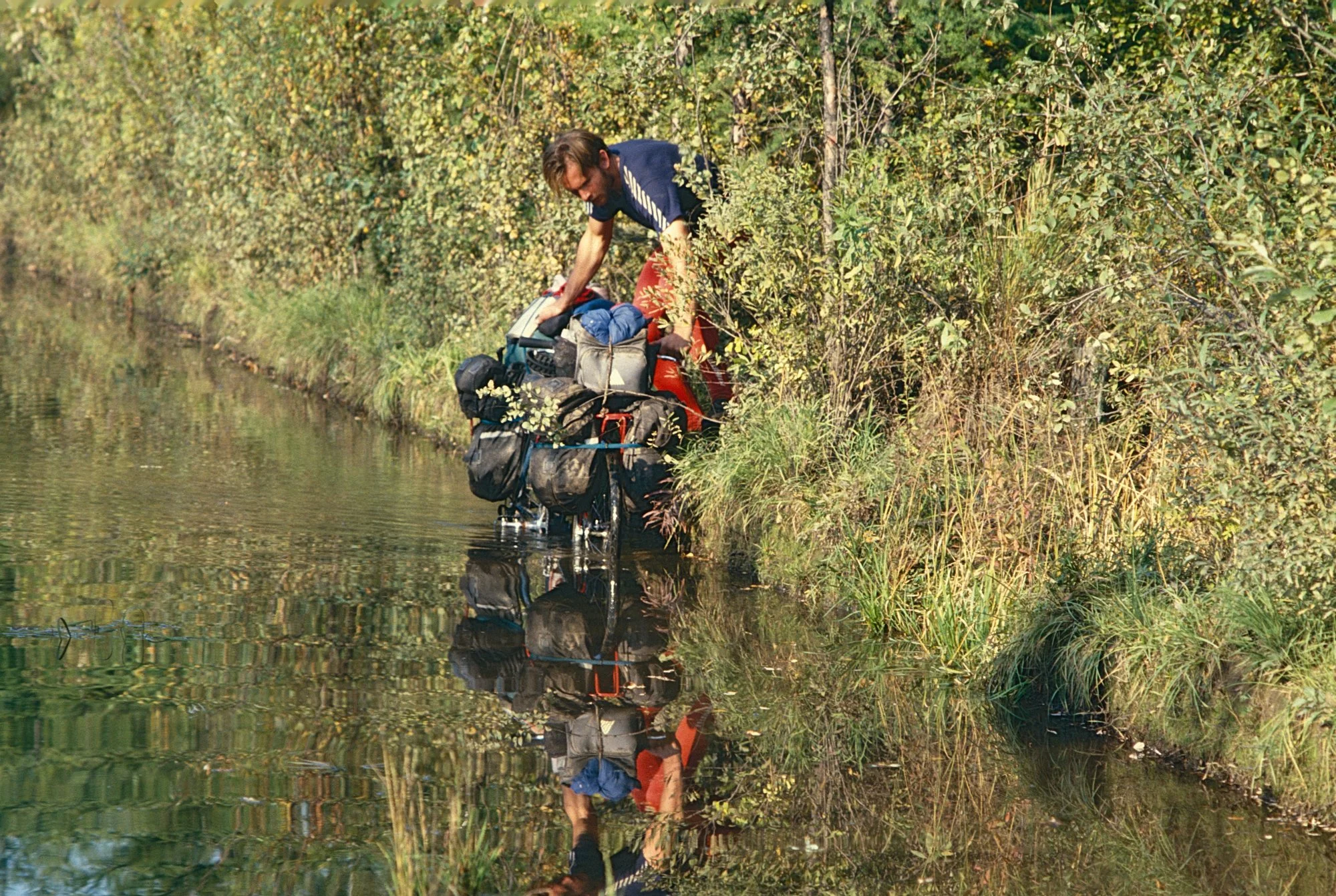
Our Russian rider Maxim Sokolenko swamp surfing.
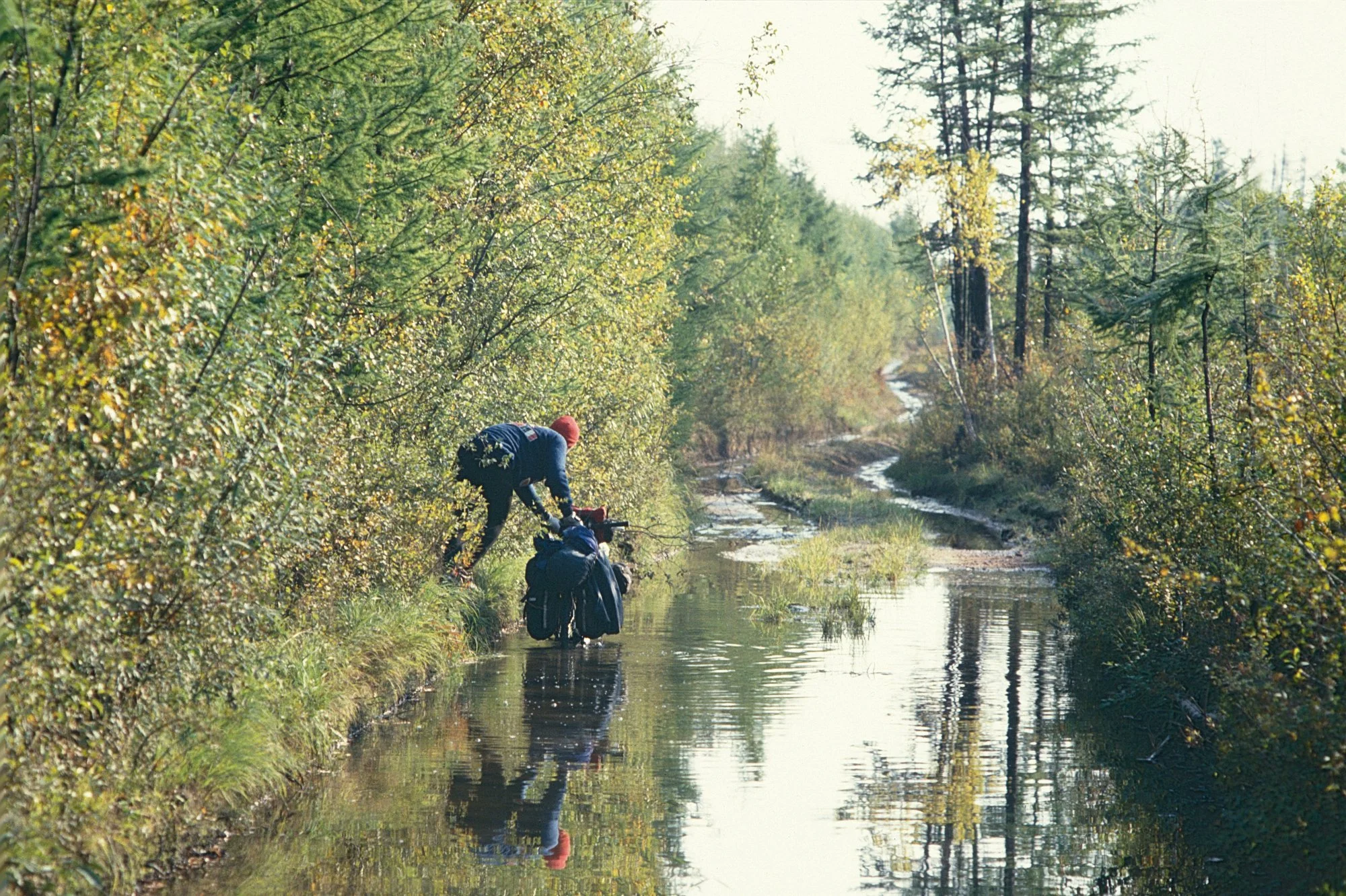
Simon heads for temporary dry land.
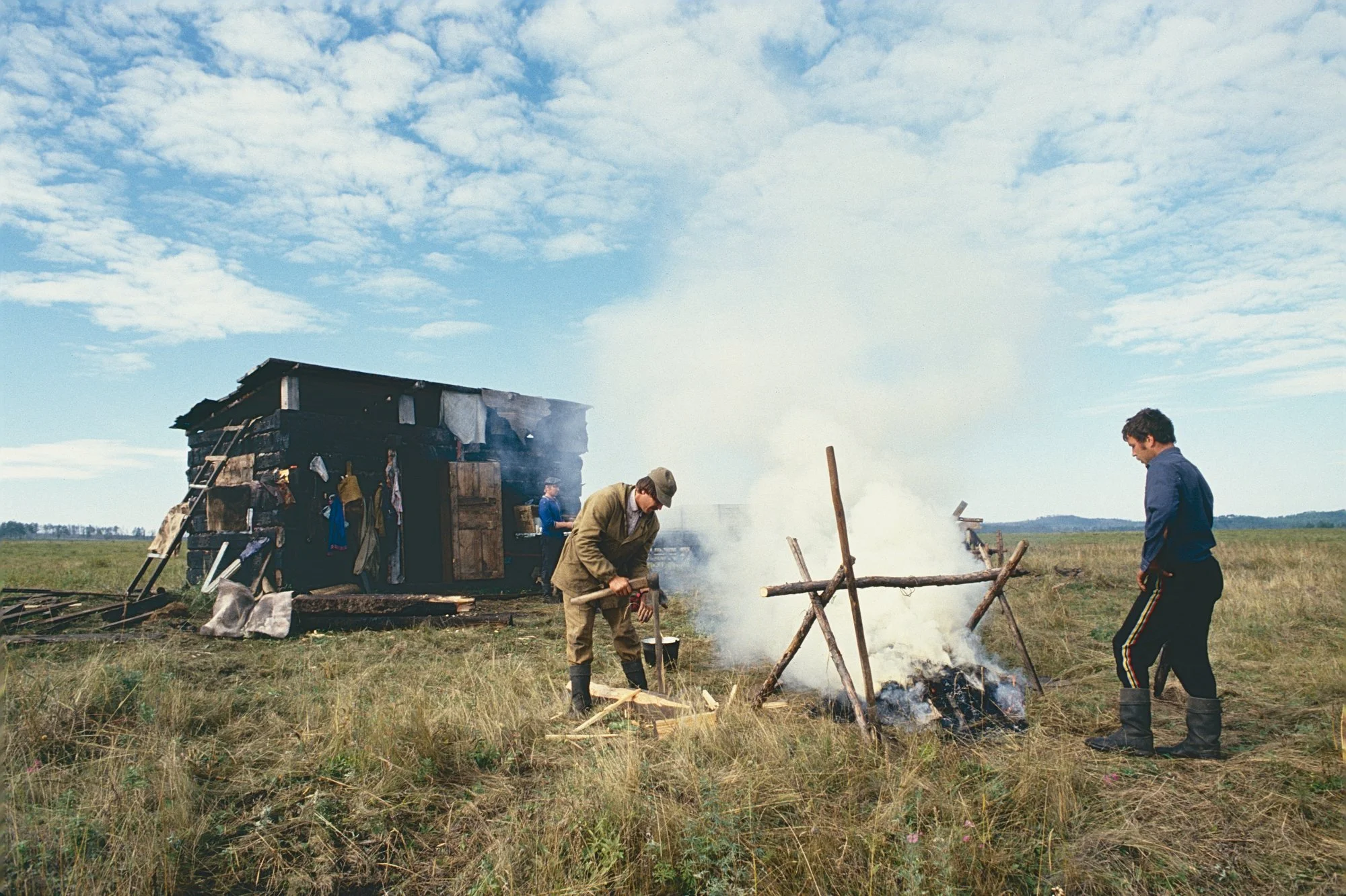
After coming upon this settlement near the Trans-Siberian tracks, we call it a day and spend the night in the cabin in the company of local rats, which spares us from having to pitch, dry and pack the tents in the morning.
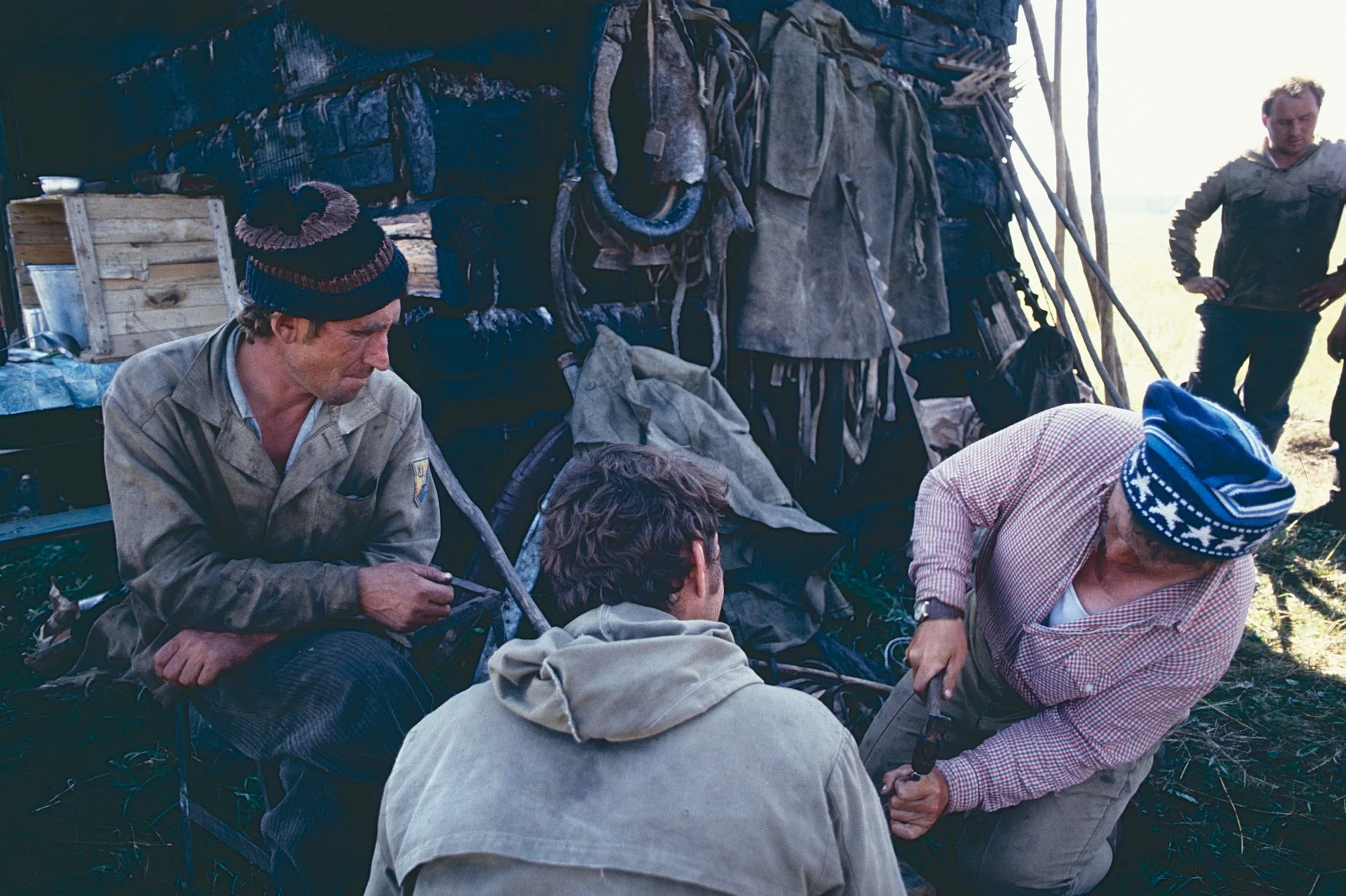
Railroad workers.
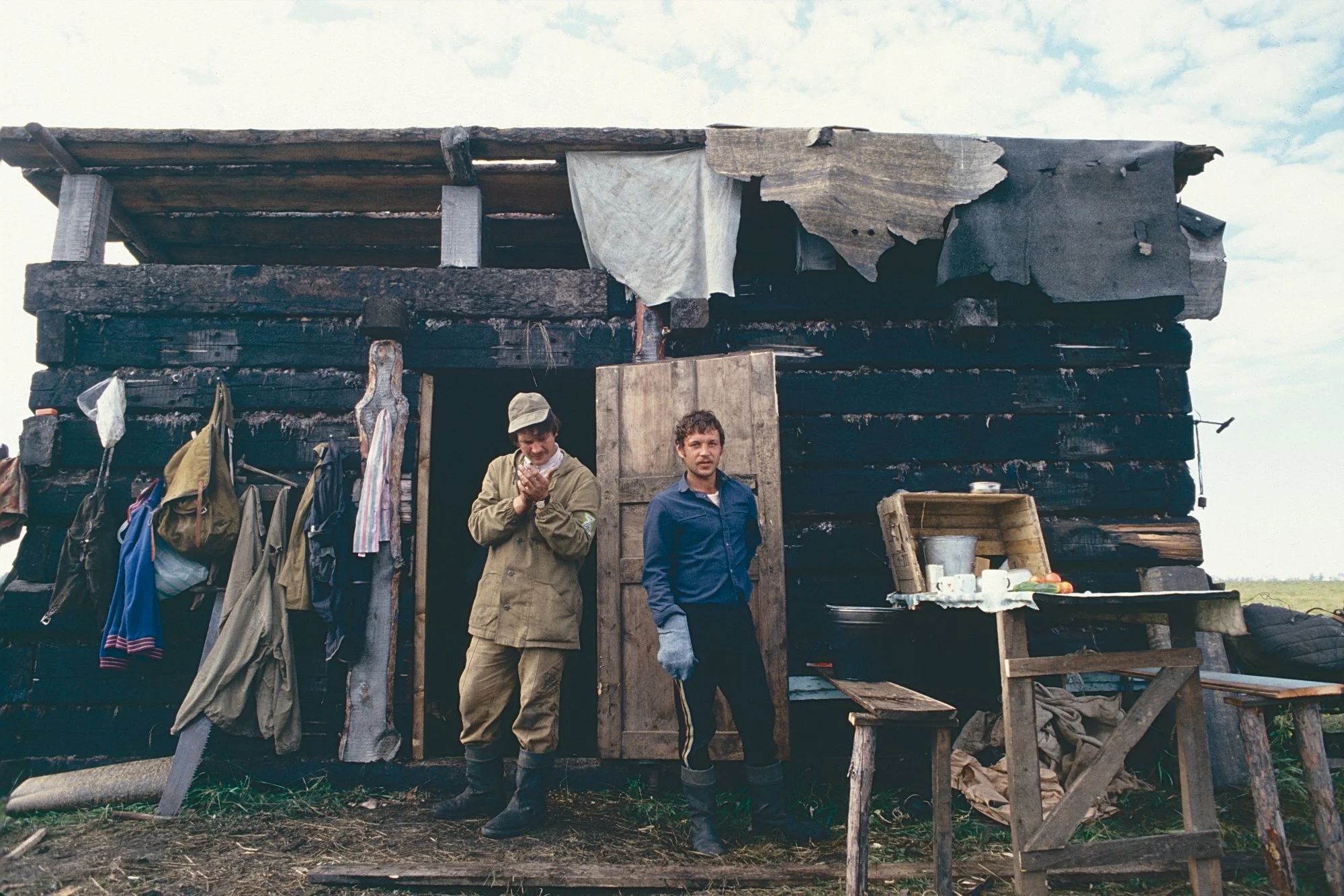
Our hosts for the night.
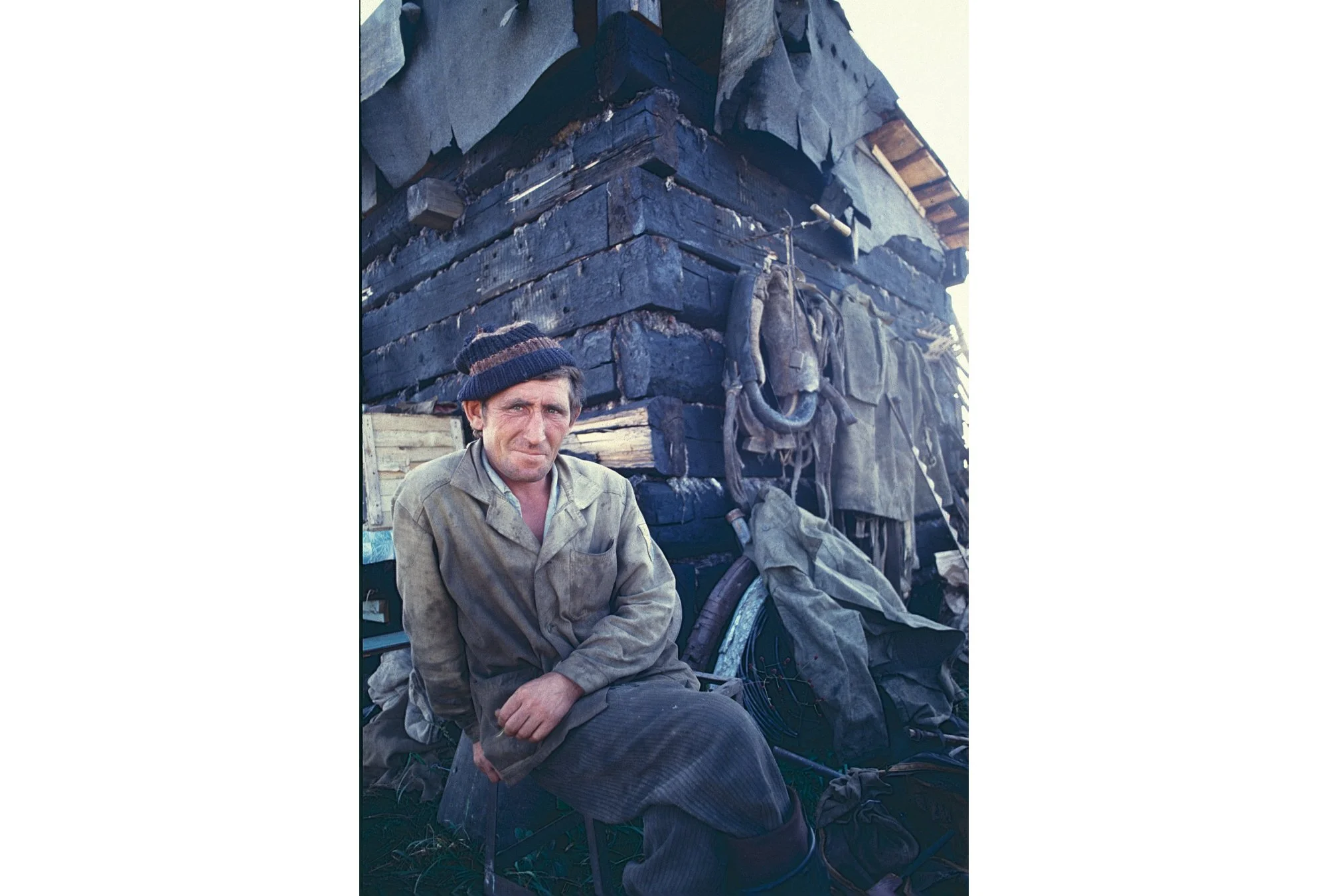
Rail worker.
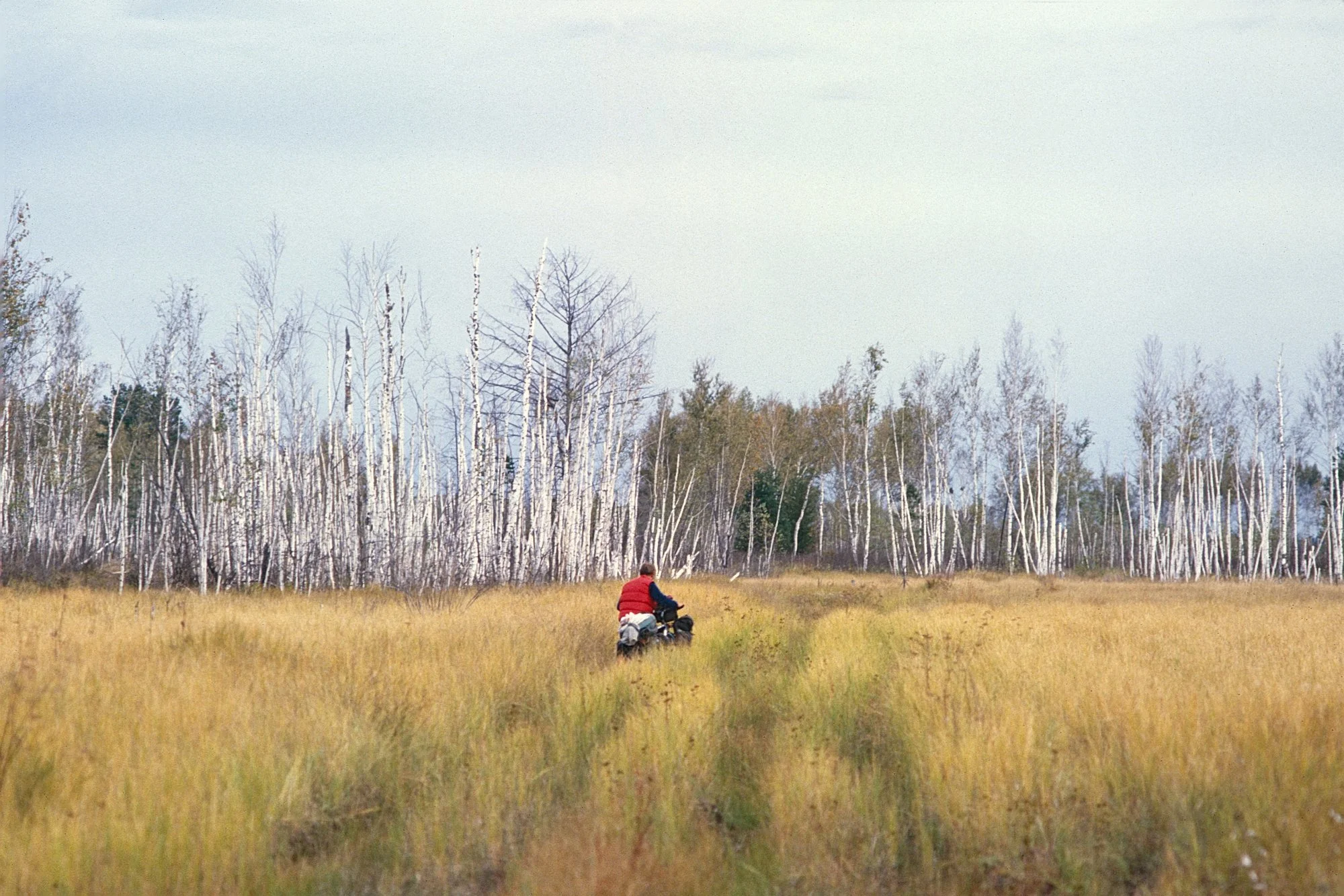
It's starting to feel like winter, but if you have to push a bike in a swamp for a month, Siberia has nice views.
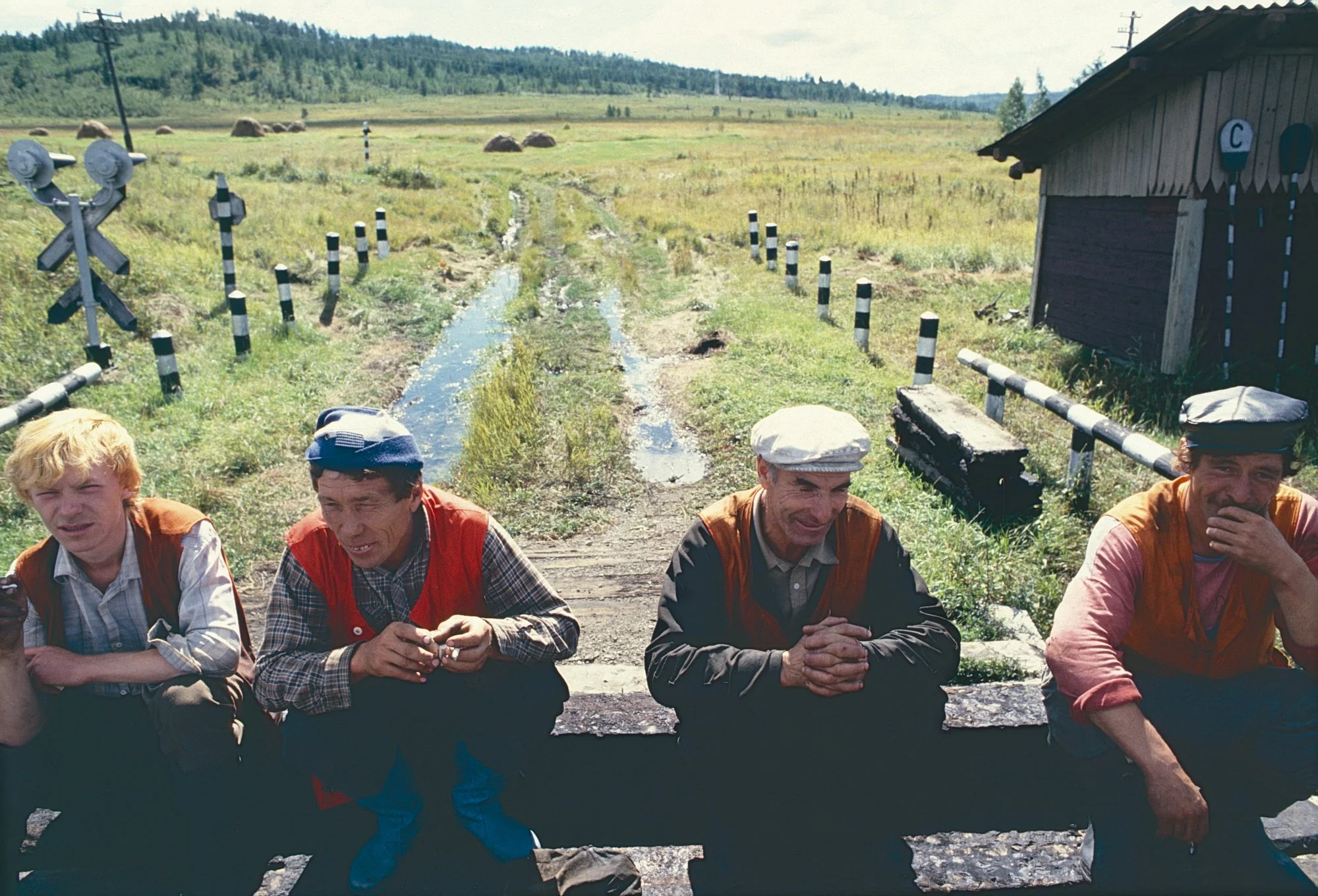
Those Trans-Siberian railroad workers seem amused by the sight of four cyclists pushing bike on their tracks.
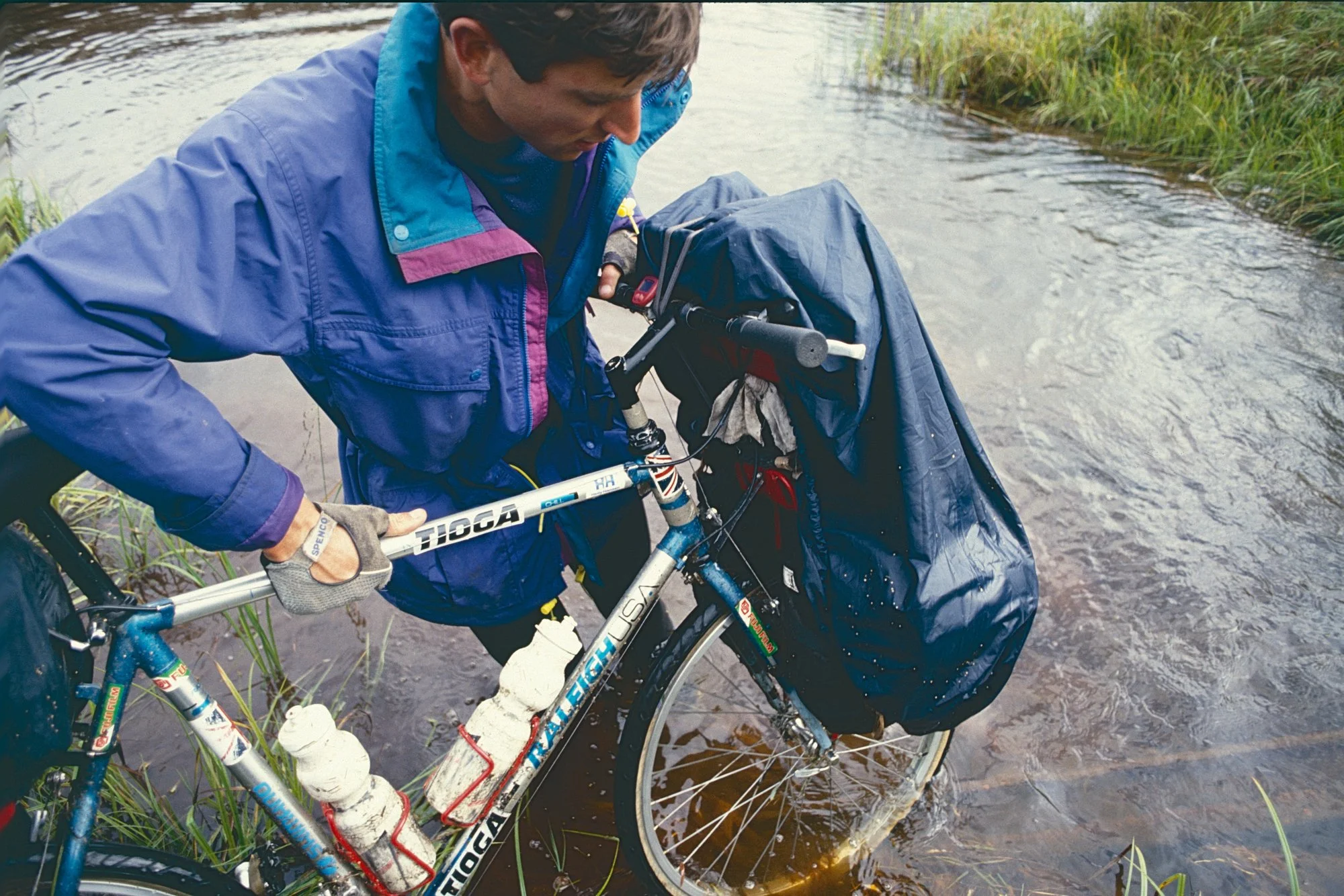
Carefully wadding into freezing water.
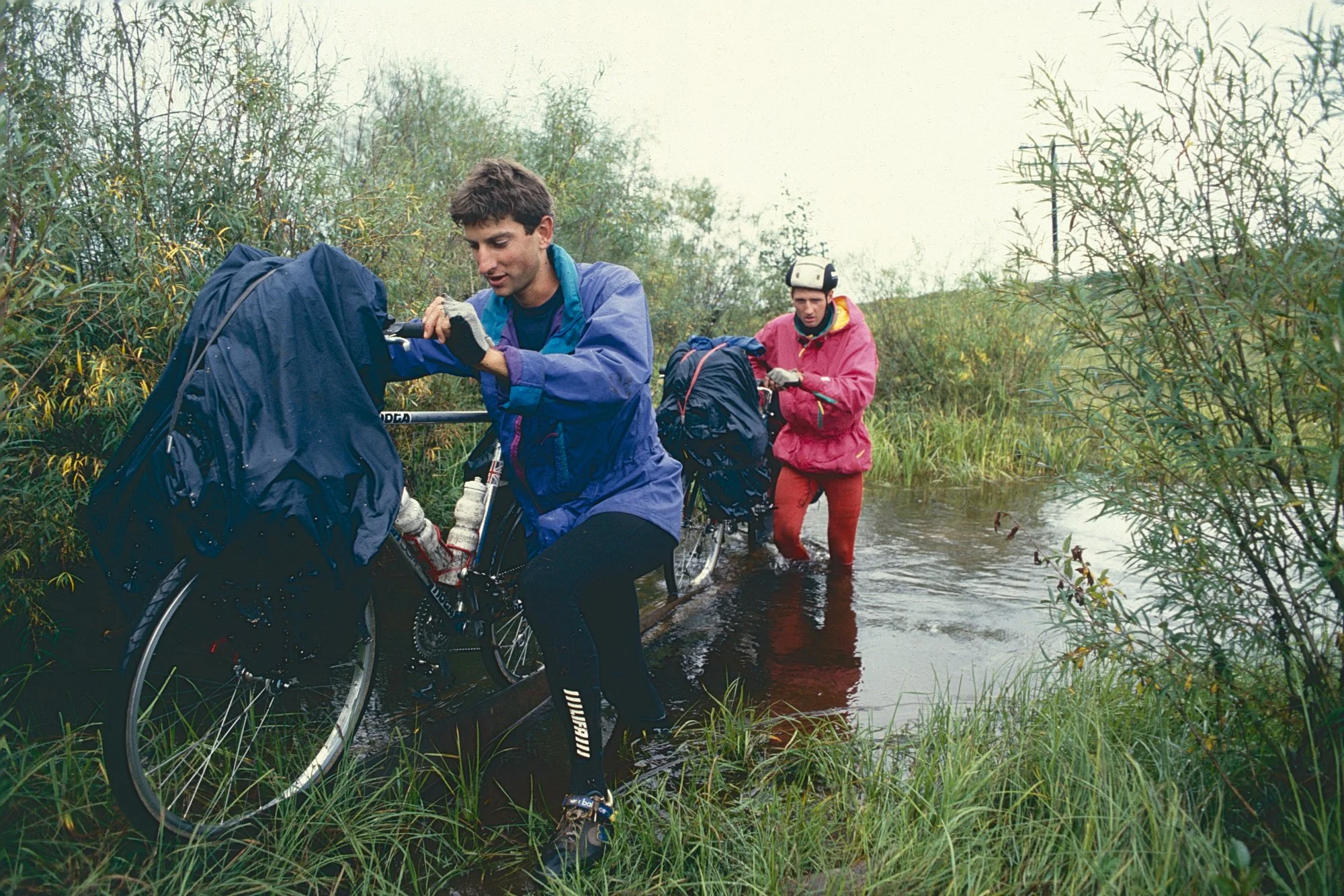
Siberian bike wash: wet and cold shoes for the rest of day, but our chains and derailleurs get a welcomes cleaning.
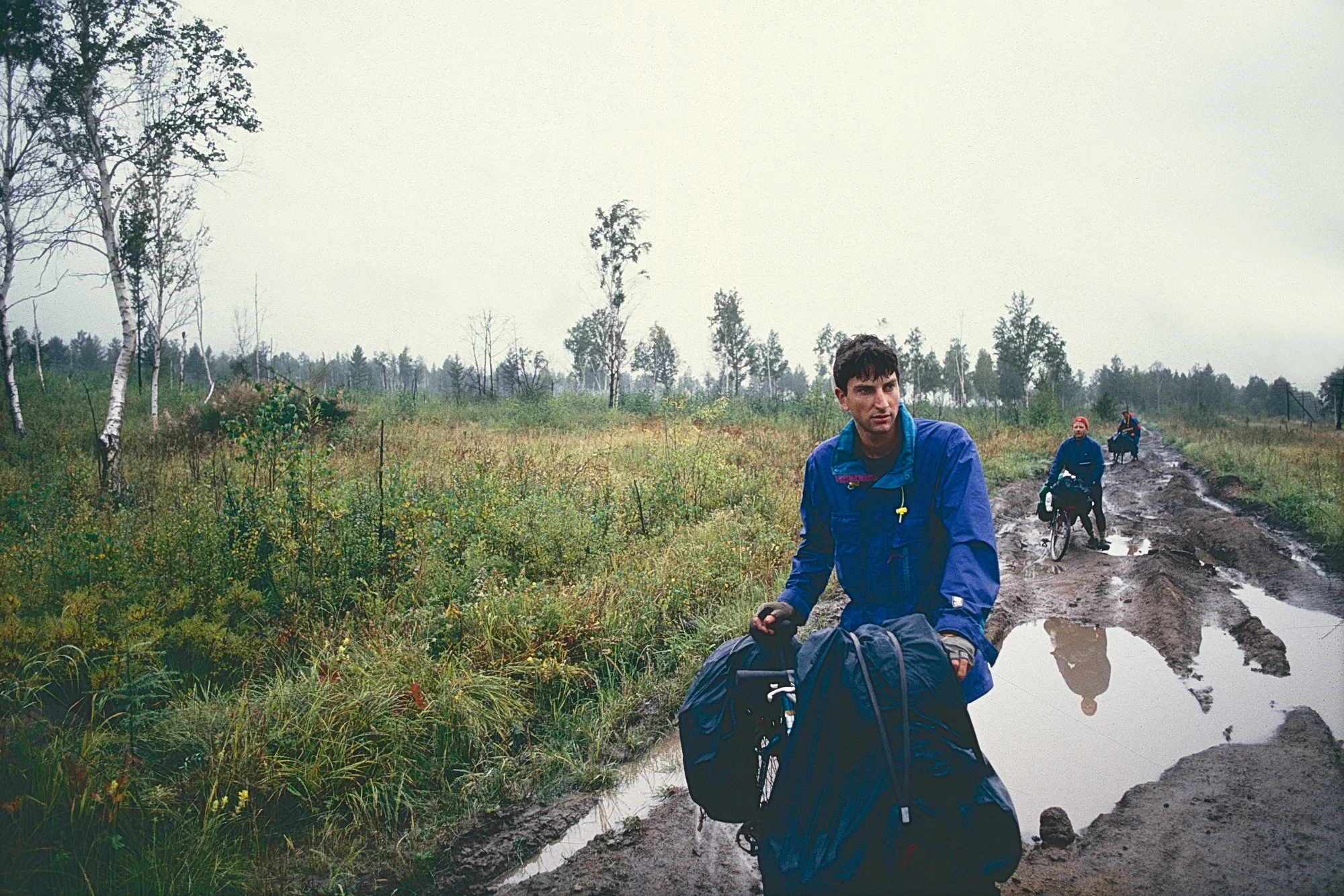
It was a good idea on paper. General mood during week three of swamp bike pushing.
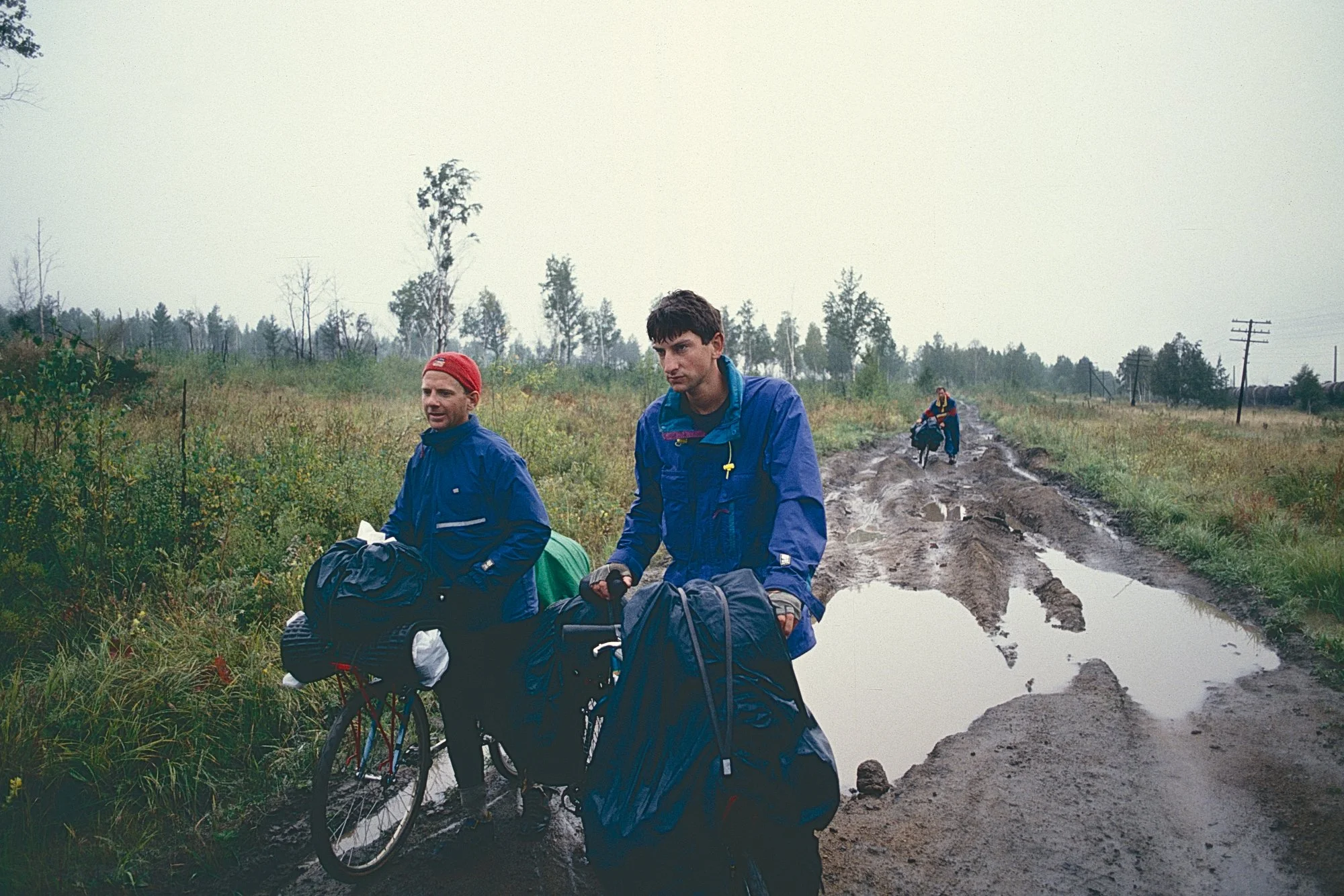
Still on slick: since we're mostly pushing our bikes, we decide to save our one set of knobby tires for what we hope will be a muddy but more rideable section on the eastern side of the swamp.
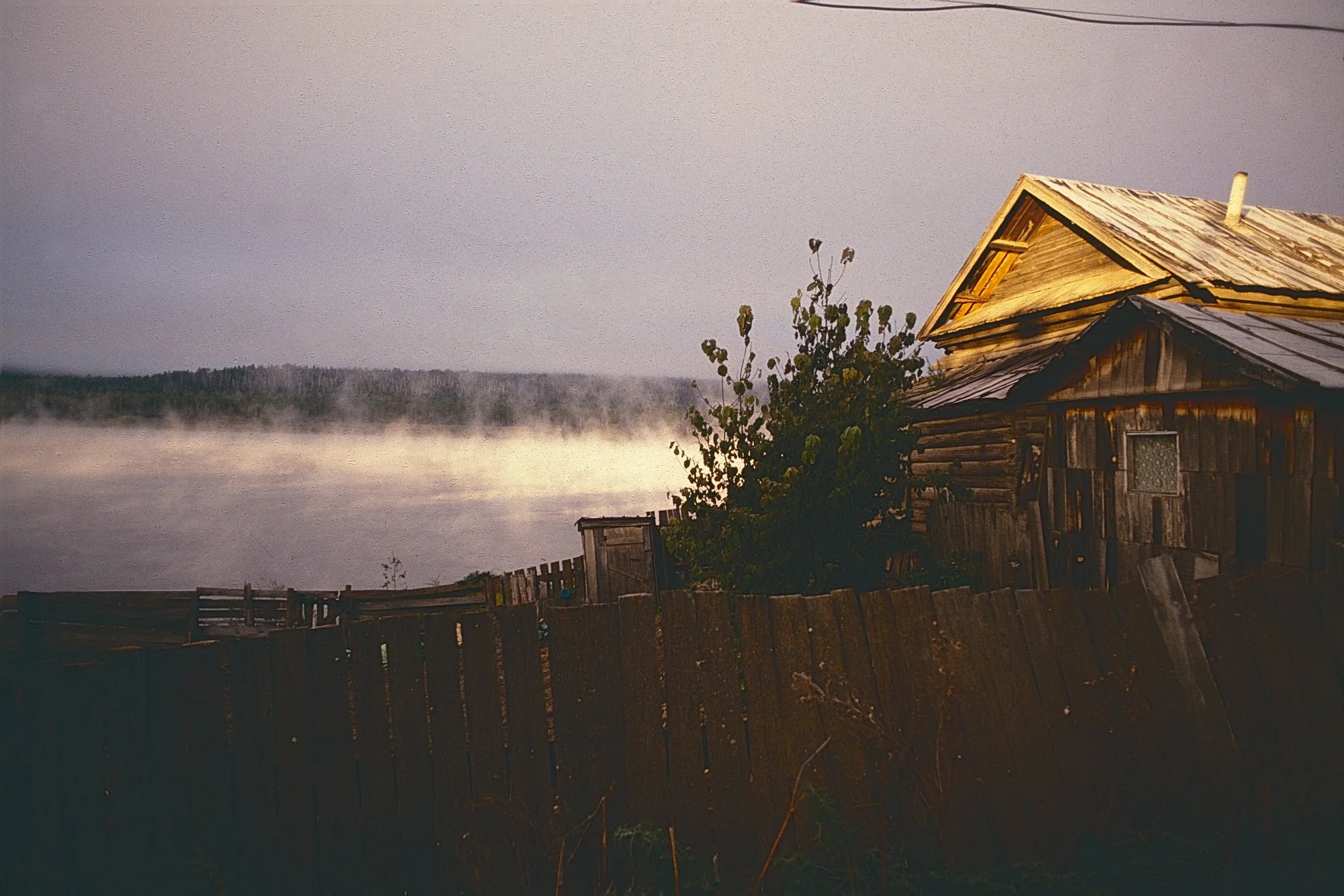
Frosty morning on the bank of the Amur River. Through the lifting fog, China is visible across the water. After stumbling on a short but miraculous dirt road in the dark, we excitedly followed it to a dilapidated military base, where we spent the night. The place had a strong Apocalypse Now vibe: soldiers out of uniforms, a knife fight in the bathroom -I walked away with a frozen smile- and the worst meal of the entire trip, complete with an escort through a mine field when we left in the morning.
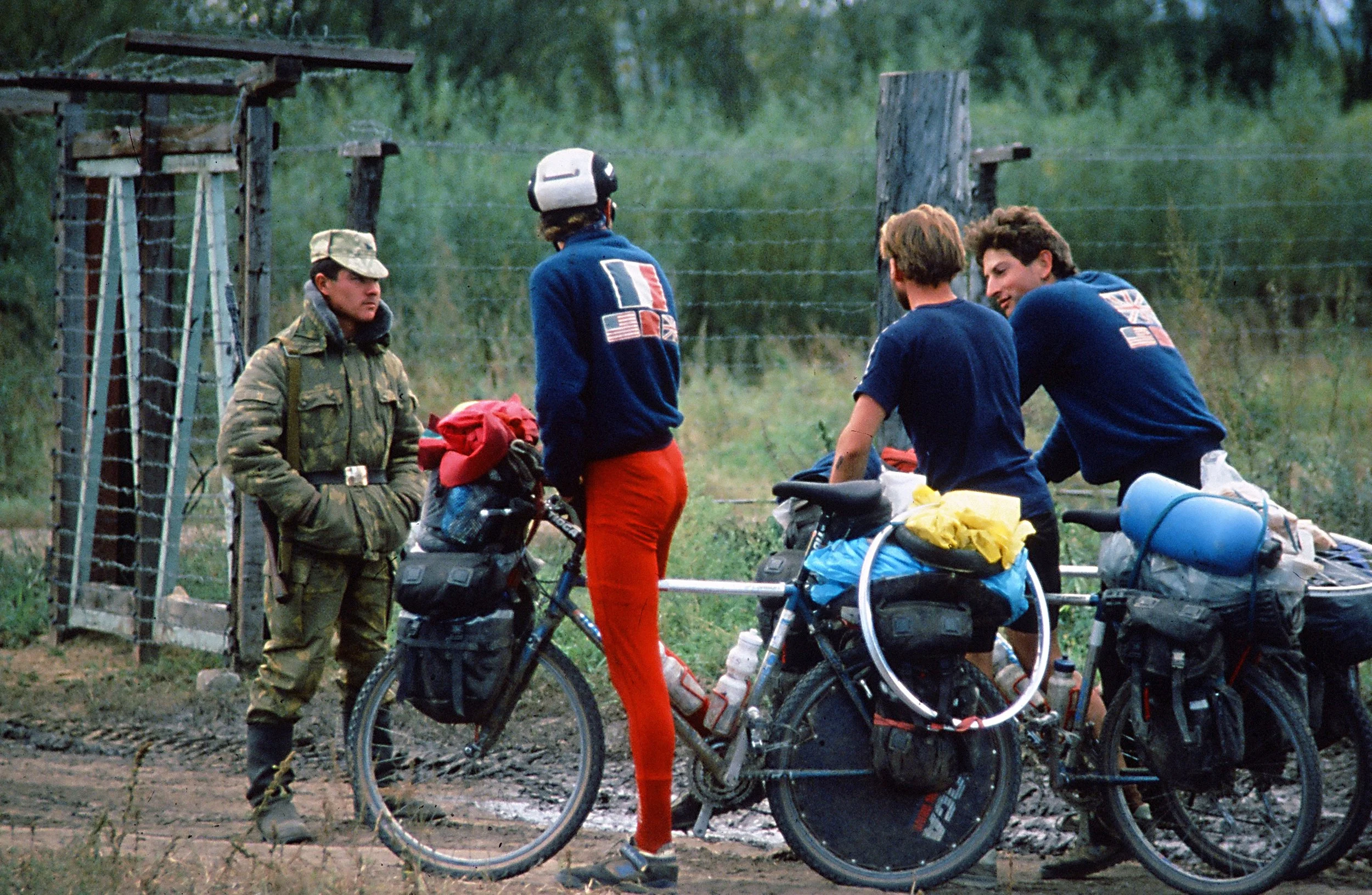
Military guard near the border base.
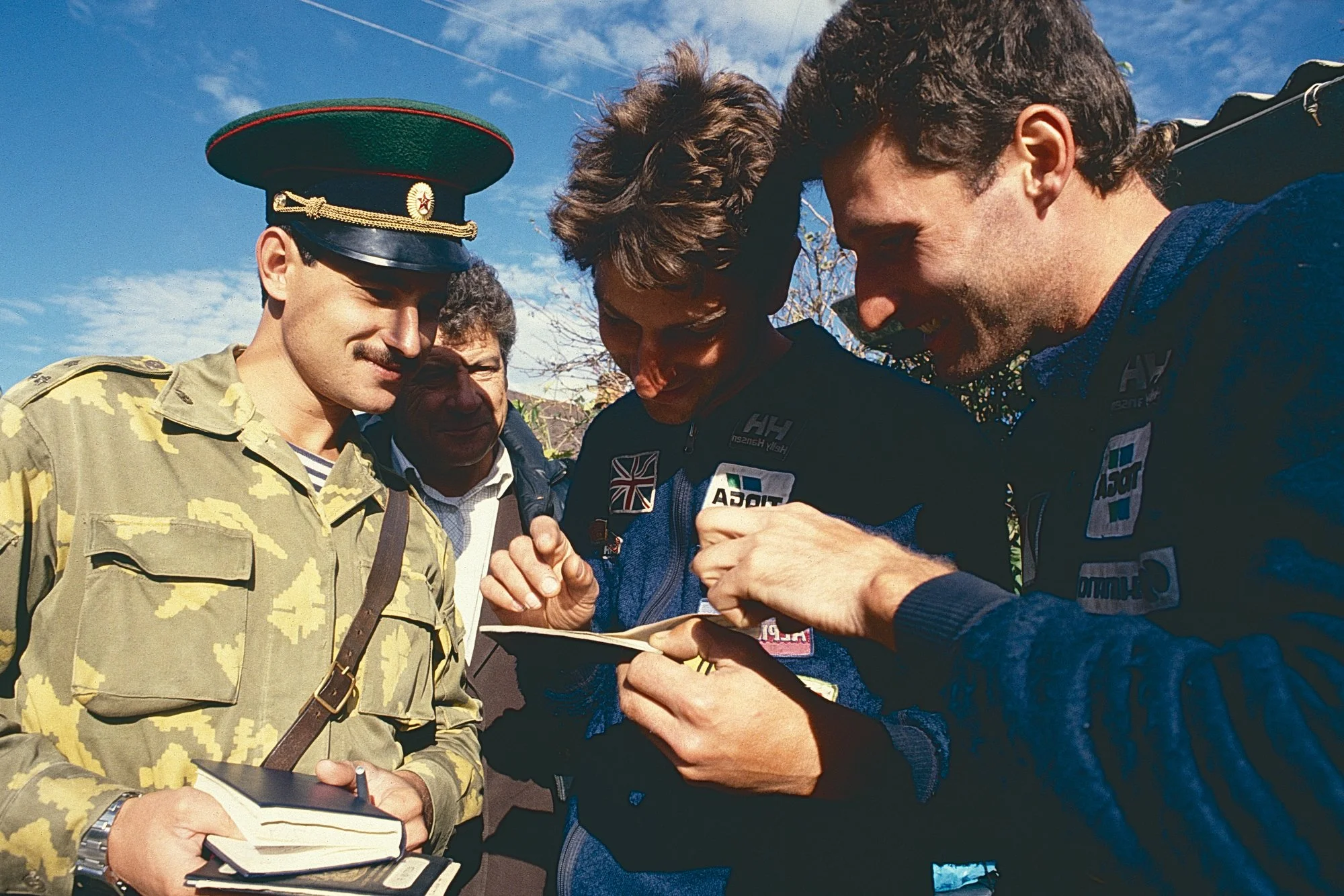
The border guard who had never seen Western passports is friendly, but informs us that the magical dirt track that brought us to the border military base last night is only a few kms long and off-limit to civilians.
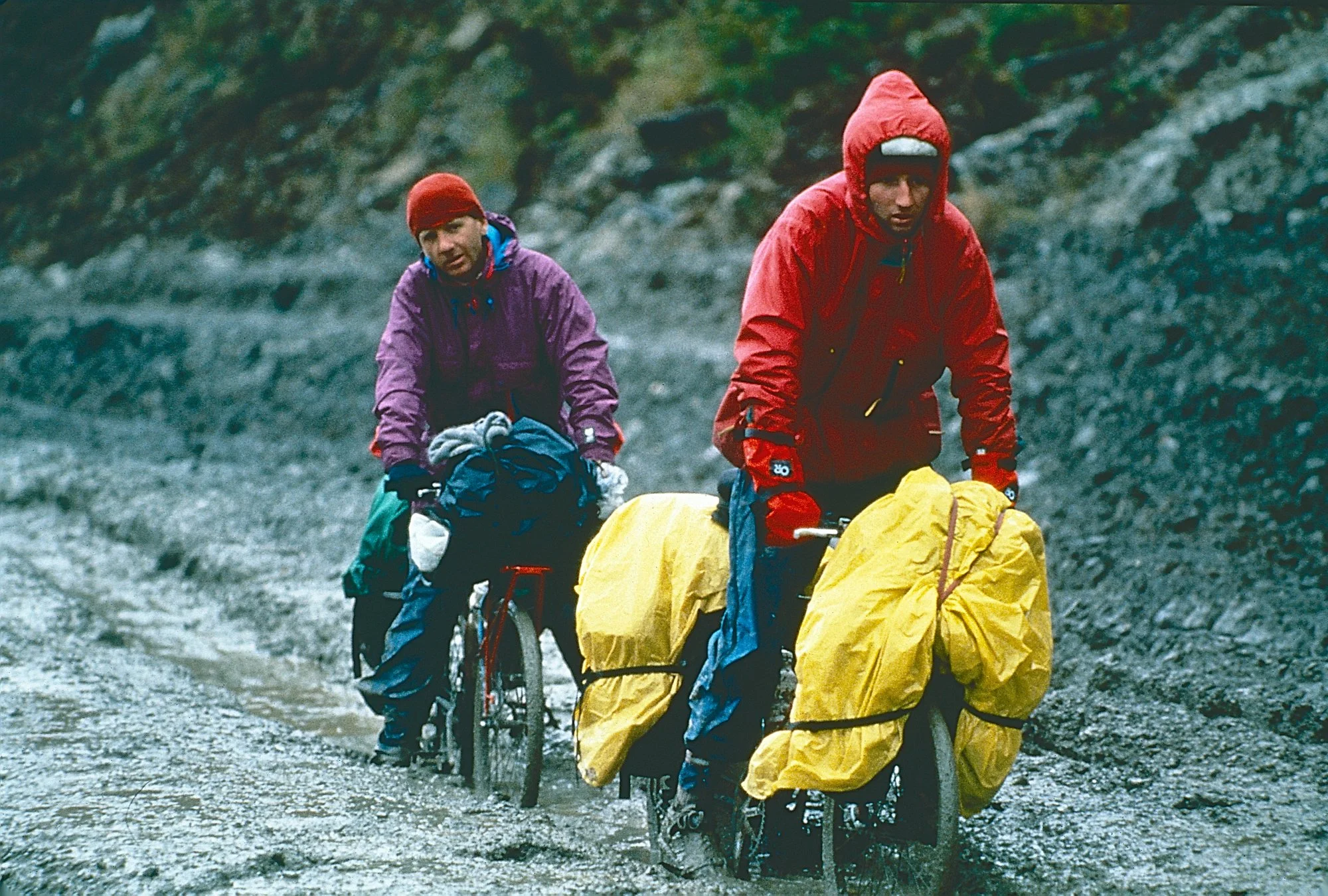
So we head back to the swamp.
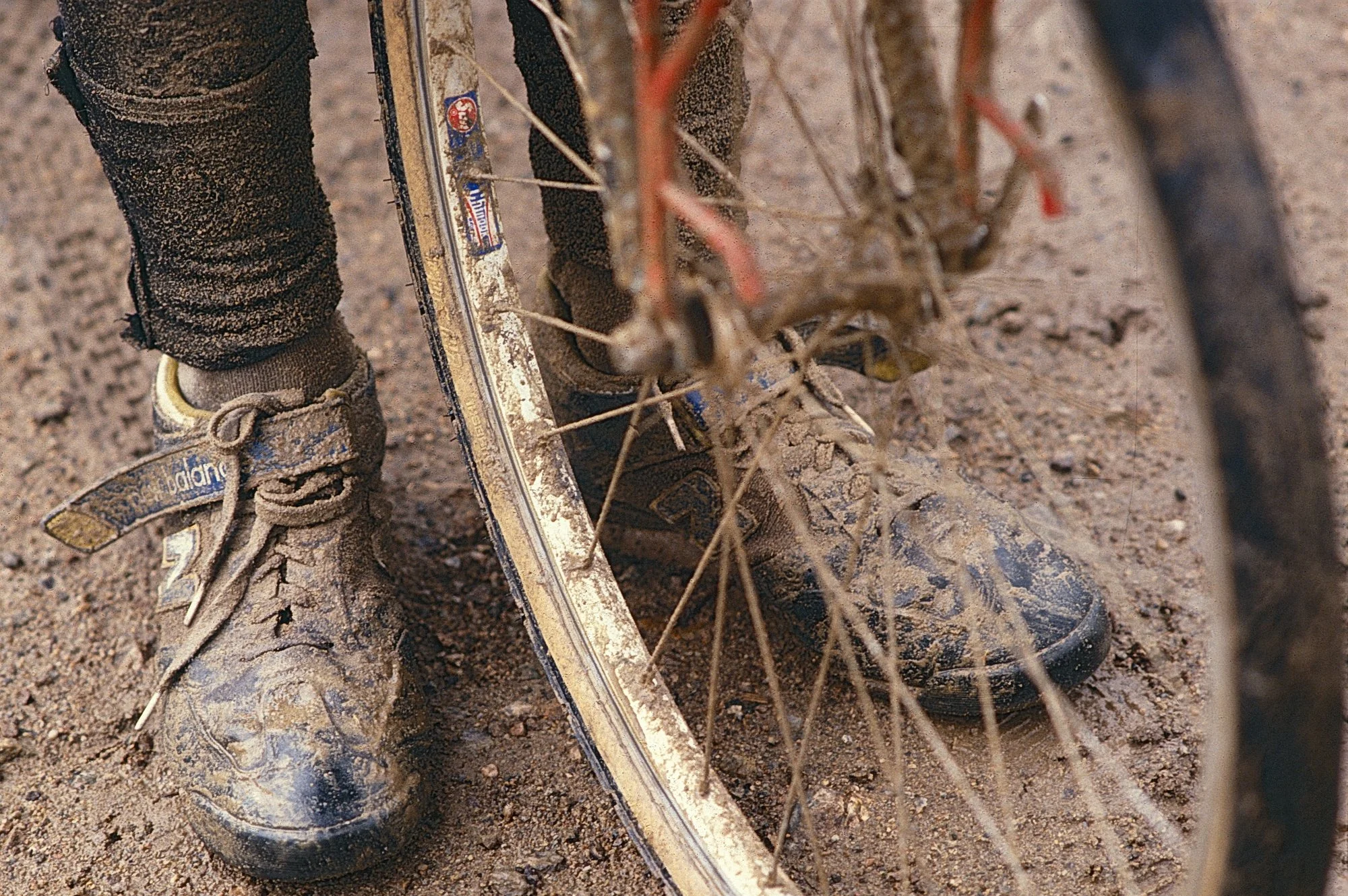
The sandy mud continues to wreck our sidewalls, chains and derailleurs.
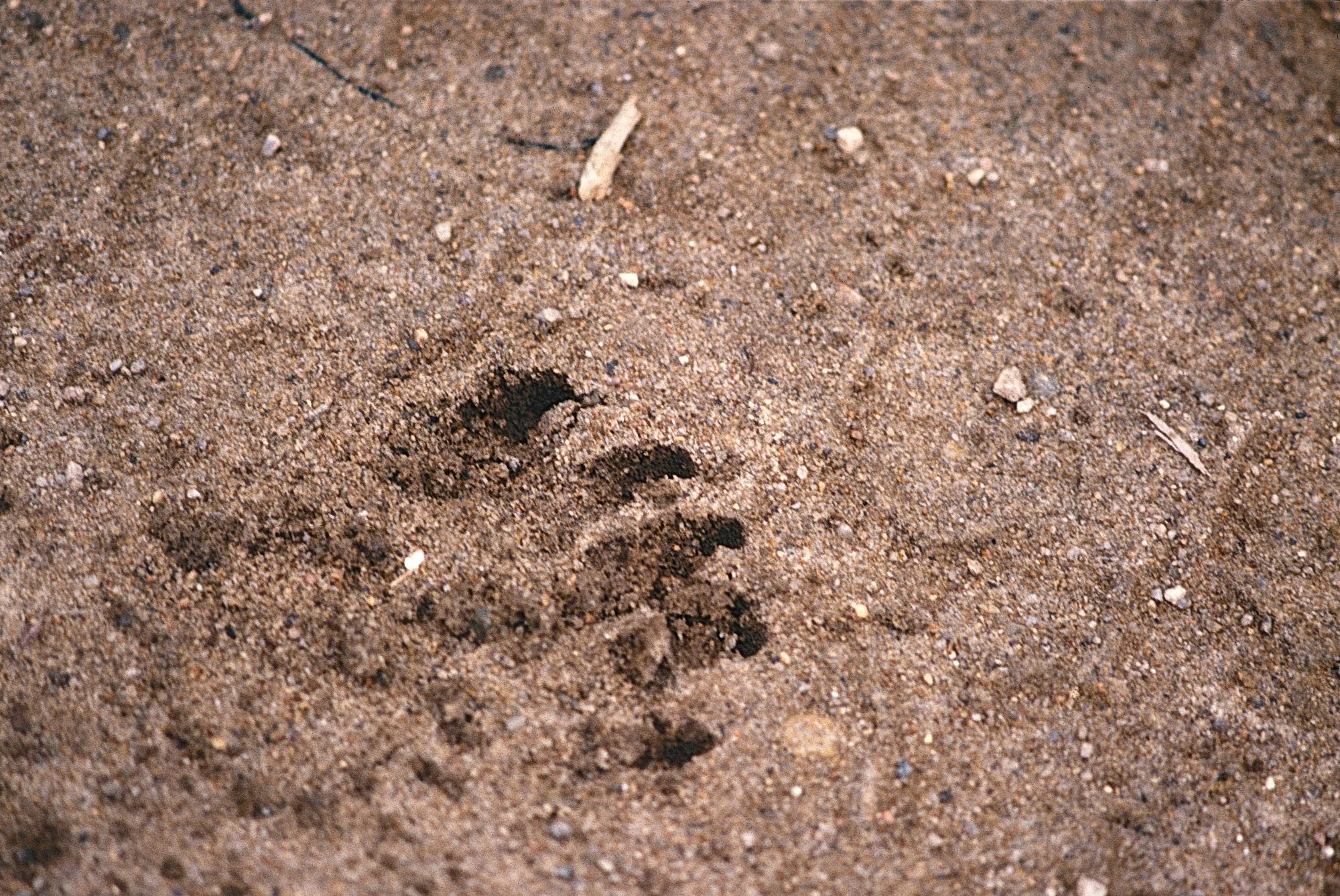
Siberian interval training: after dropping back to shoot a wide landscape of the group in the taiga, I saw a bear and two cubs cross the trail between the group and me. I gave them plenty of time before moving forward, snapping this frame, and "sprinting" back to the group.
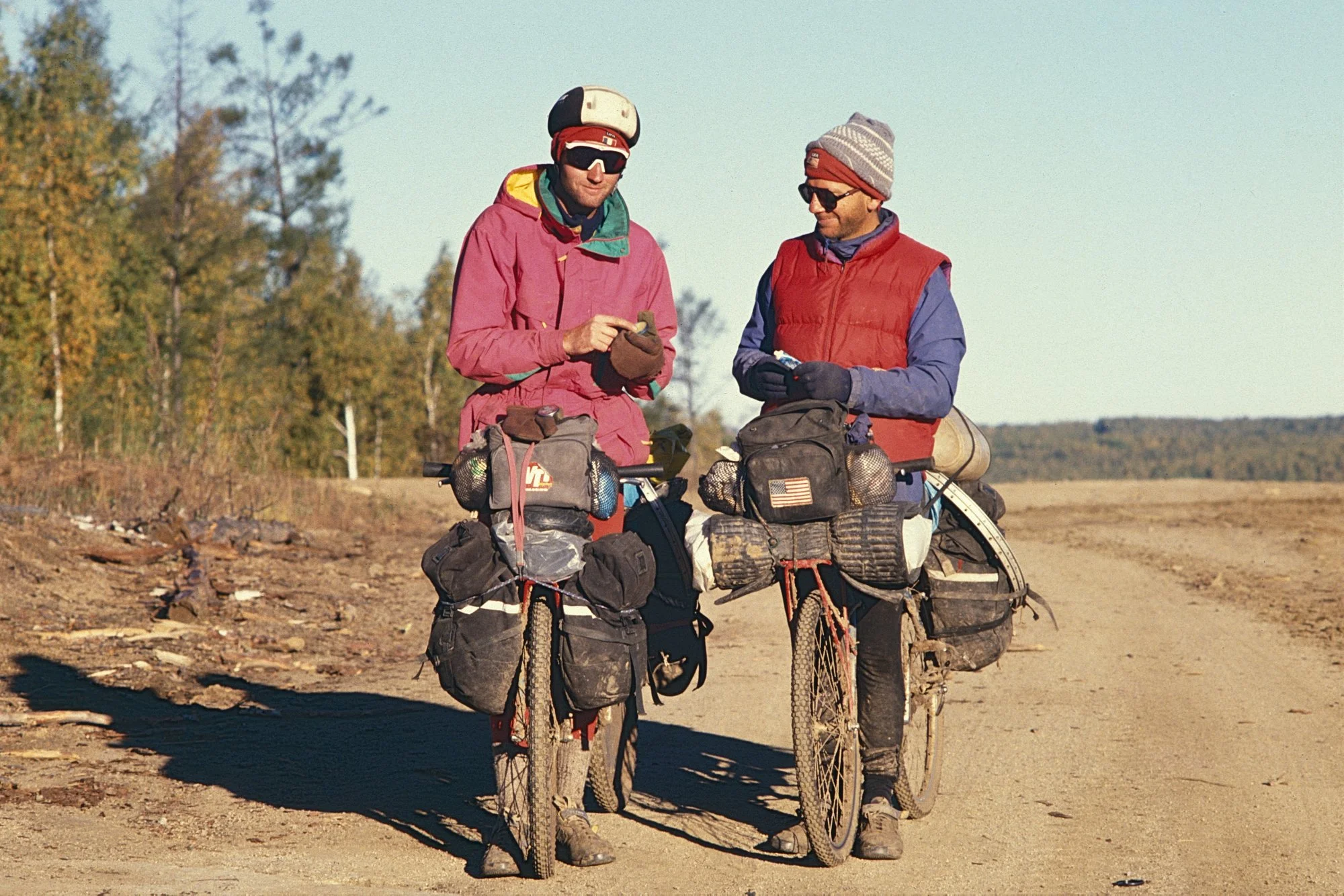
The temperature drops, but we are back on rideable dirt roads on the eastern edge of the swamp. We exit the swamp a week before the first snow fall.
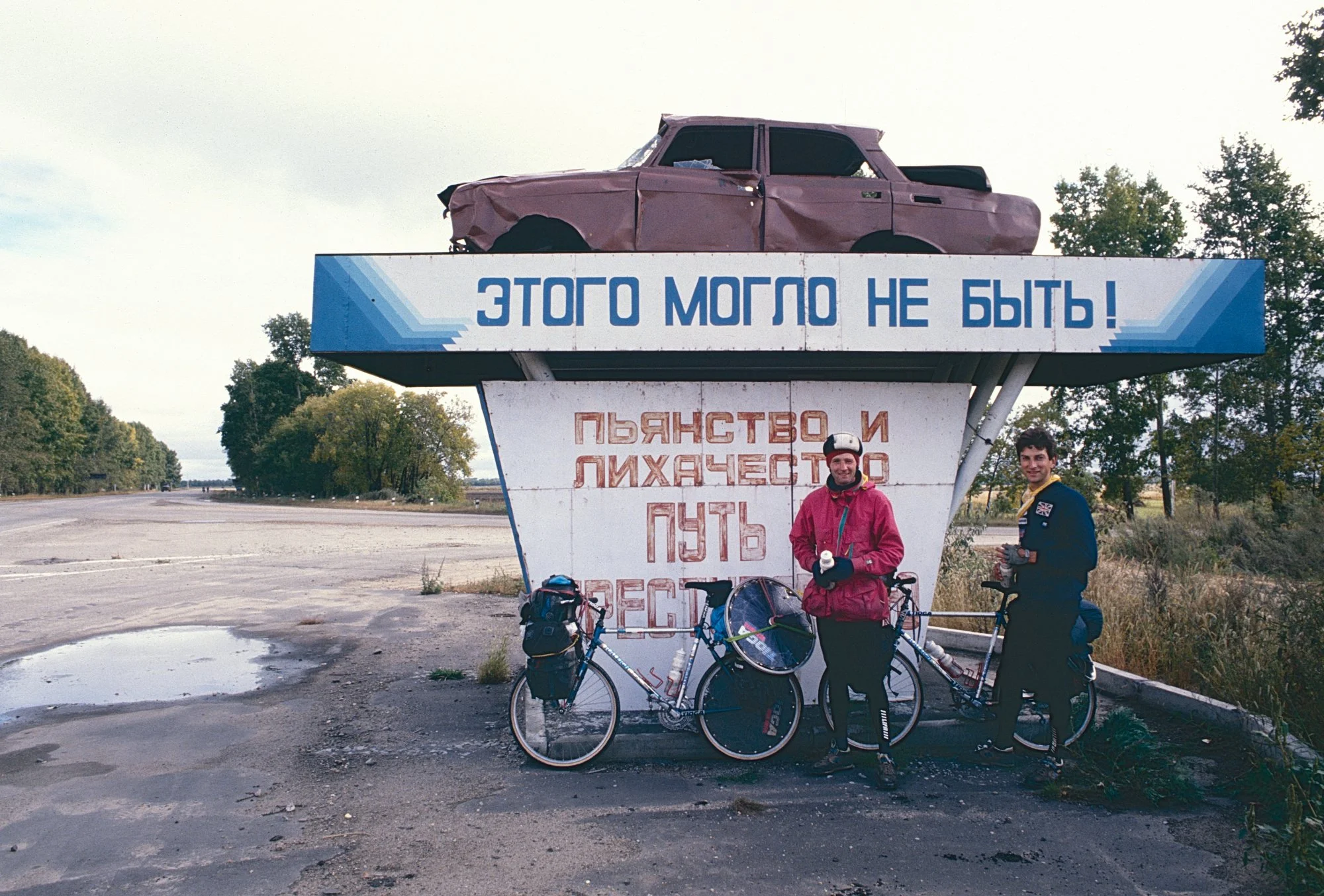
"It Didn't Have to Happen!". Not sure if they mean the car crash, or our trip. We stop at a roadside attraction as the road to Vladivostok curbs south alongside the Chinese border.
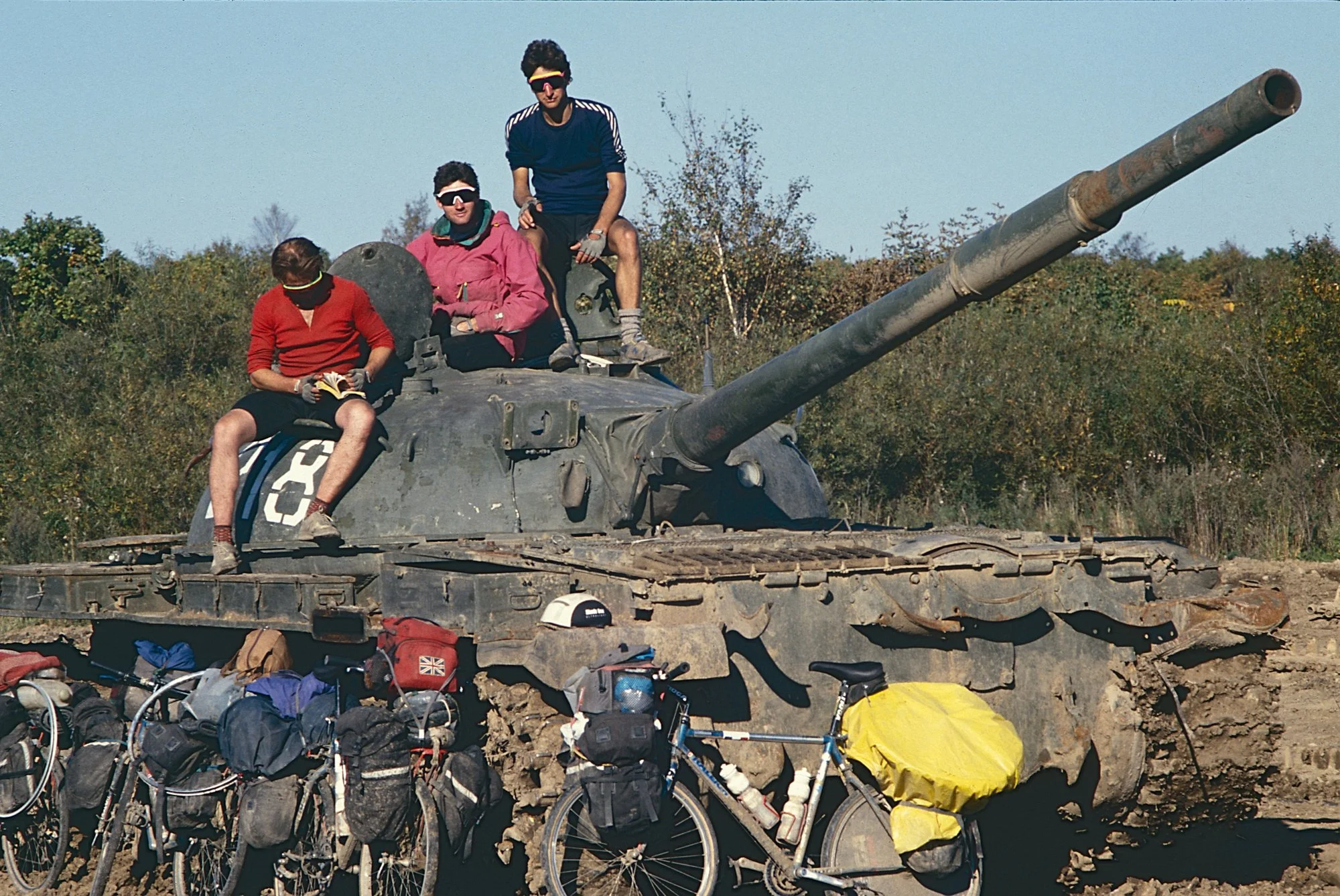
Another broken wheel leaves us down to two spare rims, but we captured a tank.
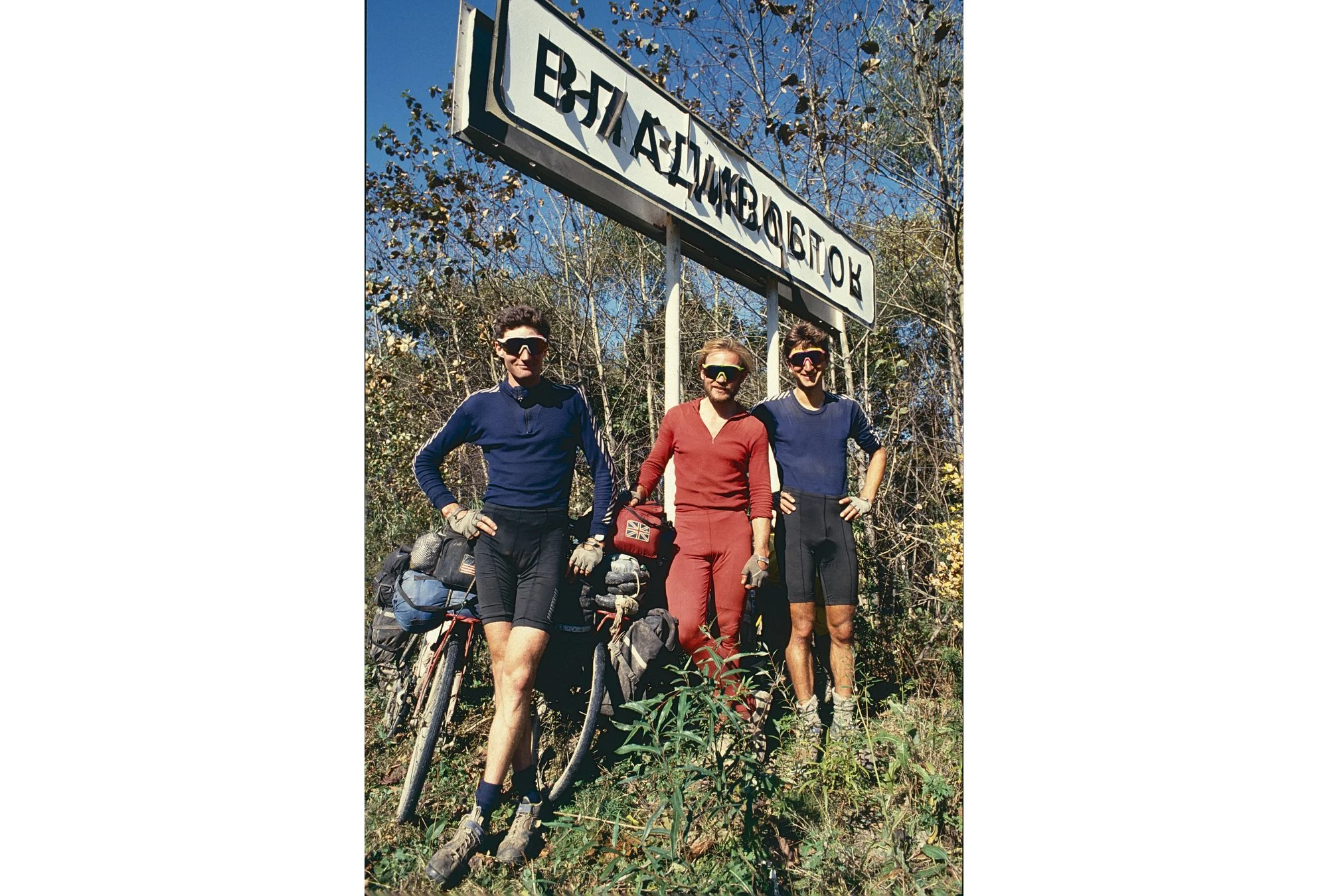
Smelling the barn as we pose under a Vladivostok sign.
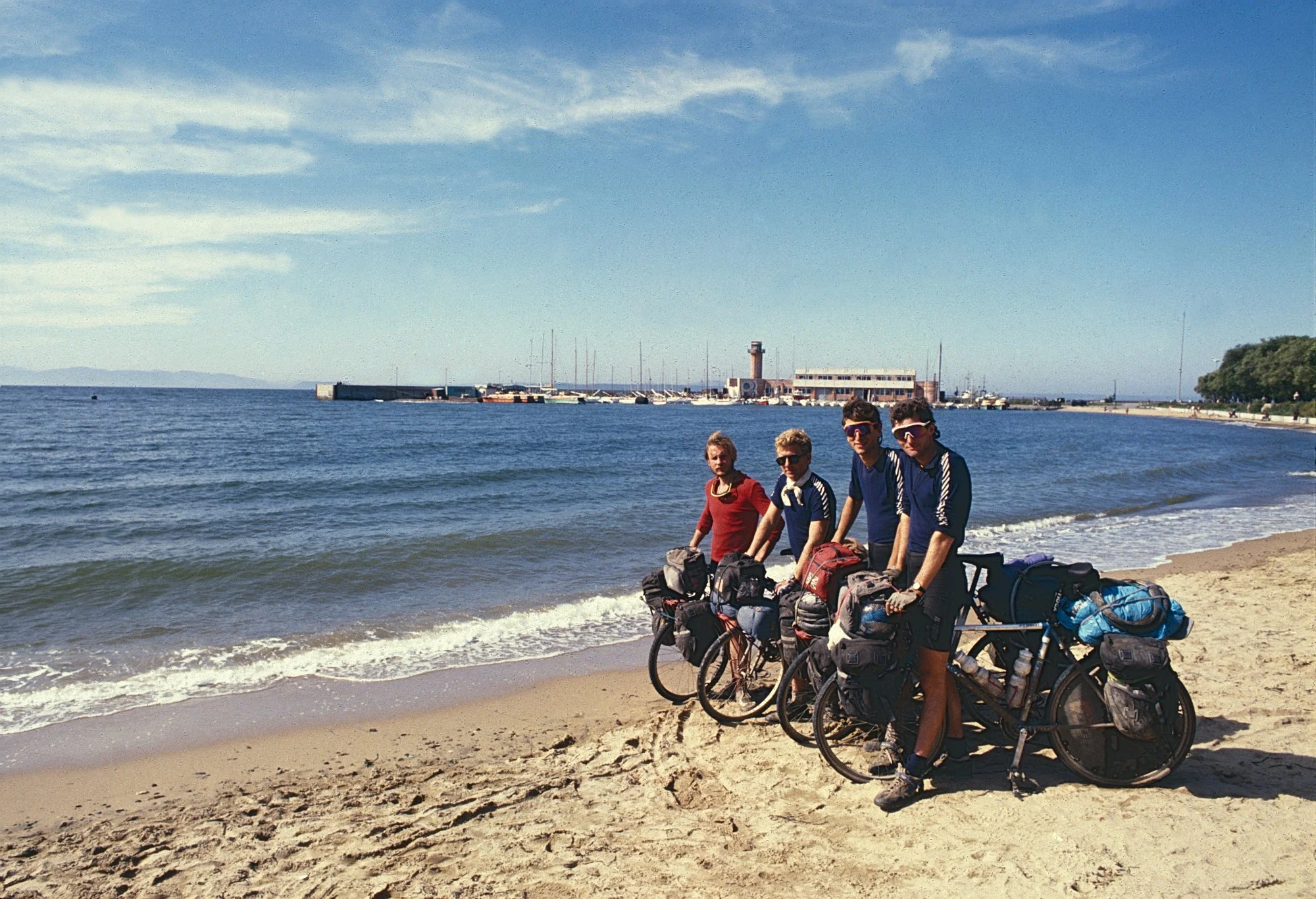
Made it: the Sea of Japan and the shores of Vladivostok welcome us with warm Fall weather.